
The LibreOffice Conference is the annual gathering of the community, our end-users, and everyone interested in free office software. Every year, it takes place in a different country and is supported by members of the LibreOffice commercial ecosystem. In 2018, the conference was organized by the young and dynamic Albanian community at Oficina in Tirana, from Wednesday, September 26, to Friday, September 28, the eight anniversary of the LibreOffice project. Here’s a quick video recap – read on for more details…
Please confirm that you want to play a YouTube video. By accepting, you will be accessing content from YouTube, a service provided by an external third party.
If you accept this notice, your choice will be saved and the page will refresh.
On Monday, September 24, there were the internal meetings of TDF’s Board of Directors and Membership Committee, followed on Tuesday, September 25, by a meeting of the TDF Team in the morning and by the traditional community meeting in the afternoon. This is a unique opportunity for representatives of native language projects and community members to meet face-to-face and discuss localization and other topics.
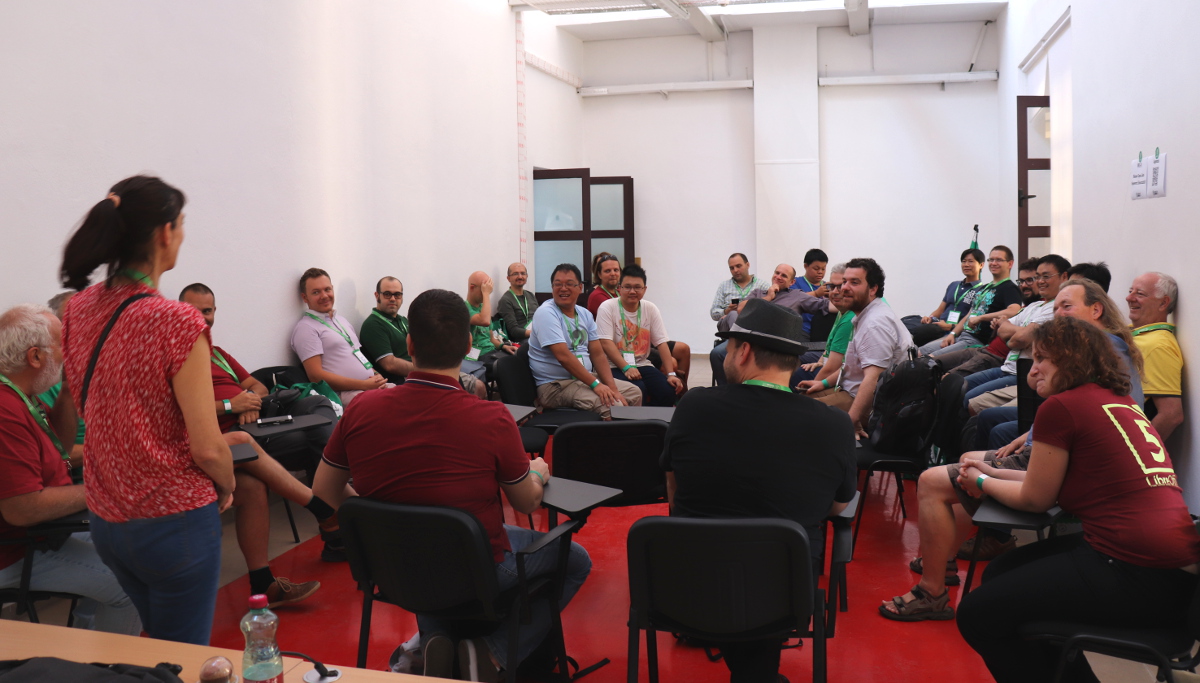
Over 150 people from across the globe attended the conference, including LibreOffice developers, community volunteers and Google Summer of Code students. For several people, it was their first LibreOffice Conference and therefore the first time they had met other community members in-person.
Conference
The conference started officially on the morning of Wednesday, September 26, with an address by Erion Veliaj, Mayor of Tirana, followed by the “State of the Project” – a talk which outlined some project statistics since the Rome conference – and a Q&A session with TDF’s Board of Directors. The morning track ended with sponsors’ keynotes.
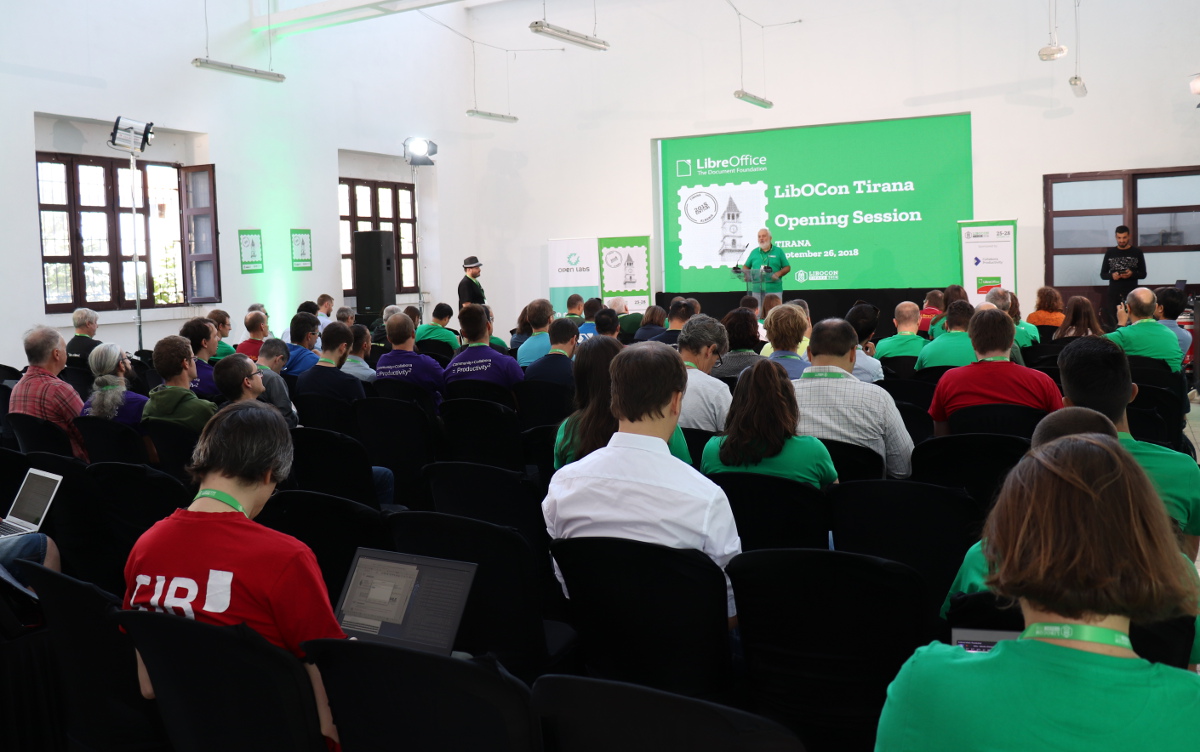
In total, there were around 80 presentations, covering all aspects of LibreOffice, from development to QA, from localization to design, from documentation to marketing, and to broader subjects such as building communities and making the LibreOffice project more inclusive.
The Development Track was the richest one in terms of the number of presentations, in two different rooms, and included the usual face-to-face meeting of the Engineering Steering Committee, the Google Summer of Code Panel and a Lightning Talk Session.
In the second room there were talks about ODF, reports about migrations to LibreOffice and the adoption of the Open Document Format in Israel, Hungary, Taiwan and Turkey, and presentations about the community and other specific topics.
In the third room there was a meeting of the Open Source Business Alliance (OSBA) and workshops about inclusiveness, documentation and certification. Finally, the conference wrapped up on the 28th of September with a celebration of the eight anniversary of the LibreOffice project.
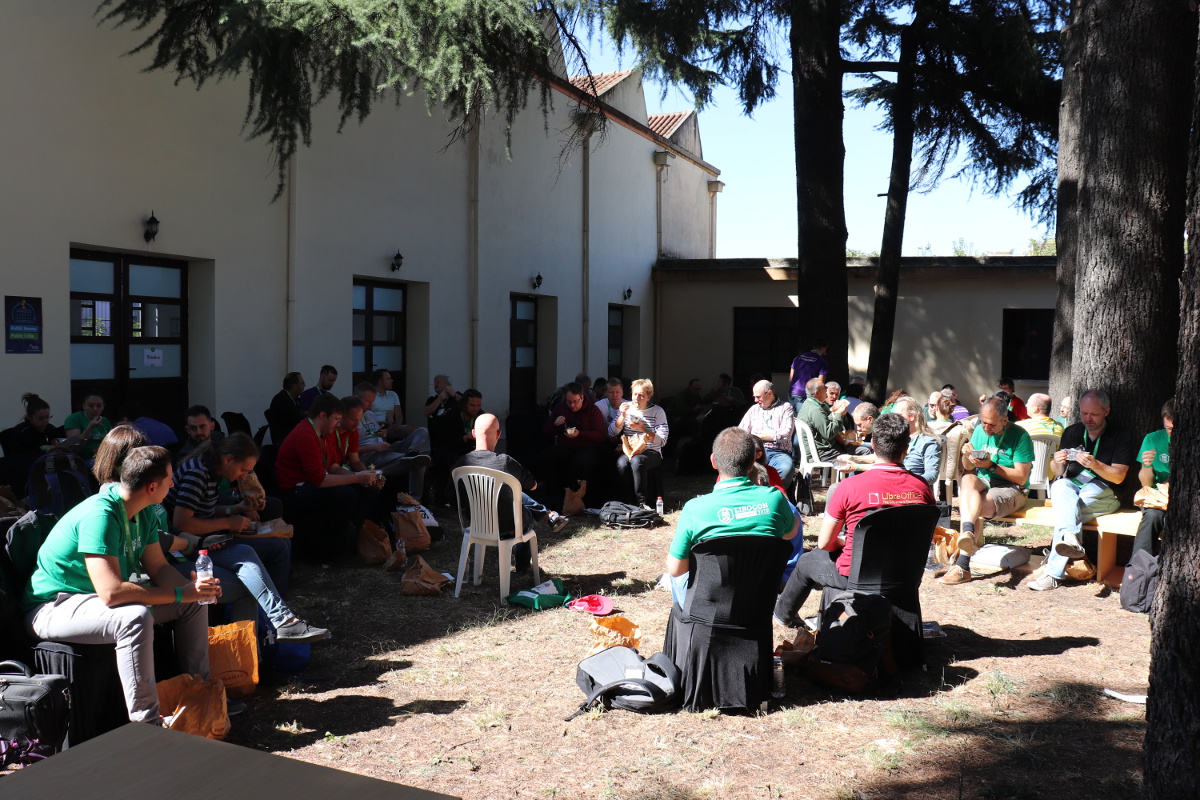
Oficina was a great conference location, thanks to the availability of a large garden where people could relax between talks, enjoy the sunny weather, discuss with other community members about LibreOffice and take a large number of pictures.
Additional Events
In the evening of Wednesday, September 26, all conference participants met for the social dinner to better know each other and discuss – mostly informally – about their activity in the community. The event was also an opportunity to sample some local beer.
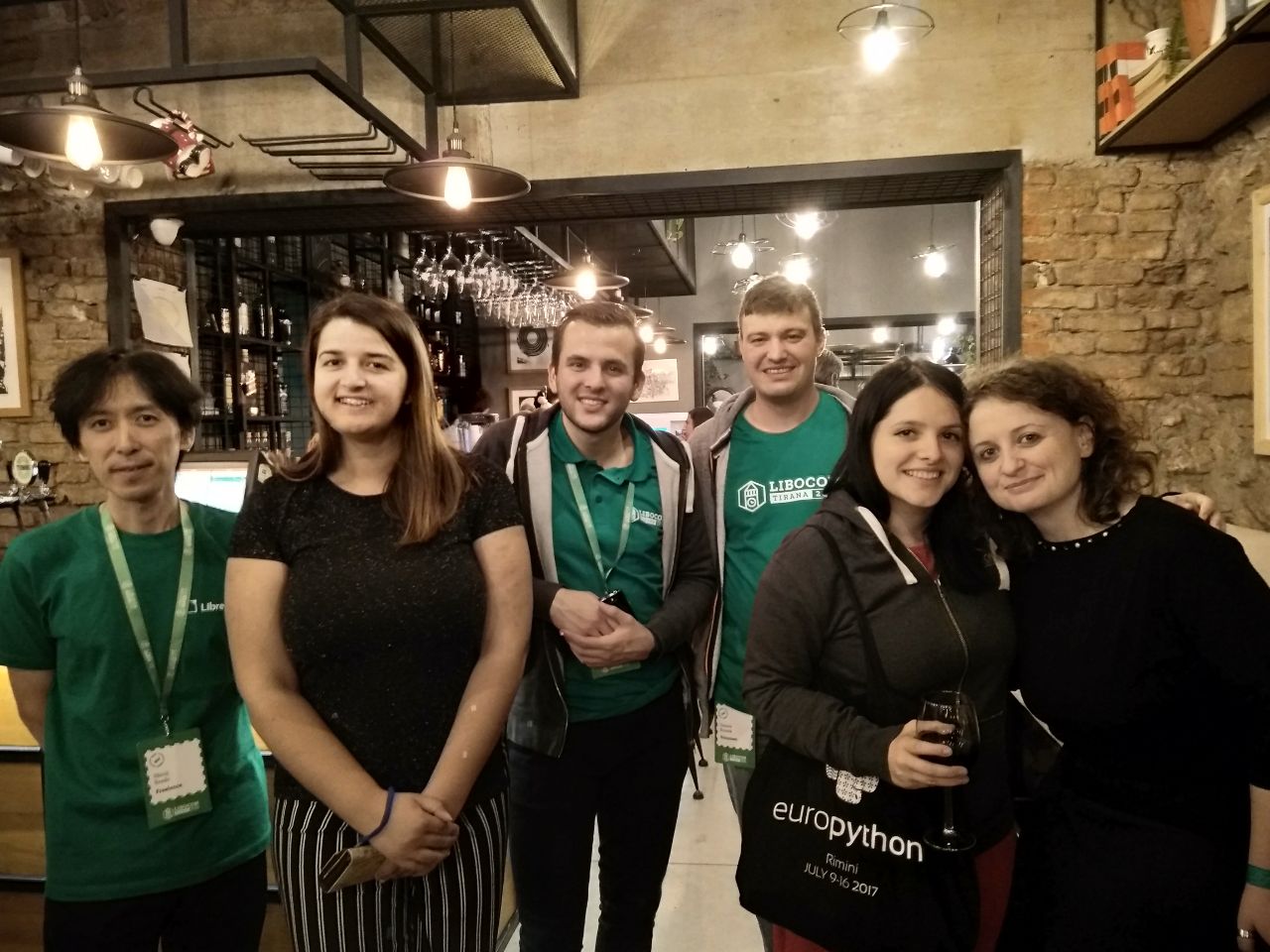
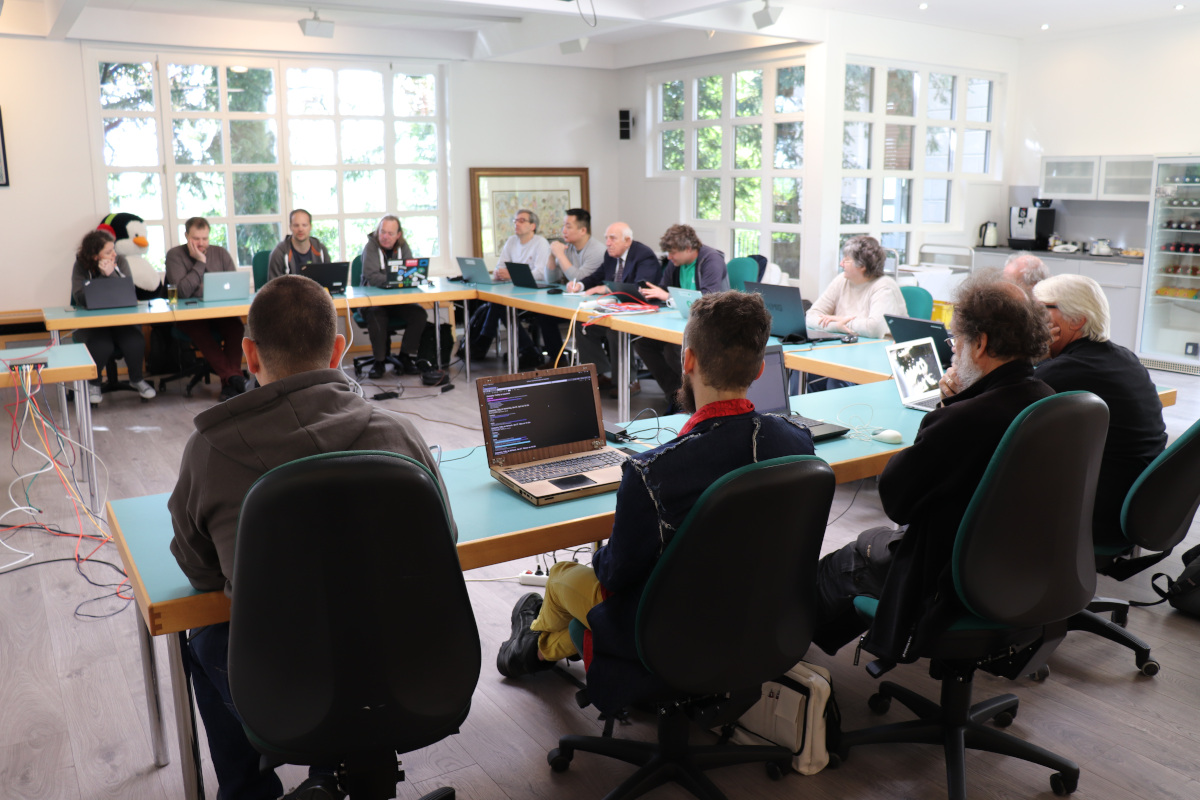
During the evening of Thursday, September 27, most conference participants met at Destil for the HackNight, to work and discuss while having some food. This was a good opportunity for people to get to know core developers, and get their opinion about the future development of LibreOffice.
The full program the 2018 LibreOffice Conference in Tirana is still available online. The Document Foundation and the LibreOffice community are now looking forward to the upcoming 2019 event, which is due to take place in Almeria, Spain.




 Where do you live, and what do you enjoy in your spare time?