The Document Foundation (TDF) is the non-profit entity behind LibreOffice. In 2021, we had elections for the foundation’s Board of Directors, along with regular Advisory Board calls, and support for other projects and activities.
(This is part of The Document Foundation’s Annual Report for 2021 – we’ll post the full version here soon.)
Election of new Board of Directors
The Board of Directors (or “BoD”) is the main administration of the foundation’s projects and teams. Directors are directly elected by Community Members. The Board of Directors consists of seven members and three deputies. The Board of Directors may launch any other teams or committees ad hoc if necessary.
The Board of Directors decides on all fundamental matters on its own authority in accordance with the Articles and conducts the ongoing business of the foundation. The Executive Board has the status of a legal representative and represents the foundation in and out of court. More about the Board’s responsibilities and decision-making processes is in the foundation’s statutes.
In October, Marina Latini – on behalf of the Membership Committee – announced the start of the election process. The existing Board started its duty on February 18, 2020, and remained in charge until the end of February 17, 2022 – so the new Board was set to take charge the day after that, ie February 18, 2022.
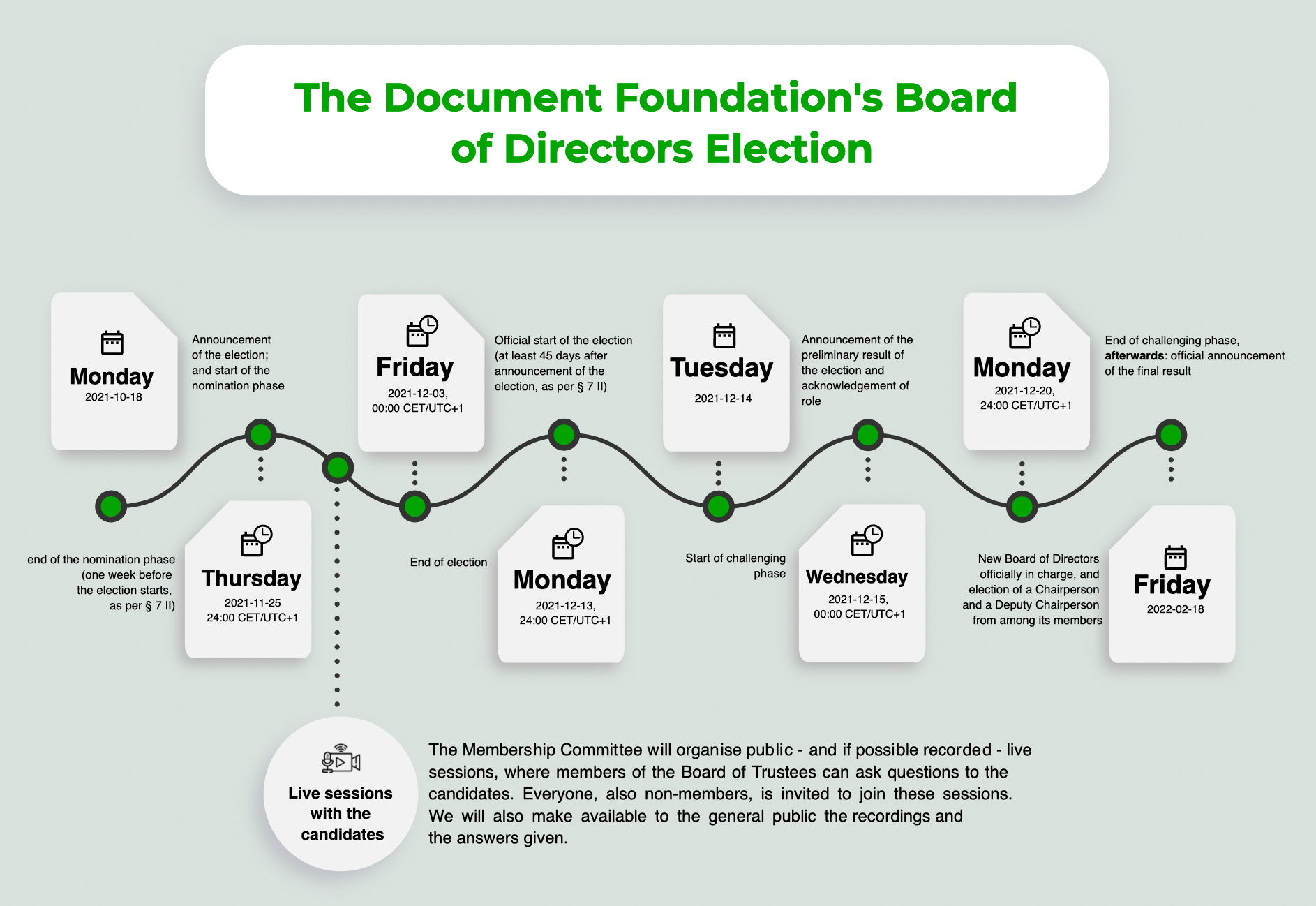
After the nomination phase, which ran until late November, the elections began, with 10 days for TDF Members to cast their votes. Between the end of the nomination phase, and before the official start of the election, the Membership Committee organised public (and recorded) live sessions, where members of the Board of Trustees could ask questions to the candidates. Everyone, including non-members, was invited to join these sessions. TDF then made available to the general public the recordings and the answers given.
In December, TDF’s Membership Committee announced the preliminary results, with the following confirmed as Full Members: Thorsten Behrens, Paolo Vecchi, Jan ‘Kendy’ Holešovský, Emiliano Vavassori, Caolán McNamara, Cor Nouws and László Németh. Deputies: Gábor Kelemen, Ayhan Yalçınsoy and Gabriel Masei.
TDF would like to say thank you to all past and new members of the Board for their service to the community, and to all candidates for running. Congratulations to the newly elected Board members and their deputies.
Advisory Board members and meetings
The Document Foundation relies on its Advisory Board Members in order to receive advice and support. The Advisory Board’s primary function is to represent The Document Foundation’s supporters and to provide the Board of Directors with advice, guidance and proposals. Current members are Adfinis SyGroup, allotropia software GmbH (joined in 2021), Red Hat, Hypra (joined in 2021), Collabora, GNOME, Google, Kopano b.v., City of Munich (Landeshaupstadt München), CIB Software, IHC Invest Inc., Software in the Public Interest (SPI), KDE e.V., UK Government Digital Services, and the Free Software Foundation Europe (FSFE).
Throughout the year, TDF had regular calls with representatives of the Advisory Board. Team and Board of Directors members at TDF provided updates on the foundation, software and community, and described plans and activities for the future. Advisory Board members were invited to provide valuable feedback on TDF’s work, and various ideas and proposals were discussed during the calls. TDF would like to express its thanks to all of the members for their help and support.
Highlights of activities
Throughout the year, TDF supported – and provided information about – various campaigns and events, via this blog and social media channels. For instance, on 14 February we joined the Free Software Foundation Europe’s campaign “I love Free Software”. This was the perfect opportunity to say thank you to the contributors of the various Free Software we love: developers, translators, designers, testers, or documentation writers, of huge software projects – or smaller ones.

Similarly, we backed International Women’s Day on March 8, raising awareness against bias and prejudices. Free Software projects tend to be heavily male-dominated, but our community is trying to be more open and inclusive.
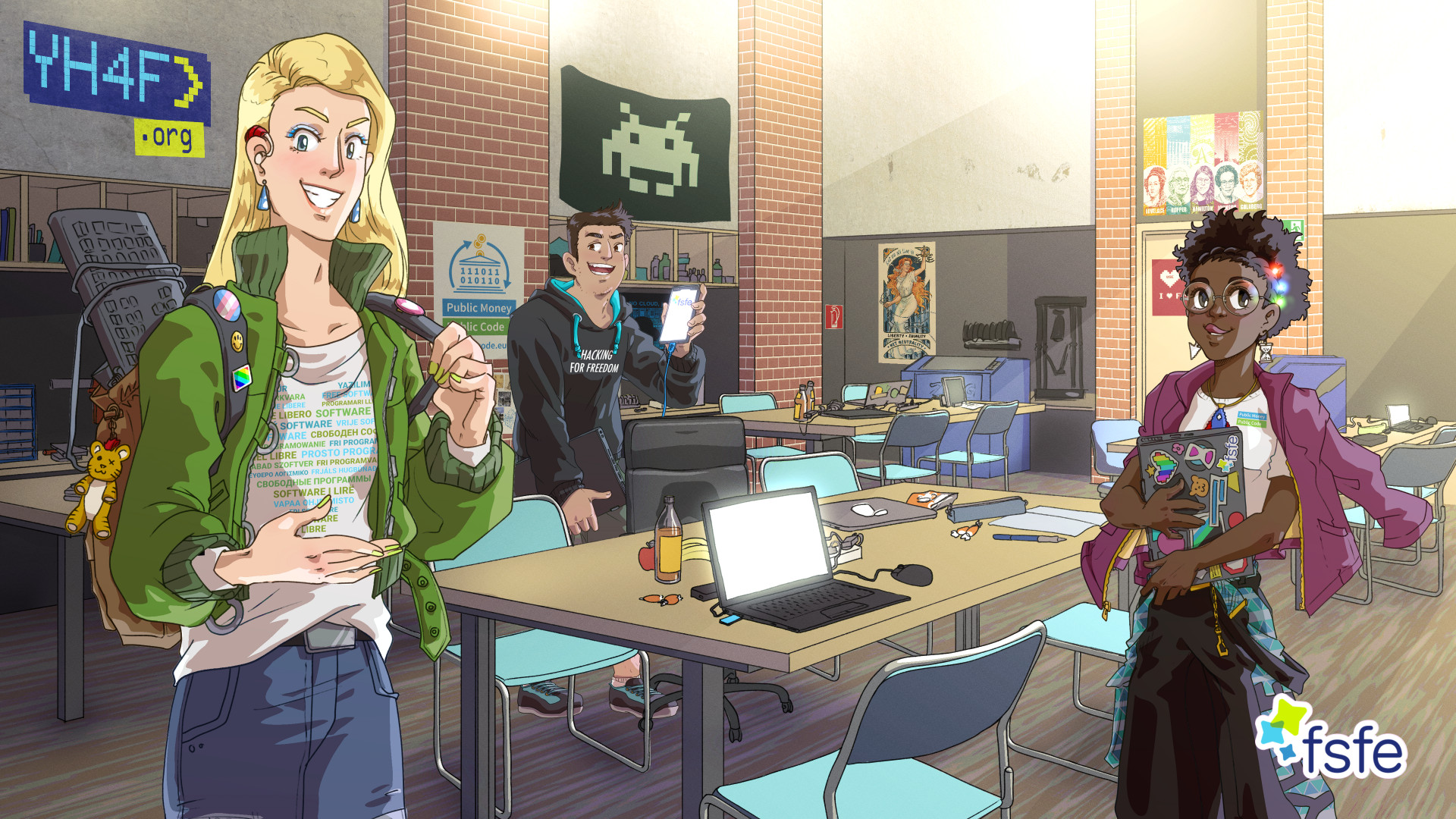
In October, we reported that the Free Software Foundation Europe was starting a new competition, “Youth Hacking 4 Freedom”. This was open for 14 – 18 year-olds who live in Europe, and who like to work on and “hack” (develop) free software projects. The competition helped like-minded people from around Europe to connect, win cash awards, and travel to Brussels to meet others in the free software movement.
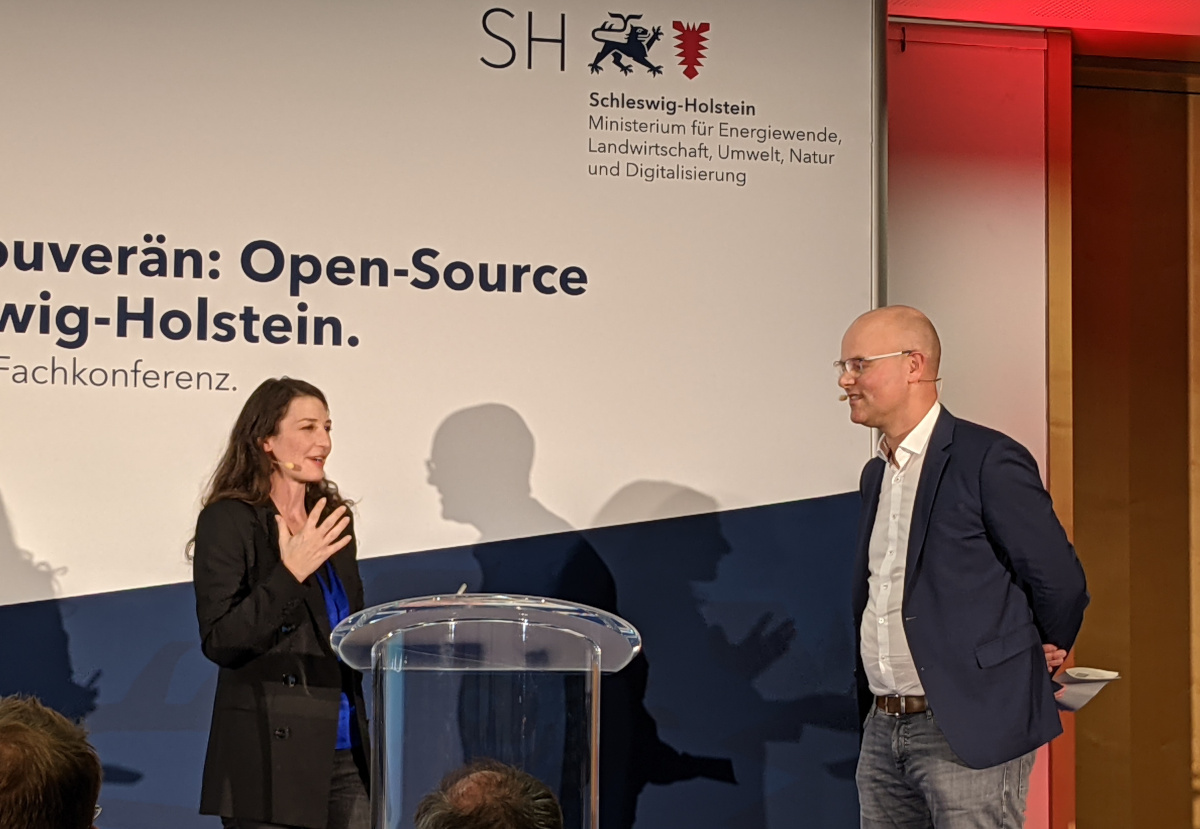
In November, TDF spread the word about a German state planning to switch 25,000 PCs to LibreOffice. The north-German state of Schleswig-Holstein had made public its plans to switch to open source software, including LibreOffice, in its administration and schools.
In doing so, the state plans to reduce its dependence on proprietary software, and eventually end it altogether. By the end of 2026, Microsoft Office is to be replaced by LibreOffice on all 25,000 computers used by civil servants and employees (including teachers), and the Windows operating system is to be replaced by GNU/Linux.
Lothar Becker and Thorsten Behrens from TDF were invited to a meeting with those responsible for the planned migration. The focus was on cloud solutions, integration with LibreOffice and other systems, and video conferencing tools. We at TDF are pleased that LibreOffice is being used in public institutions, and hope that more federal states, governments and other organisations around the world will join the migration.
Finally, throughout the year we celebrated our community of translators, which provide LibreOffice in over 110 different languages (with more hopefully becoming available in the future), more than any other software. This helps us to fulfil one of the most important objectives of The Document Foundation: “to support the preservation of mother tongues by encouraging all people to translate, document, support, and promote our office productivity tools in their native language”. Today, there are over four billion people in the world who can use LibreOffice in their native languages. We are very thankful to our hard-working community which makes all of this possible.