Community Member Monday: Roman Kuznetsov

Today we’re chatting with Roman Kuznetsov, a Russian contributor to LibreOffice who helps out in QA and other areas:

Your nickname in the LibreOffice project is “Kompilainenn” – where did that come from?

Oh, it’s simple: one day I was trying to compile the Linux kernel for my old and slow PC. And I came up with my current nickname: Kompilainenn 😀

So tell us a bit about yourself – where you’re from, where you live, how to find you on social media, and what do you do in your spare time!

I’m a member of The Document Foundation from Russia, and I live in Lipetsk – it’s an industrial metallurgical city. You can find me on Telegram as @Kompilainenn, and on IRC in the channel #libreoffice-ru. I have a blog about LibreOffice in Russian: the blog has strange address with the prefix “anti”, but in reality the blog isn’t against LibreOffice 😉

I work for a large agribusiness company, as the boss of the “build cost calculation and conclusion of contracts” department. In my spare time I read books, play with my children, play computer games or walk outdoors – and of course make LibreOffice better 😉

What are you working on in LibreOffice at the moment?

At the moment I’m doing some quality assurance (QA) work – filing bug reports, retesting and sorting many old bugs. It’s huge area of activity – and also, I’ve fixed a pair of user interface bugs. I have translated my Conditional Formatting Guide into English as well.

Is there anything else you’d like to work on in the future?

First, I would like to learn C++ and I want to try to improve the management of macros in LibreOffice.

Second, there is the LibreOffice Style Guide in Russian. But it has much information about Writer styles, and very little info about styles in all another modules of LibreOffice. I want to add more info about styles for all modules, and then translate the guide to English.

Third, I want increase the number of active members in the Russian community – to involve more Russian developers in LibreOffice development. It will take a lot of work!

How did you get involved with LibreOffice – and what was the experience like?

I used OpenOffice.org from 2008, and then LibreOffice when it came to life. In 2013, I knew about the Russian forum http://forumooo.ru and created an account there.

At the end of 2014, Lera Goncharuk (aka “tagezi”) invited me to help him with translating LibreOffice’s FAQ into Russian on our wiki. And I agreed. Since then, I translate all Release Notes for new versions of LibreOffice into Russian.

Other tasks I worked on were translating the Getting Started Guide and Draw Guide. Then I began to send bug reports and some enhancements. Also, I worked on translations of Math and Impress guides. In the last year I have tried fix simple UI bugs in the source code of LibreOffice – now I have over ten simple bug fixes aready!

I got valuable experience communicating with a worldwide community, along with some practice in English, working in Bugzilla and making good bug reports. Now that I know more about how LibreOffice’s user interface is created, I like to make new dialogues in Glade and create UI mockups in Pencil.

Finally, what do you see in the future for LibreOffice? What does it need most?

First, I fully agree with Khaled Hosny, who was interviewed recently. LibreOffice needs to have a more clear vision and development agenda.

Second, every month I see about 600 new bug report and only 150 bug fixes. Our project need more developers and needs to pay more attention to attracting programmers to the project.

Third, it need to have more marketing materials about LibreOffice in various world languages – things like stickers, posters, etc. People should know about alternative software in the office world.

But to finish: thanks to everyone in the LibreOffice community for their work!

And thanks to Roman for his time and contributions! Our project and community is always open to newcomers, in many areas: marketing, design, programming, documentation, QA and more. Learn new skills, meet new people and get involved today!

Coming up: The Month of LibreOffice, May 2019!

LibreOffice is made by hundreds of people around the world: volunteers working from home, certified developers who are part of our commercial ecosystem, and other supporters and users. Throughout the year, they add new features to the software, test them, and help us to make each release polished and reliable. We’re incredibly appreciative of their efforts!

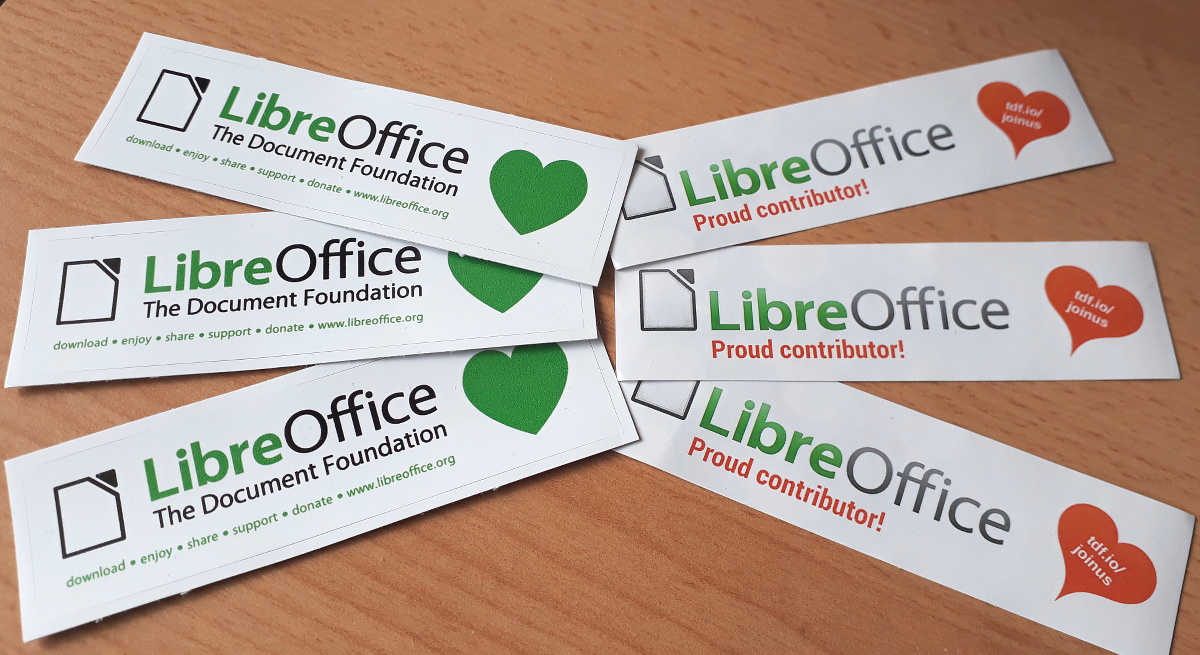
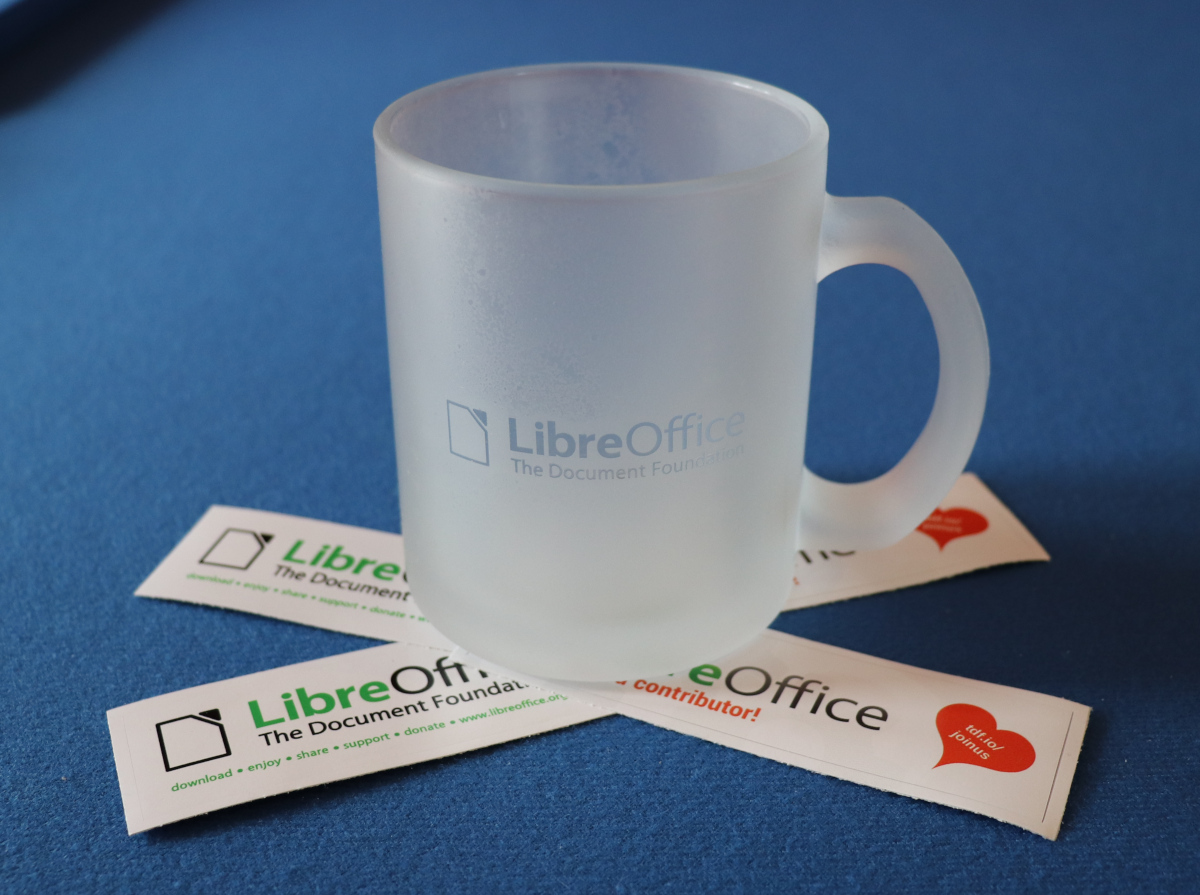
Now, if you’re a regular user of LibreOffice, you can give us a hand! In May 2019, we’re running a Month of LibreOffice – a campaign to credit all contributions to the software and community. Everyone who helps out can claim an awesome sticker pack, and this time round we have an extra bonus: 10 contributors will be chosen at random at the end, and will receive an exclusive LibreOffice glass mug:

While your help is important for the LibreOffice project, it’s also good for you as well! If you’re interested in a possible future career in software – such as programming, QA, user interface design, documentation, user support and other topics – then joining the Month of LibreOffice is great for you too:

  • Build up your skills
  • Get experience in a well-known software project
  • Make new contacts
  • Put it all on your CV!

So, what happens next? Well, on May 1st we’ll post full details on this blog about how you can get involved – so stay tuned! And follow us on Mastodon, Twitter, Facebook and Reddit for more updates. See you soon!

Next C++ workshop: Linked Lists / Stack Classes; PQs and Heaps, 25 April at 18:00 UTC

Boost your C++ skills with the help of LibreOffice developers! We’re running regular workshops which focus on a specific topic, and are accompanied by a real-time IRC meeting. For the next one, the topic is Linked Lists / Stack Classes; PQs and Heaps. Start by watching this presentation:

Please confirm that you want to play a YouTube video. By accepting, you will be accessing content from YouTube, a service provided by an external third party.

YouTube privacy policy

If you accept this notice, your choice will be saved and the page will refresh.

And check out the suggested EasyHacks.

Then join us for a discussion via our #libreoffice-dev IRC channel. You can ask experienced LibreOffice developers questions, and learn more about the language. See you then!

Next C++ workshop: Linked Lists, 11 April at 18:00 UTC

Another workshop is coming up! Improve your C++ skills with the help of LibreOffice developers: we’re running regular workshops which focus on a specific topic, and are accompanied by a real-time IRC meeting. For the next one, the topic is Linked Lists. Start by watching this presentation:

Please confirm that you want to play a YouTube video. By accepting, you will be accessing content from YouTube, a service provided by an external third party.

YouTube privacy policy

If you accept this notice, your choice will be saved and the page will refresh.

And check out the suggested EasyHacks.

Then join us for a discussion via our #libreoffice-dev IRC channel. You can ask experienced LibreOffice developers questions, and learn more about the language. See you then!

Community Member Monday: Biraj Karmakar

India has 23 official languages according to the country’s constitution, but over 750 other languages are spoken there as well. Today we talk to Biraj Karmakar, who helps to translate LibreOffice into Bengali, and is a passionate supporter of other free and open source software projects:

Where do you live, and can we follow you on social media or IRC?

I’m based in Kolkata, India, and I’m active on Twitter: @birajkarmakar. I always try to help people through social media. Other than that I am available on IRC (biraj) and Telegram (@birajkarmakar).

What do you do when you’re not working on LibreOffice?

Basically I am a professional linguist – I work from my own office. Also, I am a digital marketing consultant, helping small business to grow in online markets. Other than that I run many social entrepreneur activities like Digital Literacy for Kids and Women, and I am a pure hardcore open source supporter. I have been contributing to open source projects like Mozilla, DuckDuckGo, GNOME, SaifishOS, VLC etc from 7 years. There I generally do localisation (l10n) and community events, along with quality assurance (QA) activities.

What do you do in the LibreOffice project? What are you working on?

Basically I am the bn-IN (Bengali) locale leader in the LibreOffice project, trying to complete the pending translation. Also I have done some translation for two marketing videos. I am planning to organize one translation workshop for bn-IN language very soon. Then there’s one QA event in my list.

How did you get involved? Was it a good experience?

Actually, I knew about LibrepOffice when I started using Linux. It looked good to me because we got it free for our office-related work. As I am an open source fan, I thought: why not get involved in this project? Then a few community members introduced me to the LibreOffice community!

What does LibreOffice need most right now?

I think the LibreOffice community is growing – But we don’t have much exposure in India. It would be great if we could arrange meet-ups in India where we recruit new community members, especially in colleges and university campuses, who can help us to promote the software in India.

Thanks to Biraj for his time and contributions! Learn more about localising LibreOffice here – and, of course, there are many other ways to get involved as well!

LibreOffice at the Chemnitzer Linux-Tage 2019

Free software projects, such as LibreOffice and GNU/Linux, are developed by communities spread across the world. Most of the work takes place online, but there are many events for developers and supporters to meet face-to-face. One such event is the Chemnitzer Linux-Tage (Chemnitz Linux Days), in Saxony, which took place this year on 16 and 17 March. And the LibreOffice community was there!

Stefan Unverricht, Thorsten Behrens and Mike Saunders had a stand with LibreOffice flyers, stickers, books and other merchandse – along with a PC to demonstrate the latest version of the suite. Of course, most Linux users are well aware of LibreOffice, but there were still various questions on these topics:

In addition, Stefan, Thorsten, Mike and Katarina Behrens gave talks about LibreOffice, The Document Foundation, and EGroupware integration with LibreOffice Online. Most of the talks were in German, and you can find them – along with audio recordings – here. From the other talks, we learnt about schools in Chemnitz that use LibreOffice, along with small organisations and churches.

Thorsten summarised the event: “It was very nice, with excellent talks, and a good spirit like the Paris Open Source Summit. The venue was lovely, while the talks were well attended. We should definitely go again next year!”

The Document Foundation All Rights Reserved 2025
Proudly powered by WordPress | Theme: Refined Magazine Pro by Candid Themes.