LibreOffice 7.3.3 Community available for download

LibreOffice is now available for download also on SourceForge

Berlin, May 4, 2022 – LibreOffice 7.3.3 Community, the third minor release of the LibreOffice 7.3 family, targeted at technology enthusiasts and power users, is available for download from https://www.libreoffice.org/download/. In addition to the LibreOffice website, starting from tomorrow it will be possible to download LibreOffice from SourceForge: https://sourceforge.net/projects/libreoffice/files/libreoffice/stable/.

Logan Abbott, SourceForge’s President and COO, says: “We’re happy to add to our open source download library an amazing open source office suite such as LibreOffice, which is without a doubt one of the best office suites ever and one which I personally use often. I highly recommend it to anyone that needs a powerful FOSS office suite.”

The LibreOffice 7.3 family offers the highest level of compatibility in the office suite market segment, starting with native support for the OpenDocument Format (ODF) – beating proprietary formats in the areas of security and robustness – to superior support for DOCX, XLSX and PPTX files.

Microsoft files are still based on the proprietary format deprecated by ISO in 2008, which is artificially complex, and not on the ISO approved standard. This lack of respect for the ISO standard format may create issues to LibreOffice, and is a huge obstacle for transparent interoperability.

LibreOffice for enterprise deployments

For enterprise-class deployments, TDF strongly recommends the LibreOffice Enterprise family of applications from ecosystem partners, with long-term support options, professional assistance, custom features and Service Level Agreements: https://www.libreoffice.org/download/libreoffice-in-business/.

LibreOffice Community and the LibreOffice Enterprise family of products are based on the LibreOffice Technology platform, the result of years of development efforts with the objective of providing a state of the art office suite not only for the desktop but also for mobile and the cloud.

Products based on LibreOffice Technology are available for major desktop operating systems (Windows, macOS, Linux and Chrome OS), mobile platforms (Android and iOS) and the cloud. They may have a different name, according to each company brand strategy, but they share the same LibreOffice unique advantages, robustness and flexibility.

Availability of LibreOffice 7.3.3 Community

LibreOffice 7.3.3 Community represents the bleeding edge in term of features for open source office suites. For users whose main objective is personal productivity and therefore prefer a release that has undergone more testing and bug fixing over the new features, The Document Foundation provides LibreOffice 7.2.6 and soon LibreOffice 7.2.7.

LibreOffice 7.3.3 change log pages are available on TDF’s wiki: https://wiki.documentfoundation.org/Releases/7.3.3/RC1 (changed in RC1) and https://wiki.documentfoundation.org/Releases/7.3.3/RC2 (changed in RC2). Over 80 bugs and regressions have been solved.

LibreOffice Technology based products for Android and iOS are listed here: https://www.libreoffice.org/download/android-and-ios/, while for App Stores and ChromeOS are listed here: https://www.libreoffice.org/download/libreoffice-from-microsoft-and-mac-app-stores/

LibreOffice individual users are assisted by a global community of volunteers: https://www.libreoffice.org/get-help/community-support/. On the website and the wiki there are guides, manuals, tutorials and HowTos. Donations help the project to make all of these resources available.

LibreOffice users are invited to join the community at https://ask.libreoffice.org, where they can get and provide user-to-user support. People willing to contribute their time and professional skills to the project can visit the dedicated website at https://whatcanidoforlibreoffice.org.

LibreOffice users, free software advocates and community members can provide financial support to The Document Foundation with a donation via PayPal, credit card or other tools at https://www.libreoffice.org/donate.

LibreOffice 7.3.3 is built with document conversion libraries from the Document Liberation Project: https://www.documentliberation.org.
LibreOffice project and community recap: April 2022

Here’s our summary of updates, events and activities in the LibreOffice project in the last four weeks – click the links to learn more…

  • How do different free and open source software projects do mentorship, and how can we all learn from each other? Daniel Garcia Moreno (EndlessOS Foundation and GNOME), Emily Gonyer (openSUSE), Ilmari Lauhakangas (The Document Foundation), and Marie Nordin (Fedora) discuss this in a panel moderated by Ben Cotton:

Please confirm that you want to play a YouTube video. By accepting, you will be accessing content from YouTube, a service provided by an external third party.

YouTube privacy policy

If you accept this notice, your choice will be saved and the page will refresh.

Keep in touch – follow us on Twitter, Facebook and Mastodon. Like what we do? Support our community with a donation – or join us and help to make LibreOffice even better!

The Month of LibreOffice, May 2022 starts today – Join in and get snazzy merch!

Boost your skillset and learn new things – join the Month of LibreOffice! The software is a worldwide, community open source project – and many people who help to improve it, actually started out as regular users of the software.

So in the coming four weeks, we’d love it if you get involved, join our community, and have fun. You can build up valuable skills for a future career – and you don’t need to be a programmer. There are many ways to help make LibreOffice awesome, as we’ll see in a moment.

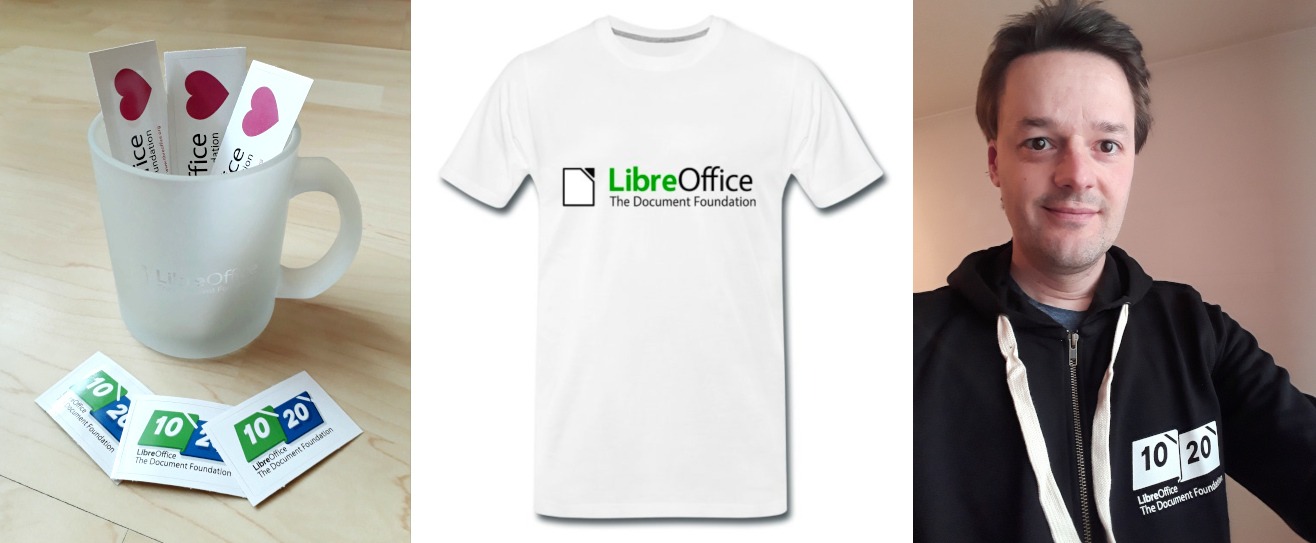
And best of all: everyone who contributes to LibreOffice in the next four weeks can claim a cool sticker pack, and has the chance to win extra LibreOffice merchandise such as mugs, hoodies, T-shirts, rucksacks and more (we’ll choose 10 participants at random at the end):

How to take part

So, let’s get started! There are many ways you can help out – and as mentioned, you don’t need to be a developer. For instance, you can be a…

  • Handy Helper, answering questions from users on Ask LibreOffice. We’re keeping an eye on that site so if you give someone useful advice, you can claim your shiny stickers.
  • First Responder, helping to confirm new bug reports: go to our Bugzilla page and look for new bugs. If you can recreate one, add a comment like “CONFIRMED on Windows 10 and LibreOffice 7.3.2”.
  • Drum Beater, spreading the word: tell everyone about LibreOffice on Twitter or Mastodon! Just say why you love it or what you’re using it for, add the #libreoffice hashtag, and at the end of the month you can claim your stickers.
  • Globetrotter, translating the user interface: LibreOffice is available in a wide range of languages, but its interface translations need to be kept up-to-date. Or maybe you want to translate the suite to a whole new language? Get involved here.
  • Docs Doctor, writing documentation: Whether you want to update the online help or add chapters to the handbooks, here’s where to start.

We’ll be updating this page every few days with usernames across our various services, as people contribute. So dive in, get involved and help make LibreOffice better for millions of people around the world – and enjoy your sticker pack at the end as thanks from us! And who knows, maybe you’ll be lucky enough to win bonus merch as well…

Let’s go! We’ll be posting regular updates on this blog and our Mastodon and Twitter accounts over the next four weeks – stay tuned!

Annual Report: LibreOffice Documentation Project in 2021

The LibreOffice Conference is the annual gathering of the community, our end-users, developers, and everyone interested in free office software. This year, it took place online once again.

(This is part of The Document Foundation’s Annual Report for 2021 – we’ll post the full version here soon.)

New and translated guides

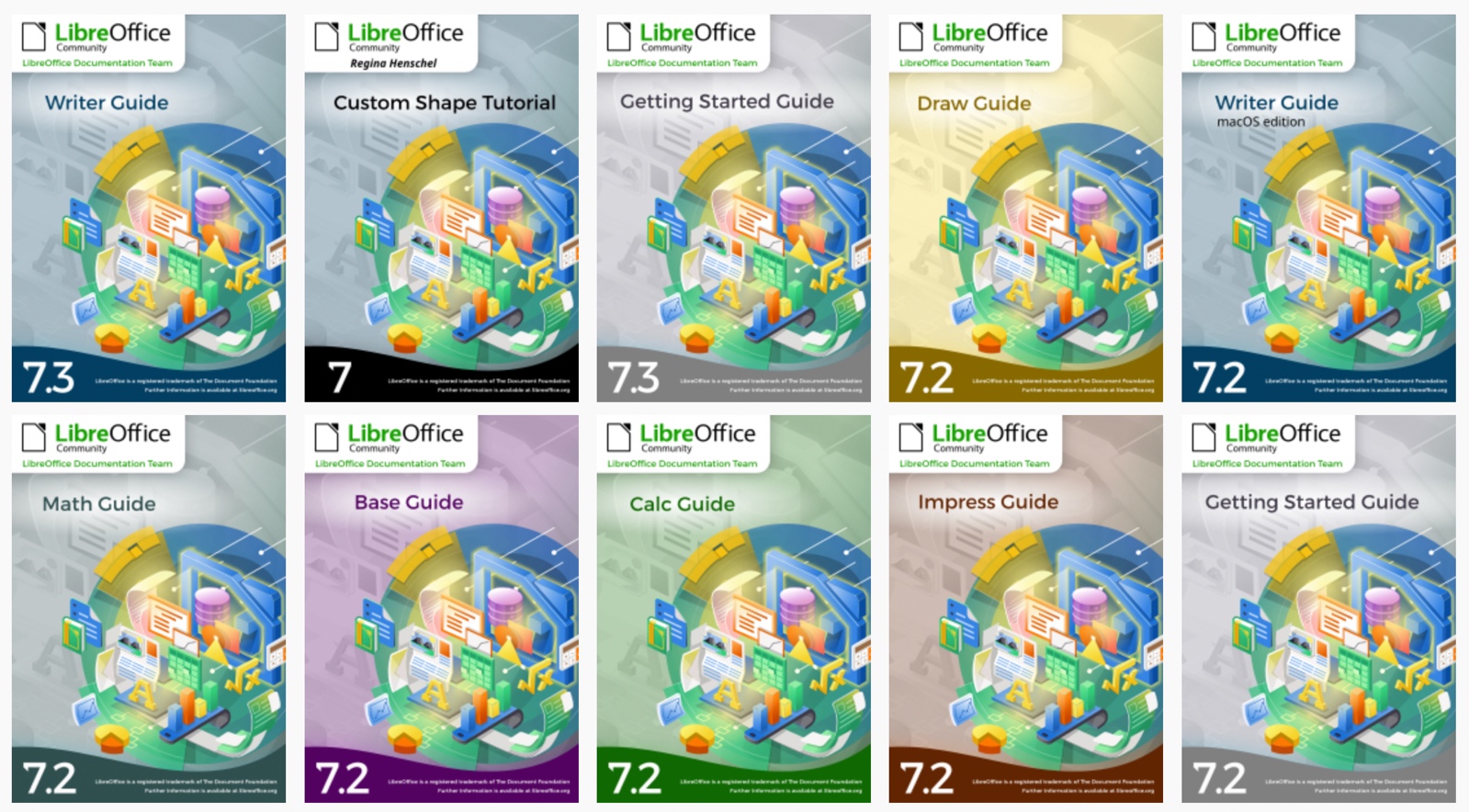
Throughout the year, the documentation project closed the gap between LibreOffice major releases, and the updates of the corresponding user guides. By the year end, all of the version 7 guides updated to match the release of LibreOffice 7.2, and ready to continue for the forthcoming release – 7.3 – which arrived in February 2022. The goal of tracking the software release closely was achieved, and the documentation team is now in a steady state of small updates between releases.

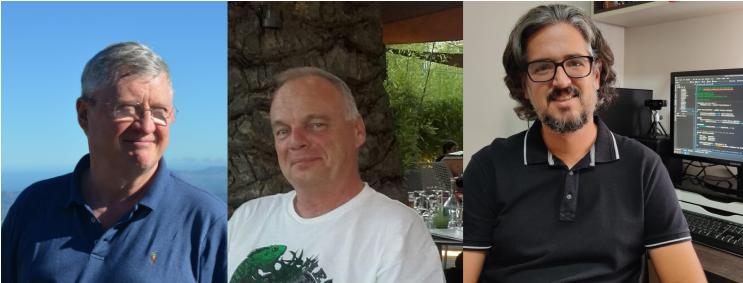
The updates and enhancements of the guides was an effort of all the team, coordinated by Jean Weber (Writer and Getting Started Guide), Steve Fanning (Calc and Base guides), Peter Schofield (Impress and Draw guides), Rafael Lima (Math guide). A number of volunteers also worked in each guide by writing and reviewing contents and suggesting improvements. Special thanks to Jean Weber for making the guides available for sale in printed format via Lulu Inc.

In the last quarter of 2021, thanks to The Document Foundation’s budget, some master documents bugs were fixed under contract by Michael Stahl of allotropia, and now the documentation team can safely assemble it guides with master documents, and produce PDFs with hidden sections and correct navigation indexes in PDF readers.

ScriptForge Library and Wiki Pages

The documentation community also had a nice contribution from Jean Pierre Ledure, Alain Romedenne and Rafael Lima, for the development of the ScriptForge macro library, in synchronization with the much-needed Help pages on the subject, a practice rarely followed by junior developers of LibreOffice. As we know, undocumented software is software that’s lacking; features that are unknown to the user can be a cause of costly calls to a help desk in corporate deployments. ScriptForge developments came together with its documentation, demonstrating the ScriptForge team’s professional maturity.

Special thanks to Steve Fanning for his leadership of the Calc Functions wiki pages maintenance. The wiki pages were initially developed by Ronnie Gandhi in 2020 under the Google Season of Docs programme, and are now run by Steve, providing richer content about the functions, with better descriptions, new examples, and other reference information. The in-depth review of the Calc Function wiki pages gave very good feedback for the Help pages, which also lead to help content improvements. The Calc functions wiki pages are available for translation, thanks to the dedication of Ilmari Lauhakangas at TDF.

Very important as well: the documentation community also had a team of Help page bug fixes, closing Help documentation bugs, bridging gaps, fixing typos and improving quality, a must-have update to keep LibreOffice in-shape for its user base. The Help pages, which are part of the LibreOffice code, were also refactored continuously for better maintenance and code readability. The L10N team of volunteers (localization and translators) were quick in flagging typos and English mistakes – while translating the help content and the user interface.

LibreOffice Bookshelf

In 2021, the documentation community also launched the LibreOffice Bookshelf, another download page for LibreOffice guides that is different from the current documentation.libreoffice.org server page. The Bookshelf can be cloned and installed in organizations, libraries, colleges and schools, for immediate availability in controlled environments, as well as online reading of the guides. The OpenDocument Format chapters were transformed into static HTML pages, and are ready to display on computers, tablets and cell phones, bringing LibreOffice user guides closer to its public, anywhere, anytime. The conversion process is extensive and was described at the LibreOffice 2021 Conference. It was also extended to the Portuguese translation of the guides, and can easily extended for other languages. Many thanks to Tulio Macedo for his work on it.

Like what we do? Support the LibreOffice project and The Document Foundation – get involved and help our volunteers, or consider making a donation. Thank you!

Latin-American LibreOffice Conference 2022 will take place in Brasília

The 2022 edition of the Latin-American LibreOffice Conference will take place in Brasilia, Brazil between August 25 and 26. The event will be held at the Catholic University of Brasília, in the Taquaritinga – DF.

The conference aims to bring together the community of LibreOffice contributors and users and promote the dissemination of knowledge and experiences related to LibreOffice. The planned tracks for talks and lectures will cover the following topics:

  • Cases of LibreOffice adoption in companies, governments, educational institutions, NGOs, etc.
  • LibreOffice usage tutorials
  • Getting started with contributing to LibreOffice (development, documentation, translations, etc)
  • Improving and promoting LibreOffice (user communities, marketing, design, quality)
  • Inclusion and diversity in free software and LibreOffice

The event will be organized by the Brazilian LibreOffice community, with the joint participation of other communities in Latin America and the world. Representatives from The Document Foundation – LibreOffice maintainer – will also participate in the event.

The submissions of talks and lecture proposals will be open from May 1 to June 30, 2022. The procedures for submitting proposals will be announced shortly.

Supporters

About the Catholic University of Brasília

The Catholic Educational Center of Brasília is an institution maintained by the Brazilian Union of Catholic Education – UBEC. It is a civil, confessional, private, non-profit, educational, assistance, cultural and philanthropic association.

About The Document Foundation

The Document Foundation is the legal entity that maintains LibreOffice, based in Berlin, Germany. The Document foundation is a non-profit foundation under German law (gemeinnützige rechtsfähige Stiftung des bürgerlichen Rechts).

Open Letter for the Right to Install any Software on any Device

To: Legislators in the European Union

In copy: Citizens of the European Union

The universal right to freely choose operating systems, software and services

Software design is crucial for the ecodesign and sustainability of products and hardware. Free Software systems and services enable reuse, repurposing and interoperability of devices. The universal right to freely choose operating systems, software and services is crucial for a more sustainable digital society.

The ongoing digitization of infrastructures and services comes along with a continuously growing number of electronic devices that are connected to the Internet – be it in private, public or business environments. Many of these devices need more energy and natural resources to be produced than the energy they consume during their entire lifespan. And way too many of these devices are being wasted and not reparable simply because the software stops working or is not being updated anymore.

Once the pre-installed software stops users from continuing to use their hardware, restrictive ownership models prevent users from helping themselves to enjoy longer use of their devices. Restrictions span from physically locking down hardware, to technical obscurity by using proprietary software, to legal restrictions via software licenses and end user license agreements. This way, manufacturers often prohibit repairability, access and reuse of their devices. Even after purchase, customers often do not really own their devices. They are not able to do what they want with their very own devices. If you cannot install the software you want on your own device – you don’t own it.

We, the signees of this open letter,

  • recognize that free access to the hardware and software determines how long or how often a device can be used or reused.
  • declare the increased longevity and reusability of our devices to be inevitable for a more sustainable digital society.

That is why we ask legislators around Europe to make use of the historic chance and enable a more sustainable use of electronic products and devices with a universal right to install and run any software on any device. To this end, we demand that:

Users have the right to freely choose operating systems and software running on their devices

Our tablets, phones and other connected devices are general purpose computers. Replacing software and operating systems on these devices enables us to extend the initial lifespan of a device and to make full use of our hardware. For the ability to reuse and repurpose our resources in a creative and sustainable way we need the universal right to install and develop any operating system and software we want on any of our devices. Any legal, technical or other obstacles to reuse these devices for any purpose must not be allowed.

Users have the right to freely choose between service providers to connect their devices wit

Users must have the free choice of providers offering software related services, meaning they can use the device from one manufacturer with the service provided by another. Many connected clients today go to waste simply because their online services go offline. Free choice of services allows these clients to be reused by connecting to another service.

Operating systems and embedded software determine possible interactions between generic sensors, modules and systems with their connected online services. For users to exercise free choice of services, they must be able to use the device from one manufacturer with any online service, which could be supplied by any other third party or by themselves. Connected services as well as the software on connected devices and applications must offer interoperability and full functionality of a device’s initial purpose with the use of Open Standards.

Devices are interoperable and compatible with open standards

Software designs and architectures determine accessibility and compatibility of hardware via standards, drivers, tools, and interfaces. Proprietary software and protocols hinder competition among manufacturers, undermine repairability of devices and create an artificial incompatibility of different devices within the same infrastructure. Interoperability of single devices however is crucial for the creation of sufficient, sustainable and long-lasting IT infrastructures. To enable interoperability, manufacturers must ensure that any data necessary to run a device’s primary function is compatible with and possible to import/export in open standards.

Source code of drivers, tools, and interfaces are published under a free license

Smaller components of a device often require specific drivers, tools, and interfaces to operate. Users need full access and free reusability of the source code of those drivers, tools, and interfaces to analyse and integrate a device within a set of interconnected devices from different manufacturers. Source code reusability is also key to exercise the full right to repair for any third-parties from professional repair shops to repair cafés to end users.

A free license is any license that gives everyone the four freedoms to use, study, share and improve the software, including Free Software and Open Source Software licenses. The obligation to publish drivers, tools, and interfaces under such a free license after market entry is key for full access to our devices and exercising the universal right to repair.

EU Ecodesign: 38 organisations demand the right to access and to reuse hardware

Open Letter on Free Software Foundation Europe (FSFE) Website