Impress Sprint Dresden Retrospective

The weekend before Easter, a number of hackers congregated in the beautiful city of Dresden, Germany for the first Impress Sprint. Hosted by Dresden Technical University’s Institute for Applied Photophysics, and run by TDF volunteers, the event was rooted in the desire to improve Impress for power users, and getting a number of those tiny, but annoying little paper cuts and needless extra hoops to jump through eliminated.

TDF Hackfests and Sprints are taking place all over the world, organised and run by local volunteers, are excellent opportunities to taste the spirit of the LibreOffice community, and get you bootstrapped in a weekend to fix your first bug or two. As such, we are firm believers in the help-to-help-yourself paradigm. And it is fun, too!

Image

The rather long list of tackled bugs is here – thanks to all participants for making this a success!

If you want to join us the next time, following are the upcoming opportunities:

The Document Foundation announces LibreOffice 4.0.2

Berlin, April 4, 2013 – The Document Foundation (TDF) announces LibreOffice 4.0.2, for Windows, Mac OS X and Linux, the third release of the LibreOffice 4.0 family that fixes several small bugs and glitches.

This is another important milestone in the process of improving the quality and stability of the bleeding edge version of LibreOffice, and facilitating the migration process to free software. The Document Foundation has recently published a white paper to provide a reference roadmap for migrations to LibreOffice, which is available here: http://tinyurl.com/mwp-v1.

To foster the development of LibreOffice, The Document Foundation needs your support! There is a dedicated donation page at http://donate.libreoffice.org that lists various options to contribute to the budget of the charitable entity.

LibreOffice 4.0.2 is available for immediate download from the following link: http://www.libreoffice.org/download/. Extensions for LibreOffice are available from the following link: http://extensions.libreoffice.org.

The change log is available at https://wiki.documentfoundation.org/Releases/4.0.2/RC1 (fixed in 4.0.2.1) and https://wiki.documentfoundation.org/Releases/4.0.2/RC2 (fixed in 4.0.2.2).

TDF releases White Paper to help migrations to LibreOffice

Berlin, March 27, 2013 – The Document Foundation releases a white paper to help organizations migrate to LibreOffice. Published on Document Freedom Day, the text explains how governments and enterprises can leverage Free Software to lower their IT expenditures and get rid of proprietary software lock-in.

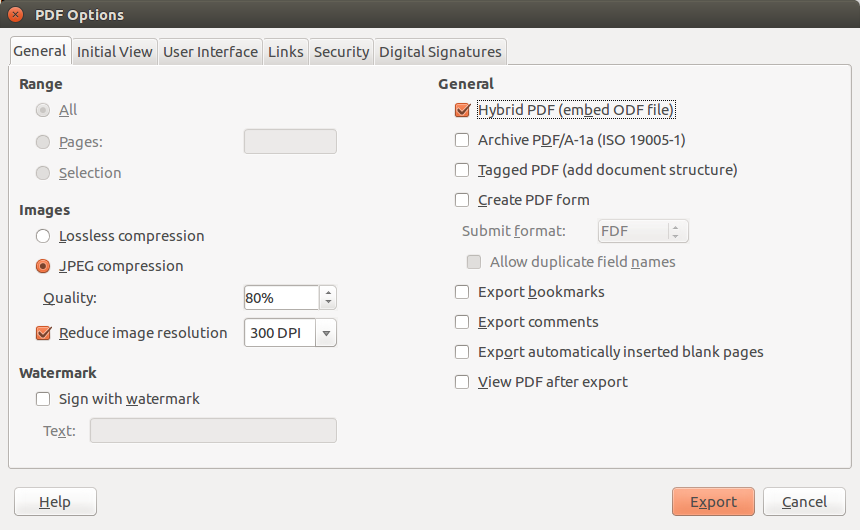
The white paper can be accessed from here: LibreOffice Migration White Paper (of course, it is a Hybrid PDF document, which can be edited with LibreOffice).

According to the white paper, migrations to Free Software – and especially to LibreOffice – should follow a carefully crafted change management process, which needs to handle not only the technical aspects, which are actually the easiest ones to cope with, but also the barriers met when breaking long-term working habits.

LibreOffice liberates the users from proprietary document formats by adopting natively ODF (Open Document Format), which is the standard document format recognized by the largest number of organizations and supported by the largest number of desktop software (including Microsoft Office).

In addition, LibreOffice offers the largest set of import filters for proprietary document formats (including Microsoft Office, Publisher, Visio and Works, plus Corel Draw, Lotus 1-2-3 and WordPro, Quattro Pro and WordPerfect), and thus protects user investments in legacy applications, while providing a migration path to ODF.

Last but not least, LibreOffice templates are using only free fonts available on every OS which can be installed independently from any software package and thus foster interoperability between GNU/Linux, Mac OS and Windows users as documents maintain their original layout on every platform.

LibreOffice is immediately available for download from the following link: http://www.libreoffice.org/download/. Extensions for LibreOffice are available from the following link: http://extensions.libreoffice.org/extension-center.

LibreOffice users, free software advocates and community members can support The Document Foundation with a donation at http://donate.libreoffice.org. Money collected will be used to maintain the infrastructure, and support events and marketing activities to increase the awareness of the project, both at a global and local level.

Update: click here for the latest protocol documents

Impress Remote for Android: video and how-to instructions

Impress Remote for Android is one of the coolest features introduced by LibreOffice 4.0. With version 4.0.1, it is compatible with every platform – Linux, MacOS and Windows – and works like a charm.

In order to install and operate the Impress Remote you must first download it from Google Play on your Android smartphone, and then follow a simple procedure, which is described in this wiki page and also in this video:

[youtube http://www.youtube.com/watch?v=hM5H4fUxq4M&w=640&h=360]

If you like the Impress Remote for Android, please remember that The Document Foundation is a not for profit entity which lives thanks to the work of many volunteers, but also thanks to donations, which support infrastructure, marketing and community development.

The Document Foundation announces LibreOffice 4.0.1

Impress Remote for Android now available on every platform

Berlin, March 6, 2013 – The Document Foundation (TDF) announces LibreOffice 4.0.1, for Windows, MacOS and Linux, the first release after the successful launch of LibreOffice 4.0 in early February, which has yielded rates of entirely new client IP addresses requesting updates each day over the 100,000 mark (they were just 25,000 one year ago).

LibreOffice Impress Remote is now available for all platforms – Linux, MacOS and Windows – from Google Play. How to instructions are available on the wiki.

The new release is a step forward in the process of improving the overall quality and stability of LibreOffice 4.0. For enterprise adoptions, though, The Document Foundation suggests the more solid and stable LibreOffice 3.6.5, backed by certified level 3 support engineers.

The Documentation team has also released the guide “Getting Started with LibreOffice 4.0”, which is available in PDF and ODF formats from the website and as a printed book from Lulu.

LibreOffice users, free software advocates and community members can support The Document Foundation – infrastructure, marketing, community development – with a donation. There is a donation page with many options including PayPal and credit cards.

LibreOffice 4.0.1 is available for immediate download from the website. Extensions for LibreOffice are available from the extension repository.

The change logs are available from the wiki: changes in RC1 (4.0.1.1) and changes in RC2 (4.0.1.2).

Interview of Naruhiko Ogasawara, a localizer from Japan

LibreOffice can only exist since people are working on it: so please, tell us a bit about yourself.402282_464389833584422_1344809811_n

I’m a member of LibreOffice Japanese Team; working in the backyard of Japanese community. Driving translation, reporting bugs instead of people who can’t use English and attending FLOSS events in Japan.

In the team, my main task is translation of LibreOffice UI, and sometimes Wiki pages, and I’m one of the administrator of Pootle Japanese group. And now I have lots of interest about outreaching (I’ll talk about it later). It might be a special, I’m a “printer” guy. I have strong interest about the future of printing; not only print something from desktop application (e.g. LibreOffice), but also using mobile device, from cloud service, etc. In the future I want to get involved about printing related enhancement of LibreOffice.

In what other software projects have you been involved?

Ubuntu and GNOME (mostly translation), and OpenPrinting; standardize group of unix-like printing environments.

Where do you live (and/or study)?

Very east side of Tokyo (Katsushika-ku).

What do you do when you’re not working on LibreOffice?

My work is technical investigation of current FLOSS technologies, e.g, NoSQLs, Private IaaS Platforms, something something… includes LibreOffice also.

In private, reading books, sitting in front of my laptop and many many tweeting, or sometimes reading blogs or news. And just now I’ve started Yoga. It’s pretty good.

I love running rivers with a kayak. Most of 60 rivers I’ve visited, includes US and New Zealand. Paddling is wonderful 🙂

When do you usually spend time on the project?

About translation or Facebook pages administration, mostly off time of weekdays. Our LibreOffice meetup (read below) also are in weekday night. I guess almost 10 hours per week.

How did you hear about LibreOffice?

Because a friend of mine is the key person of Japanese LibreOffice (and former OpenOffice.org) community.

Why did you get involved? Is LibreOffice popular in your native-language?

Because my friend mentioned above need my help. At that time I had surprised how people in the community is active, full of love for LibreOffice itself, “wow it’s really nice community” I thought. That’s why I still spend a time for the community.

In Japan, LibreOffice is getting big I feel, but still “OpenOffice” as a brand is bigger than LibreOffice. If someone want to find fee-free office productive suite, he might google “openoffice.”

What was your initial experience of contributing to LibreOffice like?

Checking most of all printing-related UI translations and correcting because my special is printing.

What have you done since then?

About translation, I have expanded my area from printing-related to any other UI, and not only UI, but also some Wiki pages or else.

Now my most important work is to drive our own (LibreOffice-titled) event in Japan, and share them to global.

First, I’ve started monthly LibreOffice meeting “Kanto LibreOffice Study Group” (Kanto means around Tokyo area). This meeting might deal with widely theme from using how-to to introduction to development.

Then I administrate two Facebook pages: one https://www.facebook.com/LibreOfficeJa is for all of Japanese LibreOffice related people to discuss about LibreOffice in Japanese, and another https://www.facebook.com/LibreofficeStudyJapan is for LibreOffice meeting owners in Japan to exchange knowledge how to host meetings or anything else.

And I feel it’s important that we, Japanese community should let global people know how we’re active and share success stories and problems.

What would be your best suggestion or advice for anyone interested in getting involved in the localization of LibreOffice?

Don’t worry about English. If you can’t understand some translated string, the translation might be wrong. Please teach us. It’s first step to join us. No English is needed. We always need proofreading.

And LibreOffice community is very active, full of love, lots of nice people and easy to join.

What is your vision for the future and/or what would you most like to see improved in LibreOffice?

My currently interest is how to reach non-FLOSS, non-geek people in Japan to tell how LibreOffice is good for them. Most of them only know MS Office, few of them know also OpenOffice but not know LibreOffice. We need to reach them and get feedback what they want, and tell them to the global.

Of course migration in large companies and local governments from MS Office to LibreOffice is big issue, so we need supporting companies in our ecosystems in Japan. But this issue is out of focus for me as a community guy…

Anyway, my another point is writing codes. Because it is easiest way to put Japanese local requirements, but in Japan very few people have done that. So I want to became a developer and I also grow some young developers of LibreOffice.

Thanks a lot for your answers and time!

Interview by Charles-H. Schulz.