Month of LibreOffice: Stickers in action!

Back in May we had a Month of LibreOffice, celebrating contributions all across the project, from code and documentation through to translations and bug reports. 304 members of our worldwide community won stickers, and we’ve received some photos of them in action – so here they are!

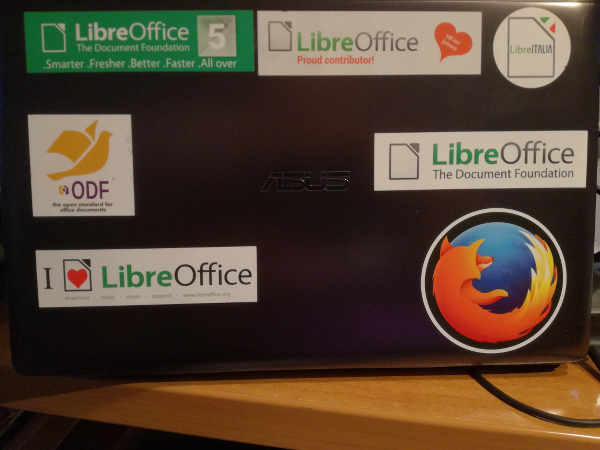
The first is from Gabriele Ponzo, who is in The Document Foundation’s Membership Committee and already has plenty of LibreOffice stickers:

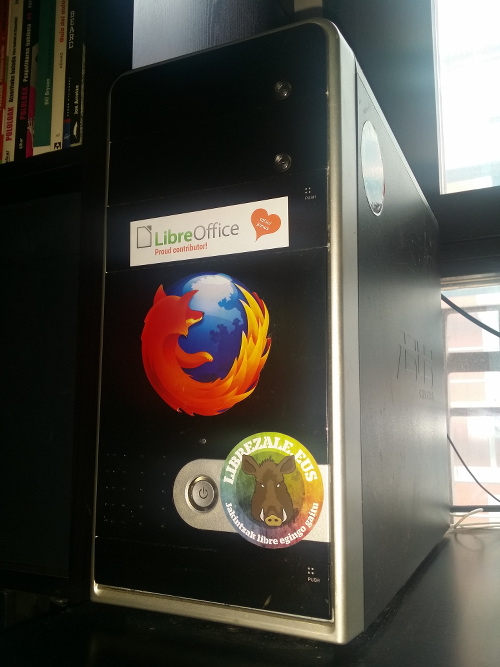
Next up is Osoitz E who helps to translate and localise LibreOffice into Basque:

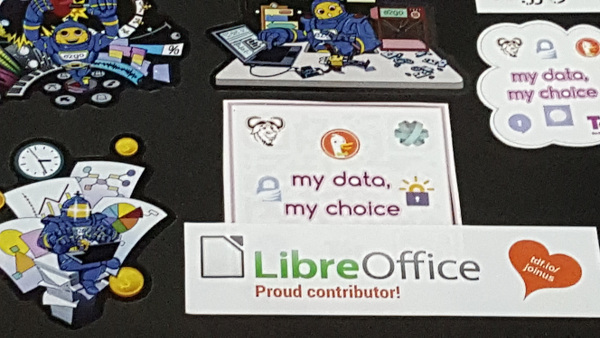
Franklin Weng promotes LibreOffice and the Open Document Format in Taiwan, and sent us this photo:

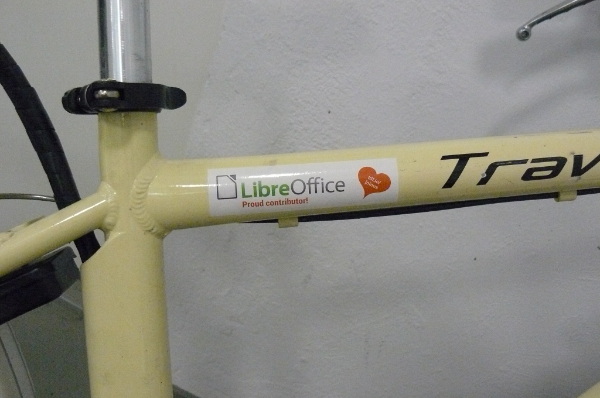
Finally, Buovjaga from our QA community has a novel use for his sticker:

We’ll be repeating the Month of LibreOffice in November, so you’ll have another chance to grab a sticker – but you can get involved with our friendly community at any time. Join us and help make LibreOffice even better for millions of people around the world!

LibreOffice Conference 2017 in Rome – register now!

This year’s LibreOffice Conference will take place from 11 – 13 October in Rome, Italy. It’s a great opportunity for LibreOffice developers, users, supporters, translators and other members of the community to meet up, share ideas and make plans for future versions of the software.

And you can join us! On our conference website you’ll find a registration form, along with useful practical information. We’re still working on the website and conference programme, so stay tuned to the site for more information.

Also: if you’re attending and want to give a talk or presentation about what you’re doing with LibreOffice, check out the Call for Papers. There are many different topics and “tracks” in the programme, so whether you want to talk about development, QA, marketing, outreach, migrations or something else, submit your idea. The deadline for submissions is August 15.

We look forward to seeing you at the conference!

Day against DRM

Sunday, July 9, is the Day against DRM. The Document Foundation supports the global campaign led by FSF, to raise the awareness of issues related to the so called Digital Rights Management software. As any other proprietary technology, DRM is killing user freedom of choice, and should always be avoided.

LibreOffice users are fighting a similar battle when they are promoting the ODF standard file format against the OOXML pseudo-standard, and they should be amongst the first to support the Day against DRM on social media or by educating their contacts.

This is FSF campaign website: https://defectivebydesign.org/2017-dayagainstdrm-call-to-action.

New page added: questions and answers about donations

The Document Foundation is very grateful to all contributions to LibreOffice, both in terms of time and money (donations). For the latter, we occasionally receive questions on various topics: the cost of donations, confirmation emails, refunds and rejected credit cards.

Usually we answer these individually, but now we’ve created a dedicated page on this blog with a list of questions and answers:

Click here to view the page

In addition, it can be accessed via the Donate menu in the top-right of the blog. We hope this helps anyone who has issues donating – and once again, a big thank you to everyone who has donated!

LibreOffice German community meeting, 23 – 25 June 2017

LibreOffice and Germany have a strong connection. StarOffice, the proprietary office suite that eventually became OpenOffice.org (and now LibreOffice) came to life in north Germany in the 1980s. Over time, more and more developers got involved, and when the suite became open source a thriving local community was established.

This continues today, and many German-speaking LibreOffice users, developers and supporters keep in touch on the mailing lists. But face-to-face meetings are important as well, so every year the German community meets up to exchange ideas, discuss new features, and make plans for the future.

This year, we met in Berlin at Endocode AG, an employee-owned software engineering company that focuses on open source. Its office features a great view of Berlin’s skyline, and – most importantly – plenty of coffee and comfy chairs for meetings and discussions. (Here’s Endocode’s blog post about the event.)
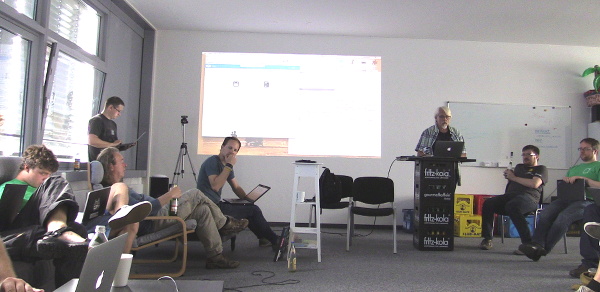
We had 17 participants in the event, and Saturday started with an introduction round. Many familiar faces who’ve been active in LibreOffice and OpenOffice.org for years were present, but there were also some new participants who were eager to get involved and help out. After choosing some discussion topics for the day, we split up into small groups and worked on tackling some issues.

For instance, one group asked the question: how can we convert LibreOffice end users into project contributors? What are the barriers? We noted that the German user mailing list has over 520 subscribers – so maybe we can provide them with some “Easy Hacks” (like in the development project) to get involved. These could be: fixing bugs and typos on the website, making small translation improvements, updating documentation, and confirming bugs. It was noted that due to our existing infrastructure, some of these tasks require good knowledge of English, though.

Other groups looked at strengthening outreach (eg getting LibreOffice into schools) and how the different projects in LibreOffice (development, documentation, QA, marketing etc.) can work together more effectively.
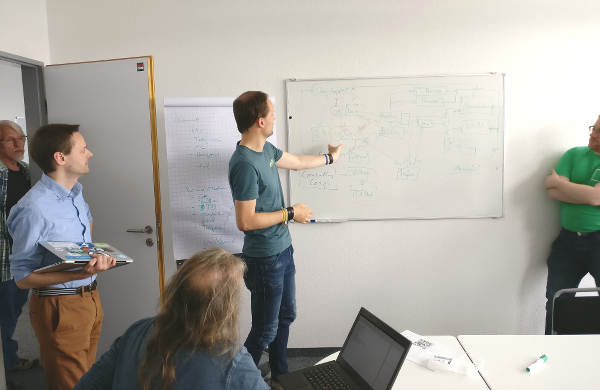
In the afternoon, all participants got together for a wide-ranging discussion. We talked about many things: does LibreOffice need a vision for the future? Or a killer feature? How can we steer development of LibreOffice based on such a vision? And how can we make end users feel more involved?

One idea is to run a survey of end user needs, in the style of the Open Source Survey 2017. Not only would this show that the LibreOffice community listens carefully to end users, but it could also guide the project, showing which things we need to work on, and which ones are already in good shape. (German speakers can find more notes from the discussion on our pad.)

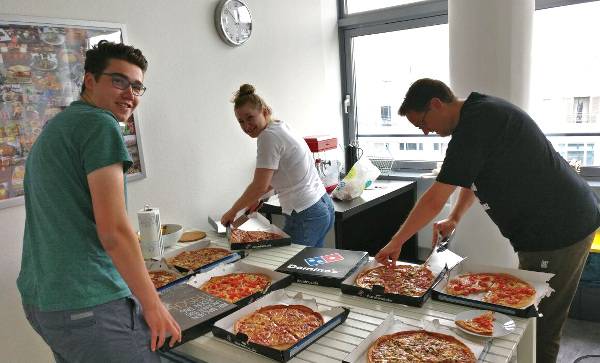
Of course, the meeting wasn’t just about discussions – it was a great opportunity to network as well, over food and drink. We would like to thank our kind hosts from Endocode, Lisa and Mirko, very much for making that meeting possible and offering their office space for the community – we enjoyed it very much and made new friends!
If you’re a German speaker and want to join our community, sign up to the discuss@de.libreoffice.org mailing list. We look forward to hearing from you!


LibreOffice 5.3.4 immediately available for download

Berlin, June 26, 2017 – The Document Foundation (TDF) announces the availability of LibreOffice 5.3.4, the fourth minor release of the LibreOffice 5.3 family, targeted at technology enthusiasts, early adopters and power users. LibreOffice 5.3.4 integrates over 100 patches, with a significant number of fixes for interoperability with Microsoft Office RTF and OOXML documents.

People interested in technical details about the release can access the change log here: https://wiki.documentfoundation.org/Releases/5.3.4/RC1 (fixed in RC1).

For all other users and enterprise deployments, TDF suggests LibreOffice 5.2.7, with the backing of professional support by certified professionals (updated list available atΒ http://www.libreoffice.org/get-help/professional-support/).

Technology enthusiasts and early adopters looking for bleeding edge features can start evaluating the next major release by installing LibreOffice 5.4 RC1, which is available here: http://dev-builds.libreoffice.org/pre-releases/.

Download LibreOffice

LibreOffice 5.3.4 is immediately available for download from the following link: https://www.libreoffice.org/download/download/. Flatpak and Snap versions are also available from the same link.

LibreOffice users, free software advocates and community members can support The Document Foundation with a donation at http://donate.libreoffice.org.

Several companies sitting in TDF Advisory Board (http://www.documentfoundation.org/governance/advisory-board/) are providing either value added Long Term Supported versions of LibreOffice or consultancy services for migrations and training, based on best practices distilled by The Document Foundation.