Coming up on April 27: First Bug Hunting Session for LibreOffice 6.1

LibreOffice 6.1 is due to be released in mid August 2018, with many new features (those already implemented are summarized on the release notes page, with much more still to come).

In order to find, report and triage bugs, the Quality Assurance (QA) community is organizing the first Bug Hunting Session for LibreOffice 6.1 on Friday, April 27, 2018. All details are available on the specific wiki page.

In order to find, report and triage bugs, the tests during the First Bug Hunting Session will be performed on the first Alpha version of LibreOffice 6.1, which will be available on the pre-releases server on the day of the event. Builds will be available for Linux (DEB and RPM), macOS and Windows, and can be run in parallel with the production version – so you can test without affecting your existing stable installation.

Mentors will be available on April 27th 2018, from 8AM UTC to 8PM UTC for questions or help in the IRC channel: #libreoffice-qa (connect via webchat) and its Telegram bridge. Of course, hunting bugs will be possible also on other days, as the builds of this particular Alpha release (LibreOffice 6.1.0 Alpha1) will be available until the end of May.

During the day there will be two dedicated sessions focus on two of the tenders implemented in LibreOffice 6.1: The first to test the improvements on the image handling between 10AM UTC and 12AM UTC, and the second to test the HSQLDB import filter for firebird between 14PM UTC and 16PM UTC.

And the Month of LibreOffice is starting!

Throughout May we will be running the Month of LibreOffice, awarding cool stickers to contributors across the project. The Bug Hunting Session is your chance to get involved with the LibreOffice QA project, and grab a sticker during May – so get involved and help us make LibreOffice 6.1 the best release yet! See here for all the details.

LibreOffice Community Meeting and Hackfest in Hamburg: the results

The LibreOffice community communicates mainly over the internet, using our mailing lists, IRC channels and other services. But it’s often good to meet in person, to discuss ideas face-to-face, tackle problems together, and enjoy good company over food and drinks! And from April 6 – 8, in Hamburg, we did just that…

Friday: Meet and Greet

Some participants arrived early and had a chance to explore the fascinating Hanseatic city of Hamburg, with its river, canals and lake in the centre (Binnenalster, shown below). In the evening we sampled local food at the Groeninger Privatbrauerei.


(Picture: Thomas Ulrich, CC-BY-SA 2.0)

Saturday and Sunday: Hackfest

Starting on Saturday, we had around 45 participants, who split into two groups. One group focused on a hackfest – that is, a joint coding session for fixing bugs, working on new features and sharing information. Here’s a summary of the achievements from each participant:

  • Miklos Vajna: mostly mentored Patrick, Nithin, Linus and Zdeněk (aka raal)
  • Michael Stahl: mentored Nithin and remote participant Heiko; worked with Christian Lohmeier to install a GUI text editor as an alternative to Emacs and Vim; reviewed some old Gerrit patches; and investigated regression tdf#77919 (it was already fixed on master but it wasn’t obvious how)
  • Regina Henschel: worked on the topic “Make drawing layers ODF conformant”
  • Tamás Bunth: mostly worked on HSQLDB migration; also picked a random Firebird-related bug
  • Heiko Tietze: solved (remotely) issues with inline tooltips on tracked changes, with help from Michael Stahl
  • Michael Meeks: tweaked, reviewed and merged patch(es) for a 5-10x speedup for VLOOKUP
  • Xisco Fauli: spent most of his time trying to make LibreOffice Viewer work on Android emulator; also showed Marina Latini how to create a bisect repository from scratch
  • Markus Mohrhard: reviewed patches for Zdeněk, and analysed a Calc memory corruption issue
  • Patrick Jaap: worked on tdf#115094, a bug relating to misplaced images in tables when importing .docx files
  • J-NA: worked on fixing up sw uitests with Linus
  • Marina Latini: fixed Italian translation typos; worked on fixing a GPG problem
  • Nithin: worked with Miklos on adding line feeds to section styles
  • Linus Behrens: improved sw uitests, making them more pythonic with J-NA; removing unused includes
  • Lothar Becker: explained the LibreOffice certification programme to Silva from the Albanian community
  • Zdeněk Crhonek (raal): looked at building the LibreOffice Viewer app for Android
  • Jan-Marek Glogowski: worked on font problems in the Qt5 backend
  • Tim Janik: talked to people, discussing toolkits and technology
  • Sophia Schröder: fixing up help, and some translation work
  • Stephan Bergmann: mentored people; worked on fixing regressions with UBSAN, and fixing repaint issue in basic IDE
  • Rheinhard: observed and interacted, as he’s writing about open source communities

So lots of great work from everyone involved – thanks so much for your contributions! The hackfest showed that meeting face-to-face is really effective for fixing issues and sharing information.

German community meeting

At the same time as the hackfest, a meeting of the German-speaking LibreOffice community took place. Last year we met in Berlin (text in German) to discuss various ideas and issues in the project, especially from a German-language perspective, and we followed them up this year to see what progress had been made.

Specifically, we talked about attending more conferences in the German-speaking region, with a more targeted focus: instead of just telling people what LibreOffice is (which most Linux users already know, for instance), we should focus more clearly on bringing in potential new contributors.

Then we turned to the topic of education. It was noted that the Citavi citation software no longer works with LibreOffice 6, and the community lacks materials that could be used to create courses (both online and in schools) about LibreOffice.

We also discussed having more regular face-to-face meetups. Silva Arapi from the Albanian community shared her experiences, but in a larger country like Germany, it’s difficult to get everyone together in the same place. So one idea was to organise more local events, like the Duisburg “Stammtisch” run by Andreas Mantke.

Finally, we set up some “action items”, including the creation of a new “Get involved” flyer for events, and a German translation of the “Get involved” page on the website.

Wrapping up

On the whole, it was a fun and productive event, with some familiar faces, some new faces, and lots of coding, ideas and proposals. Many thanks also to Bjoern Michaelsen and Thorsten Behrens for organising the event, serving up coffee and mentoring developers. And another big thanks to freiheit.com who generously hosted us – and even let us play on their pool table!

We plan to run more hackfests and local community events in the future, so keep an eye on this blog and our social media channels to hear about them: Twitter, Google+ and Facebook!

Coming up: the Month of LibreOffice, May 2018!

Joining an open source project is awesome, for many reasons. You get to:

  • Talk to, meet and share ideas with people around the world
  • Build up valuable skills that could be useful in a future career
  • Make the world a better place, by improving software for everyone to use

In the case of LibreOffice, you can join us at our yearly conference too! Here’s our community posing for a photo in Brno, Czech Republic:

LibreOffice Conference 2016

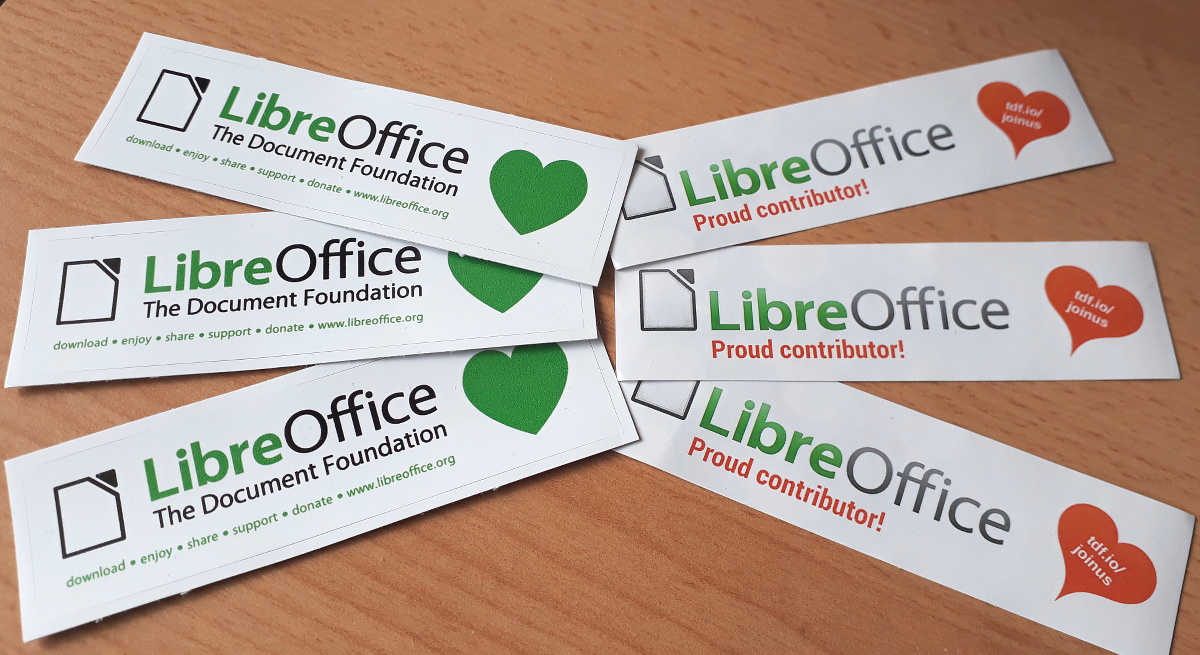
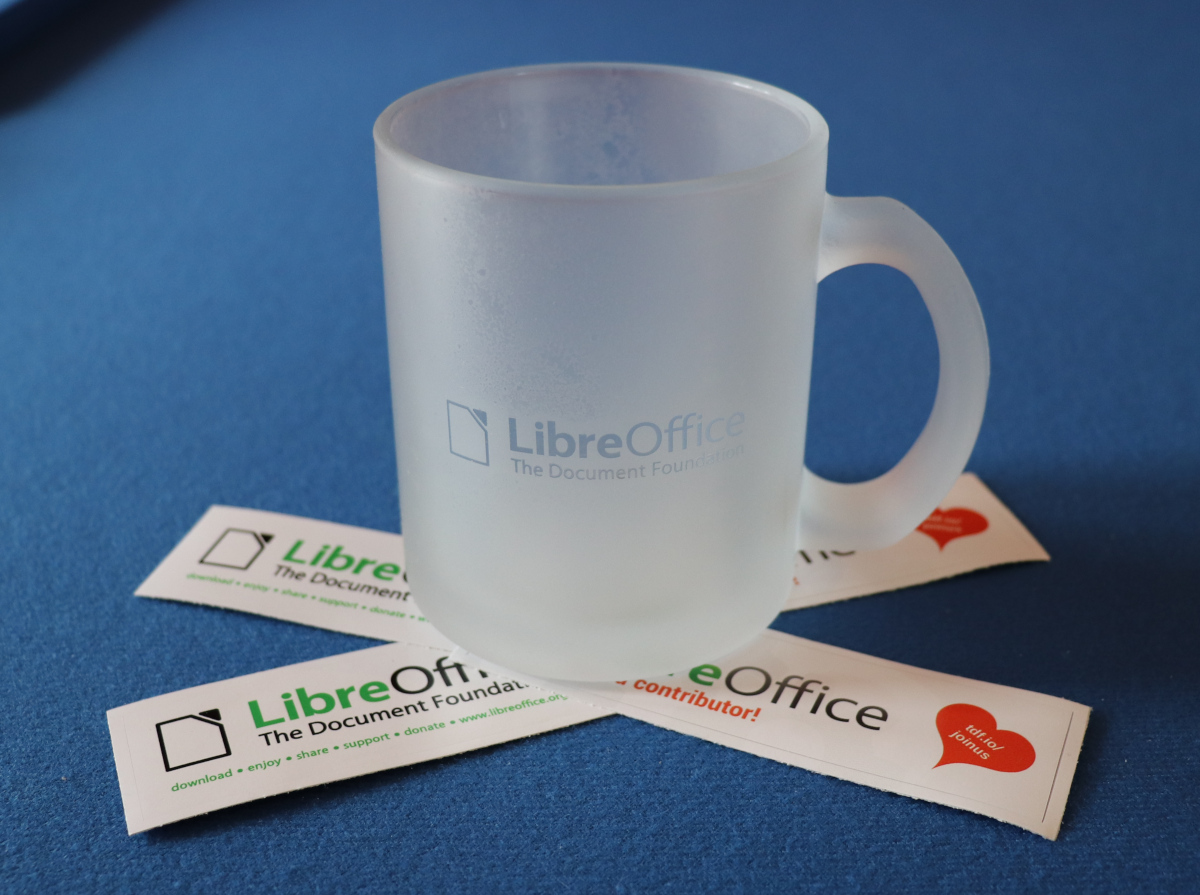
In May, we’ll be celebrating contributions all across the project with a “Month of LibreOffice”. Everyone who helps out with development, design, documentation, QA, marketing, translations and user support will get a big “thank you” from us, and a nifty sticker pack in the post:

(Oh, and there’s an extra special surprise as well, but more on that later!) We’ll post full details on May 1st, but in the meantime, you can find out more about joining the project on our Get Involved page. You don’t have to be a software developer – you can help out in many other areas as well. See you soon!

Document Freedom Day 2018 in Cuba

The Document Foundation has supported the Cuban LibreOffice community, represented by Carlos Parra Zaldivar, for the Document Freedom Day 2018 in Holguín, on the opening day of the International Book Exhibition in the local library Biblioteca Provincial “Alex Urquiola”. LibreOffice is included in the Cuban GNU/Linux distribution Nova, and as such is part of the IT syllabus in all schools.

Below, some pictures shot during the event of Carlos Parra Zaldivar speaking about LibreOffice and ODF (Open Document Format) and some of the promotional materials produced by the Cuban LibreOffice community.

LibreOffice contributor interview: Edmund Laugasson

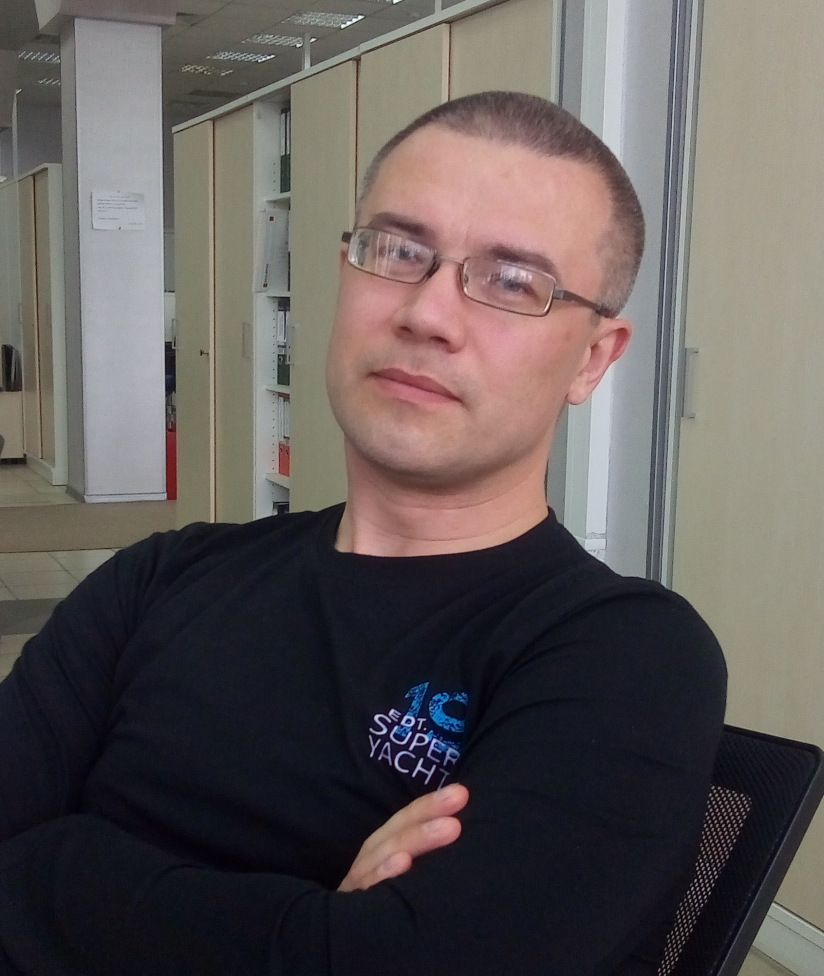
Edmund Laugasson

LibreOffice is being used in governments and companies around the world, and this is largely thanks to support and advocacy from local communities and developers. Today we’re talking to Edmund Laugasson, a member of the Estonian LibreOffice community, who is promoting the software and the Open Document Format (ODF) in his country…

How popular is Free, Libre and Open Source Software (FLOSS) and LibreOffice in Estonia?

To be honest, it has not yet been deeply investigated, but the Estonian Ministry of Economic Affairs and Communications has published a “State Information System Interoperability Framework” (in Estonian) where clearly ODF is the main format suggested to use. The status of OOXML is only “allowed”. OOXML should not be confused with the file formats used by MS Office, which differs from OOXML by several proprietary changes. Even LibreOffice offers two different versions to save, e.g. docx – one is OOXML and the another one is used in MS Word. The same applies also to rest of OOXML, MS Office formats that coexist in LibreOffice. As the status of ODF is “suggested”, it is not mandatory. Despite that, ODF is quite widely used – for instance, educational institutions usually have LibreOffice installed, along with some local authorities.

Research is quite challenging as people usually do not respond to questionnaires, and researchers need to meet people directly in order to get reliable answers to questions.

What is your background and involvement in FLOSS?

I live in a small city called Rapla in Estonia, but I work as a lecturer at IT College, which is part of the Tallinn University of Technology. I am involved in FLOSS in many ways. When teaching, I use FLOSS as much as possible: the operating system in university is Ubuntu Linux, and I use derivates like Linux Mint MATE, all 64-bit and the latest LTS (Long Term Support) versions. The office suite is LibreOffice everywhere under GNU/Linux but under MS Windows next to MS Office. It is very important to have LibreOffice installed on every operating system that is used. Also, at least ODF file formats should be opened by LibreOffice by default. Then it would be much easier to deploy ODF in future when the ground is prepared properly. We have a dual-boot system (Microsoft Windows 10 and Ubuntu Linux 16.04.4), and in one classroom also a triple-boot (with macOS 10.12).

In addition I am involved as a board member of the Estonian Free and Open-Source Software Association, taking care of FLOSS in general in Estonia. Also I am involved in the Network of Estonian Teachers of Informatics and Computer Science (NETICS) as a board member. There I promote FLOSS – LibreOffice in particular – to encourage people to use it.
The next involvement is my doctoral studies at Tallinn University, where the current topic is “Technology approval as a factor of adopting a free software ecosystem”.

Further activities will come when I graduate and can focus more on wider deployments of FLOSS, particularly LibreOffice. I have serious plans to arrange all this, but as people in Estonia are not very cooperative, it takes more time – regardless of the fact that Estonia is small. Lots of people just do not believe in better future full of FLOSS, and those few who still believe, will act towards that goal. So to anyone who feels the FLOSS spark inside: do not hesitate to contact me.

What do you think are the biggest obstacles to wider FLOSS and LibreOffice adoption in Estonia?

My first paper in 2013 (published at the IFIP conference) showed that awareness of FLOSS is still relatively low, but interest in getting more information is quite high. Microsoft is doing relatively strong lobbying work, also in Estonia, and the government has quite weak power regarding FLOSS. There is also sometimes controversial behaviour: five state-arranged procurements in the FLOSS field (four state procurements relating to LibreOffice, one state procurement to create an interoperability framework), but weak activities around FLOSS in general. So I decided to start my doctoral studies to fix this situation in a scientific (weighted) way.

Thanks to Edmund for his time and effort helping the FLOSS cause. Click here to see many more interviews from LibreOffice contributors – and why not become one yourself! Build up skills, join a friendly community, and help to make LibreOffice better for everyone.