
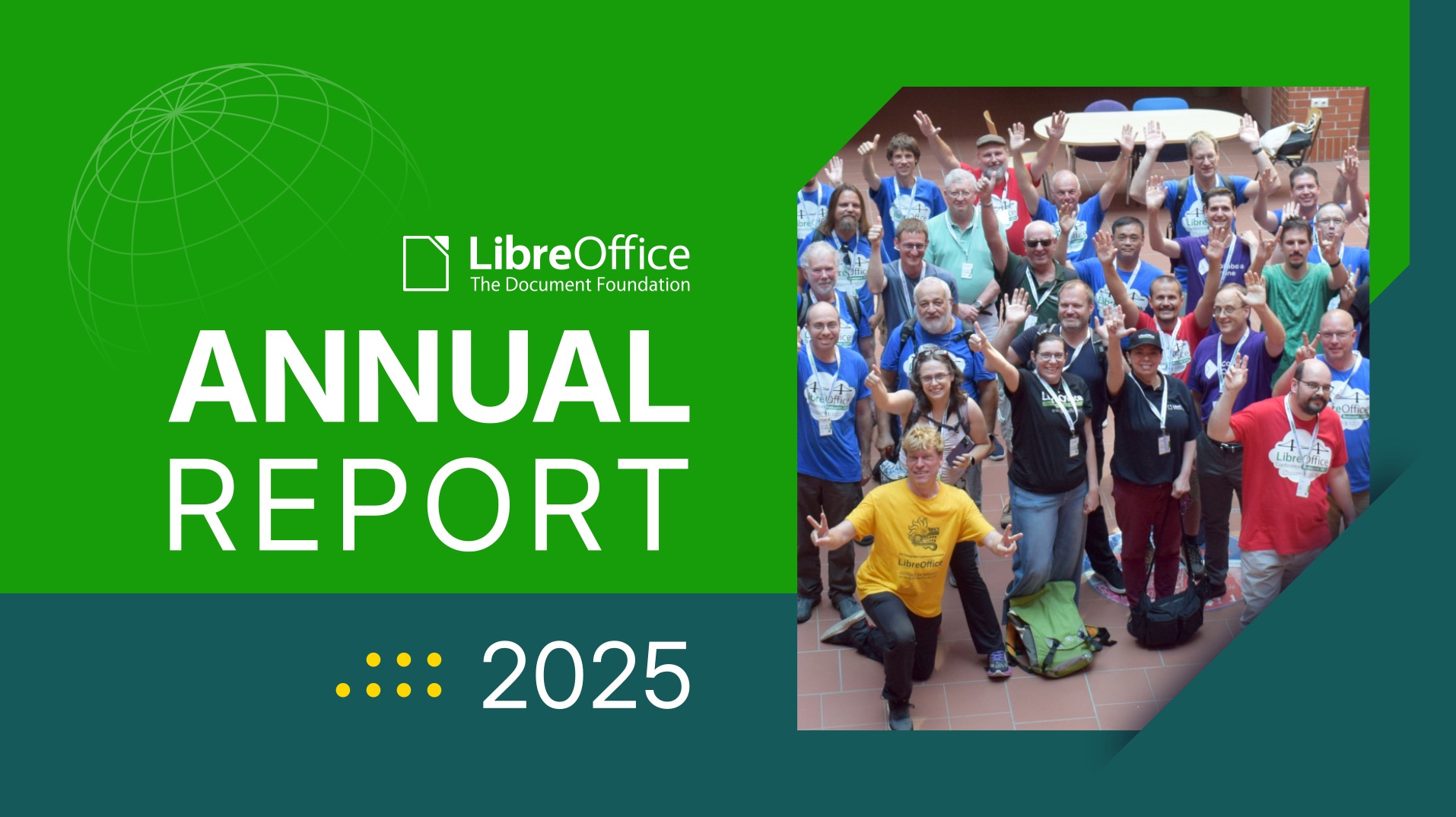
LibreOffice is available in over 120 languages, thanks to the work of localisation communities around the world. We asked them to summarise their work in 2025 – here’s what they had to say…
Czech
The Czech community maintained an active presence both online and in-person. Their localisation efforts remained strong, keeping the UI fully translated and the Help files at 95% completion. The team also stayed connected with their user base through the Czech Ask LibreOffice site along, with social media presence across X, Facebook, Instagram and Mastodon.
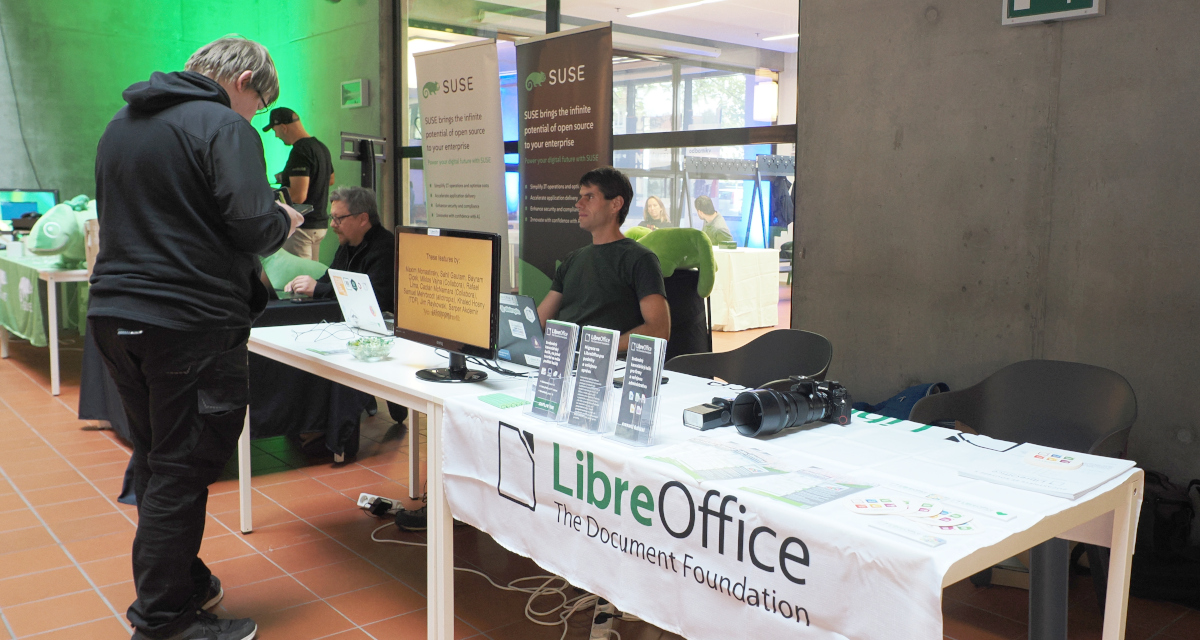
There was also outreach at events. The team hosted dedicated LibreOffice booths at InstallFest in April and LinuxDays in October, both held in Prague. Documentation also saw significant updates, with the publication of the Getting Started Guide (24.8), the Calc Guide (25.2), and the Draw Guide (25.8).
Danish
The Danish community focused on multimedia education and consistent localisation in 2025. There was the launch of the @libreofficeskolen (“LibreOffice School”) YouTube channel. This initiative provides the Danish-speaking public with a series of instructional videos designed to lower the barrier to entry for new users. Alongside this output, the community kept the UI and Help files fully translated at 100%, and ensured that LibreOffice promotional videos were accessible via localised subtitles.
Dutch
Beyond maintaining the local website and providing assistance via the Ask LibreOffice website and mailing lists, the Dutch-speaking community worked on many documentation updates.
Beginning in January with the Calc Guide for 24.8, the community then published a steady stream of translated manuals for version 25.2, including the Writer, Impress, Math, and Getting Started Guides. This effort then lead to the release of the updated 25.2 Calc Guide in July. On the localisation front, the Dutch team continued their work on Weblate, successfully maintaining 100% translation coverage for both the User Interface (UI) and the Help system, following upstream changes.
Finnish
The Finnish community focused on steady and ongoing translation efforts. The team prioritised localisation of the UI, with secondary work continuing on the Help system. To ensure the long-term sustainability of these efforts, the community has been proactive in outreach, utilising the vapaaehtoistyo.fi online platform to recruit new volunteers.
French
On the technical front, the French-speaking team maintained 100% translation coverage for both the UI and Help systems across all versions of LibreOffice. Their localisation work extended to the new Hugo-based website, release notes, and the Extensions wiki page. Significant progress was also made on the translation of Calc functions on the wiki and the subtitling of promotional videos.
Outreach was a major topic in 2025, with the community representing LibreOffice at events like Capitole du Libre in Toulouse, and Open Source Experience in Paris. The team also worked on academic ties, coordinating with UBO University to involve translation students in user guide writing. Beyond documentation and QA, the French team supported users through the Ask LibreOffice site and published various articles on LinuxFR. In addition, there were REGEX tutorials for civil servants and introductory presentations at public media libraries.
German
Throughout the year, the German-speaking community wrote blog posts (and translated others from the English-language blog), maintained its social media activity on Mastodon, and worked on user interface translations. Community members also attended local events on behalf of the LibreOffice project, such as the Augsburger Linux-Infotag 2025 and Digitaltag 2025 in Duisburg.
Irish
The Irish-speaking community made significant steps in 2025 to bring the suite to native speakers. Currently, the UI and website translations are nearing 100%, with the LibreOffice 26.2 user interface already reaching a 96% completion rate. The team’s primary focus is now on finalising these remaining strings and resolving technical checks.
Italian
The Italian-speaking community maintained 100% translation status for the UI and Help files across all active versions of the suite. The team helped with localising the project’s new Hugo-based website and kept the Italian-speaking public informed by translating all release notes and press releases. Current efforts are focused on the ongoing translation of Calc functions on the wiki and a comprehensive revision of various wiki pages.
In 2025, the Associazione LibreItalia organised a full-day LibreItalia conference in Gradisca d’Isonzo, following the adoption of a regional law mandating the use of free open source software in Friuli Venezia Giulia, an eastern Italian region bordering Slovenia. The politician who signed the law provided an overview of the approval process.
The event was organised by Marco Marega, a long-standing member of LibreItalia who is active in the localisation team and other areas of the project. Several members of the Pordenone LUG attended the conference and initiated a discussion about organising the 2026 LibreOffice Conference in their city. This discussion then evolved into an official proposal.
Japanese
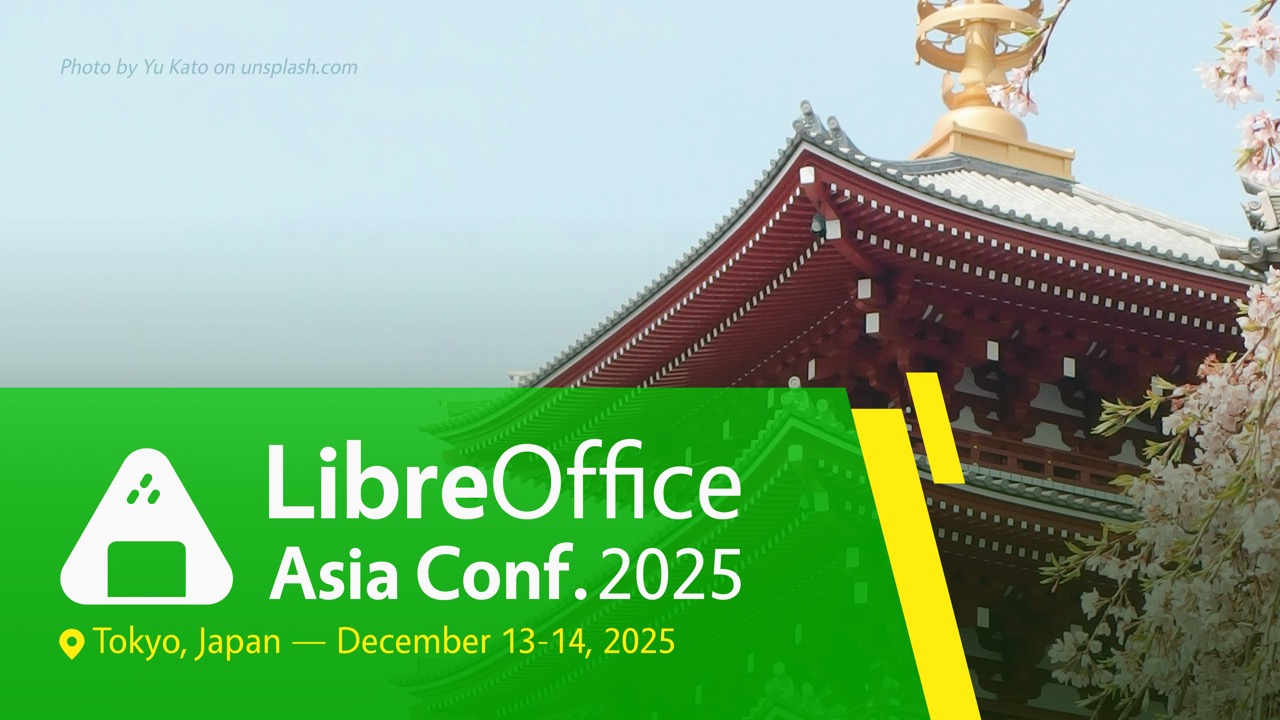
The Japanese community had a busy year in terms of events. There was the LibreOffice Asia Conference 2025 in Tokyo, a two-day event that brought together 70 attendees. Outreach extended internationally as Japanese members traveled to COSCUP 2025 in Taiwan to deliver three talks and strengthen ties with the Taiwanese community.
The community also organised:
- Online Hackfests: Held 46 times via Jitsi and YouTube Live
- Online Study Parties: Three sessions dedicated to user knowledge sharing
- LibreOffice Days: Monthly offline meetups in Osaka, co-hosted with the Open Data Mokumoku-kai
- Open Source Conferences (OSC): Booths and hackfests at seven locations across Japan, from Hokkaido to Fukuoka
On the documentation front, the team published the Writer Guide for LibreOffice 25.2 in Japanese. Localisation efforts currently stand at 91% for the UI and 46% for Help. The team also remained responsive to end users, answering nearly 50 new questions on Ask LibreOffice, publishing 20 blog articles, and maintaining a steady presence on X, Facebook and Bluesky.
Kazakh
Starting in late 2025, the community launched a refresh of its translation efforts, achieving 100% UI completeness in time for the LibreOffice 26.2 release. This work extended to the localisation of the official website and the activation of the Help master branch, preparing for future documentation projects.
To improve consistency across other open source projects, the team is currently developing a unified Kazakh glossary derived from various localisation projects. Furthermore, the community has begun testing the use of AI-assisted translations, reporting high-quality results to improve their workflows in 2026.
Tagalog
The Tagalog community made steps forward in localisation, maintaining the user interface and Help files at a high completion rate of 98–99% across all versions. The team continued to integrate Deep Language Modeling to automate accuracy verification. While the community experiences a natural ebb and flow of contributors, there is growing interest in expanding support to regional dialects, such as Ilocano.
The team also wishes to extend a special note of gratitude to the dedicated group of US-based translation helpers whose contributions were vital to success in 2025.
TDF says: many thanks to all native-language projects for their work in 2025! Of course, this is just a selection of their activities, based on communities that reported their activities, but there are many more too.