Quick report: LibreOffice 6.2 Bug Hunting Session in Ankara, Turkey

Our community is working on LibreOffice 6.2, which is due to be released in early February 2019! While developers are adding new features, other community members are helping to test them, in the form of Bug Hunting Sessions. You can learn more about these on our Quality Assurance blog, and in the meantime, here’s a quick report from an in-person session in Ankara, Turkey…

Here’s what Muhammet Kara, who helped to organise the event, had to say:

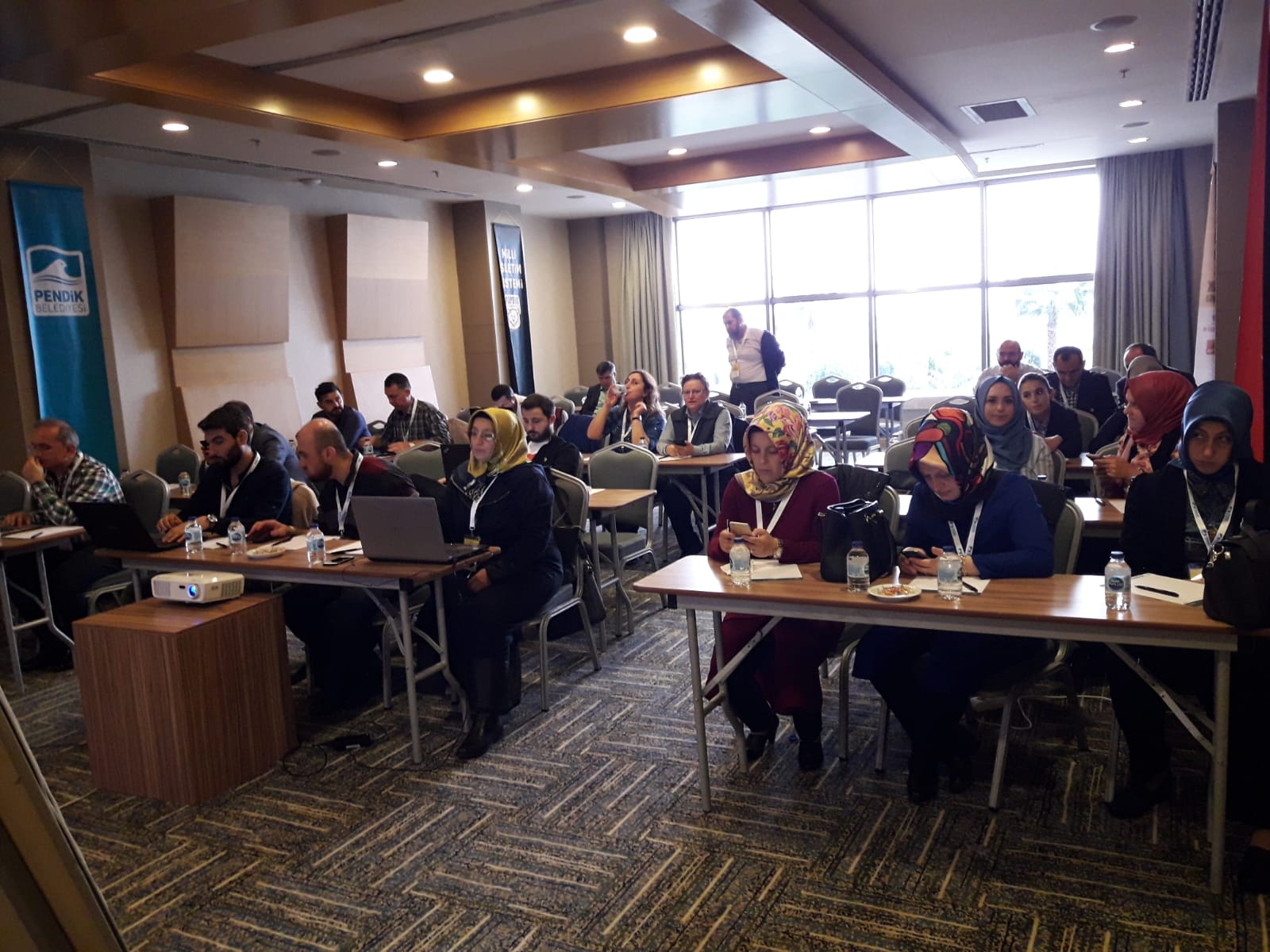
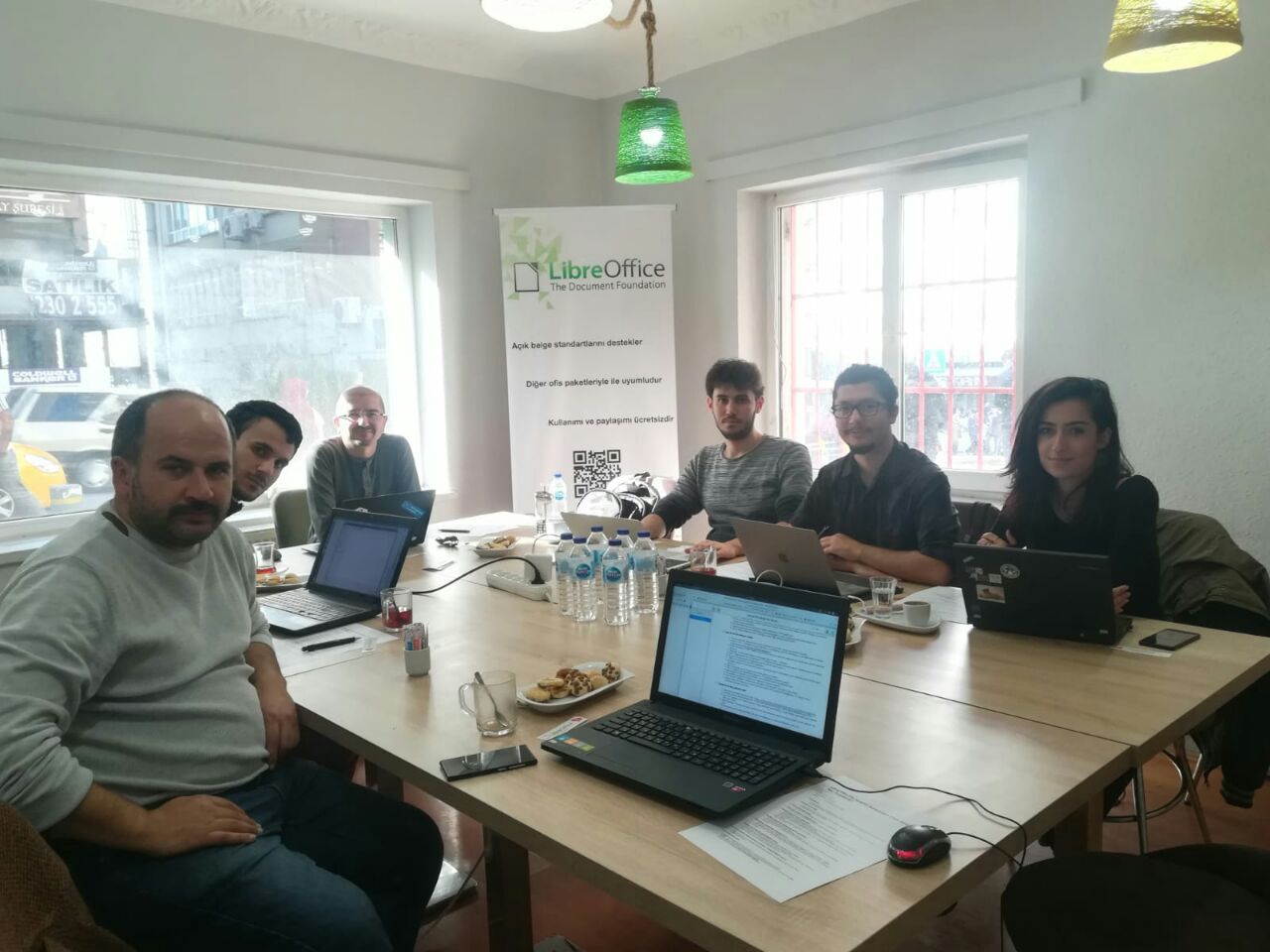
Eight people (including one remotely from Istanbul) participated in our live session in Ankara, and we tested LibreOffice 6.2 Alpha on Linux, Windows and macOS.

We always held our past live sessions in Pardus’ venue. This time we decided to make a change, and I think it brought good results. All people in the session, except me, were new faces, from different schools and workplaces.

We started with self-introductions, and chatted for a short while, to get to know each other. Then I went through our bug reporting and QA process briefly, and introduced the participants to our Bugzilla installation.

We identified several bugs, and created bug reports for them. Some of our new community members are following up the bug reports, and some have even started contributing to localization).

We also created a Telegram channel to communicate during the event, and later on as well. Overall, I think it was a productive, and fun event.

So thanks to Muhammet and the awesome Turkish LibreOffice community for their help! LibreOffice 6.2 is shaping up to be an excellent release…

The Document Foundation announces LibreOffice 6.0.7 and LibreOffice 6.1.3: all users are invited to update for improved robustness and security

Berlin, November 5, 2018 – The Document Foundation announces the release of LibreOffice 6.0.7 and LibreOffice 6.1.3, which improve the quality and stability of previous releases, and integrate a security patch.

All LibreOffice users are therefore strongly recommended to update to the new versions:

  • Power users, early adopters and technology enthusiasts should update from LibreOffice 6.1.2 to LibreOffice 6.1.3, which represents the bleeding edge in term of features for open source office suites;
  • All other individual users and organizations of any size should update from any previous version of LibreOffice to LibreOffice 6.0.7, which is more mature and as such targeted at production environments and enterprise-class deployments.

Organizations should source LibreOffice 6.0.7 from one of the companies providing a Long Term Supported version of the suite, for additional value-added services which make the software better suited to enterprise deployments, thanks to professional support (the companies are all members of TDF’s Advisory Board, and are listed here: https://www.documentfoundation.org/governance/advisory-board/). When it is sourced from The Document Foundation, LibreOffice is supported by volunteers.

Also, value-added services for migrations and trainings, to support enterprise-class deployments in large organizations, should be sourced from certified professionals (a list is available here: https://www.libreoffice.org/get-help/professional-support/).

LibreOffice is deployed by large organizations in every continent. A list of some large or significant migrations announced in the media is available on the TDF wiki: https://wiki.documentfoundation.org/LibreOffice_Migrations.

LibreOffice 6.0.7 bug and regression fixes are described here: https://wiki.documentfoundation.org/Releases/6.0.7/RC1 (fixed in RC1), https://wiki.documentfoundation.org/Releases/6.0.7/RC2 (fixed in RC2) and https://wiki.documentfoundation.org/Releases/6.0.7/RC3 (fixed in RC3), while LibreOffice 6.1.3 bug and regression fixes are described here: https://wiki.documentfoundation.org/Releases/6.1.3/RC1 (fixed in RC1) and https://wiki.documentfoundation.org/Releases/6.1.3/RC2 (fixed in RC2).

Download LibreOffice

LibreOffice 6.0.7 and LibreOffice 6.1.3 are immediately available from the following link: https://www.libreoffice.org/download/. Builds of the LibreOffice Online source code can be downloaded as Docker images: https://hub.docker.com/r/libreoffice/online/.

LibreOffice Online is fundamentally a server service, and should be installed and configured by adding cloud storage and an SSL certificate. It might be considered an enabling technology for the cloud services offered by ISPs or the private cloud of enterprises and large organizations.

LibreOffice users, free software advocates and community members can support The Document Foundation with a donation at https://www.libreoffice.org/donate. Donations help TDF to maintain its infrastructure, share knowledge, and fund the presence of volunteers at events, where they can meet with other free software advocates.

LibreOffice 6.0.7 and LibreOffice 6.1.3 are built with document conversion libraries developed and maintained by the Document Liberation Project (DLP): https://www.documentliberation.org. Several of these libraries have been adopted by other software projects to provide an escape path from proprietary document lock-in.

Starting today: the Month of LibreOffice, November 2018!

Yes, it’s that time of the year again! As you probably know, LibreOffice is made by hundreds of people around the world. We have a busy community working on source code, documentation, translations, user support, marketing and many other topics. And throughout November, we want to give special credit to every contribution – and encourage even more people to get involved!

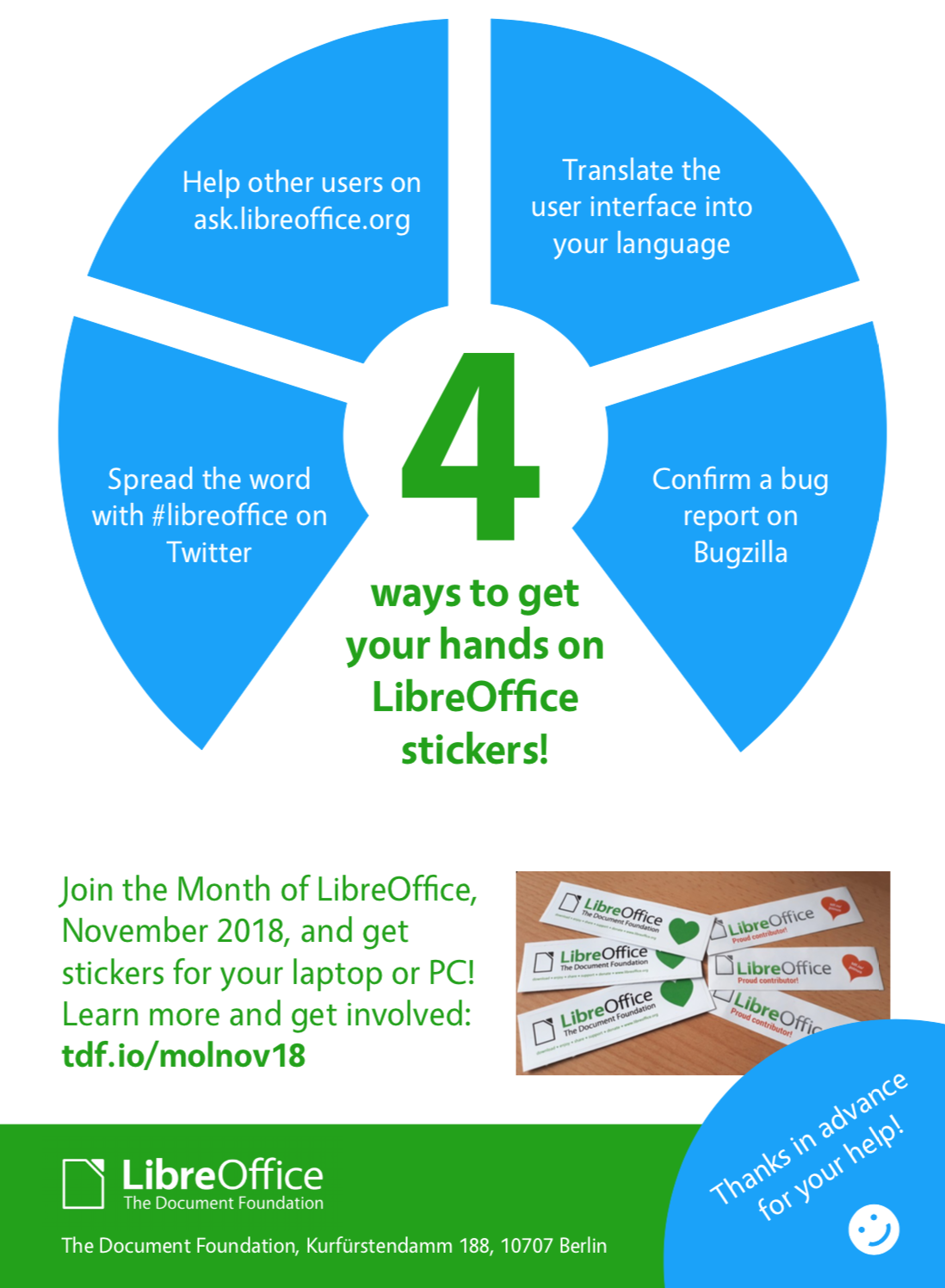
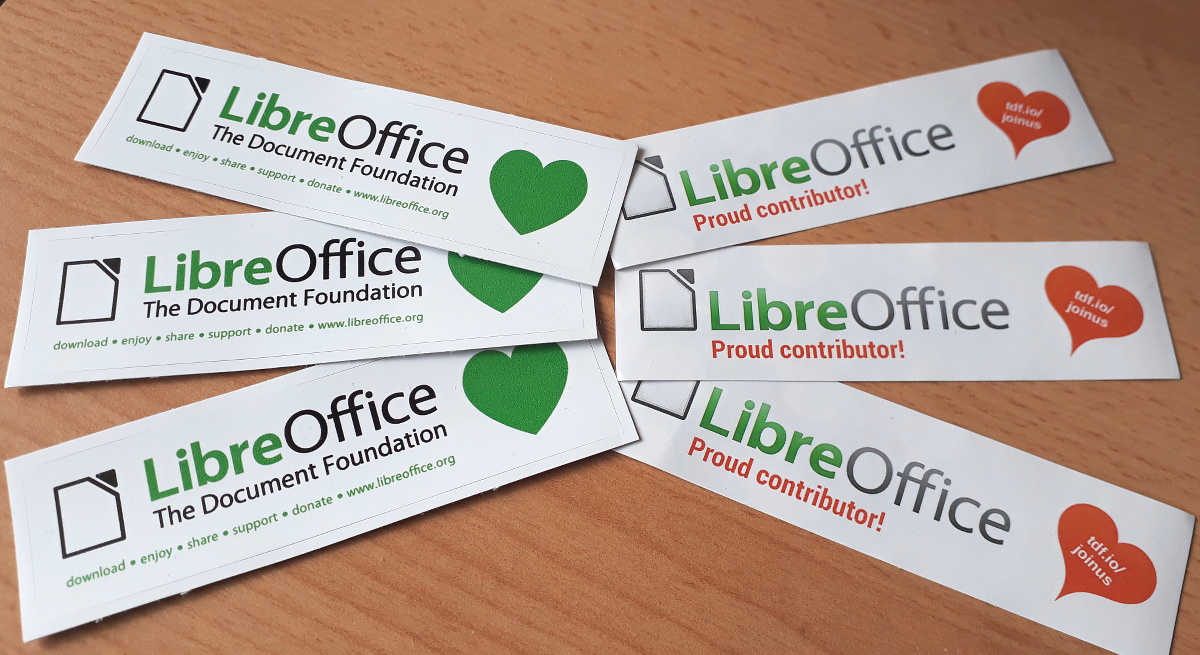
So how does this work? In a nutshell, if you contribute to the LibreOffice project this month, you can claim an awesome sticker pack at the end:

Over the next four weeks, we’ll be keeping track of contributions and add your name (or username) to this wiki page if you help out. The page will be updated daily, and everyone listed there can claim a sticker! Here’s how you can get involved…

How to get your stickers

Here are some ways you can contribute to the project and get your stickers…

  • Answer questions from users: Over on Ask LibreOffice there are many users looking for help with the suite. We’re keeping an eye on that site so if you give someone useful advice, you can claim a shiny sticker.
  • Help to confirm bugs: go to our Bugzilla page and look for new bugs. If you can recreate one, add a comment like “CONFIRMED on Windows 10 and LibreOffice 6.1.2”. (Make sure you’re using the latest version of LibreOffice.)
  • Spread the word: Tell everyone about LibreOffice on Twitter! Just say why you love it or what you’re using it for, add the #libreoffice hashtag, and at the end of the month you can claim a sticker. (We have a maximum of 100 stickers for this category, in case the whole internet starts tweeting!)
  • Translate the interface: LibreOffice is available in a wide range of languages, but its interface translations need to be kept up-to-date. Or maybe you want to translate the suite to a whole new language? Get involved here.
  • Contribute code: The codebase is big, but there are lots of places to get involved with small jobs. See our Developers page on the website and this page on the wiki to get started. Once you’ve submitted a patch, if it gets merged we’ll send you a sticker!
  • Write documentation: Another way to earn a badge is to help the LibreOffice documentation team. Whether you want to update the online help or add chapters to the handbooks, here’s where to start.

So there’s plenty to do! Dive in, get involved and help make LibreOffice better for millions of people around the world – and enjoy your sticker as thanks from us. We’ll be posting regular updates on this blog and our Twitter account over the next four weeks!

LibreOffice monthly recap: October 2018

Here’s our regular recap of events and updates in the last month!

  • The Albanian LibreOffice Community made an awesome recap video of our recent conference in Tirana. Check it out:

Please confirm that you want to play a YouTube video. By accepting, you will be accessing content from YouTube, a service provided by an external third party.

YouTube privacy policy

If you accept this notice, your choice will be saved and the page will refresh.

  • Also, we’ve been uploading presentation videos from the conference. Apologies for the echo in the audio, but it’s the best we could do given technical limitations of the venue – try using headphones and it should be a bit clearer. There are many more videos to come!
  • As a large open source project serving millions of end users, LibreOffice has extensive infrastructure. We talked to Guilhem Moulin, who is in charge of The Document Foundation’s infrastructure and services, about new developments and how others can get involved.

  • Meanwhile, the QA community organised the first Bug Hunting Session for LibreOffice 6.2, which is currently in development and due to be released in early February next year. There will be more sessions in the coming weeks, so if you want to help us make the next version super reliable, you can give us a hand!

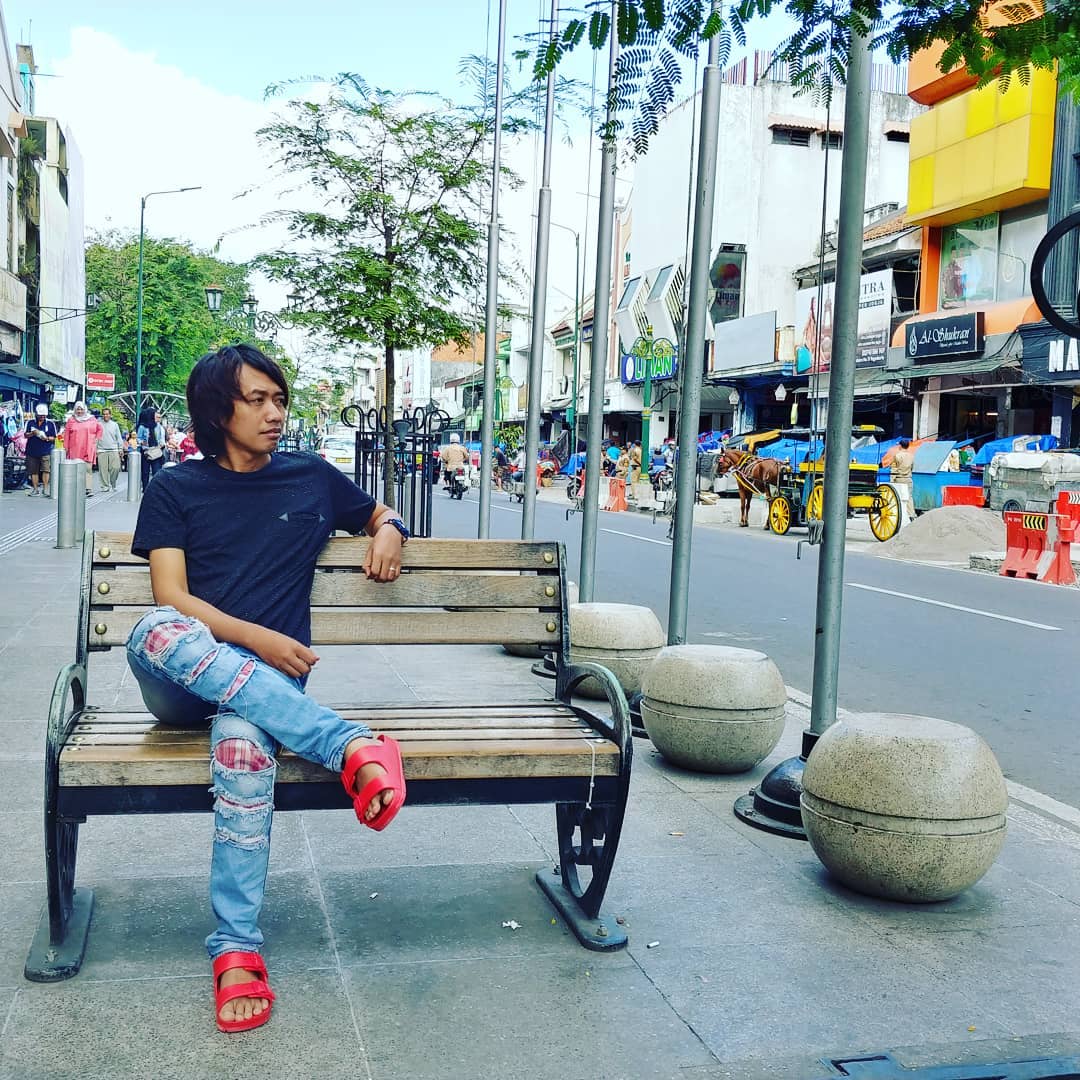
  • We continued our series of “Community Member Monday” interviews, talking to Ahmad Haris from Indonesia and Onyeibo Oku from Nigeria.

  • Gökhan Gurbetoğlu from our Turkish community organised some LibreOffice training in Istanbul. 25 people were present and Gökhan focused on Writer and Calc.

  • Finally, the German community and CIB organised a Hackfest in Munich, with 25 participants who worked on bugfixes, polishing features, and sharing information. Oh, and there was great pasta as well!

Keep in touch – follow us on Twitter, Facebook and Google+. Like what we do? Support our community with a donation – or join us and help us to make LibreOffice even better!

Munich Hackfest, October 2018: Roundup and photos

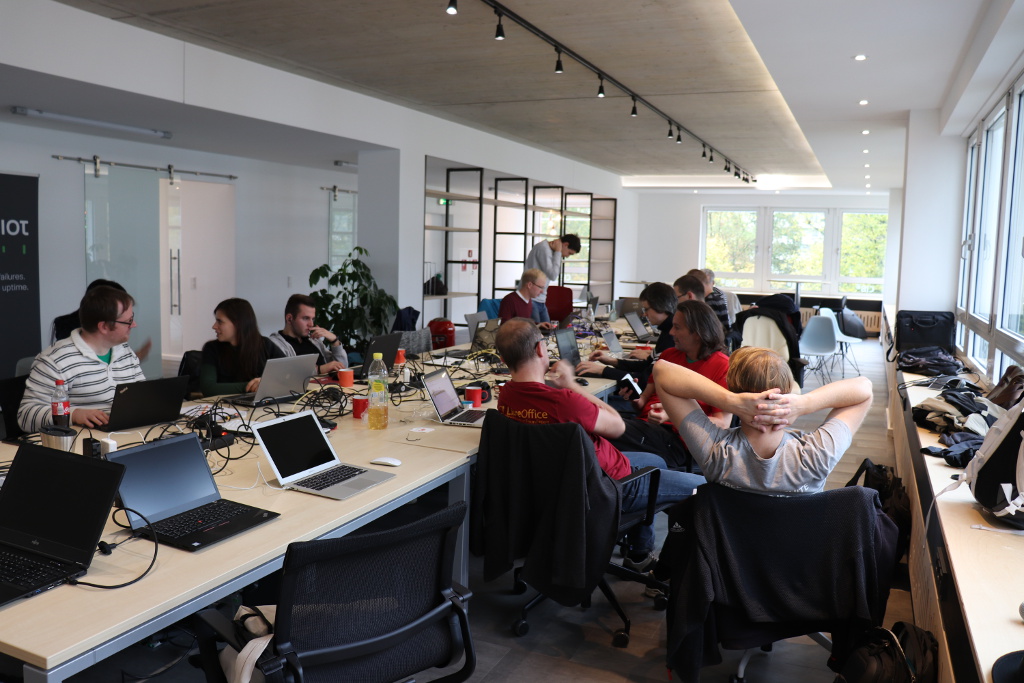
Hackfests are great opportunities for LibreOffice developers and community members to meet face-to-face, work on new features, fix bugs and enjoy good food! In late October, CIB hosted a hackfest in Munich, Germany, with 25 participants over the three days.

Check out the achievements section for full details on the results, but in summary: many bugs were fixed, some features were polished, and knowledge was shared. Two participants learned about building LibreOffice from source code, while others discussed non-technical topics such as marketing and local events.

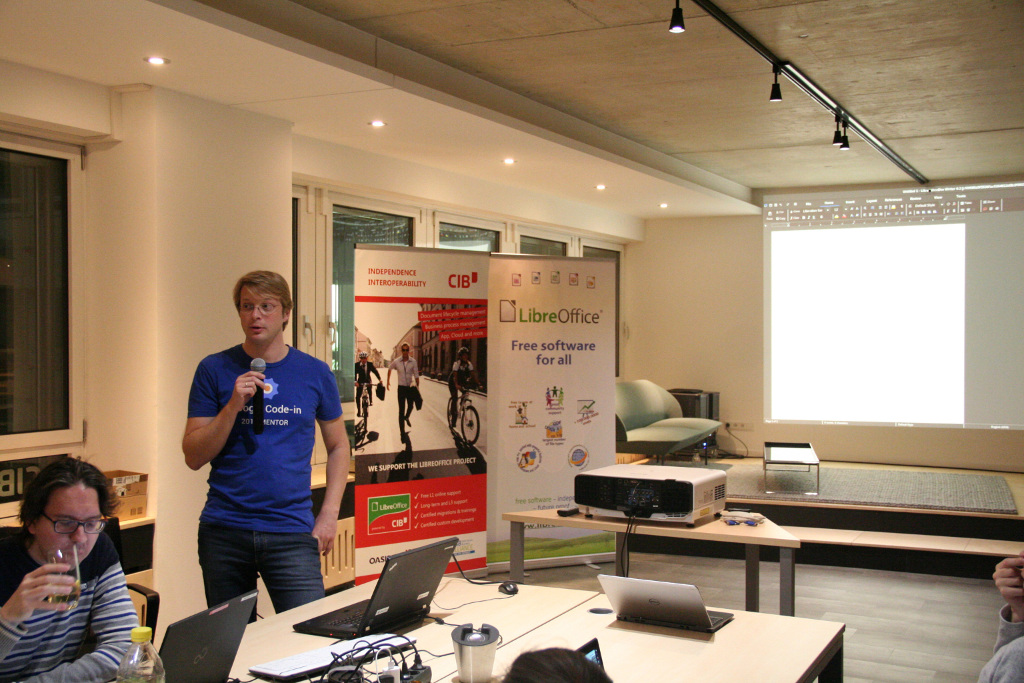
A big thanks to everyone who took part – it was great seeing you! Here are a few photos, starting with the first evening, when a few quick presentations were given. Andreas Kainz discussed his work on the NotebookBar user interface design (also check out his blog):

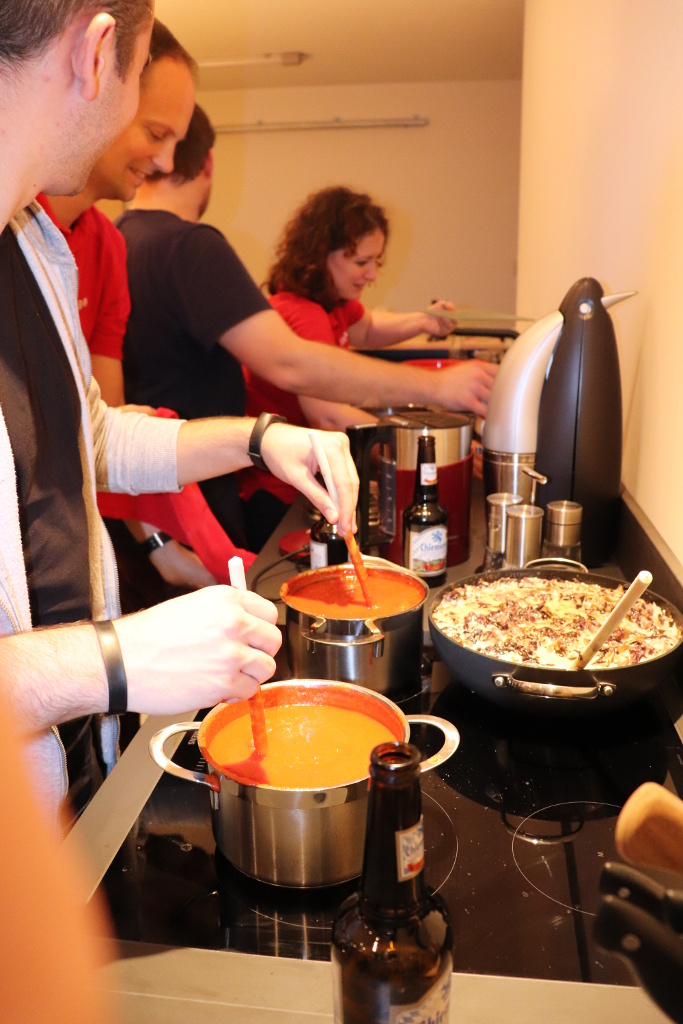
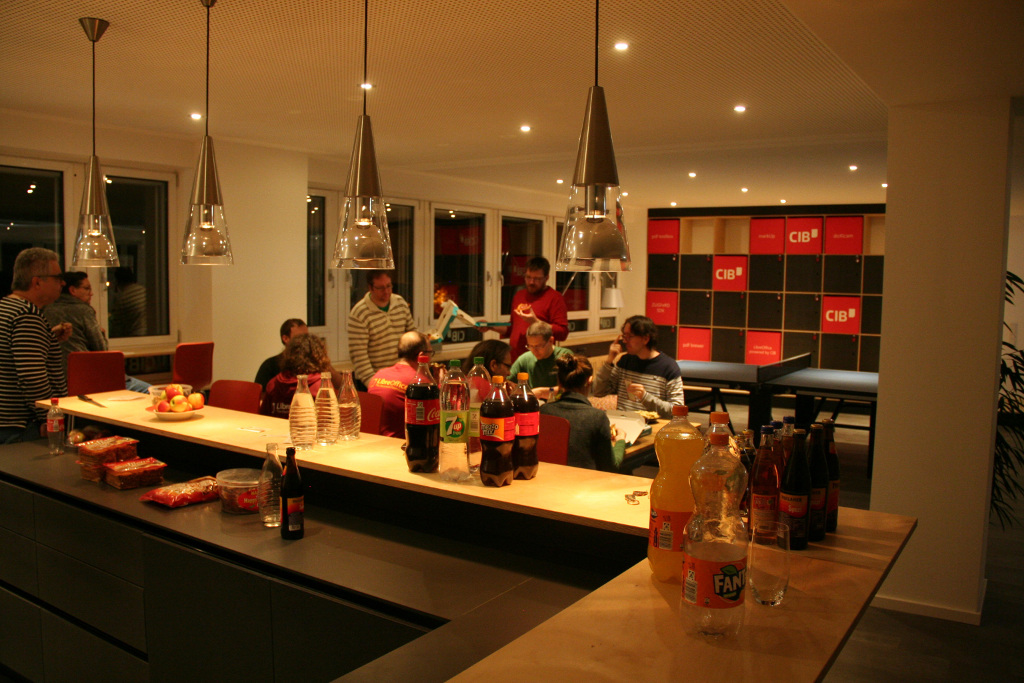
Then it was time for pasta – penne all’arrabbiata and fusilli radicchio and gorgonzola…

On the second day, developers worked on various features and bugfixes:

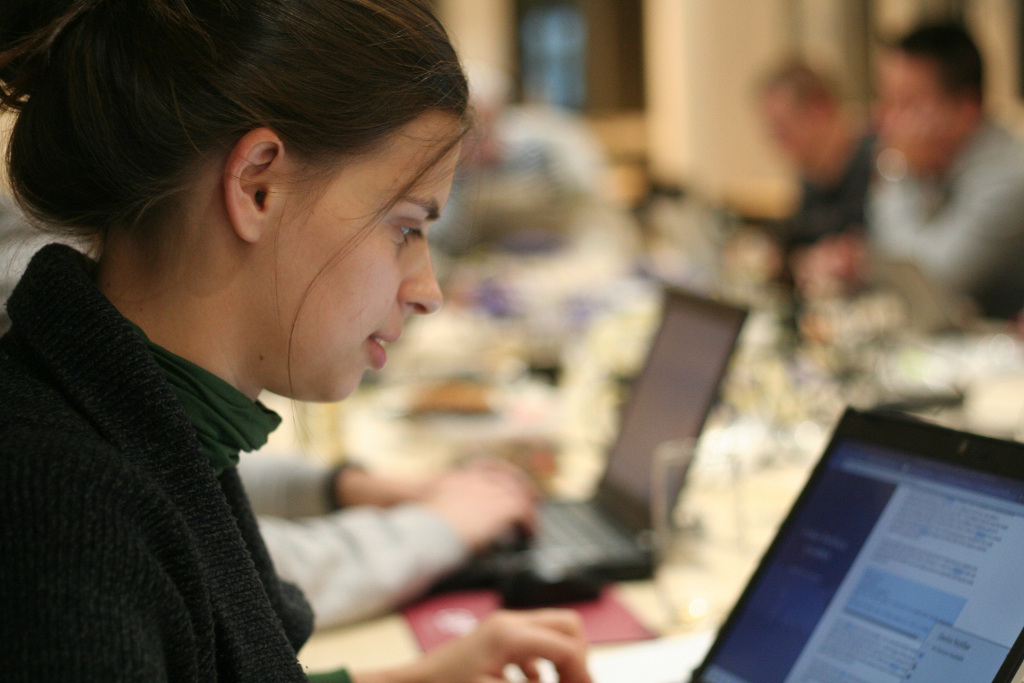
Izabela Bakollari from the Albanian LibreOffice community worked with Bjoern Michaelsen to build the source code and commit some code changes:

Then it was time for more Italian food – this time, pizza!

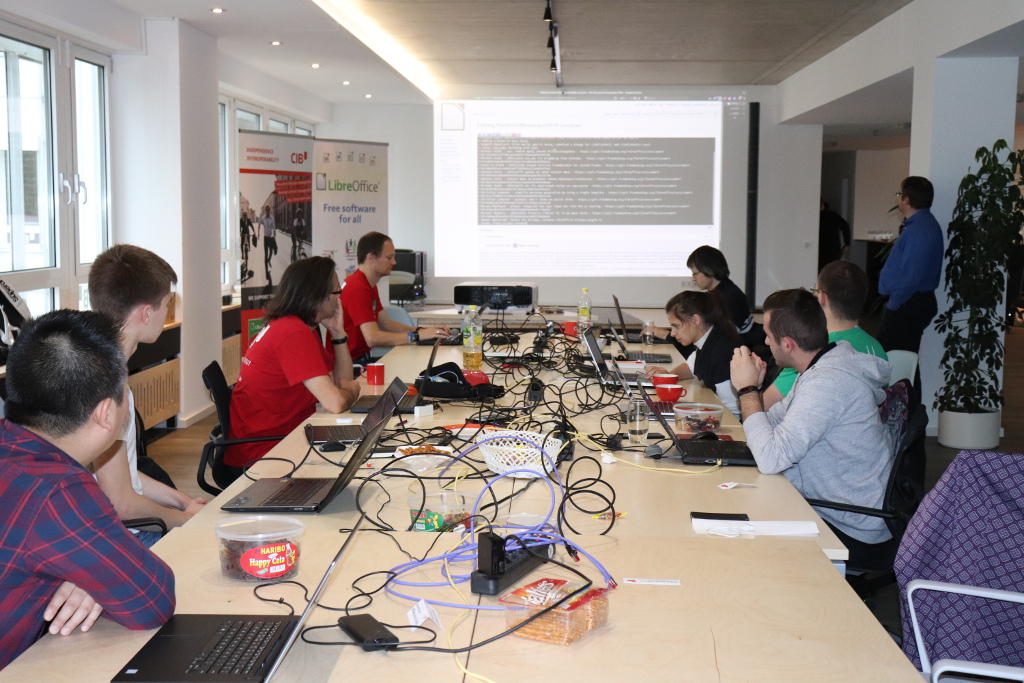
On the final day, participants presented their achievements:

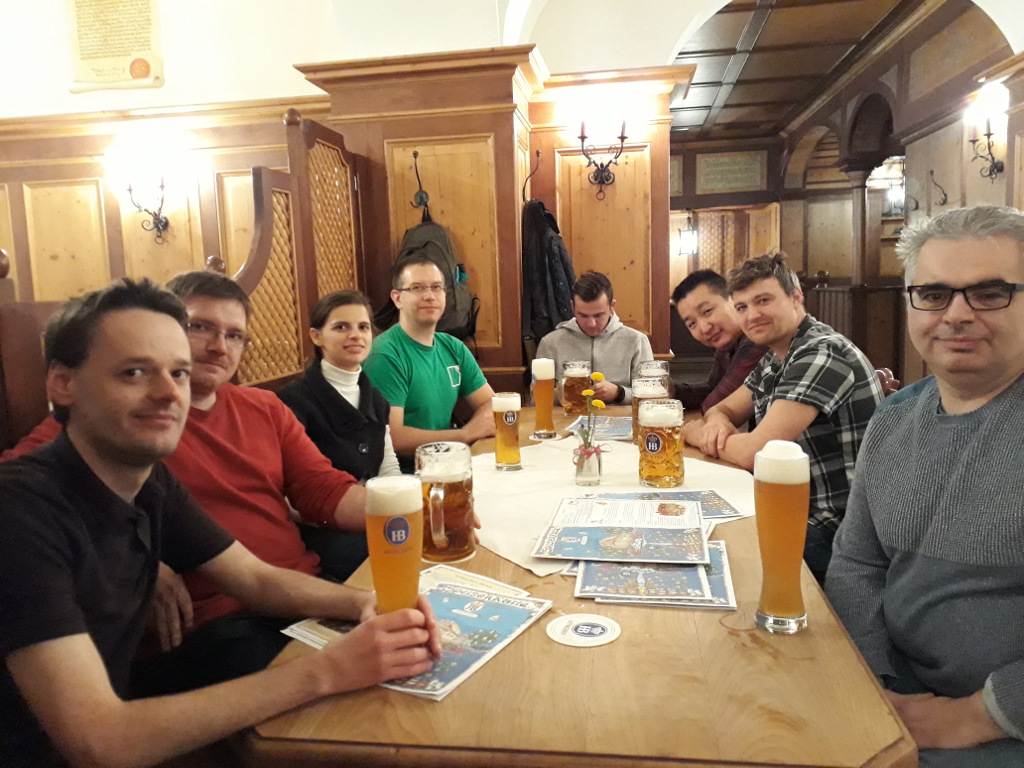
Most people headed home after that, but a few stayed around for a quick city tour and beer at the world-famous Hofbräuhaus:

We’ll be organising more hackfests next year, so keep an eye on this blog for updates!