OASIS announces the ODF Advocacy Open Project

The ODF Advocacy Open Project we have pre-announced at FOSDEM is now a reality. Yesterday, OASIS has released the following press release, which is just the first step of a new sustained activity focused on supporting the adoption of ODF – the only true standard document format available on the market – by governments, public administrations and enterprises worldwide, to increase interoperability (and thus knowledge sharing), reduce hidden costs associated to document management, and get rid of vendor lock-in.

OASIS Introduces Open Projects Program to Bridge Open Source and Standards Development

AirBus, CIB, Fujitsu, IBM, Red Hat, Siemens, Software AG, The Document Foundation, and others sponsor Open Projects

Boston, May 8, 2019 – OASIS, a global nonprofit consortium, today announced the launch of Open Projects, the first-of-its-kind program that creates a more transparent and collaborative future for open source and standards development. Open Projects gives communities the power to develop what they choose–APIs, code, specifications, reference implementations, guidelines– in one place, under open source licenses, with a path to recognition in global policy and procurement.

The lines between open source and open standards have been blurring for some time, and communities in both arenas have been calling for more flexibility and options for collaboration. Open Projects is a new approach that addresses the need for change in everything from handling IP to governance and decision-making, from funding to establishing trust and assuring quality.

“With Open Projects, we’re building a movement to transform the open source and standards world,” said Gershon Janssen, Chairman, OASIS Board of Directors. “We want to dissolve the barriers that separate communities. We want to empower groups with more control and streamlined governance. We want to support projects by giving them all the process they need–and not a bit more–so they can accomplish great things fast.”

Open Projects builds on the OASIS experience and reputation for producing quality work that’s been trusted and supported by governments and industries worldwide for more than 25 years.

“For many, open source has become a means of establishing de facto software standards. However, de facto standards are not recognized by many governments and institutions,” said Chris Ferris, IBM Fellow and CTO Open Tech for IBM. “OASIS Open Projects provides an important new opportunity to leverage the rapid innovation of open source in the process of developing open standards. The potential to achieve ISO, IEC, or ITU standards approval is a huge value for many important open source initiatives.” Ferris, who also holds a leadership position on the Hyperledger Fabric project, played an instrumental role in defining the OASIS Open Projects program and now serves on its Advisory Council.

The Open Projects program is being advanced by some of the most accomplished, regarded minds in open source today.

As part of the program announcement, OASIS is launching the first two Open Projects – Open Services for Lifecycle Collaboration (OSLC) and OpenDocument Format (ODF) Advocacy.

The OSLC Open Project advances a suite of standard REST APIs to connect data and achieve the digital thread across domains, applications, and organizations. It is sponsored by AirBus, Austrian Institute of Technology, Bank of America, Boeing, Dassault, Fujitsu, IBM, Koneksys, KTH Royal Institute of Technology, Red Hat, Siemens, Software AG, and Tasktop.

“OSLC helps create standard REST APIs that solve industry integration challenges,” said Andrew Berezovskyi of the KTH Royal Institute of Technology. “Open Projects enables the OSLC community to produce deliverables that meet requirements from various stakeholders without being hindered by the weight of foundation bureaucracy or the baggage that comes with financial, legal, technical, and marketing administration.”

The ODF Advocacy Open Project promotes the world’s leading document standard. After being approved as an OASIS Standard, ODF was recognized by ISO/IEC and endorsed by governments around the world as a way to ensure permanent access to data and eliminate the risk of vendor lock-in. The ODF Advocacy Open Project is sponsored by CIB and The Document Foundation.

“ODF guarantees perennial access to data that can be transferred in a transparent way between different apps, computers and operating systems, getting rid of hidden interoperability costs, vendor lock-in issues and license fees,” said Italo Vignoli, Co-Founder, The Document Foundation.

Additional Open Projects for blockchain and other areas will be announced in the coming months. Further details about OASIS Open Projects are available here or email info@oasis-open-projects.org.

First Bug Hunting Session for LibreOffice 6.3

LibreOffice 6.3 is being developed by our worldwide community, and is due to be released in early August 2019 (see release notes describing the new features here).

In order to find, report and triage bugs, the LibreOffice QA team is organizing the first Bug Hunting Session for LibreOffice 6.3 on Monday May 13, 2019. Tests will be performed on the first Alpha version, which will be available on the pre-releases server a few days before the event. Builds will be available for Linux (DEB and RPM), macOS and Windows, and can be installed and run in parallel along with the production version.

Mentors will be available from 07:00 UTC to 19:00 UTC for questions or help in the IRC channel #libreoffice-qa and the Telegram QA Channel. Of course, hunting bugs will be possible also on other days, as the builds of this particular Alpha release (LibreOffice 6.3.0 Alpha 1) will be available until the end of May. Check the Release Plan.

During the day there will be a dedicated session to test the ongoing work in the KDE5 integration from 14:00 and 16:00 UTC.

All details of the first bug hunting session are available on the wiki.

Next C++ workshop: Binary Trees, 9 May at 18:00 UTC

Boost your C++ skills with the help of LibreOffice developers! We’re running regular workshops which focus on a specific topic, and are accompanied by a real-time IRC meeting. For the next one, the topic is Binary Trees. Start by watching this presentation:

Please confirm that you want to play a YouTube video. By accepting, you will be accessing content from YouTube, a service provided by an external third party.

YouTube privacy policy

If you accept this notice, your choice will be saved and the page will refresh.

And check out the suggested EasyHacks.

Then join us for a discussion via our #libreoffice-dev IRC channel. You can ask experienced LibreOffice developers questions, and learn more about the language. See you then!

First LibreOffice Latin America Conference: Call For Papers

The Document Foundation invites all members and contributors to submit talks, lectures and workshops for this year’s First LibreOffice Latin America Conference in Asunción, Paraguay. The event is scheduled for mid July, from Friday 19 to Saturday 20. Whether you are a seasoned presenter or have never spoken in public before, if you have something interesting to share about LibreOffice or the Document Liberation Project we want to hear from you!

Proposals should be filed by May 31st, 2019, in order to guarantee that they will be considered for inclusion in the conference program.

The conference program will be based on the following tracks:

a) Cases of migration to LibreOffice

b) Standard OpenDocument Format (ODF)

c) Community & Ecosystem

d) Resources & functionalities of LibreOffice

e) Quality Assurance

f) Localization, Documentation and Native Language Projects

g) Advocating LibreOffice

Presentations, case studies, workshops, and technical talks will discuss a subject in depth, and will last 30 minutes (including Q&A). Lightning talks will cover a specific topic and will last 5 minutes (including Q&A). To submit your proposal, visit https://latam.conference.libreoffice.org/

The talks will be presented in the auditorium of the Polytechnic Faculty of the National University of Asuncion (FPUNA). The authors of the approved talks will be notified by e-mail as of June 10 and the publication of the preliminary programming grid will be carried out on June 30. The event is free and registration is open.

If you do not agree to provide the data for the talk under the Creative Commons Attribution-Share Alike 4.0 License please explicitly state your terms.

If you want to give multiple talks please send a separate response for each.

Release of LibreOffice 6.1.6

Berlin, May 7, 2019 – The Document Foundation announces LibreOffice 6.1.6, the 6th minor release of the LibreOffice 6.1 family, targeted to users in production environments. This is a more mature version of the software which includes some months of back-ported fixes.

LibreOffice 6.1.6’s change log pages, with a list of bug and regression fixes, are available on TDF’s wiki: https://wiki.documentfoundation.org/Releases/6.1.6/RC1 (changed in RC1) https://wiki.documentfoundation.org/Releases/6.1.6/RC2 (changed in RC2) and https://wiki.documentfoundation.org/Releases/6.1.6/RC3 (changed in RC3).

LibreOffice users are invited to join the community at https://ask.libreoffice.org, where they can get and provide user-to-user support. While TDF can not provide commercial level support, there are guides, manuals, tutorials and HowTos on the website and the wiki. Your donations help us make these available.

Enterprise Deployments

Organizations looking for an enterprise class application backed by support and service level agreements (SLA) should source a LibreOffice LTS (Long Term Supported) version from those TDF Advisory Board members who provide this product (https://www.documentfoundation.org/governance/advisory-board/).

Also, value-added services for enterprise class deployments – related to software support, migrations and training – should be sourced from certified professionals (https://www.libreoffice.org/get-help/professional-support/).

Sourcing software and/or services from the ecosystem of certified professionals represents the best support option for enterprises deploying LibreOffice on a large number of desktops. In fact, these activities are contributed back to the project under the form of improvements to the software and the community, and trigger a virtuous circle which is beneficial to users and all other stakeholders.

Availability of LibreOffice 6.1.6

LibreOffice 6.1.6 is immediately available from the following link: https://www.libreoffice.org/download/. Minimum requirements for proprietary operating systems are Microsoft Windows 7 SP1 and Apple macOS 10.9. Builds of the latest LibreOffice Online source code are also available as Docker images: https://hub.docker.com/r/libreoffice/online/.

LibreOffice Online is fundamentally a server-based platform, and should be installed and configured by adding cloud storage and an SSL certificate. It might be considered an enabling technology for the cloud services offered by ISPs or the private cloud of enterprises and large organizations.

LibreOffice users, free software advocates and community members can support The Document Foundation with a donation at https://www.libreoffice.org/donate.

LibreOffice 6.1.6 is built with document conversion libraries from the Document Liberation Project: https://www.documentliberation.org.

TDF is Google Seasons of Doc Mentoring Organization

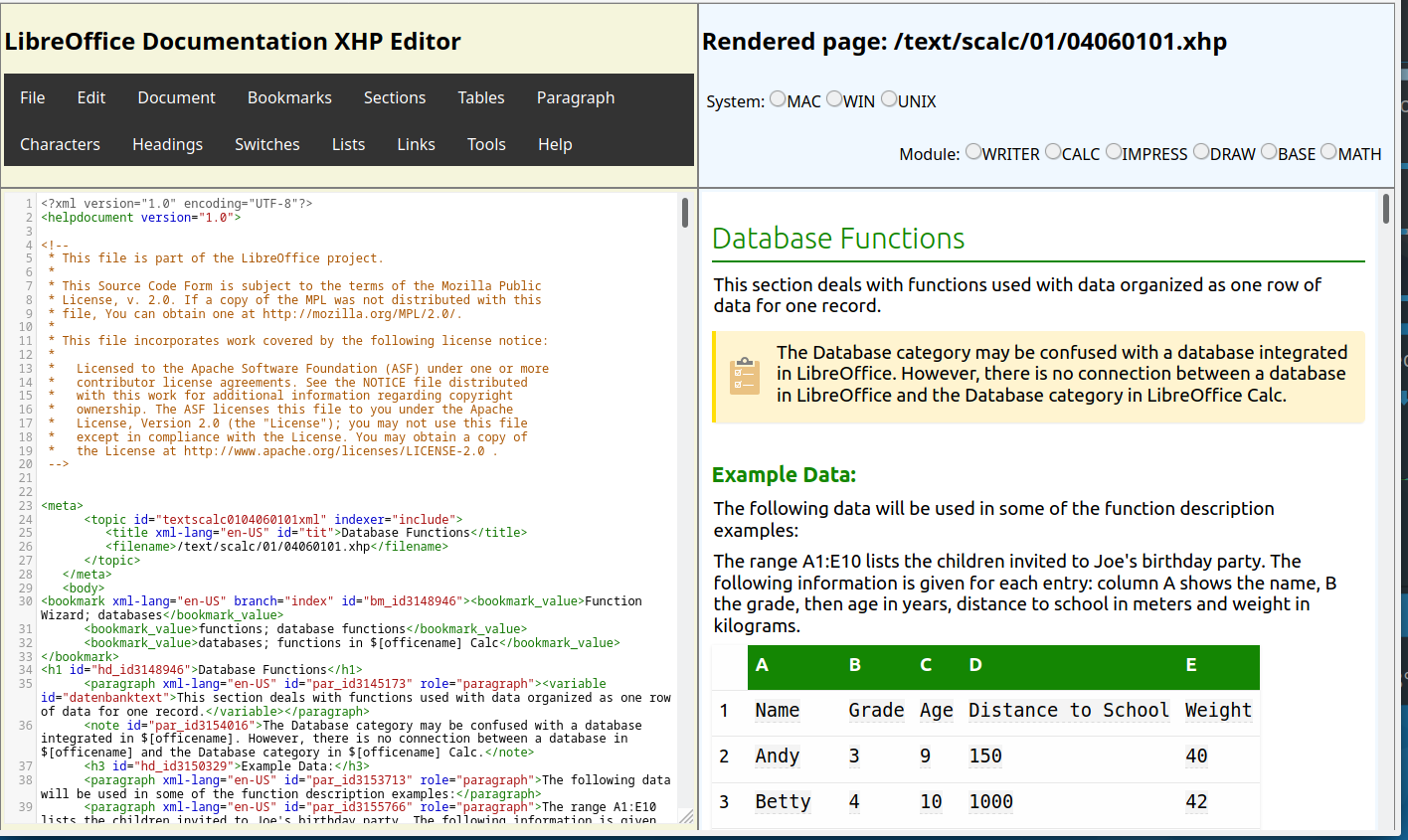
The Document Foundation has been accepted as organization for the Google Seasons of Docs, a project whose goals are to give technical writers an opportunity to gain experience in contributing to open source projects, and to give open source projects an opportunity to engage the technical writing community.

For technical writers who are new to open source, the program provides an opportunity to gain experience in contributing to open source projects. For technical writers who’re already working in open source, the program provides a potentially new way of working together.

During the program, technical writers will spend a few months working closely with the LibreOffice community, bringing their technical writing expertise to the project’s documentation, and at the same time learn about the open source project and new technologies. At the same time, LibreOffice documentation team members will work with the technical writers to improve the project’s documentation and processes.

LibreOffice is an advanced office suite covering may areas of knowledge, from maths and sciences, engineering, financials, editing, drawing, printing and more. LibreOffice is also that kind of application that is used cross-industry, a very rich opportunity for technical writing.

Olivier Hallot, LibreOffice documentation coordinator, will lead the GSoD project, supported by Sophie Gautier and by members of the LibreOffice documentation team such as Drew Jensen, who has immediately created a banner to visually support this community effort.

All information about the Google Summer of Docs project are on the GSoD website. An outline of the project’s different steps is available on the GSoD timeline. The next deadline in the process for The Document Foundation is May 28th, as we we have to find interested technical writers to discuss our ideas, which are summarized on the following TDF wiki page. The list includes some of our project’s permanent challenges, but should not be limited to these items.

LibreOffice contributors who are interested in becoming a mentor for the GSoD project should get in touch with Olivier Hallot by sending him a message or by subscribing to the documentation mailing list.