Join the LibreOffice Team as a Quality Assurance Analyst (m/f/d), 40h per week, remote

The Document Foundation (TDF) is the non-profit entity behind the world’s leading open source office suite, LibreOffice. We are truly passionate about free software, the open source culture and about bringing new companies and people with fresh ideas into our community, especially in the second decade of our project.

Quality Assurance Analyst

To improve the quality assurance process of LibreOffice, the office productivity suite for over 200 million users around the globe 🌎, we’re searching for a Quality Assurance Analyst (m/f/d) to start work as soon as possible.

The role, which is scheduled for 40 hours per week, includes among other items:

  • Help community outreach to encourage more people to join the QA team
  • Help on-boarding new QA contributors
  • Foster communication between QA and other teams, like engineering and documentation
  • Triage unconfirmed bugs that are not handled in a reasonable time
  • Categorize confirmed bugs
  • Retest old reports
  • Analyze regression bugs identified longer than a month
  • Based on bug categorization support the Board of Directors with Bugzilla metrics about possible impact of development project proposals
  • Support the Board of Directors in proper understanding of LibreOffice features that may be worth further developing by providing relevant data from Bugzilla
  • Help with informing decision-making towards improving the ODF standard and file-format interoperability in general

The role requires the following:

  • Good understanding of office suites and LibreOffice in particular from a user’s viewpoint
  • Understanding of many of the features within each component and ability to learn other features quickly
  • Understanding of Bugzilla or another bugtracking system
  • An understanding of quality assurance procedures
  • Essential understanding of Git

Bonus points if you have:

  • A firm understanding of bibisect process used in LibreOffice QA
  • Python coding and/or test automation experience
  • UX experience
  • C++ coding experience

Speaking and writing English fluently is a mandatory requirement. Another language like German, Spanish or Chinese is a bonus.

A previously established relationship within the quality assurance team as well as with other teams including development and marketing, and with the users is a plus, but it is not mandatory at the start and can be achieved during the work itself.

As always, TDF will give some preference to individuals who have previously shown a commitment to TDF, including but not limited to members of TDF. Not being a member does not exclude any applicants from consideration.

Here’s how a typical day in your new role might look like:

You start your day by looking in unconfirmed bugs. There, you read the bug description and look at the provided samples, and try to find out if the bug is reproducible or not. You try to categorize the bug and add useful information and add relevant people to the page.

You try to determine if the bug is a regression or not, and if it is, bibisect the bug and add the one who has introduced the regression.

You should be able to communicate effectively with the current QA team and also work with the new contributors and help them grow their skills where needed and encourage them to become active in different areas of the QA process. Especially for new contributors, you will introduce them not only to our community culture, but also to our variety of tools and methods including Bugzilla, bibisect and others.

Join us!

TDF welcomes applications from all suitably qualified persons regardless of their race, sex, disability, religion/belief, sexual orientation or age.

All jobs at The Document Foundation are remote jobs 🌟, where you can work from your home office or a co-working space. The work time ⌚ during the day is flexible, apart from very few fixed meetings. The role is offered as full-time, 40 hours per week. For technical reasons we are currently accepting applications only from countries where remote.com offers active payroll services.

Are you interested? Get in touch! We aim to schedule the first interview within two weeks of your application. You can also approach us anytime for an informal chat to learn about the role or in case of questions.

TDF welcomes applications from all suitably qualified persons regardless of their race, gender, disability, religion/belief, sexual orientation or age. Don’t be afraid to be different, and stay true to yourself. We like you that way!

We are looking forward to receiving your application, including information about you, when you are available for the job, and of course your financial expectations. Pointing to public repositories with your code is very helpful. Please send us an e-mail to qa.application@documentfoundation.org no later than September 1, 2022. If you haven’t received feedback by September 30, 2022, your application could not be considered.

Note: We do not accept agency resumes. Please do not forward resumes to any recruiting alias or employee.

Join the LibreOffice Team as a Web Technology Engineer (m/f/d), 10-20h per week, remote

The Document Foundation (TDF) is the non-profit entity behind the world’s leading open source office suite, LibreOffice. We are truly passionate about free software and the open source culture.

To provide high quality tools for our contributors, together working on office productivity for over 200 million users around the globe 🌎, we are searching for a Web Technology Engineer (m/f/d) to start work as soon as possible.

As our future Web Technology Engineer, you work with a great team and collaborate with volunteers around the globe to:

  • Maintain and improve the user-facing (frontend) part of our web applications. This includes external and internal applications, and some custom projects.
  • Implement features and fixes to the applications we use (see the list below for some examples)
  • Take care of localisation needs and accessibility requirements for our tools
  • Make as many of our web-based tools as possible usable both with desktop and mobile devices
  • Evaluate web technologies and bring them to TDF web services

To succeed in this new role, you ideally already have some of the following skills:

  • Self-driven and a motivated team player
  • Fluent in HTML and CSS
  • Demonstrable JavaScript coding experience of at least three years
  • Some experience with TypeScript
  • Experience in backend development (e.g. Django and Python) and/or system administration is a plus
  • Contribution history in FLOSS communities is a plus
  • Design skills are a plus (UX or visual)
  • Experience in implementations conforming with accessibility requirements is a plus
  • Previous experience in remote work
  • Fluent written and spoken English is a mandatory requirement

Examples of the technologies and applications we use:

All jobs at The Document Foundation are remote jobs 🌟, where you can work from your home office or a coworking space. The work time ⌚ during the day is flexible, apart from very few fixed meetings.

Are you interested? Get in touch! We aim to schedule the first interview within two weeks of your application. You can also approach us anytime for an informal chat to learn about the role or in case of questions.

TDF welcomes applications from all suitably qualified persons regardless of their race, gender, disability, religion/belief, sexual orientation or age. Don’t be afraid to be different, and stay true to yourself. We like you that way!

We are looking forward to receiving your application, including information about you, when you are available for the job, and of course your financial expectations. Pointing to public repositories with your code is very helpful. Please send us an e-mail to webtech.application@documentfoundation.org no later than August 12, 2022. If you haven’t received feedback by September 9, 2022, your application could not be considered.

Note: We do not accept agency resumes. Please do not forward resumes to any recruiting alias or employee.

Tender to clean up and further improve ODF conformance (#202202-01)

The Document Foundation (TDF) is the charitable entity behind the world’s leading free/libre open source (FLOSS) office suite LibreOffice.

We are looking for an individual or company to clean up and further improve ODF conformance.

The default file format of LibreOffice is ODF, the Open Document Format. We have successfully tendered two projects on the current version 1.3 recently:

The scope of this tender is to further improve the ODF conformance in LibreOffice. Note however that the majority of the items mentioned below are unrelated to ODF version 1.3, and have existed before support of this version was introduced in LibreOffice.

Deliverables

  1. Get ODFAutoTests (https://gitlab.com/odfplugfest/odfautotests) to run again. Note: This item does not ask to setup a publicly available website.
  2. Address one or more of the following high priority issues:
    1. “svg gradient” – Bugs 48392, 76682. Bug 48392 is prerequisite for Bug 76682.
    2. “list indent” – Bugs 78510, 92762, 114287, 83532, 82179, 145318
    3. “Math inline in text box” – Bug 129061. From user point of view it has highest priority.
    4. “numbered paragraph” – Bug 62032, 108868. The internal work is done. But a UI is missing. The expected UI needs to be specified.
    5. “ODF conformance part 1” – These are those errors, which are in most cases not visible for users, and therefore likely never included in a customer contract. Bug 53992, 101758, 103602.

    Please propose a subset and prioritization of these bugs, that do not exceed the person days factored in for this tender, see below.

  3. Address one or more of the following lower priority issues:
    1. “ODF conformance part 2” Bug 106934, Bug 91472, 97706, 107253, 108536, 113404, 113554, 116321, 131148
    2. “Trailing space in cell text not encoded as <text:s/>” – Bug 113726
    3. “FILEOPEN PPTX: equation not displayed because Impress doesn’t support inline formulas”, in particular the as-char embedded object – Bug 129061
    4. “ODF database mime-type confusion” – Bug 45854
    5. “table: evaluates <text:variable-set> in body of float and void cells, but not of string cells” – Bug 68024
    6. “Implement ODF attribute fo:hyphenate to exclude a portion of text from hyphenation” – Bug 106733
    7. “FILESAVE: Form: incorrect ‘time’ type” – Bug 131127
    8. “FILESAVE: Date form: unexpected attribute ‘form:input-required’ – Bug 131148, cf. also https://issues.oasis-open.org/browse/OFFICE-4121

    Please propose a subset and prioritization of these bugs, that do not exceed the person days factored in for this tender, see below.

The work has to be developed on LibreOffice master, so that it will be released in the next major version.

A key item of the deliverables for this tender is extensive documentation, about the approach chosen to implement the above items. We expect bidders to provide documentation on both the code and the non-code parts of this tender, e.g. methodology, structure and technical aspects. The Document Foundation will publish this under a free and open source license and make it available to the general public.

Required skills

  • Extensive knowledge of C++
  • Experience working on the LibreOffice source code

Other skills

  • English (conversationally fluent in order to coordinate and plan with members of TDF)

We use free, libre and open source (FLOSS) software for development wherever possible, and the resulting work must be licensed under the Mozilla Public License v2.0.

TDF welcomes applications from all suitably qualified persons regardless of their race, sex, disability, religion/belief, sexual orientation or age.

Bidders will get a preference for including a partner or independent developer who has not been involved in a successful tender before.

As always, TDF will give some preference to individuals who have previously shown a commitment to TDF, including but not limited to certified developers and/or members of TDF. Not being a member, or never having contributed before, does not exclude any applicants from consideration.

The task offered is a project-based one-off, with no immediate plans to a mid- or long-term contractual relationship. It is offered on a freelance, project basis. Individuals and companies applying can be located anywhere in the world.

When budgeting, we anticipated that this project (all items combined) to take in the region of 40 days of work. Should bidders’ assessment result in a significantly different number, please reach out to us before sending your bid, so we can clarify upfront.

TDF is looking forward to receiving your applications for one or more of the aforementioned tasks, your financial expectations and the earliest date of your availability, via e-mail to a committee at tender20220201@documentfoundation.org no later than March 31, 2022.

Applicants who have not received feedback by April 29, 2022 should consider that their application, after careful review, was not accepted.

All bidders are invited to ask their questions on this tender until March 24, 2022. Questions and answers will be made public in a collected and anonymized form.

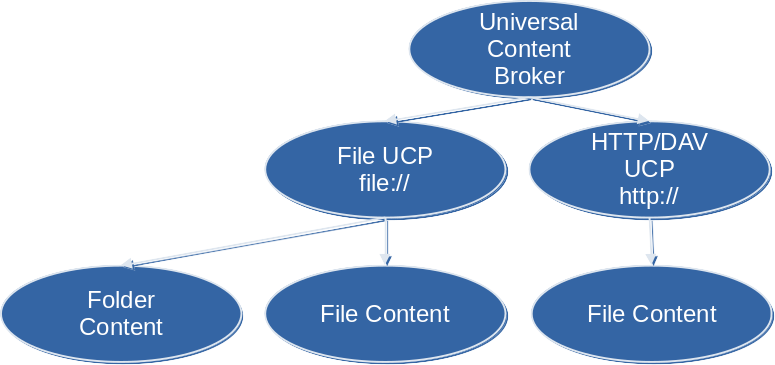
Update on tender to implement Curl based HTTP/WebDAV UCP (#202104-01)

In April last year, The Document Foundation posted a tender to implement Curl based HTTP/WebDAV UCP in LibreOffice. Now we have an update from allotropia, the company that won the tender:


This is to report the recent activities we performed.

  • We held a presentation during this year’s FOSDEM conference, giving an in-depth account of what we did, why we did it, and the problems we’ve met. Both video and slides are available, licensed as CC-BY 2.0 BE currently.
  • We’ve accompanied that with a blog post, going into detail.
  • Additionally, we’ve fixed a number of additional bugs; all told, we believe the implementation is now definitely production-ready (and likely quite better than the old ones).

All included, we provided a total of 126 commits, that went into this development work (there were also 7 community contributions), which includes the previous work by Giuseppe. You can see the full list from the core repo, via:

git log --grep='webdav-curl'

…or see this link. From our side, this now concludes work on this tender. We hope the services rendered were satisfactory, and both The Document Foundation and the LibreOffice users will enjoy the new implementation!


Tender to optimize text layout performance for print and PDF export (#202112-01)

The Document Foundation (TDF) is the charitable entity behind the world’s leading free/libre open source (FLOSS) office suite LibreOffice.

We are looking for an individual or company to optimize text layout performance for print and PDF export.

The text layout performance as currently implemented in LibreOffice has lots of issues. All over the codebase text shaping is done over and over again, although it consumes quite some compute cycles. Text shaping is done each time for measuring the text, measuring parts of text, finding line breaks, drawing text on screen. Especially for more involved scripts than Latin, this is problematic. The above issues are especially problematic for printing or PDF export. The time to export a PDF or print a Latin text has doubled since the Harfbuzz implementation.

It’s up to the bidder how to solve the problem. Some possible solutions could be:

  • retaining shaping results much longer
  • improving the wasteful OutputDevice API
  • implement caching

The scope of this tender is to fix at least the following issues:

Further reference can be found at:

All technology standards of relevance, as well as their targeted versions for this tender should be declared or defined in the offer’s description of implementation.

A key item of the deliverables for this tender, and therefore also a decision criteria – besides qualification, references, price, and completness of fullfilment – is extensive documentation about the approach chosen to implement the above items, covering more than just the pure implementation. We expect bidders to provide documentation on both the code and the non-code parts of this tender, e.g. methodology, structure and technical aspects.

The Document Foundation will publish this under a free and open source license and make it available to the general public.

Required skills

  • Extensive knowledge of C++
  • Experience working on the LibreOffice source code

Other skills

  • English (conversationally fluent in order to coordinate and plan with members of TDF)

We use free, libre and open source (FLOSS) software for development wherever possible, and the resulting work must be licensed under the Mozilla Public License v2.0.

TDF welcomes applications from all suitably qualified persons regardless of their race, sex, disability, religion/belief, sexual orientation or age.

Bidders will get a preference for including a partner or independent developer who has not been involved in a successful tender before. For such developers, who have not yet been part of a successful tender bid, we aim on a best-effort basis, but without any guarantees whatsoever, to provide some mentoring in understanding the code base and the process in contributing to the code. We expect that time and efforts on the bidder’s side should not be part of the paid work for this tender. Please mention such need of LibreOffice development mentoring in your offer.

As always, TDF will give some preference to individuals who have previously shown a commitment to TDF, including but not limited to certified developers and/or members of TDF. Not being a member, or never having contributed before, does not exclude any applicants from consideration.

The task offered is a project-based one-off, with no immediate plans to a mid- or long-term contractual relationship. It is offered on a freelance, project basis. Individuals and companies applying can be located anywhere in the world.

When budgeting, we anticipated that this project (all items combined) to take in the region of 30 days of work. Should bidders’ assessment result in a significantly different number, please reach out to us before sending your bid, so we can clarify upfront.

TDF is looking forward to receiving your applications, your financial expectations offer in form of a fixed time fixed budget approach and the duration period for the implementation in calender weeks after the final reward of the tender, via e-mail to a committee at tender20211201@documentfoundation.org no later than January 21, 2022.

Applicants who have not received feedback by February 18, 2022 should consider that their application, after careful review, was not accepted.

All bidders are invited to ask their questions on this tender until January 14, 2022. Questions and answers will be made public in a collected and anonymized form.

Tender to implement C++ accessibility tests (#202110-01)

The Document Foundation (TDF) is the charitable entity behind the world’s leading free/libre open source (FLOSS) office suite LibreOffice.

We are looking for an individual or company to implement C++ accessibility tests.

The work has to be developed on LibreOffice master, so that it will be released in the next major version.

The current accessibility tests are rather incomplete and hard to maintain. Additionally, they are written in Java.

The scope of this tender is to convert them into in-process cppunit-based tests and create a solid foundation in both code as well as documentation to facilitate extending the coverage both as part of this tender as well as for follow-up contributions. TDF aims to prepare a good infrastructure and documentation, so that adding further tests is much simpler in the future, even for new kinds of widgets, up to a point where they could be implemented as part of our EasyHacks. The implementation therefore has to be solid and thorough to support future test cases easily.

We recommend the following steps to approach the tender deliverable:

  • assessing the technical requirements (both using the existing tests to convert, plus the various requirements of a11y in general)
  • assessing the current status
  • designing and creating the new required interfaces, or adapting or augmenting existing ones
  • creating helpers to ease writing tests
  • writing some tests to both serve as examples and proof of concept (at least a couple for each key aspect of testing, but exercising the infrastructure to validate it is key to having something that has a chance of withstanding the test of time)
  • extensive documentation on all those, plus how to write tests and such
  • peer review

Therefore, this tender should provide the infrastructure to:

  • Test the interfaces (AT-SPI, UIA, MSAA, etc.) allowing accessibility tools (ATs) such as e.g. screen readers, magnifier glasses, etc. to access the information required to perform their tasks. This requires testing the LibreOffice implementation of the AT interfaces themselves to catch issues at the outer edge. It is crucial because even if all is well working inside LibreOffice itself, but the information is not properly sent to the platform, it still won’t work for users. Also, it probably has to be done for each platform separately (Desktop Linux (AT-SPI2), Windows (UIA, MSAA), macOS etc.) as their APIs are different, even if often similar, and have separate modules in LibreOffice.
  • Test that there is enough information sent through those interfaces and that it is accurate and usable. This could rely on internal unified interfaces to fetch information and interact with the UI, but there still is a fair bit of diversity on what needs to be tested.
  • Test that functionalities are usable with different type of input (e.g. work with the keyboard, as it’s the most common offender). Also this could rely on internal unified interfaces to fetch information and interact with the UI, but there still is a fair bit of diversity on what needs to be tested.

A key item of the deliverables for this tender is the extensive documentation (in addition to the source-code documentation) that will allow to both maintain the converted tests as well as create additional tests. The documentation shall include (but is not limited to) common pitfalls with accessibility related tests (like timeouts/waiting for events/deal with load dependent/parallelism differences) and how to deal with them. The documentation could walk the developer through the process behind the creation of newly created tests, showcasing both the obvious and not-so-obvious hurdles with that specific tests/a11y related tests in general and how they were dealt with. Aiming for an extendable framework, this likely requires creating new interfaces for missing functionality for reuse in tests.

We expect bidders to provide information on both the code and the non-code parts of this tender, e.g. methodology, structure and technical aspects. The Document Foundation will publish this under a free and open source license and make it available to the general public.

Required skills

  • Extensive knowledge of C++
  • Experience working on the LibreOffice source code

Other skills

  • English (conversationally fluent in order to coordinate and plan with members of TDF)

We use free, libre and open source (FLOSS) software for development wherever possible, and the resulting work must be licensed under the Mozilla Public License v2.0.

TDF welcomes applications from all suitably qualified persons regardless of their race, sex, disability, religion/belief, sexual orientation or age.

Bidders will get a preference for including a partner or independent developer who has not been involved in a successful tender before.

As always, TDF will give some preference to individuals who have previously shown a commitment to TDF, including but not limited to certified developers and/or members of TDF. Not being a member, or never having contributed before, does not exclude any applicants from consideration.

The task offered is a project-based one-off, with no immediate plans to a mid- or long-term contractual relationship. It is offered on a freelance, project basis. Individuals and companies applying can be located anywhere in the world.

When budgeting, we anticipated that this project (all items combined) to take in the region of 30 days of work. Should bidders’ assessment result in a significantly different number, please reach out to us before sending your bid, so we can clarify upfront.

TDF is looking forward to receiving your applications for one or more of the aforementioned tasks, your financial expectations and the earliest date of your availability, via e-mail to a committee at tender20211001@documentfoundation.org no later than November 26, 2021.

Applicants who have not received feedback by December 23, 2021 should consider that their application, after careful review, was not accepted.

All bidders are invited to ask their questions on this tender until November 19, 2021. Questions and answers will be made public in a collected and anonymized form.