Event reports: LibreOffice in Cyprus and Czech Republic

Throughout the year, LibreOffice community members attend events around the world, helping to promote free software and open standards. We’re really grateful for their work! Today we have a couple of reports from recent events – and we start with Muhammet Kara who has been busy in Cyprus:

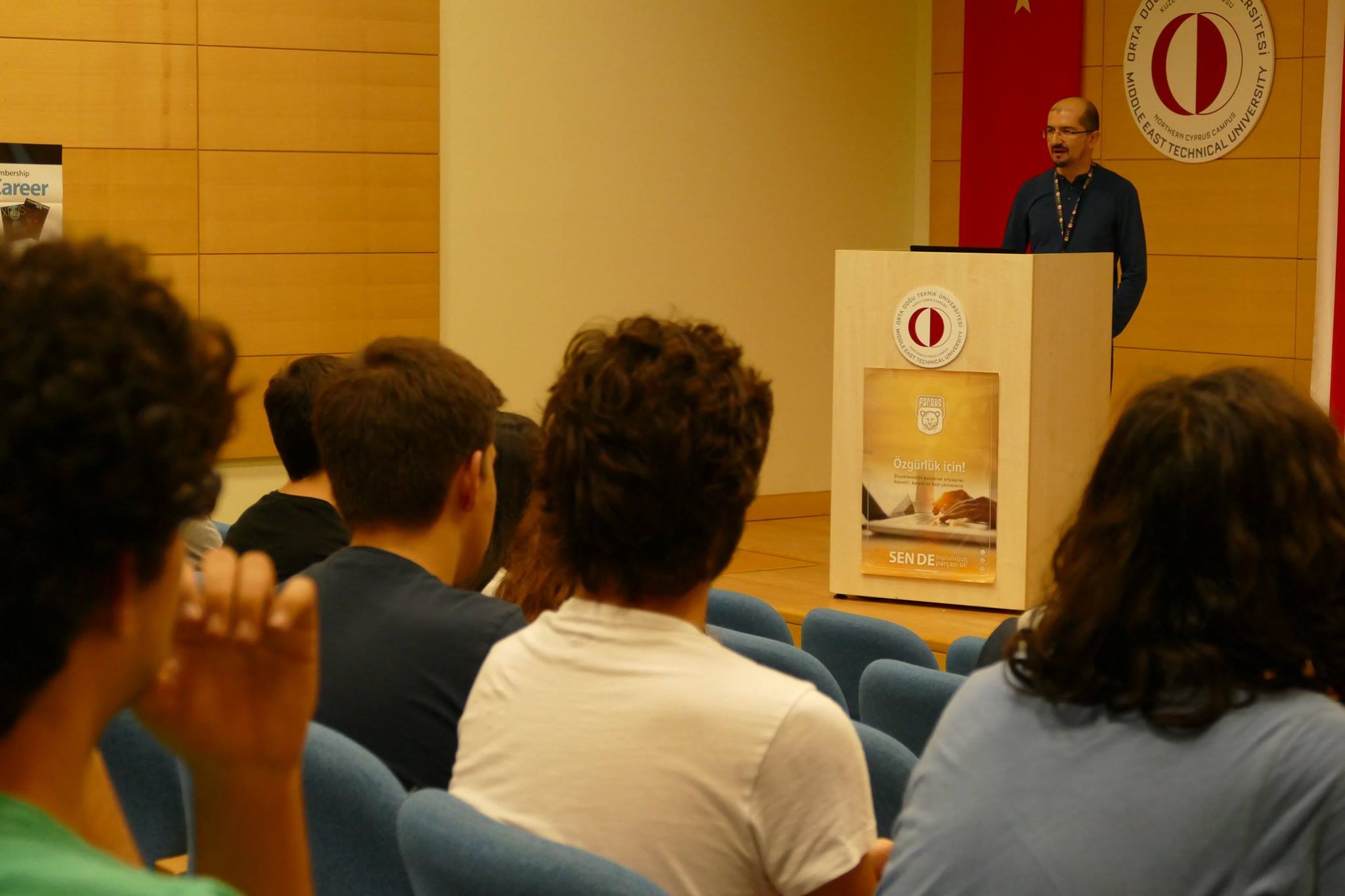
I attended the Free Software and Linux Seminar on October 20 at METU NCC (Northern Cyprus Campus). 60 people were there, all university students, and I talked about many topics: free Software, Linux, LibreOffice, ways to contribute, and opportunities like Google Summer of Code, Outreachy, and LibreLadies. Then I finished by answering their questions about Free Software, Linux, and Pardus. The excitement of the attendees was promising!

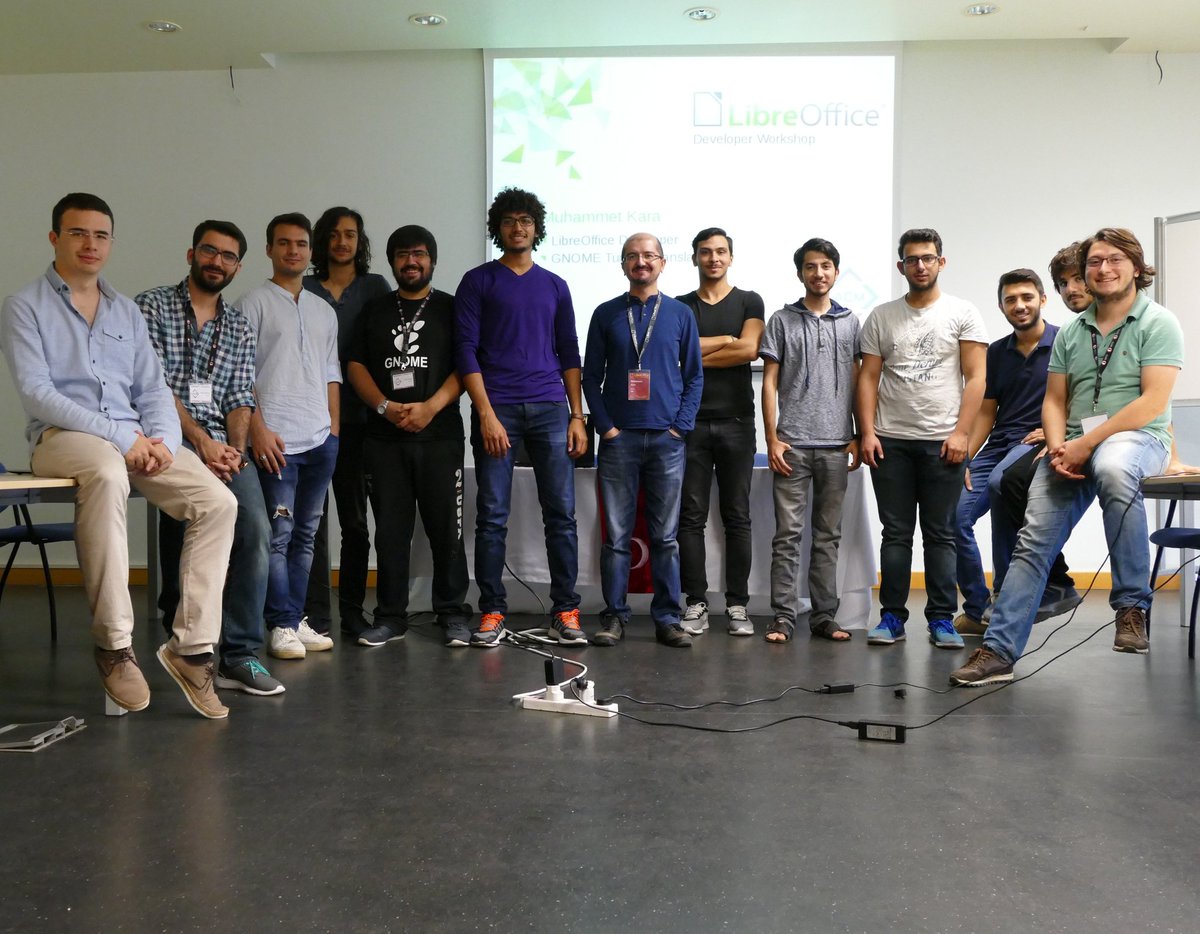
Then, on October 21 at METU NCC, I helped to organise a LibreOffice Developer Workshop. Many people were interested in joining this session, but I asked the organisers to bring a small group, so 10+ people attended. We formed a Telegram group with the attendees so that they can cooperate, and I can provide some hand-holding while they got their first patches merged. (So far two of them have had their patches submitted, reviewed, and ready to be merged. The first ones will also help the others to follow.) Overall, I am happy about the results.

LinuxDays 2017 in Prague

Next up, we have a report from Stanislav Horáček about a recent event in the Czech Republic:

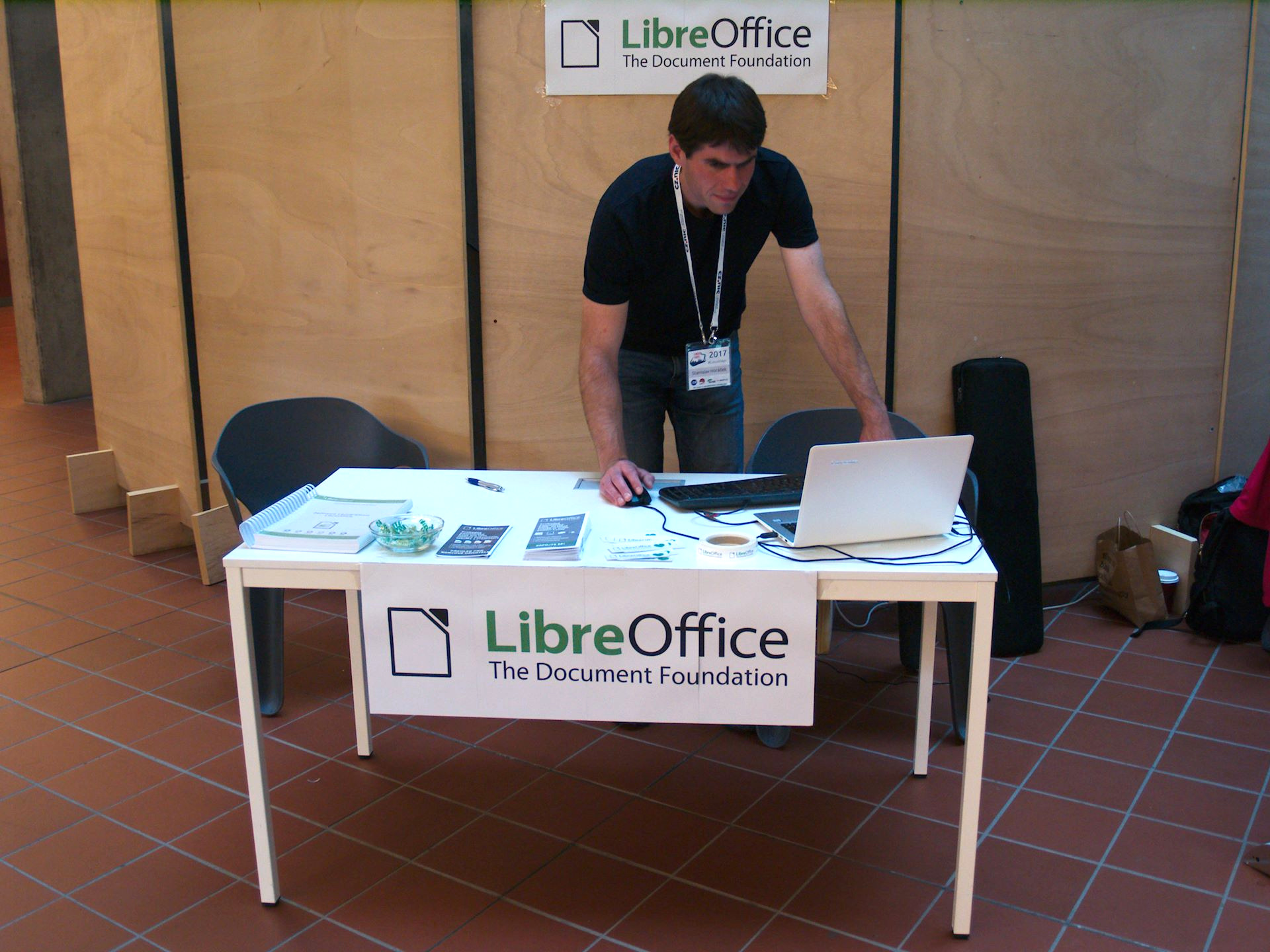
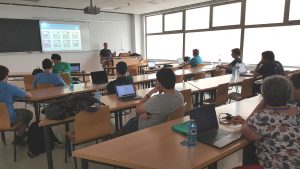
Zdeněk Crhonek and I attended LinuxDays, the biggest Linux event in the Czech Republic. A simple LibreOffice booth was managed there – here’s what it looked like (photo by Lukáš Jelínek):

We got useful feedback, and most of our visitors were satisfied with LibreOffice – there were fewer complaints about document compatibility than in previous years. In addition, there was interest in how development works and the role of The Document Foundation. We were surprised by some very specific questions (headless mode, Base, remote documents…) and it’s clear that LibreOffice Online is still generally not well known.

There was also a meeting of Czech localisation communities (Mozilla, GNOME, OpenSUSE) – we agreed to continue with cooperation (terminology and style consolidation, and an initiative to renew language dictionaries). Overall, I have a feeling that the Linux/FOSS community here is strong and growing, and it is great that LibreOffice can be part of it.

Thanks to Muhammet and Stanislav for their great work! We really appreciate your help spreading the word. And to others reading this: if you want to get involved as well and promote LibreOffice in your country, join our marketing mailing list and we’ll give you a hand!

Meeting the Taiwanese community

I have just visited Taiwan to attend COSCUP, meet representatives of the Taiwanese government and the local community, and run a certification session. Generally speaking, it was a very positive trip, because I was able to get a grasp of the activities at every level. Taiwan is definitely one of the strongholds of The Document Foundation.

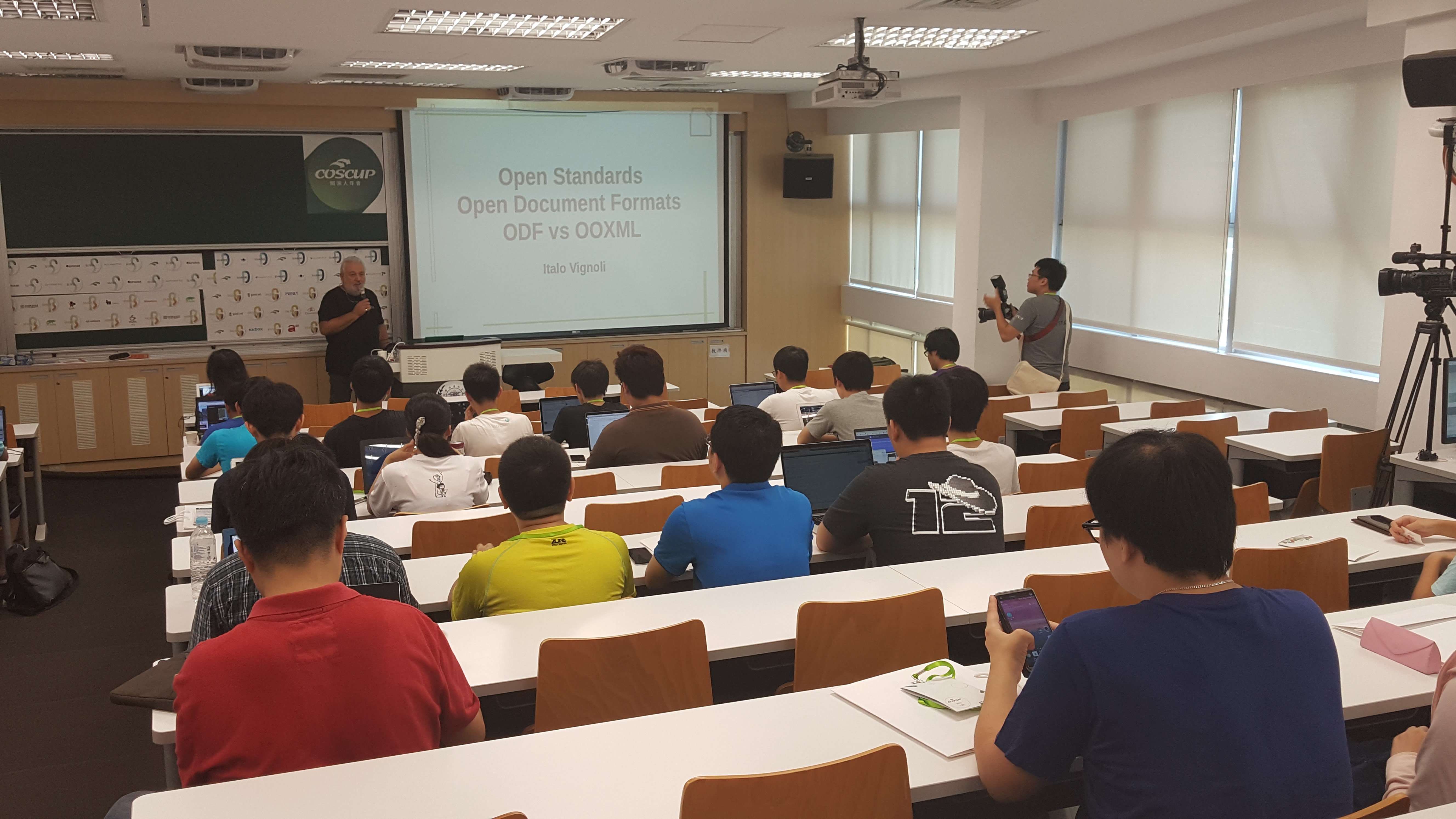
COSCUP is the annual conference held by the Taiwanese Open source community since 2006. This year, the event has returned to its original location at the National Taiwan University on August 5/6, with a number of community managed tracks. ODF and LibreOffice were featured during the first day, when I was able to present about the advantages of ODF over OOXML to a large audience of Taiwanese people – mostly young students – who asked several questions. Taiwan is one of the countries moving to ODF, so the topic is rather hot.

The meeting with representatives of the Taiwanese government, led by Digital Minister Audrey Tang, was organized on Monday, August 7, in the early afternoon. During the meeting, we discussed the situation of the migrations to ODF in Europe, together with the opportunities and the challenges faced by every government. I learned about the digital strategy of the Taiwanese government, and about the investments they are doing to introduce open source software to the next generations of citizens. Digital Minister Audrey Tang asked about the evolution of LibreOffice in the cloud.

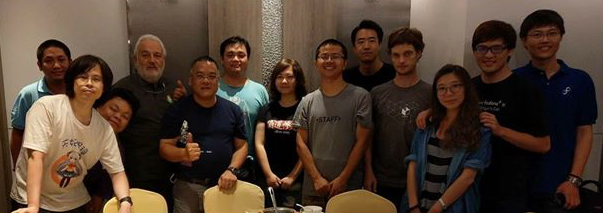
The meeting with the Taiwanese LibreOffice community spanned over a couple of events: a dinner on Saturday night, during which I had the opportunity to taste some real Chinese and Taiwanese dishes (which are rather different from their European equivalents), and a meetup on Monday night, during which I could talk about ODF vs OOXML, to provide some competitive marketing background on the topic. Moving from OOXML to ODF is not easy, not even in countries where the decision is backed by the government like Taiwan. It is therefore important that all community members know the differences between the two document formats and the advantages of ODF in term of interoperability and costs over OOXML.

I would like to take the opportunity of thanking LibreOffice Taiwanese community for the organization of my presence in the island, and congratulate the Taiwanese government for their comprehensive digital strategy to support not only open source software and open standards but also the education of a new generation of digital citizens.

LibreOffice at KDE’s Akademy meetup in Almeria

Collaboration is essential within free and open source software projects – but it’s also important between projects as well. For instance, many LibreOffice users and contributors run it on the GNU/Linux operating system, with KDE as the desktop environment. With this in mind, members of the LibreOffice community attended Akademy, the yearly summit of KDE developers, users and supporters. It was held this year in Almeria, Spain.

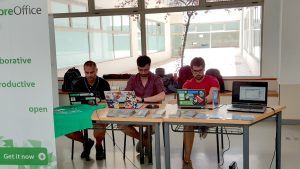
Gabriele Ponzo from LibreItalia, Teodor Mircea Ionita (TDF’s new Development Mentor) and Xisco Fauli (QA engineer) set up a stand for two days of the event. They answered questions from LibreOffice users, and handed out stickers and promotional flyers:

They were assisted by Franklin Weng and Jeff Huang from the Taiwanese LibreOffice community. Franklin gave two presentations:

He also hosted a Birds of a Feather (BoF) session entitled “Migrating FOSS and KDE – Does KDE have chances?”, while Jeff gave a talk about the challenges faced by translation teams. Gabriele and Xisco ran BoF sessions on the value of becoming a TDF member, and they also discussed the newly-released LibreOffice 5.4.

Teodor summarised the event with: “Being somewhat new to the LibreOffice project, this has been a very lucrative opportunity to learn a lot regarding the community and how it works, meet members in person and get a bit more acquainted on a personal human level. Oh, we also had lots of fun too!”

So that was Akademy – but don’t forget that the LibreOffice Conference in Rome is coming up too, in early October. Register now!

LibreOffice German community meeting, 23 – 25 June 2017

LibreOffice and Germany have a strong connection. StarOffice, the proprietary office suite that eventually became OpenOffice.org (and now LibreOffice) came to life in north Germany in the 1980s. Over time, more and more developers got involved, and when the suite became open source a thriving local community was established.

This continues today, and many German-speaking LibreOffice users, developers and supporters keep in touch on the mailing lists. But face-to-face meetings are important as well, so every year the German community meets up to exchange ideas, discuss new features, and make plans for the future.

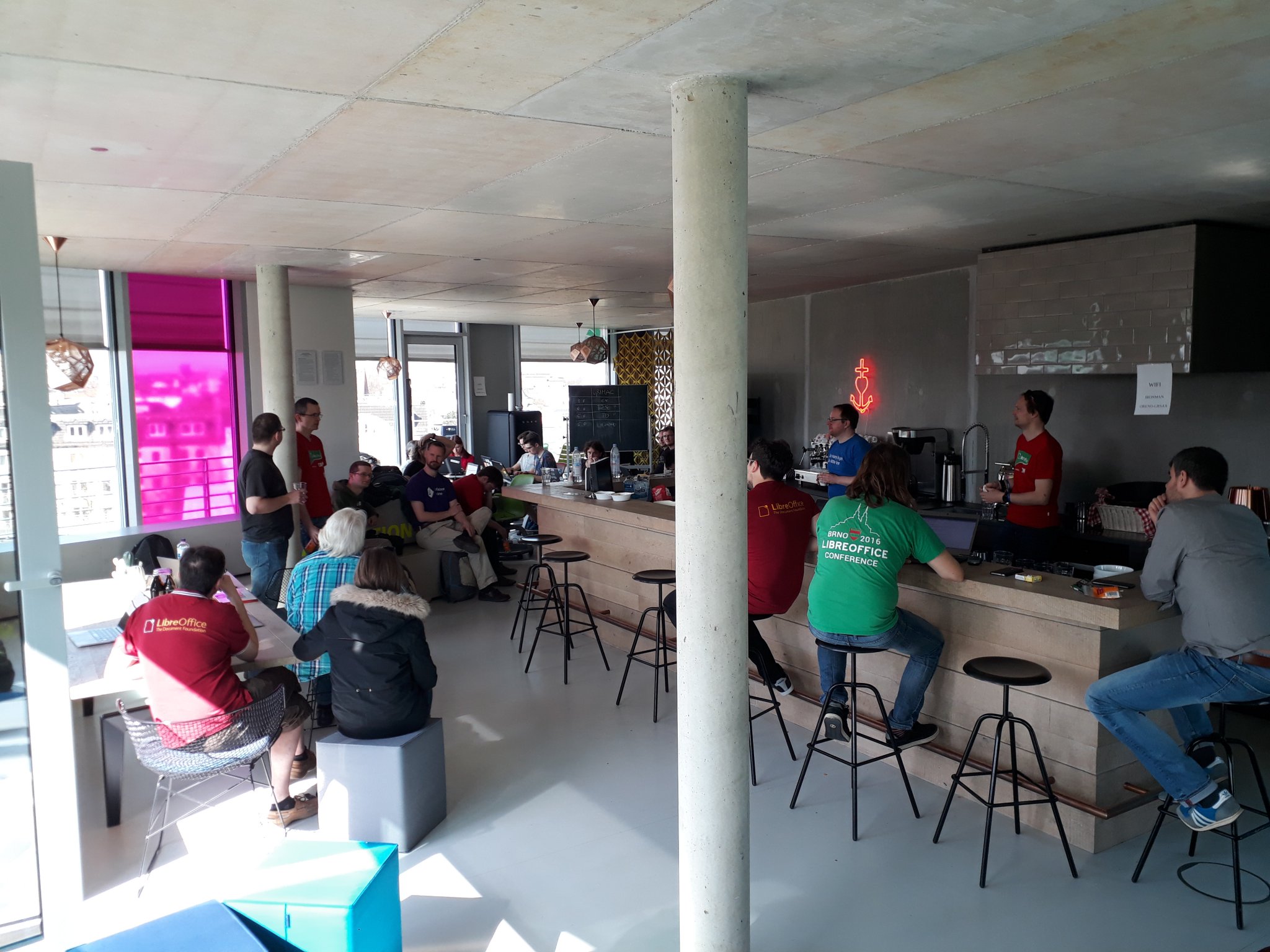
This year, we met in Berlin at Endocode AG, an employee-owned software engineering company that focuses on open source. Its office features a great view of Berlin’s skyline, and – most importantly – plenty of coffee and comfy chairs for meetings and discussions. (Here’s Endocode’s blog post about the event.)

We had 17 participants in the event, and Saturday started with an introduction round. Many familiar faces who’ve been active in LibreOffice and OpenOffice.org for years were present, but there were also some new participants who were eager to get involved and help out. After choosing some discussion topics for the day, we split up into small groups and worked on tackling some issues.

For instance, one group asked the question: how can we convert LibreOffice end users into project contributors? What are the barriers? We noted that the German user mailing list has over 520 subscribers – so maybe we can provide them with some “Easy Hacks” (like in the development project) to get involved. These could be: fixing bugs and typos on the website, making small translation improvements, updating documentation, and confirming bugs. It was noted that due to our existing infrastructure, some of these tasks require good knowledge of English, though.

Other groups looked at strengthening outreach (eg getting LibreOffice into schools) and how the different projects in LibreOffice (development, documentation, QA, marketing etc.) can work together more effectively.

In the afternoon, all participants got together for a wide-ranging discussion. We talked about many things: does LibreOffice need a vision for the future? Or a killer feature? How can we steer development of LibreOffice based on such a vision? And how can we make end users feel more involved?

One idea is to run a survey of end user needs, in the style of the Open Source Survey 2017. Not only would this show that the LibreOffice community listens carefully to end users, but it could also guide the project, showing which things we need to work on, and which ones are already in good shape. (German speakers can find more notes from the discussion on our pad.)

Of course, the meeting wasn’t just about discussions – it was a great opportunity to network as well, over food and drink. We would like to thank our kind hosts from Endocode, Lisa and Mirko, very much for making that meeting possible and offering their office space for the community – we enjoyed it very much and made new friends!

If you’re a German speaker and want to join our community, sign up to the discuss@de.libreoffice.org mailing list. We look forward to hearing from you!

TDF at MucGov17 BarCamp in Munich

On April 29th, the City of Munich in southern Germany held an event called MucGov17. Subtitled “Digital city – ideas, projects and apps”, it provided an opportunity for people involved with Munich’s IT infrastructure to get together, exchange ideas, and come up with new projects. The Document Foundation (TDF) attended and took part in various sessions.

Because the event was a BarCamp, sessions were planned on an ad-hoc basis; attendees could suggest presentations and talks, which were then allocated to different rooms. Other people at the event could then visit the talks they found most interesting.

Topics included: removing barriers in the digital world (eg making Munich’s websites and software more friendly to users with special needs or disabilities); improving the systems used in schools and education; and how to digitalise older, printed materials – making them more available to residents in the city.

TDF organised a discussion about the relationship between open data and open source. A question was raised: as cities, local councils and governments pay more attention to open data, should we be working harder to advocate the benefits of open source (and free software) as well? Is open data just one step on the road towards adopting open source, or do people find it hard to see a connection?

We also discussed how open source can mitigate duplication of effort. For instance, the City of Munich is working on an app to help residents (and visitors) find out about events and places to visit. Other cities in Germany are working on their own apps as well. Would it make more sense for all cities to work together on a single open source “core” app, and then individual cities could add their data on top?

Finally, we had an opportunity to talk to various people about LibreOffice, explaining how it is developed, what new features are being worked on, and how to get involved. So it was worth attending, and later in the year, TDF hopes to be present at Munich’s Open Government Day in October.

Help keep the Calc guide up to date

The Documentation Team Meeting will

take place in May 10th at 17:00 CET

The Calc module of LibreOffice is one of its most complex and extensive applications and one of the most in-demand for documentation, as our measurements of the documentation website clearly show.

Documentation website daily visits over time, since January 1st, 2017.

The latest published Calc Guide is connected to LibreOffice release 4.1. The gap between this guide and the most recent Calc developments has widen and the current publication is outdated. (more…)