Another eight videos from the LibreOffice Conference 2024

The next batch is here! We’re editing and uploading more videos from our recent conference – these ones covering C++, the LibreOffice WebAssembly port from Allotropia, and Collabora Online. Use the icon in the top-right to choose videos from the playlist:

Please confirm that you want to play a YouTube video. By accepting, you will be accessing content from YouTube, a service provided by an external third party.

YouTube privacy policy

If you accept this notice, your choice will be saved and the page will refresh.

Announcement of LibreOffice 24.8.3, the office suite optimised for the privacy-conscious office suite user who wants full control over the information they share

Berlin, 14 November 2024 – LibreOffice 24.8.3, the third minor release of the LibreOffice 24.8 family of the free open source, volunteer-supported office suite for Windows (Intel, AMD and ARM), MacOS (Apple and Intel) and Linux, is available at www.libreoffice.org/download.

The release includes over 80 bug and regression fixes over LibreOffice 24.8.2 [1] to improve the stability and robustness of the software, as well as interoperability with legacy and proprietary document formats. In addition, support for Visio template format VSTX has been added.

LibreOffice is the only office suite that respects the privacy of the user, ensuring that the user is able to decide if and with whom to share the content they create. It even allows deleting user related info from documents. As such, LibreOffice is the best option for the privacy-conscious office suite user, while offering a feature set comparable to the leading product on the market.

Also, LibreOffice offers a range of interface options to suit different user habits, from traditional to modern, and makes the most of different screen sizes by using all the space available on the desktop to put the maximum number of features just a click or two away.

The biggest advantage over competing products is the LibreOffice Technology engine, the single software platform on which desktop, mobile and cloud versions of LibreOffice – including those from ecosystem companies – are based.

This allows LibreOffice to produce identical and fully interoperable documents based on the two ISO standards: the Open Document Format (ODT, ODS, ODP) and the fully proprietary Microsoft OOXML (DOCX, XLSX, PPTX), which hides a large amount of artificial complexity, and can cause problems for users who are confident that they are using a true open standard.

End users looking for support can download the LibreOffice 24.8 Getting Started, Writer and Impress guides from the following link: /books.libreoffice.org/. In addition, they will be able to get first-level technical support from volunteers on mailing lists and the Ask LibreOffice website: ask.libreoffice.org.

LibreOffice for Enterprise

For enterprise-class deployments, TDF strongly recommends the LibreOffice Enterprise family of applications from ecosystem partners, with three or five year backporting of security patches, other dedicated value-added features and Service Level Agreements: www.libreoffice.org/download/libreoffice-in-business/.

Every line of code developed by ecosystem companies for enterprise customers is shared with the community on the master code repository and improves the LibreOffice Technology platform. Products based on LibreOffice Technology are available for all major desktop operating systems (Windows, macOS, Linux and ChromeOS), mobile platforms (Android and iOS) and the cloud.

The Document Foundation’s migration protocol helps companies move from proprietary office suites to LibreOffice, by installing the LTS (long-term support) enterprise-optimised version of LibreOffice, plus consulting and training provided by certified professionals: www.libreoffice.org/get-help/professional-support/.

In fact, LibreOffice’s mature code base, rich feature set, strong support for open standards, excellent compatibility and LTS options make it the ideal solution for organisations looking to regain control of their data and break free from vendor lock-in.

LibreOffice 24.8.3 availability

LibreOffice 24.8.3 is available from www.libreoffice.org/download/. Minimum requirements for proprietary operating systems are Microsoft Windows 7 SP1 (no longer supported by Microsoft) and Apple macOS 10.15. Products for Android and iOS are at www.libreoffice.org/download/android-and-ios/.

LibreOffice users, free software advocates and community members can support The Document Foundation by donating at www.libreoffice.org/donate.

Enterprise deploying LibreOffice can also donate, although the best solution for their needs would be to look for the enterprise optimized versions of the software (with Long Term Support for security and Service Level Agreements to protect their investment) at www.libreoffice.org/download/libreoffice-in-business/.

[1] Fixes in RC1: wiki.documentfoundation.org/Releases/24.8.3/RC1. Fixes in RC2: wiki.documentfoundation.org/Releases/24.8.3/RC2.

LibreOffice and Google Summer of Code 2024: The results

Google Summer of Code logo

This year, LibreOffice was once again a mentoring organization in the Google Summer of Code (GSoC), a global program focused on bringing more developers into free and open source software development. Seven projects were finished successfully, plus one project mentored under Linux Foundation. Contributors and mentors enjoyed the time, and here we present some of the achievements, which should make their way into LibreOffice 25.2 in early February 2025!

You can experiment with the new features by using daily builds and report any problems in our bug tracker.


LibreOffice Theme by Sahil Gautam

Mentors: Rafael Lima, Heiko Tietze (TDF)

Theming LibreOffice has a long history. Support for Mozilla Personas was added in version 4.0 released in 2013. This was later changed to a selection of preinstalled themes. The current work started by Sahil aims to also supersede Application Colors.

The groundwork has been done and the design team is currently discussing how to present the feature in the user interface. Sahil continues to engage in the work and discussion and we are grateful for the commitment.

Learn more about the theme project in the final report.


Comments in Sidebar by Mohit Marathe

Mentors: Sarper Akdemir (allotropia), Heiko Tietze (TDF)

The Sidebar has proven to be very powerful when dealing with complex documents. The complexity of comments can certainly increase quickly, so the ability of managing them via the Sidebar was seen as a welcome addition.

Mohit is currently polishing the feature while working closely with the design team.

Learn more about the comment feature in the final report.


Improvements to the Functions Sidebar deck and Functions Wizard by Ahmed Hamed

Mentors: Andreas Heinisch, Heiko Tietze (TDF)

Both the Sidebar deck and the wizard now display the functions in collapsible groups when viewed with the “All” filtering option. Both also now have an optional similarity search.

Ahmed is currently working on adding a category to store favourite functions.

Learn more about the Functions deck improvements in the final report.


Native support for histogram chart and its variations by Devansh Varshney

Mentors: Tomaž Vajngerl (Collabora)

The new chart type will make it possible to visualise ranges of values. Adding a new type of chart is a can of worms, because file format support has to be added both for ODF and OOXML. Devansh is working to finish the implementation in this regard.

Learn more about the chart work in the final report.


Cross Platform .NET bindings for UNO API by Ritobroto Mukherjee

Mentors: Hossein Nourikhah (TDF), Thorsten Behrens (allotropia)

This is big news for .NET developers hoping to make use of LibreOffice’s UNO API. The earlier support was undocumented and targeted versions released over twenty years ago. Now with .NET 8 support added, the bindings for .NET programming languages, including C#, F# and Visual Basic are cross platform, available for Windows, Linux and macOS.

Learn more about the .NET work in the final report.


Lua UNO language bindings by Venetia Furtado

Mentors: Thorsten Behrens (allotropia), Stephan Bergmann (allotropia)

Lua is a small language originally developed in Brazil. Many might know it as a scripting language used in games. We also use Lua in our wiki through the Scribunto extension. Thanks to the work of Venetia, it can now be used to drive LibreOffice.

Learn more about the Lua work in the final report.


More and better tests by Adam Seskunas

Mentors: Xisco Faulí (TDF), Hossein Nourikhah (TDF)

The quality of LibreOffice’s code base is guarded by a vast collection of automated tests, many of which are based on bugs that were discovered and fixed. Adam added many such tests and also converted some ancient Java-based tests to C++. He created a guide for writing tests for fixed bugs.

Learn more about the test authoring work in the final report.


Providing CPDB support for the LibreOffice Print Dialog by Biswadeep Purkayastha

Mentors: Michael Weghorn (TDF), Till Kamppeter (OpenPrinting), Gaurav Guleria, Sahil Arora, Ira McDonald

This project was done under Linux Foundation’s OpenPrinting and benefits the Linux version of LibreOffice. The Common Print Dialog Backends technology had received updates and it was necessary to rework LibreOffice’s code to make use of the improvements. Now the printer lists are periodically refreshed to avoid stale printers, the Print Directly button prints to the default printer and the print dialog is more responsive.

Learn more about the print dialog work in the final report.

Wrapping up

Many thanks to all contributors who spent their summer time improving LibreOffice. You are awesome! And special thanks also to the mentors who always put so much love and energy into these tasks. That’s what makes LibreOffice rock.

Now we are looking forward to next year’s GSoC. If you are interested, why not prepare early? Learn more at out wiki page where some ideas are listed.

Participating in GSoC is a great way to build your skills, and show future employers what you’re capable of!

Eight more videos from the LibreOffice Conference 2024

We’re editing and uploading more videos from our recent conference – these ones covering the Google Summer of Code, new Calc functions and optimisations, improvements to language support and more (use the icon in the top-right to choose videos from the playlist):

Please confirm that you want to play a YouTube video. By accepting, you will be accessing content from YouTube, a service provided by an external third party.

YouTube privacy policy

If you accept this notice, your choice will be saved and the page will refresh.

Art at the Tobacconist’s, with a Catalogue made with LibreOffice

Manuel Frassinetti is one of our heroic volunteers working on the localisation of LibreOffice, including the site and wiki, in Italian. During the day, Manuel runs a tobacco shop in Modena – the city where he was born and where he lives – where he organises exhibitions of works by local artists.

In 2023, after the conclusion of the tenth edition of Art at the Tobacconist’s, he decided to publish a catalogue of the eight exhibitions that took place in the first six months of the year, followed by a series of photos recalling the journeys he made together with his wife Patrizia, who passed away in 2022.

To produce the catalogue, Manuel used his Linux PC with LibreOffice, in the unusual guise of a desktop publishing tool. The catalogue was printed and distributed to the customers of the tobacco shop, as well as to the artists who participated in the exhibitions.

FRASSINETTI_CATALOGO_COMP

The resolution of the images has been reduced to 150 dpi to keep the file size within the limit imposed by the blog.

LibreOffice project and community recap: October 2024

LibreOffice Conference 2024 group photo

Here’s our summary of updates, events and activities in the LibreOffice project in the last four weeks – click the links to learn more…

Please confirm that you want to play a YouTube video. By accepting, you will be accessing content from YouTube, a service provided by an external third party.

YouTube privacy policy

If you accept this notice, your choice will be saved and the page will refresh.

  • In addition, we’ve started editing and uploading videos from the talks. Here’s the first batch – but there are many more to come, and we’ll put them on PeerTube too. (Apologies for the occasional video stutter in some places.)

Please confirm that you want to play a YouTube video. By accepting, you will be accessing content from YouTube, a service provided by an external third party.

YouTube privacy policy

If you accept this notice, your choice will be saved and the page will refresh.

LibreOffice at Software Freedom Day celebrations in Nepal

  • We talked to Ritobroto Mukherjee about the work he’s doing to improve LibreOffice, as part of the Google Summer of Code. He also tells us about his experiences joining our community.

Ritobroto Mukherjee<

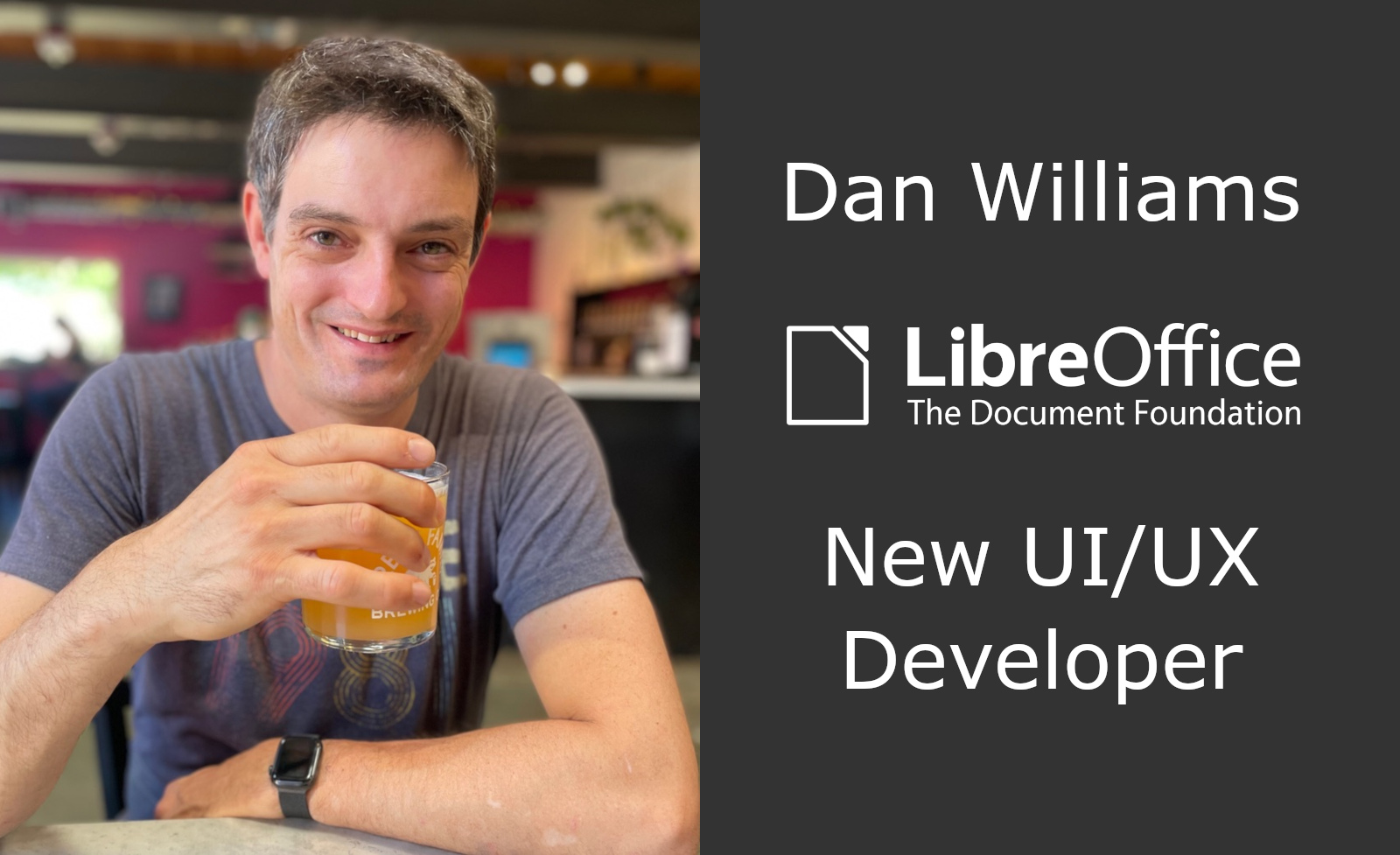
  • Then we caught up with Jonathan Clark, who recently joined the small team at The Document Foundation to work on improving LibreOffice’s language support, especially for RTL / CTL / CJK.

Jonathan Clark

  • On the release side, we had one update to LibreOffice in October – version 24.2.7, planned to be the last in the 24.2 branch. Then all users are strongly recommended to upgrade to the latest stable branch, LibreOffice 24.8.

LibreOffice 24.2 banner

Rafael Lima

  • And finally, we looked ahead to some upcoming and future events. The LibreOffice project will be at FOSDEM 2025 in Brussels at the start of February, for instance. And thinking further ahead: we’re looking for people to host the LibreOffice Conference 2025!

Keep in touch – follow us on Mastodon, X (formerly Twitter), Bluesky, Reddit and Facebook. Like what we do? Support our community with a donation – or join our community and help to make LibreOffice even better!