LibreOffice developer interview: Winfried Donkers

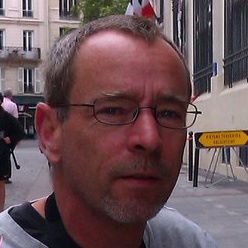
Winfried Donkers LibreOffice developer

In this week’s developer interview, we talk to Winfried Donkers, a Dutch coder who has been using LibreOffice (and its predecessors) for almost two decades, and today works on Calc.

Where are you based, and do you work for a LibreOffice-related company or just code in your spare time?

I live in the Netherlands, in a small village in Zeeland, near the North Sea. My work is within cycling distance – I don’t drive cars any more. I contribute mostly in my spare time, but if people or companies want me to fix a bug in my ‘area of expertise’ I will spend some company time. The company I work for uses LibreOffice.

How did you get involved with LibreOffice?

I first used StarOffice in the 1990s, but that was just a short fling. I used OpenOffice.org since version 1.1, and the company I worked for at that time switched to OpenOffice.org somewhere between 2000 and 2002. The company I work for now used an old version of Microsoft Office and I managed to get the company to choose LibreOffice in October 2011 (I think). Around that time I personally chose to contribute to LibreOffice.

What areas of the code do you normally work on? Anything else you want to tackle?

I concentrate on Calc functions, both fixing bugs and adding new (missing) functions. I am happy with that; LibreOffice is quite complex and I would rather know one area well than many areas superficially. I am still learning a lot about Calc and its functions and I’m far from being an expert.

What is your vision for the future, or what would you most like to see improved in LibreOffice?

I would like LibreOffice to be one of the available, undisputed and fully-fledged office applications and not just a ‘cheap’ alternative to Microsoft Office. LibreOffice is much more than that. A better (more stable) Base would be welcome. I hardly use it because of hitches. But having said that, I cannot contribute to Base and the people working on Base are doing a great job, especially considering their limited time.

What do you do when you’re not working on LibreOffice?

In my spare time when I am not working on LibreOffice I like to sail. My wife and I have a sailing boat and I sail with my wife as well as alone a lot. Also I like to work on our boat, ‘restoring’ as it is a classic boat.

Thanks Winfried! And to any other interested developers reading this: join our community and help to make LibreOffice even better.

LibreOffice developer interview: Krishna Keshav

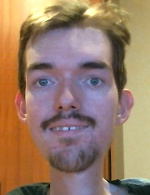
Krishna Keshav LibreOffice developer

In our next developer interview, we talk to Krishna Keshav, a new contributor to the LibreOffice project who is currently working on Easy Hacks and plans to expand into more complex bug-fixes in the future…

Where are you based, and do you work for a LibreOffice-related company or just code in your spare time?

I am currently pursuing my Bachelor’s in Computer Science and have just entered my final (fourth) year of study at PES College of Engineering. PESCE is located in the small town of Mandya in the state of Karnataka, India. I use LibreOffice for individual purposes. I mostly use Writer as my requirements are limited to it, but I also use Impress for creating presentations whenever needed. The best thing I like is its availability for every system, and it loads faster than its counterpart.

How did you get involved with LibreOffice?

Earlier I was just aware of open source software and used to see it in articles on the internet. So I decided to start with open source during the month of March 2016. Eventually, I found out that people here in India are not familiar with open source involvement and programs like the Google Summer of Code (GSoC). Anyway, getting back to how I started: I found LibreOffice as the most familiar organization while looking for open source organizations in the GSoC 2016 list.

Since the day I started with LibreOffice, the steps I took towards contributing to the software made me explore other open source software like Gerrit, Jenkins, GDB and much more. The LibreOffice community is very well organized and has appropriate documentation and a wiki page for every step, which helped me a lot while getting started. Additionally, I would like to say that LibreOffice has some very nice people on the IRC channels.

What areas of the code do you normally work on? Anything else you want to tackle?

So far I have worked on small bugs and tasks which LibreOffice refers to as Easy Hacks. You can visit my patches via this link. I am currently trying to tackle more complex bugs, and learning the user interface design of LibreOffice. In future, I would like to be involved as a more active and significant contributor to LibreOffice.

What is your vision for the future, or what would you most like to see improved in LibreOffice?

Libreoffice already seems to be a very stable product, with enough features for any end users. However, since things can always be better, I will definitely talk to the community if I find something to improve. Moreover, I would like to see LibreOffice replace its proprietary counterpart.

What do you do when you’re not working on LibreOffice?

Apart from looking for something to code, I like to read tech articles whenever I find time. I love bike rides, playing table tennis and sometimes exploring music. I can be found on Facebook, LinkedIn and GitHub.

Thanks Krishna! And to any other interested developers reading this: join our community and help to make LibreOffice even better.

LibreOffice developer interview: Laurent Balland-Poirier

Following our previous interviews with Xisco Fauli and Muhammet Kara, we now speak to Laurent Balland-Poirier, who works in his spare time on Calc.

Where are you based, and do you work for a LibreOffice-related company or just code in your spare time?

I’m teaching chemical engineering at Rouen University (Normandy, France), and doing some research in industrial process safety. So I can only hack on LibreOffice code during my spare time.

How did you get involved with LibreOffice?

I started using StarOffice 5.2 in the late 1990s. My first contributions were bug reports, then I helped to improve the French documentation (the OpenOffice.org wiki with its great FAQ, and translations of official guides).

As I have some basic C++ coding skills, I was always interested in hacking on LibreOffice, but I was afraid of code complexity. So I started really simple. One of my first patches was correcting a typo in an obscure hyperbolic function in Math. Encouragements from other experienced coders make me feel proud about this little contribution, so I then continued with more audacious patches.

What areas of the code do you normally work on? Anything else you want to tackle?

As I am using LibreOffice in my daily life, I feel concerned about annoying small bugs. The patch that I’m the most proud of was fixing bug 54686: preventing entering percentage value in Calc with the French locale.

I extended my knowledge of the LibreOffice code with how numbers are displayed in Calc. The most visible contribution (for those who care with engineering calculation in Calc) was introducing engineering notation. I also made some light improvements to trend lines (regression curves) in Chart.

I would really like to able to modify text elements in Chart (axis labels or trend line equations), to have superscript/subscript, and so on.

What is your vision for the future, or what would you most like to see improved in LibreOffice?

I think it is necessary to improve how help is built, because it is quite complex for contributors to make corrections/improvements to the help text. However, I have no idea where to start 🙂

What do you do when you’re not working on LibreOffice?

When I return to real life, during holidays, I like traveling and hiking in the desert. I am fan of board games and like playing with friends: Ticket to Ride, Stone Age, Splendor…

Thanks Laurent! And to any other interested developers reading this: join our community and help to make LibreOffice even better.

LibreOffice developer interview: Xisco Fauli

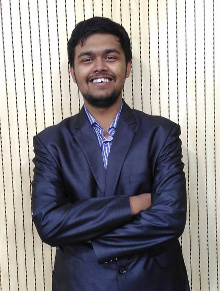
Xisco Fauli LibreOffice developer

A few weeks ago we talked to Muhammet Kara about his work on LibreOffice, and today we hear from Xisco FaulĂ­, a Spanish developer who started with Easy Hacks to get familiar with the code…

Where are you based, and do you work for a LibreOffice-related company or just code in your spare time?

I live and work in Madrid, Spain, but originally I’m from Valencia, on the east coast of the Iberian Peninsula. Currently, I work for a private company as a QA engineer, so I write code for LibreOffice in my spare time, normally late at night.

How did you get involved with LibreOffice?

Before LibreOffice existed, I knew OpenOffice.org as the open source alternative to Microsoft Office, but I never thought of contributing to the project because from my point of view, it looked really difficult for someone like me with little knowledge in C++ and no previous experience in an open source project, to contribute to such a big project.

However, when LibreOffice was forked, I came across the LibreOffice Easy Hacks page and I realized that some of the easy hacks didn’t require much knowledge in C++ – so I decided to give it a try. In fact, my first contribution to the project was as simple as deleting some commented lines, but it was really encouraging to see how welcoming the community was to me and how fast my patch was merged into master, so I got hooked right away.

What areas of the code do you normally work on? Anything else you want to tackle?

In 2011, I was accepted as a student in the Google Summer of Code to work on porting Java wizards to Python in order to reduce the Java dependency. During the program, I ported the Letter, Fax and Agenda wizards. Later on, the Web wizard was ported by Javier Fernandez (Igalia). However, there are still some database wizards that need to be ported: tdf#83814. So I take the opportunity to encourage anyone interested to work on this task.

More recently, I’ve done some work in the SVG filter (which I hope it will be deprecated soon) and in the SVGIO filter, especially adding unit tests in order to avoid regressions. More info: http://x1sc0.blogspot.com. Besides, I’m also working on tdf#89329 with the help of Noel Grandin, and tdf#62525 with the help of Thorsten Behrens (thanks to them both!) and I must say it’s helping me a lot to improve my knowledge in the code base and in C++.

What is your vision for the future, or what would you most like to see improved in LibreOffice?

I’d love to see more Spanish contributors in the project and a more active Spanish community. It would be nice to have something like in Germany, Japan, Brasil or Italy and celebrate local meetings from time to time. This could also help to have more widespread use of LibreOffice in the Spanish public administrator, which would be another thing I’d love to see in the near future.

What do you do when you’re not working on LibreOffice?

I like sports, specially those done in the mountains like climbing, skiing and trail running. I also like traveling – recently I’ve discovered the pleasure of travelling by bicycle and I must say I love it. When I have evenings free, I like to go to the cinema, the theater or go out with friends.

Thanks Xisco! And to any other interested developers reading this: join our community and help to make LibreOffice even better.

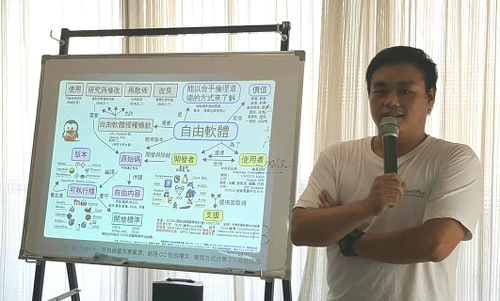
LibreOffice developer interview: Muhammet Kara

Every new LibreOffice release is built on the work of developers around the world, who collaborate to add new features and fix bugs. But who are these developers? How did they get involved in LibreOffice, what is their vision for the future of the software, and how do they enjoy their free time?

We asked some contributors these questions, and will be posting their answers here on the blog in the coming weeks. Let’s start with Muhammet Kara

Where are you based, and do you work for a LibreOffice-related company or just code in your spare time?

I live in Ankara, Turkey. I am still a student, studying computer engineering, and I also work for TUBITAK-ULAKBIM in their Pardus Linux Group. They endorse the usage of Free and Open Source Software (FOSS) nationwide. They also encourage me to work on LibreOffice when I am not given other tasks. I am glad I am able to contribute to such a great project as LibreOffice in the workplace. I also code in my spare time.

How did you get involved with LibreOffice?

I have been using and advocating OpenOffice.org and LibreOffice for years, but my involvement as a code contributor started with encouragement of Abdullah Erol, manager of the Pardus Linux Project.

What areas of the code do you normally work on? Anything else you want to tackle?

I don’t have a particular preference, and I work on various areas usually related to C++ and the user interface. After gaining some more experience, first I would like to spend some time on Base because I felt like it needs some love. I am also interested in getting involved with writing tests because they guard us against the introduction of new bugs and reintroduction of old ones. But there is no reason not to work on Calc or Writer 🙂

What is your vision for the future, and what would you most like to see improved in LibreOffice?

A well-known and widely-used LibreOffice suite worldwide, and particularly in Turkey. I think integration of LibreOffice with the cloud is also crucial for the future.

What do you do when you’re not working on LibreOffice?

I like going to the movies, reading books, mountain driving, and localizing free software. Nowadays I am trying to get GNOME 3.22 development branch’s Turkish translation to 100% completion. Wish me luck with that 🙂

Thanks Muhammet! And to any other interested developers reading this: join our community and help to make LibreOffice even better.

Interview of Naruhiko Ogasawara, a localizer from Japan

LibreOffice can only exist since people are working on it: so please, tell us a bit about yourself.402282_464389833584422_1344809811_n

I’m a member of LibreOffice Japanese Team; working in the backyard of Japanese community. Driving translation, reporting bugs instead of people who can’t use English and attending FLOSS events in Japan.

In the team, my main task is translation of LibreOffice UI, and sometimes Wiki pages, and I’m one of the administrator of Pootle Japanese group. And now I have lots of interest about outreaching (I’ll talk about it later). It might be a special, I’m a “printer” guy. I have strong interest about the future of printing; not only print something from desktop application (e.g. LibreOffice), but also using mobile device, from cloud service, etc. In the future I want to get involved about printing related enhancement of LibreOffice.

In what other software projects have you been involved?

Ubuntu and GNOME (mostly translation), and OpenPrinting; standardize group of unix-like printing environments.

Where do you live (and/or study)?

Very east side of Tokyo (Katsushika-ku).

What do you do when you’re not working on LibreOffice?

My work is technical investigation of current FLOSS technologies, e.g, NoSQLs, Private IaaS Platforms, something something… includes LibreOffice also.

In private, reading books, sitting in front of my laptop and many many tweeting, or sometimes reading blogs or news. And just now I’ve started Yoga. It’s pretty good.

I love running rivers with a kayak. Most of 60 rivers I’ve visited, includes US and New Zealand. Paddling is wonderful 🙂

When do you usually spend time on the project?

About translation or Facebook pages administration, mostly off time of weekdays. Our LibreOffice meetup (read below) also are in weekday night. I guess almost 10 hours per week.

How did you hear about LibreOffice?

Because a friend of mine is the key person of Japanese LibreOffice (and former OpenOffice.org) community.

Why did you get involved? Is LibreOffice popular in your native-language?

Because my friend mentioned above need my help. At that time I had surprised how people in the community is active, full of love for LibreOffice itself, “wow it’s really nice community” I thought. That’s why I still spend a time for the community.

In Japan, LibreOffice is getting big I feel, but still “OpenOffice” as a brand is bigger than LibreOffice. If someone want to find fee-free office productive suite, he might google “openoffice.”

What was your initial experience of contributing to LibreOffice like?

Checking most of all printing-related UI translations and correcting because my special is printing.

What have you done since then?

About translation, I have expanded my area from printing-related to any other UI, and not only UI, but also some Wiki pages or else.

Now my most important work is to drive our own (LibreOffice-titled) event in Japan, and share them to global.

First, I’ve started monthly LibreOffice meeting “Kanto LibreOffice Study Group” (Kanto means around Tokyo area). This meeting might deal with widely theme from using how-to to introduction to development.

Then I administrate two Facebook pages: one https://www.facebook.com/LibreOfficeJa is for all of Japanese LibreOffice related people to discuss about LibreOffice in Japanese, and another https://www.facebook.com/LibreofficeStudyJapan is for LibreOffice meeting owners in Japan to exchange knowledge how to host meetings or anything else.

And I feel it’s important that we, Japanese community should let global people know how we’re active and share success stories and problems.

What would be your best suggestion or advice for anyone interested in getting involved in the localization of LibreOffice?

Don’t worry about English. If you can’t understand some translated string, the translation might be wrong. Please teach us. It’s first step to join us. No English is needed. We always need proofreading.

And LibreOffice community is very active, full of love, lots of nice people and easy to join.

What is your vision for the future and/or what would you most like to see improved in LibreOffice?

My currently interest is how to reach non-FLOSS, non-geek people in Japan to tell how LibreOffice is good for them. Most of them only know MS Office, few of them know also OpenOffice but not know LibreOffice. We need to reach them and get feedback what they want, and tell them to the global.

Of course migration in large companies and local governments from MS Office to LibreOffice is big issue, so we need supporting companies in our ecosystems in Japan. But this issue is out of focus for me as a community guy…

Anyway, my another point is writing codes. Because it is easiest way to put Japanese local requirements, but in Japan very few people have done that. So I want to became a developer and I also grow some young developers of LibreOffice.

Thanks a lot for your answers and time!

Interview by Charles-H. Schulz.