The online LibreOffice Conference 2021 starts tomorrow! Here’s how to take part…
Program
The schedule of the conference is available from here. Time zone is on the upper left: depending on your system settings, it usually is Europe/Berlin time (UTC+2).
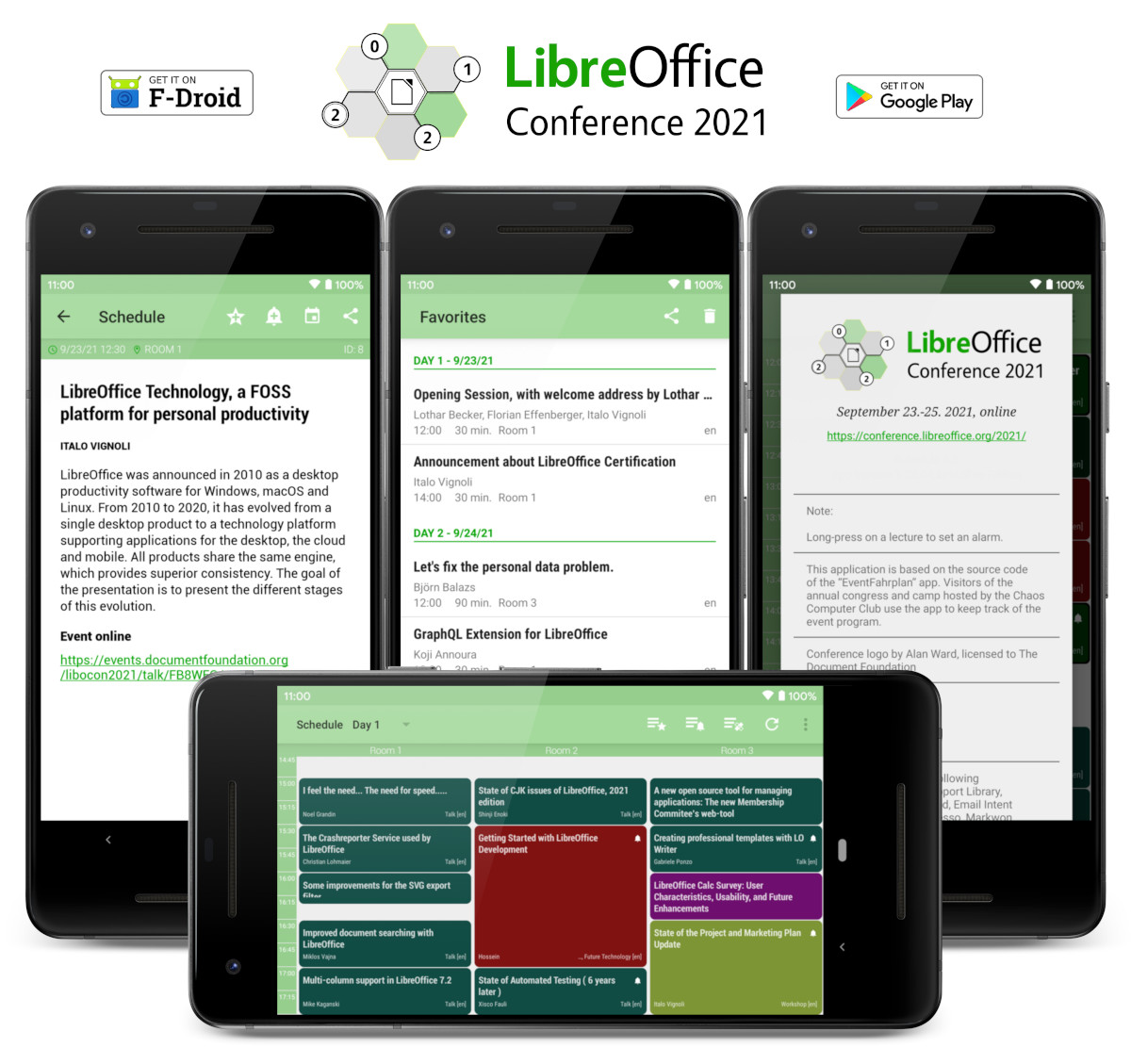
There is an app available too – downloads from here:
- https://play.google.com/store/apps/details?id=info.metadude.android.libreoffice.schedule
- https://f-droid.org/packages/info.metadude.android.libreoffice.schedule
- https://f-droid.org/repo/info.metadude.android.libreoffice.schedule_84.apk
Attending
Talks will be streamed on the website and on YouTube. Links will be made available on the first day of the conference and will be always available on the conference website. Please check the YouTube links regularly, at least once per day, as they might change.
We strongly recommend one of the two streaming above, but you can still join the Jitsi instance as a fallback with these links (to post questions/comments, please use the separate discussion channels below):
For socializing, chatting, seeing each other, and testing their video setup, all registered attendees can now use our “LibOCon Social” room (this room is neither streamed nor recorded).
Note that you are requested to register (if you are not a speaker) here in that case.
If you are not registered already, and if you register during the conference, it might take a while to get processed. And make sure that you are muted when you join and there are no videos active on your side.
Note: The current Jitsi version does NOT work with Safari on macOS at all. Firefox and Chrome work without problems. The Jitsi app for Android and iOS will likely not work with the Jitsi instance. We strongly recommend participating from a desktop device, or use one of the other mobile-compatible streaming facilities above (website, YouTube)
Asking questions
If you want to ask questions to the speakers, you can do so via Matix, IRC and Telegram. The 3 channels are bridged together, so you only need to join your preferred one:
The moderator of the talk will read your questions to the speaker and they will answer in the stream. Do not ask your questions on the Jitsi chat.
General
There are two more channels at your disposal: we will publish all announcements on the two Telegram groups: LibreOffice Virtual Conference Announcements and LibreOffice Virtual Conference. On IRC, the general channel is here, while on Matrix it is here.
If you want to support the conference by purchasing LibreOffice Conference swag from Freewear, you can do so from this page.
Our Code of Conduct applies during the virtual conference too.





 LibreOffice Conference will open on September 23 at noon CEST and will close on September 25 at 5:30PM CEST. The schedule has been finalized, and is available at the following link: