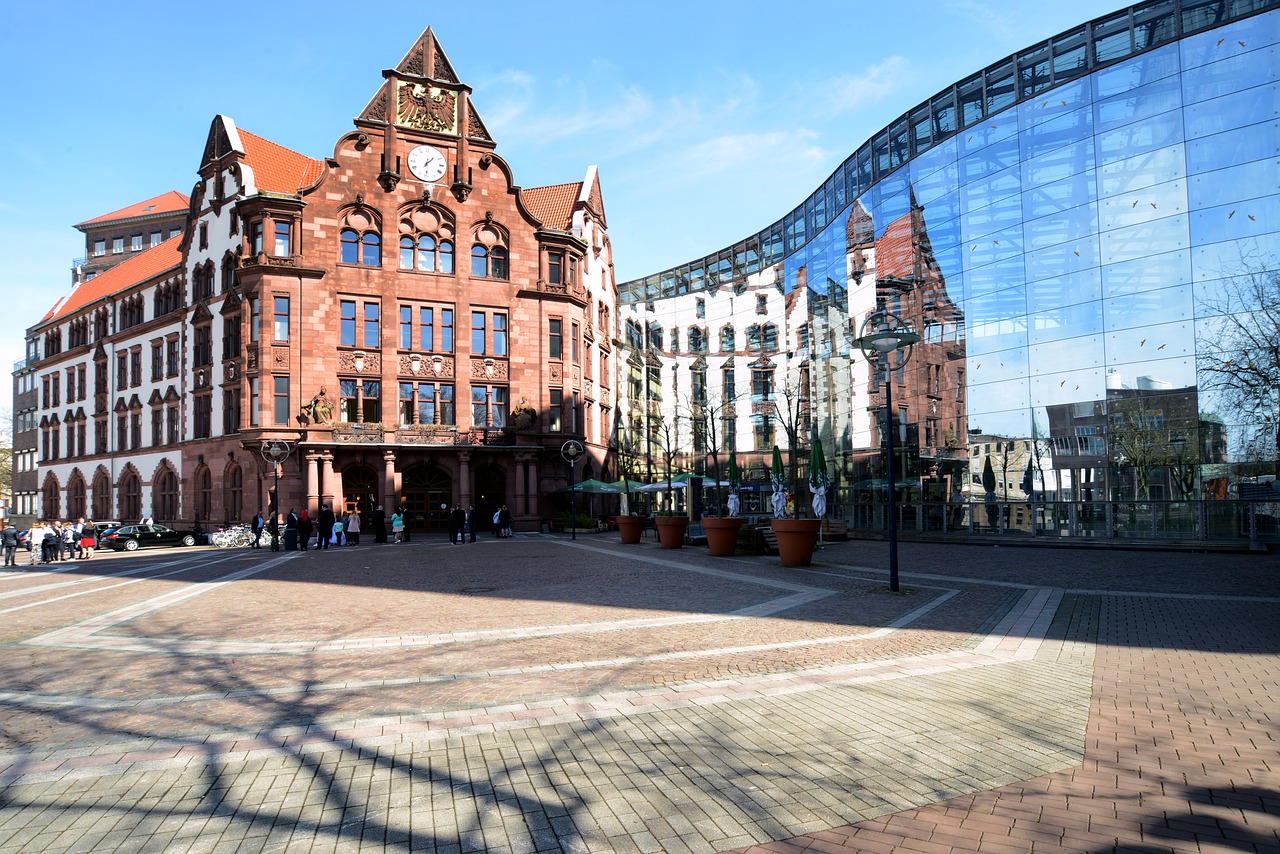
LibreOffice Conference 2021 Call for Locations

THE CALL FOR LOCATION FOR LIBREOFFICE CONFERENCE 2021 IS NOW OPEN

Background

Once a year, the LibreOffice Community gathers for a global community event: the LibreOffice Conference, or LibOCon. After a series of successful events – Paris, October 2011; Berlin, October 2012; Milan, September 2013; Bern, September 2014; Aarhus, September 2015; Brno, September 2016; Rome, October 2017; Tirana, September 2018 and Almeria, September 2019 – the venue for 2020 is Nuremberg, Germany.

To ease the organization, TDF Board of Directors has decided to open the call for location for 2021 earlier this year, to give the 2021 event organizers the opportunity of attending the conference in Nurembers in October 2020. The LibreOffice Conference takes place between September and November, with a preference for September.

The deadline for sending in proposals is June 30, 2020.

After receiving the applications, we will evaluate if all pre-conditions have been met and the overall content of the proposal, and give all applicants a chance to answer questions and clarify details if needed.

What applicants need to know

Several team members are needed and getting closer to the event, it tends to become a time consuming job, and each member of the team should be able to devote as much time as necessary. Also, dealing with finances and sponsors is a specific responsibility of conference organizers. Although TDF will provide a list of sponsors and ease the process, the team must be able to manage the budget according to the amount of sponsorships, and commit expenses based on the resulting amount of money.

In the past, we have received applications from several third parties, including casinos or professional event managers. Keep in mind that the LibreOffice Conference is a community event, by the community for the community. While we appreciate the interest of people with professional background, proposals not supported and driven by community members (not only TDF members) will not be considered as valid.

What must be covered by the proposal

IMPORTANT: Proposals missing the following information might be considered incomplete. While we try to give every applicant a chance to add or clarify missing information, there is no guarantee that the proposal will be accepted, since we have a rather short time frame. In order to enhance the chances for your proposal to be accepted, please answer as many of the following questions as possible.

The team

Only proposals with a fair amount of team members who are able to dedicate time and are part of the LibreOffice community will be considered as valid. Based on our experience, at least five team members are required, and those team members need to interact and communicate with the community. Please name all the team members, their role in the community, and their availability in term of time (especially during the month prior to the conference).

At least one team member should be working exclusively on sponsor relations, and on managing invitations for VISAs (as required for many countries). Both of these tasks require a fair amount of time, and are crucial to the organization. Based on our experience, at least a few dozen VISA requests, if not more, need to be dealt with, and you need between € 10.000 and € 20.000 in sponsorship fees. Please let us know if you have at least one team member willing to work on these topics.

The organizing entity

The Document Foundation itself will not be legally or financially responsible for organizing the event. Although it will support the organization of the conference by any possible means, it is necessary to have a local entity, an enterprise or preferably a non-profit, to take care of financial and legal requirements such as insurances and signing contractual obligations.

Another important reason for a local entity is the fact that VISA invitation letters can usually be issued only by a local entity from within the country. Please give details on the organization, its type and its leadership.

The main venue

The venue should be easily accessible from other countries, so ideally, an airport and a central train station are nearby. It should also have a good connection to the local public transportation. Please give details on the venue, its location, and its connection to public transportation.

Ideally, there is just one venue for all conference sessions. In case you distribute the conference among two venues, they should be reachable by public transportation or foot in no more than 10 minutes. Please let us know in case you plan for more than one venue (with the exception of parties and receptions).

The main venue should be partially wheelchair-accessible, with at least the opening/closing sessions and main track room fulfilling this requirement. Please let us know how accessible is the venue.

The conference itself is on 3 days, but their is an extra day before the conference dedicated to community meetings, which should be taken into account into the proposal.

Also let us know if there are defribillators available at the venue and if your team has BLS notions.

Providing canvas, projectors and rooms for two to five parallel tracks, for a total of approximately 300 participants, is also required. Please let us know if your venue fulfills these requirements.

Next to the presentations, there is often the need to have private meetings. For sure, there are a TDF Board of Directors meeting, a Membership Committee meeting and a TDF Team meeting, so at least two additional rooms are required one day before and one day after the conference. These meeting rooms can also be in a different location from the main conference venue. Please let us know if you can provide these meeting rooms.

Next to conference rooms, there should also be an open space for community gatherings. Please let us know if you can provide such a space.

A publicly accessible, free wireless Internet connection is required. If the venue itself does not provide WiFi, an alternative is represented by broadband 3G/4G wireless routers.

We should also know in advance if there are firewall restrictions in place that limit or forbid the access to services like SSH, Gerrit, Git and others (including e-mail), and whether we can provide a TDF VPN to overcome such limitations. Please let us know which kind of wireless Internet connectivity will be provided to conference attendees.

Having video archives or video live streams is not a must-have, but a nice-to-have. Please let us know if you plan video archives or live streams of the presentations.

Also, if at least one of the social events will be in a wheelchair-accessible location, this will be highly appreciated and will be absolutely wonderful.

Accommodations

Since we expect around 300 visitors, the availability of three/four stars hotel rooms or equivalent accommodations (B&B, or similar) is required. Please elaborate on the hotel offerings near the venue.

Offering couch surfing, motels, youth hostels or other means of free to cheap accommodation is a nice-to-have. Please let us know if such accommodations are available at your venue.

One more thing…

Please describe in your own words why you want to host the next LibreOffice Conference, what motivates you, and what you expect from organizing the event.

Other informations

Please write anything else that can support your application, like

  • Adoption of free open source software and open document standards in your country/region
  • FOSS support by national/local government bodies, or other organizations, enterprises, user groups
  • Cultural and/or IT related events close to the conference (parallel events are not a problem, if they do not distract participants from the LibreOffice Conference)
  • Potential conference sponsors, and the sponsorship size if it is already confirmed
  • Parties and receptions that are already planned, also in partnership with other local organizations
  • Anything else…

Providing child care would be a nice addition to the application, as there are participants with children who might be encouraged to participate if the service is available.

You may find useful information on the dedicated pad for conferences management.

How to apply

Please send your proposal as plain text e-mail, or HTML e-mail, or Open Document File to info@documentfoundation.org. Please write only in English. We will send a confirmation of your application no later than one week after we have received your proposal. In case that you have not heard back from us by then, please let us know.

Again, the deadline is June, 30 2019 24:00 UTC.

THANK YOU FOR YOUR INTEREST IN HOSTING THE LIBREOFFICE CONFERENCE!

LibreOffice 6.3.5 available for download

Berlin, February 20, 2020 – The Document Foundation announces LibreOffice 6.3.5, the 5th minor release of the LibreOffice 6.3 family, targeted at individuals using the software for production purposes, who are invited to update their current version. The new release provides bug and regression fixes, and improvements to document compatibility.

LibreOffice 6.3.5’s change log pages are available on TDF’s wiki: https://wiki.documentfoundation.org/Releases/6.3.5/RC1 (changed in RC1) and https://wiki.documentfoundation.org/Releases/6.3.5/RC2 (changed in RC2).

LibreOffice’s individual users are helped by a global community of volunteers: https://www.libreoffice.org/get-help/community-support/. On the website and the wiki there are guides, manuals, tutorials and HowTos. Donations help us to make all of these resources available.

LibreOffice in business

For enterprise class deployments, TDF strongly recommend sourcing LibreOffice from one of the ecosystem partners to get long-term supported releases, dedicated assistance, custom new features and other benefits, including SLA (Service Level Agreements). Also, the work done by ecosystem partners flows back into the LibreOffice project, benefiting everyone.

Also, support for migrations and trainings should be sourced from certified professionals who provide value-added services which extend the reach of the community to the corporate world and offer CIOs and IT managers a solution in line with proprietary offerings.

In fact, LibreOffice – thanks to its mature codebase, rich feature set, strong support for open standards, excellent compatibility and long-term support options from certified partners – represents the ideal solution for businesses that want to regain control of their data and free themselves from vendor lock-in.

Availability of LibreOffice 6.3.5

LibreOffice 6.3.5 is immediately available from the following link: https://www.libreoffice.org/download/. Minimum requirements are specified on the download page. TDF builds of the latest LibreOffice Online source code are available as Docker images: https://hub.docker.com/r/libreoffice/online/.

LibreOffice Online is fundamentally a server-based platform, and should be installed and configured by adding cloud storage and an SSL certificate. It might be considered an enabling technology for the cloud services offered by ISPs or the private cloud of enterprises and large organizations.

All versions of LibreOffice are built with document conversion libraries from the Document Liberation Project: https://www.documentliberation.org.

Support LibreOffice

LibreOffice users are invited to join the community at https://ask.libreoffice.org, where they can get and provide user-to-user support. People willing to contribute their time and professional skills to the project can visit the dedicated website at https://whatcanidoforlibreoffice.org.

LibreOffice users, free software advocates and community members can provide financial support to The Document Foundation with a donation via PayPal, credit card or other tools at https://www.libreoffice.org/donate.

Call for Paper for LibOCon 2020 is now open

The openSUSE and LibreOffice Projects are combining their annual conferences together for one year in 2020 to have a joint openSUSE + LibreOffice Conference. This joint conference, which is combined this one year to celebrate 10 years of the LibreOffice Project and 15 years of the openSUSE Project, will take place at the Z-bau in Nuremberg, Germany, from October 13 to 16, 2020. The goal of the openSUSE + LibreOffice Conference, brings together fun, smart and open-source minded community members to discuss and present topics relative to the two projects as well as open-source software development topics.

The Document Foundation invites all members and contributors to submit talks, lectures and workshops for this year’s event. Whether you are a seasoned presenter or have never spoken in public before, if you have something interesting to share about LibreOffice, the Document Liberation Project or the Open Document Format, we want to hear from you!

Proposals should be filed by June 30, 2020, in order to guarantee that they will be considered for inclusion in the conference program.

The conference program will be based on the following tracks:

a) Development, APIs, Extensions, Future Technology
b) Quality Assurance
c) Localization, Documentation and Native Language Projects
d) Appealing Libreoffice: Ease of Use, Design and Accessibility
e) Open Document Format, Document Liberation and Interoperability
f) Advocating, Promoting, Marketing LibreOffice

Presentations, case studies, workshops, and technical talks will discuss a subject in depth and will last 30 minutes (including Q&A). Lightning talks will cover a specific topic and will last 5 minutes (including Q&A). Sessions will be streamed live and recorded for download.

Please send a short description/bio of yourself as well as your talk/workshop proposal(s) to the program committee by registering and completing the form here: https://events.opensuse.org/conferences/oSLO

If you do not agree to provide the data for the talk under the “Creative Commons Attribution-Share Alike 4.0 License”, please explicitly state your terms. In order to make your presentation available on TDF’s YouTube channel, please do not submit talks containing copyrighted material (music, pictures, etc.).

Thanks a lot for your participation!

LibreOffice in Luxembourg: Ready for work

LibreOffice is available in over 100 languages, giving billions of people access to high-quality productivity tools, all across the globe. And now we’re adding Luxembourg to the list, with a new spell-checker extensions for Luxembourgish (Lëtzebuergesch).

The extension is available to download on this page.

Michel Weimerskirch, the extension’s maintainer, explains more: “My goal is to provide good quality spell-checking tools for the Luxembourgish language. LibreOffice is available on all major platforms for free, and also has the necessary programming interfaces I needed to even implement a phonological rule that could now be implemented using standard spell checking libraries. Over the past few years LibreOffice has grown to become a very mature office suite, so nowadays there is definitely no reason to not use it in a professional environment.

Paolo Vecchi, a local LibreOffice supporter – and recently elected as member of the Board of Directors of The Document Foundation – worked with Michel Weimerskirch to publish the new dictionary on the LibreOffice extensions portal, and will coordinate with the local Government and European institutions established in Luxembourg to help them upgrade to the
most complete and professional open source office suite.

Many local governments, organisations and companies around the world use LibreOffice every day – check out a selection here.

Performance-focused LibreOffice 6.4 is available for download

Berlin, January 29, 2020 – The Document Foundation announces the availability of LibreOffice 6.4, a new major release providing better performance, especially when opening and saving spreadsheets and presentations, and excellent compatibility with DOCX, XLSX and PPTX files.

LibreOffice offers the strongest compatibility in the office suite arena, starting from native support for the Open Document Format (ODF) – with superior security and interoperability features over proprietary formats – to almost perfect support for DOCX, XLSX and PPTX files. In addition, LibreOffice includes filters for many legacy document formats, and as such is the best interoperability tool in the market.

In addition, the new version provides some interesting new features [1]:

GENERAL

  • Application icons have been added to document thumbnails inside the Start Center, making it easier to recognise the different types of documents.
  • A QR Code generator has been added to the suite, making it easy to add QR codes – that can be read by mobile devices – to documents.
  • Hyperlink context menus have been unified throughout the suite, and now provide the following menu entries: Open Hyperlink, Edit Hyperlink, Copy Hyperlink Location and Remove Hyperlink.
  • The new Automatic Redaction feature lets your hide classified or sensitive data in a document based on text or regular expression matches.
  • The help system provides faster and more precise search results, while many help pages have localized screenshots for a better user experience.

WRITER

  • A Table panel has been added to the Sidebar.
  • Comments can now be marked as resolved. In addition, it’s now possible to add comments to images and charts inside text documents.
  • Cutting, copying and pasting of tables has been improved, with a new Paste Special menu option “Paste as Nested Table”.

CALC

  • Spreadsheets can be exported into a single PDF page, to get an overview of all content without it being spread over multiple pages.

IMPRESS & DRAW

  • In the Shape menu, a new option called Consolidate Text combines multiple selected text boxes into a single one. This is useful if you’re importing a PDF and the text content is split across many boxes.

LIBREOFFICE ONLINE

  • In Writer, table properties can be easily modified from the sidebar, and the document Table of Contents can be fully managed by users.
  • In Calc, the Function Wizard is now offering full features, and a wide range of options for selected charts has been added to the spreadsheet sidebar.

LibreOffice 6.4 is the first new release available in 2020. During the year, the community will celebrate the 10th anniversary of the best free office suite ever at several Free and Open Source Software (FOSS) events in Europe, Africa, Asia and the Americas. Several volunteers will present the project milestones and discuss the future of the office suite, on the desktop and in the cloud.

LibreOffice 6.4’s new features have been developed by a large community of code contributors: 75% of commits are from developers employed by companies sitting in the Advisory Board like Collabora, Red Hat and CIB, plus other organizations, and 25% are from individual volunteers.

In addition, there is a global community of individual volunteers taking care of other fundamental activities such as quality assurance, software localization, user interface design and user experience, editing of help system and documentation, plus free software and open document standards advocacy.

A video summarizing the top new features in LibreOffice 6.4 is available on YouTube: https://www.youtube.com/watch?v=-4boEj8S2JQ

LibreOffice for individual users

LibreOffice 6.4 represents the bleeding edge in term of features for open source office suites, and as such is targeted at technology enthusiasts, early adopters and power users. The Document Foundation does not provide any technical support to users, although they can get help from other users on mailing lists and the Ask LibreOffice website: https://ask.libreoffice.org
For users whose main objective is personal productivity and therefore prefer a release that has undergone more testing and bug fixing over the new features, The Document Foundation maintains the LibreOffice 6.3 family, which includes some months of back-ported fixes. The current version is LibreOffice 6.3.4.

LibreOffice in business

For enterprise class deployments, TDF strongly recommend sourcing LibreOffice from one of the ecosystem partners to get long-term supported releases, dedicated assistance, custom new features and other benefits, including Service Level Agreements (SLAs). Also, the work done by ecosystem partners flows back into the LibreOffice project, benefiting everyone.

For migrations and training from proprietary office suites, professional support should be sourced from certified professionals who provide value-added services which extend the reach of the community to the corporate world and offer CIOs and IT managers a solution in line with proprietary offerings.

In fact, LibreOffice – thanks to its mature codebase, rich feature set, strong support for open standards, excellent compatibility and long-term support options from certified partners – represents the ideal solution for businesses that want to regain control of their data and free themselves from vendor lock-in.

Availability of LibreOffice 6.4

LibreOffice 6.4 is immediately available from the following link: https://www.libreoffice.org/download/. Minimum requirements for proprietary operating systems are Microsoft Windows 7 SP1 and Apple macOS 10.9. Builds of the latest LibreOffice Online source code are available as Docker images: https://hub.docker.com/r/libreoffice/online/

LibreOffice users, free software advocates and community members can support The Document Foundation with a donation at https://www.libreoffice.org/donate

LibreOffice 6.4 is built with document conversion libraries from the Document Liberation Project: https://www.documentliberation.org

[1] A more comprehensive list of LibreOffice 6.4 new features is available on the Release Notes wiki page: https://wiki.documentfoundation.org/ReleaseNotes/6.4

Press Kit

The press kit, including the white paper on document formats and high-resolution screenshots, is here: https://nextcloud.documentfoundation.org/s/ZA4Y67yz6jBJSqz

ODF 1.3 approved as OASIS Committee Specification

OASIS is pleased to announce that Open Document Format for Office Applications (OpenDocument) v1.3 from the OpenDocument TC has been approved as an OASIS Committee Specification.

The OpenDocument Format is an open XML-based document file format for office applications, to be used for documents containing text, spreadsheets, charts, and graphical elements. OpenDocument Format v1.3 is an update to the international standard Version 1.2, which was approved by the International Organization for Standardization (ISO) as ISO/IEC 26300 in 2015. OpenDocument Format v1.3 includes improvements for document security, clarifies underspecifications and makes other timely improvements.

The OpenDocument Format specifies the characteristics of an open XML-based application-independent and platform-independent digital document file format, as well as the characteristics of software applications which read, write and process such documents. It is applicable to document authoring, editing, viewing, exchange and archiving, including text documents, spreadsheets, presentation graphics, drawings, charts and similar documents commonly used by personal productivity software applications.

This Committee Specification is an OASIS deliverable, completed and approved by the TC and fully ready for testing and implementation.

The prose specifications and related files are available on the OASIS website.

Open Document Format for Office Applications (OpenDocument) Version 1.3

Part 1: Introduction
Editable source (Authoritative): https://docs.oasis-open.org/office/OpenDocument/v1.3/cs01/part1-introduction/OpenDocument-v1.3-cs01-part1-introduction.odt. HTML:
https://docs.oasis-open.org/office/OpenDocument/v1.3/cs01/part1-introduction/OpenDocument-v1.3-cs01-part1-introduction.html. PDF: https://docs.oasis-open.org/office/OpenDocument/v1.3/cs01/part1-introduction/OpenDocument-v1.3-cs01-part1-introduction.pdf

Part 2: Packages
Editable source (Authoritative): https://docs.oasis-open.org/office/OpenDocument/v1.3/cs01/part2-packages/OpenDocument-v1.3-cs01-part2-packages.odt. HTML: https://docs.oasis-open.org/office/OpenDocument/v1.3/cs01/part2-packages/OpenDocument-v1.3-cs01-part2-packages.html. PDF: https://docs.oasis-open.org/office/OpenDocument/v1.3/cs01/part2-packages/OpenDocument-v1.3-cs01-part2-packages.pdf

Part 3: OpenDocument Schema
Editable source (Authoritative): https://docs.oasis-open.org/office/OpenDocument/v1.3/cs01/part3-schema/OpenDocument-v1.3-cs01-part3-schema.odt. HTML: https://docs.oasis-open.org/office/OpenDocument/v1.3/cs01/part3-schema/OpenDocument-v1.3-cs01-part3-schema.html. PDF: https://docs.oasis-open.org/office/OpenDocument/v1.3/cs01/part3-schema/OpenDocument-v1.3-cs01-part3-schema.pdf

Part 4: Recalculated Formula (OpenFormula) Format
Editable source (Authoritative): https://docs.oasis-open.org/office/OpenDocument/v1.3/cs01/part4-formula/OpenDocument-v1.3-cs01-part4-formula.odt. HTML: https://docs.oasis-open.org/office/OpenDocument/v1.3/cs01/part4-formula/OpenDocument-v1.3-cs01-part4-formula.html. PDF: https://docs.oasis-open.org/office/OpenDocument/v1.3/cs01/part4-formula/OpenDocument-v1.3-cs01-part4-formula.pdf

XML/RNG schemas and OWL ontologies: https://docs.oasis-open.org/office/OpenDocument/v1.3/cs01/schemas/

For your convenience, OASIS provides a complete package of the prose specification and related files in a ZIP distribution file. You can download the ZIP file at: https://docs.oasis-open.org/office/OpenDocument/v1.3/cs01/OpenDocument-v1.3-cs01.zip

Members of the OpenDocument TC approved this specification by Special Majority Vote. The specification had been released for public review as required by the TC Process. The vote to approve as a Committee Specification passed, and the document is now available online in the OASIS Library as referenced above.