Rich Contents Arrives in New Help

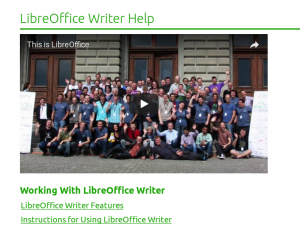
Last week the new help system – online and offline – received enhancements to add multimedia and other resources for a richer user experience of LibreOffice Help. The new help can now access external videos stored in You Tube or similar services and also to open or download OpenDocument files to support the textual explanations of LibreOffice features in the help pages.

External videos can be displayed in New Help pages

(more…)

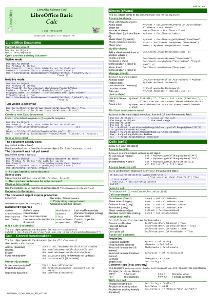
Making Macro Programming a Breeze: The BASIC & API Reference Cards

Update: Reference card for runtime library is now available.

One of the recurring issue when using LibreOffice as a replacement of other office applications is the migration of macros to the LibreOffice BASIC dialect and objects. While the LibreOffice BASIC programming language is almost standard, the objects inside a document have different names, methods and properties, and a rework on the macro is necessary in most cases to make it operational again, when imported from other suites.

(more…)

The LibreOffice Mardi Gras Party for Help: What’s new and fun in online Help?

Starting with the recent release of the 6.0 family, LibreOffice has now a brand new online help system. Unlike the previous version – based on the transfer of help content to the Mediawiki framework hosted by The Document Foundation – the new help is a direct transformation of the help XML files into simple HTML files, with additions of some JavaScript magic and CSS wizardry.

But how do I get this new help online? Actually it is quite easy. Either you navigate in your browser to https://help.libreoffice.org/6.0/ from your desktop or smartphone or you just don’t install the local help packages in your computer. When the local help is not installed, LibreOffice calls the online help, passing parameters that includes the dialog box identification or UNO command, operating system language and version. Your default browser will open the correct page at the right line position.

What is new in this help online? By working on the XML transformation targeted at modern browsers, LibreOffice developers were able to insert many nice features in the pages. Here are a few, just for a start:

The top header contains two drop-down lists, one to select the module and the second to select the language of the pages. These two lists are there to let you navigate in all help domains. If you want to read the help content in another language, just select the language in the list. There are as many as 50 languages available (not every Help page is fully translated in some languages). (more…)

Documentation Community Releases Writer Guide 5.4

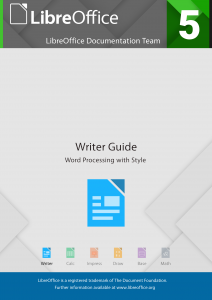
Internet, January 29th, 2018. The LibreOffice documentation community is pleased to announce the immediate availability of the Writer Guide 5.4, with all innovations and enhancements of LibreOffice 5.4. The guide is an in-depth reorganization and revision of the Writer Guide 4.2. The work was lead by Jean Hollis Weber, with collaboration from Cathy Crumbley and Bruce Byfield.

The book is targeted to end users, who look for advanced techniques for contents production, maintainability and update of text documents, unleashing the full power of a leading edge, solid word processor.

(more…)

Brazilian community releases its Getting Started Guide for LibreOffice 5.2

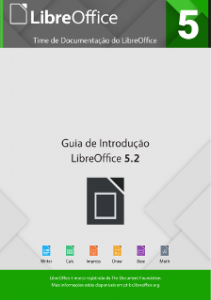
The Internet, January 25th, 2018. The Brazilian community is pleased to announce the immediate availability of the Getting Started Guide 5.2, with all innovations and enhancements from LibreOffice 5.2. The guide is an in-depth update of the 5.0 Getting Started Guide that has already been translated.
The team was composed of IT professionals, translators, engineers, teachers and technicians. The team members are:

  • Chrystina Pelizer (Getting Started Guide project leader, translator and reviewer)
  • Vera Cavalcante (reviewer and book assembler)
  • Fábio Coelho (translators, reviewer and infra manager)
  • Túlio Macedo, Raul Pacheco da Silva, Valdir Barbosa e Olivier Hallot (translators and reviewers)

Thanks to The Document Foundation’s support, the team met together at the Instituto de Física of UNESP university in São Paulo, Brazil for a final review sprint of the translated chapters, and then delivered the contents to Vera Cavalcante for book assembly and release.
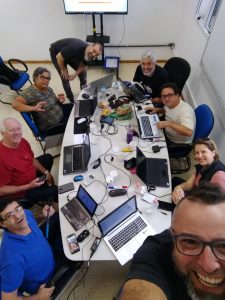
Without the face-to-face meeting in December 2017 sponsored by TDF, the guide’s release would have been delayed further due to personal and professional commitments of the volunteer team members. The face-to-face meeting was an opportunity to boost productivity, and the team finished the revision in two days of focused work. The team is planing more meetings for the other guides under production.

The new guide can be downloaded in PDF or ODT formats from the LibreOffice documentation website at http://documentation.libreoffice.org/pt-br/ .

São Paulo LibreOffice Hack-Doc 2017

Because Documentation Matters

The Instituto de Física Teórica of the State University of São Paulo (UNESP), under Prof. Dr. Marcelo Yamashita’s administration, hosted the Brazilian LibreOffice documentation community, which is committed to achieving a final sprint for the review and publication of the Getting Started Guide 5.2.

Eight members of the community gathered together in an effort to review the translation and check the consistency of the contents for final publication. Once the initial introductions were done, each member of the team picked two or three chapters and started work.

This is lengthy work that requires attention, and the team committed to reach the goal in the timeframe that was set. In meetings of this kind, doubts and questions about content are debated immediately. As an additional benefit, the text was improved while some of the user interface terms were corrected and improved for better accuracy, since the team had direct access to the translation server for immediate fixes.

On the second day, by invitation of the documentation team, Vanderlei Junior (a professional content designer) taught the team some techniques needed to produce instructional content – especially videos and interactive media. Vanderlei emphasised the absolute need to plan contents and speeches, and offered important information on framing and timings for instructional videos. He highlighted the fact that video capture is less important than careful definition of content, which, if it’s lacking, will lead to failures.

From Left to right: Raul Pacheco, Olivier Hallot, Vera Cavalcante, Vanderlei Júnior, Túlio Macedo, Valdir Barbosa, Chrystina Pelizer and Fabio Coelho.

On the third day, with all chapters revised and ready for compilation into a book – thus with the goal achieved – the team had a crash course on the Pootle server used for translations of the Help and the user interface of LibreOffice. They also learned about The Document Foundation and its operation, sharing experiences of the older members.

“To participate in the São Paulo Hack-doc was a rich experience for me” said Valdir Barbosa, a TDF-certified instructor and team coordinator for UNESP. “I could discuss several issues related to my job, while discussing new techniques for document production and less known resources of LibreOffice. Besides, it is also exciting to be able to improve the software, with direct access to the development tools” said Valdir.

“It was an excellent opportunity to see some members of the documentation team, as well as meet old documentation friends” said Vera Cavalcante, a community member and LibreOffice Magazine editor. “As I did the previous book compilation, I’ll use my experience to do this one very quickly. I believe it is essential to have periodic meetings for documentation tasks. The Hack-Doc idea worked very well and, for sure, we produced a lot in a short period of time”, she said.

The meeting, originally set for a review sprint, also triggered some discussions on community activities and planning for 2018. The team set a target to define in 2018 a LibreOffice curriculum with multimedia resources for users at several difficulty levels. Also, we discussed the current process of book production – and it is clear that direct translation of the contents for each release is not optimal, and a better approach is to update contents from the release notes, directly in Portuguese. The guide and the multimedia contents will come side-by-side, in complimentary form. Regarding events for 2018, the team will do its best to create a national or Latin American LibreOffice-exclusive event.

Wherever you are in the world, you can join our documentation community – just click this link!