Indonesian LibreOffice community: recent activities

Rania Amina from the Indonesian LibreOffice community writes:

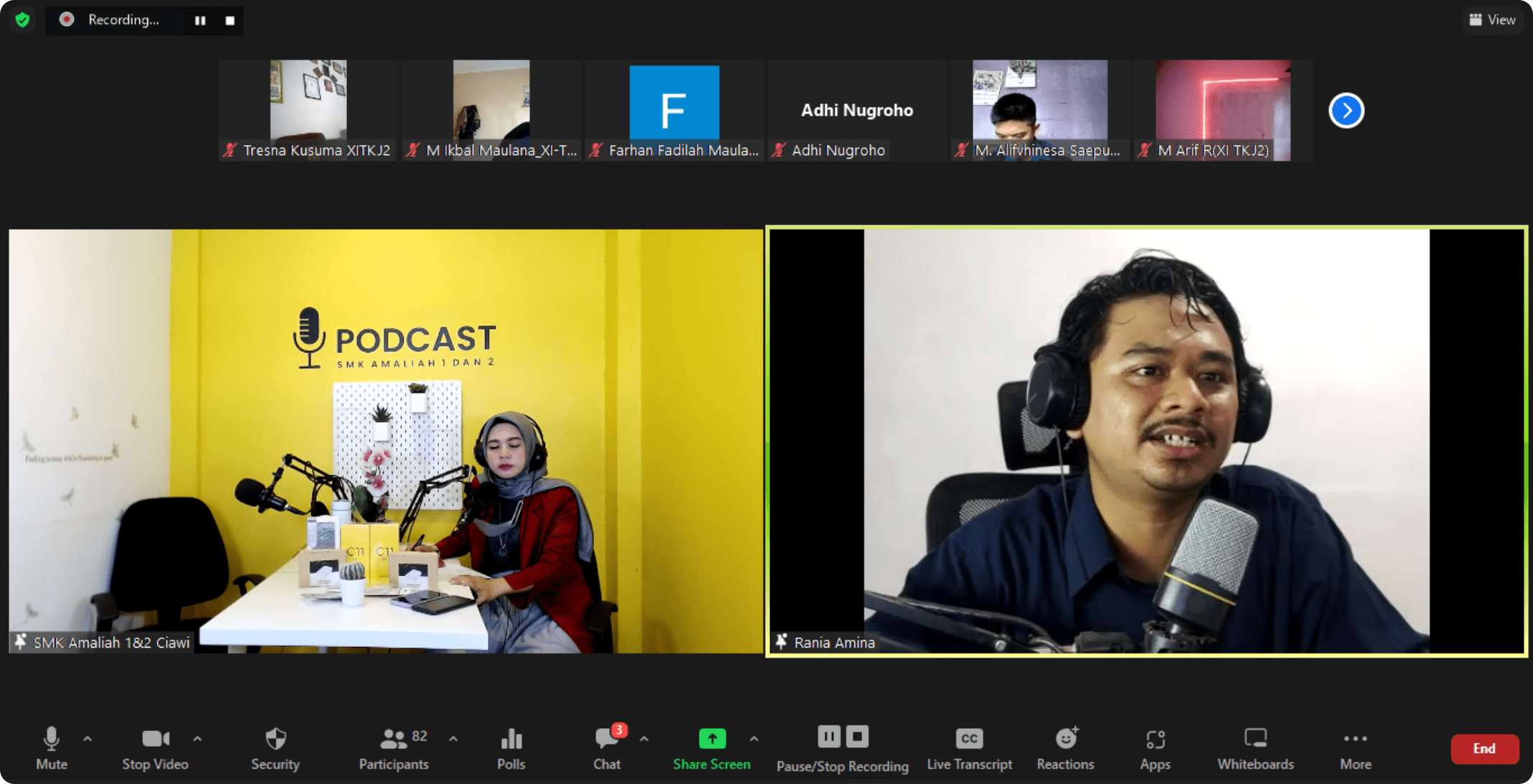
On Wednesday, 18 May 2022, I had the opportunity to talk in one of the sessions at the Virtual Visit of SMK Amaliah 1 Ciawi Bogor. This activity is a routine agenda for Amaliah Vocational School in the form of seminars and visits to institutions or communities to broaden students’ knowledge of Information and Communication Technology to Support Creative and Innovative Education.
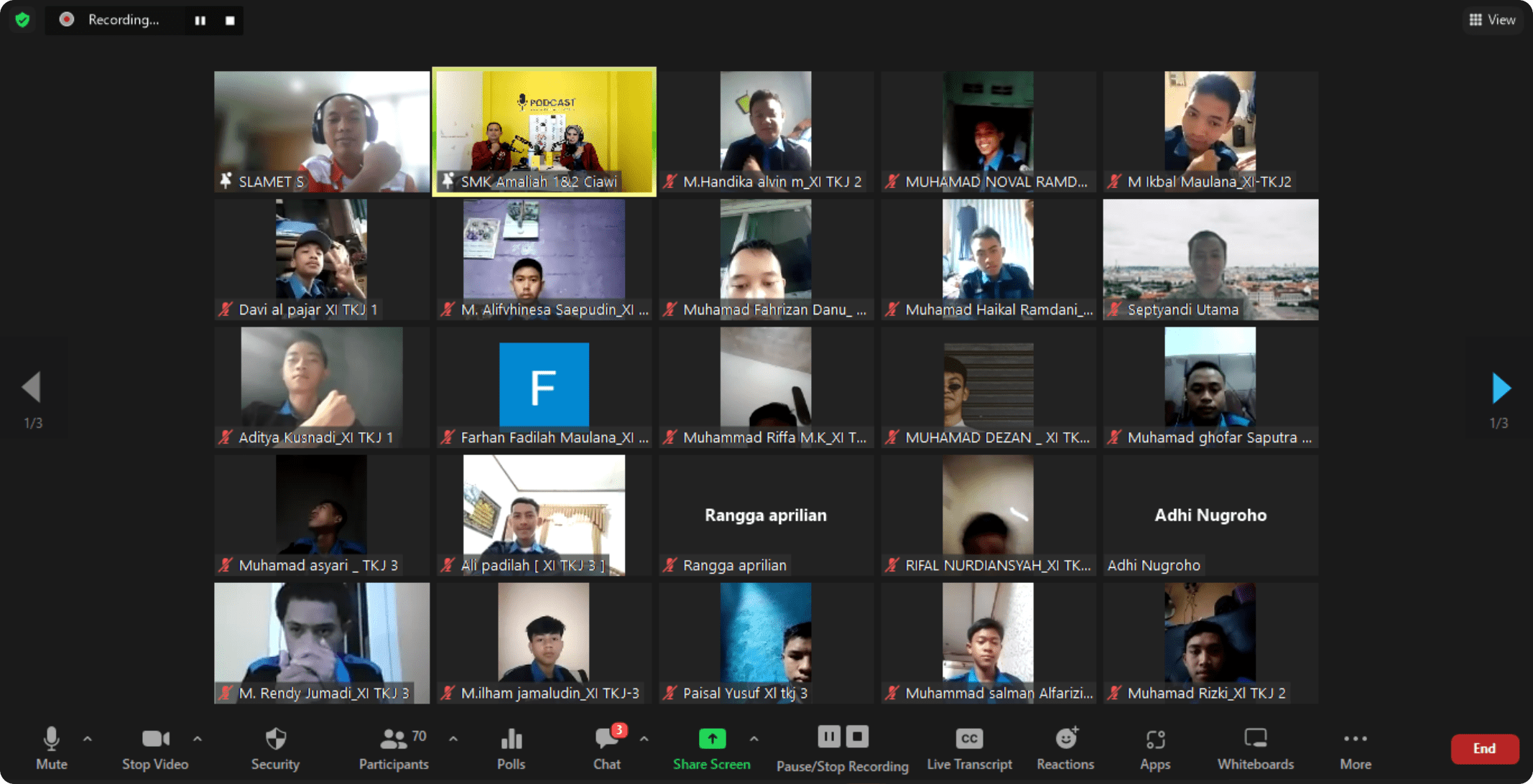
I represent the Indonesian LibreOffice community, given the opportunity to provide material for the activities. The topic that I conveyed revolves around LibreOffice and FOSS in general, and how the open source community ecosystem can be well developed so that it can be a space for self-development before pursuing a career in that field.
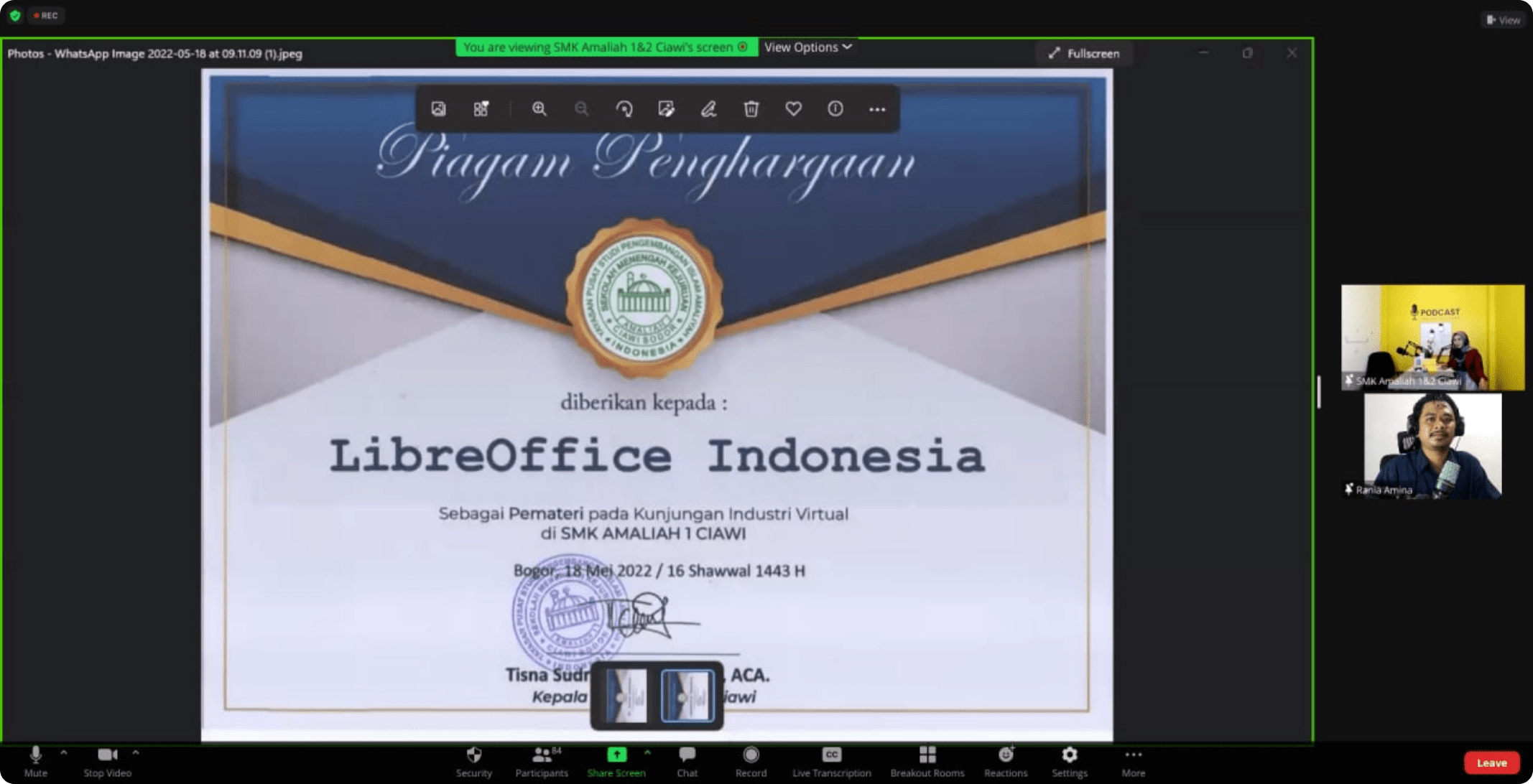
This event was held virtually, starting at 08:00 WIB (Western Indonesian Time/GMT+7) until 12:00 WIB, with around 90 participants. The enthusiasm of the participants in this activity was quite high, considering that apparently both LibreOffice and FOSS were new things for the students. On this occasion, I also conveyed to them to never hesitate to start contributing, both in the coding and non-coding spheres, for example as testers, bug hunters, making designs for promotions in their environment, creating events related to LibreOffice, and more.

We hope that – after this activity – LibreOffice ID will collaborate again with Amaliah Vocational School to organize offline activities in the future.

Many thanks to Rania and the community for their great work! Learn more here.
Annual Report: TDF’s infrastructure in 2021

In 2021, the infrastructure team migrated our “Ask LibreOffice” site to Discourse, deployed a Decidim instance, and assisted with video streaming during the LibreOffice Conference.

(This is part of The Document Foundation’s Annual Report for 2021 – we’ll post the full version here soon.)

LibreOffice’s infrastructure team is responsible for maintaining the hardware, virtual machines and services that enable the wider community to develop, market, test, localize and improve the software. The public infrastructure is powered by around 50 kernel-based virtual machines (KVMs) spread across four hypervisors, plugged to an internal 10Gbps switch, hosted at Manitu in St. Wendel (Germany), and managed with libvirt and its KVM/QEMU driver. The virtual disk images are typically stored in GlusterFS volumes – distributed across the hypervisors – except for some transient disks (such as cache) where the IOPS requirement is higher and the redundancy less important.

As 2021 marked another “pandemic year” with only online events, the infrastructure team helped to make these a pleasant experience from home. Notably, they deployed a Pretalx instance to manage conference submissions and the schedule, and put in place a streaming backend based on Jitsi/Jibri/RTMP during the annual conference, thereby providing several participation options to chose from.

Ask LibreOffice

After several months of tests and feedback from the community, the infra team also concluded the migration of LibreOffice’s Q&A platform (“Ask LibreOffice”) to Discourse. Over 65,000 questions and 130,000 replies from 50,000 users — spanning over 17 languages — were imported, with a focus on preserving post attribution and overall layout. The metric collection engines (Matomo as well as the public Grimoire Dashboard) were updated to reflect that change.

Also on the community participation front, the infrastructure team deployed a Decidim instance to structure debate and encourage democratic participation from community members. The instance is currently still under test.

On the Continuous Integration (CI) front, the team deployed new buildbots for Windows and Linux baselines, as well as a buildbot for the WebAssembly (WASM) effort. They also migrated and refactored the bibisect setup to better suit the needs of the quality assurance community.

Backends

As for the backends: Debian GNU/Linux 11 (codename “Bullseye”) was released in the middle of 2021, and the team upgraded most of TDF’s virtual machines accordingly during the second half of the year. However, for the lower layers of the virtualization stack, the upgrade is planned for 2022. Furthermore, lots of work was done in planning the restructuring of database engines, most notably around Point-in-Time Recovery; this work was driven by contributor Brett Cornwall. Finally, the team assisted the Membership Committee with the architecture of the back-end side of their new tooling.

Like what we do? Support the LibreOffice project and The Document Foundation – get involved and help our volunteers, or consider making a donation. Thank you!

Czech translation of LibreOffice Getting Started Guide 7.3

Zdeněk Crhonek (aka “raal”) from the Czech LibreOffice community writes:

The Czech team has finished its translation of the LibreOffice Getting Started Guide 7.3. As usual it was team work, namely: translations by Petr Kuběj, Zdeněk Crhonek and Ludmila Chládková; localized pictures by Roman Toman; and technical support from Miloš Šrámek. Thanks to all the team for their work! The Czech translation of the guide 7.3 is available for download on this page.

Indeed, many thanks to everyone in the Czech community for their work! Learn more about LibreOffice’s documentation project here.

Annual Report: LibreOffice Quality Assurance in 2021

Quality Assurance (QA) is a cornerstone of the LibreOffice project, thanks to the activity of a large number of volunteers and the feedback of many users who help in reporting bugs and regressions.

(This is part of The Document Foundation’s Annual Report for 2021 – we’ll post the full version here soon.)

In 2021, the QA team triaged thousands of bugs, bisected hundreds of regressions, and answered questions from countless bug reporters. As one of the most visible groups directly responding to end users, the QA team must be nimble and able to adapt to changes. In addition, it must deal with specific requests for help from other teams.

The QA team meets regularly on IRC on the #libreoffice-qa channel, which is the best medium for discussing bugs and regressions. The IRC channel provides an excellent opportunity to remain in close contact with team members, and to tutor new members in the art and skill of LibreOffice QA. This is bridged to the Telegram group.

During 2021, 6,804 bugs were reported by 3,022 users, which means 131 new bugs were reported every week on average.

Top 10 bug reporters

  • Telesto (571)
  • NISZ LibreOffice Team (296)
  • Regina Henschel (126)
  • Mike Kaganski (115)
  • Xisco Faulí (104)
  • Eyal Rozenberg (87)
  • Rafael Lima (66)
  • sdc.blanco (60)
  • Valek Filippov (54)
  • Colin (50)

Bug Hunting, Bibisecting

In July 2021, the QA Team organized an online Bug Hunting Session for LibreOffice 7.2. This provided the opportunity for all users, especially those with technical knowledge, to test pre-release versions and provide their feedback in the IRC channel and Telegram group. They were helped to report and confirm bugs, which led to improved stability in the final release.

Also, during 2021, the QA team performed 652 bibisects of regressions.

Top 10 Bisecters

  • Xisco Faulí (166)
  • Timur (85)
  • Aron Budea (68)
  • raal (66)
  • Buovjaga (48)
  • Telesto (46)
  • NISZ LibreOffice Team (29)
  • Justin L (23)
  • Roman Kuznetsov (23)
  • Kevin Suo (18)

Learn more about the QA project on this page, and give the team a hand!

Like what we do? Support the LibreOffice project and The Document Foundation – get involved and help our volunteers, or consider making a donation. Thank you!

LibreOffice project and community recap: April 2022

Here’s our summary of updates, events and activities in the LibreOffice project in the last four weeks – click the links to learn more…

  • How do different free and open source software projects do mentorship, and how can we all learn from each other? Daniel Garcia Moreno (EndlessOS Foundation and GNOME), Emily Gonyer (openSUSE), Ilmari Lauhakangas (The Document Foundation), and Marie Nordin (Fedora) discuss this in a panel moderated by Ben Cotton:

Please confirm that you want to play a YouTube video. By accepting, you will be accessing content from YouTube, a service provided by an external third party.

YouTube privacy policy

If you accept this notice, your choice will be saved and the page will refresh.

Keep in touch – follow us on Twitter, Facebook and Mastodon. Like what we do? Support our community with a donation – or join us and help to make LibreOffice even better!

The Month of LibreOffice, May 2022 starts today – Join in and get snazzy merch!

Boost your skillset and learn new things – join the Month of LibreOffice! The software is a worldwide, community open source project – and many people who help to improve it, actually started out as regular users of the software.

So in the coming four weeks, we’d love it if you get involved, join our community, and have fun. You can build up valuable skills for a future career – and you don’t need to be a programmer. There are many ways to help make LibreOffice awesome, as we’ll see in a moment.

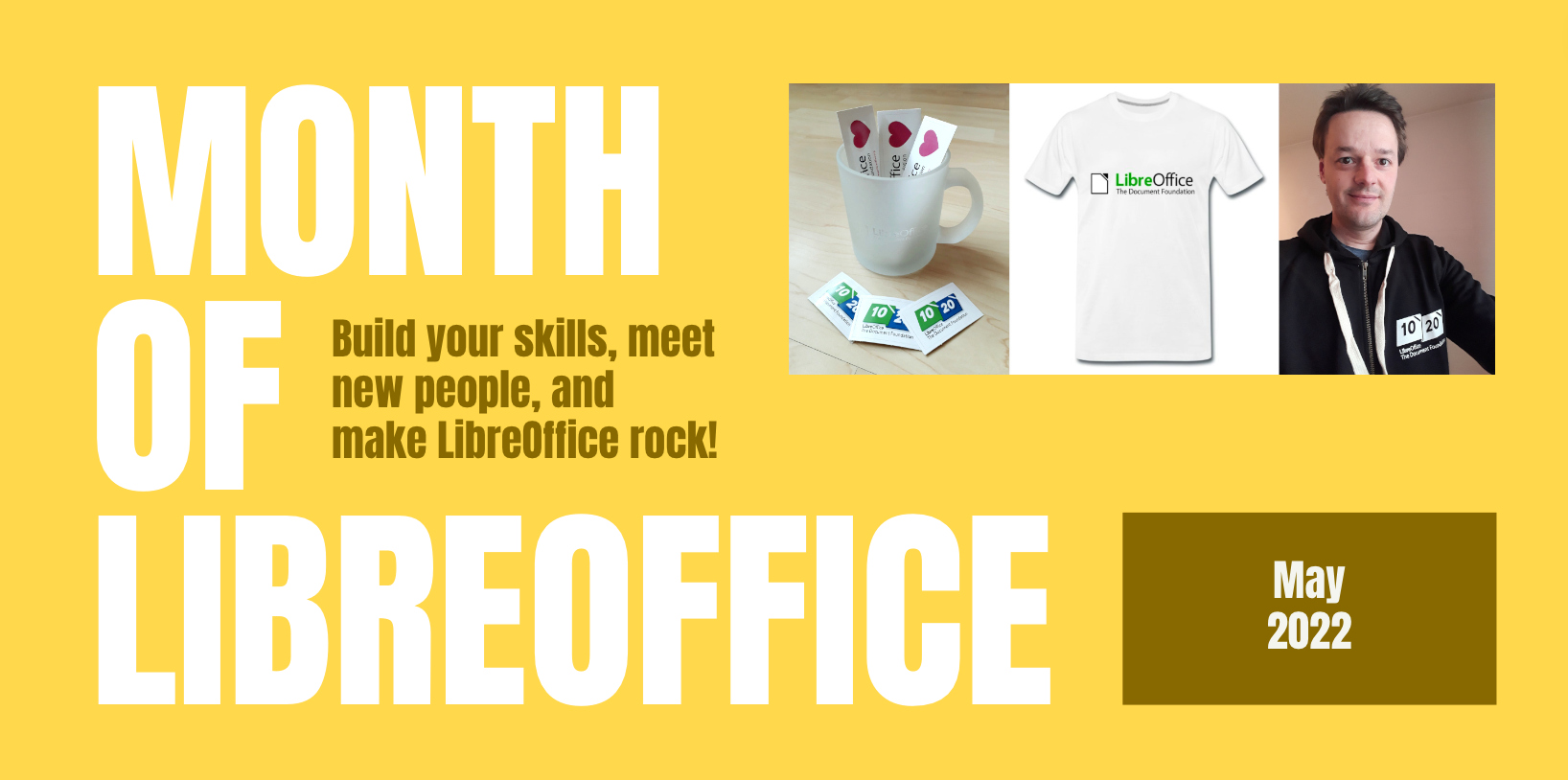
And best of all: everyone who contributes to LibreOffice in the next four weeks can claim a cool sticker pack, and has the chance to win extra LibreOffice merchandise such as mugs, hoodies, T-shirts, rucksacks and more (we’ll choose 10 participants at random at the end):

How to take part

So, let’s get started! There are many ways you can help out – and as mentioned, you don’t need to be a developer. For instance, you can be a…

  • Handy Helper, answering questions from users on Ask LibreOffice. We’re keeping an eye on that site so if you give someone useful advice, you can claim your shiny stickers.
  • First Responder, helping to confirm new bug reports: go to our Bugzilla page and look for new bugs. If you can recreate one, add a comment like “CONFIRMED on Windows 10 and LibreOffice 7.3.2”.
  • Drum Beater, spreading the word: tell everyone about LibreOffice on Twitter or Mastodon! Just say why you love it or what you’re using it for, add the #libreoffice hashtag, and at the end of the month you can claim your stickers.
  • Globetrotter, translating the user interface: LibreOffice is available in a wide range of languages, but its interface translations need to be kept up-to-date. Or maybe you want to translate the suite to a whole new language? Get involved here.
  • Docs Doctor, writing documentation: Whether you want to update the online help or add chapters to the handbooks, here’s where to start.

We’ll be updating this page every few days with usernames across our various services, as people contribute. So dive in, get involved and help make LibreOffice better for millions of people around the world – and enjoy your sticker pack at the end as thanks from us! And who knows, maybe you’ll be lucky enough to win bonus merch as well…

Let’s go! We’ll be posting regular updates on this blog and our Mastodon and Twitter accounts over the next four weeks – stay tuned!