Join the LibreOffice Team as a Developer focusing on accessibility, full-time, remote (m/f/d)

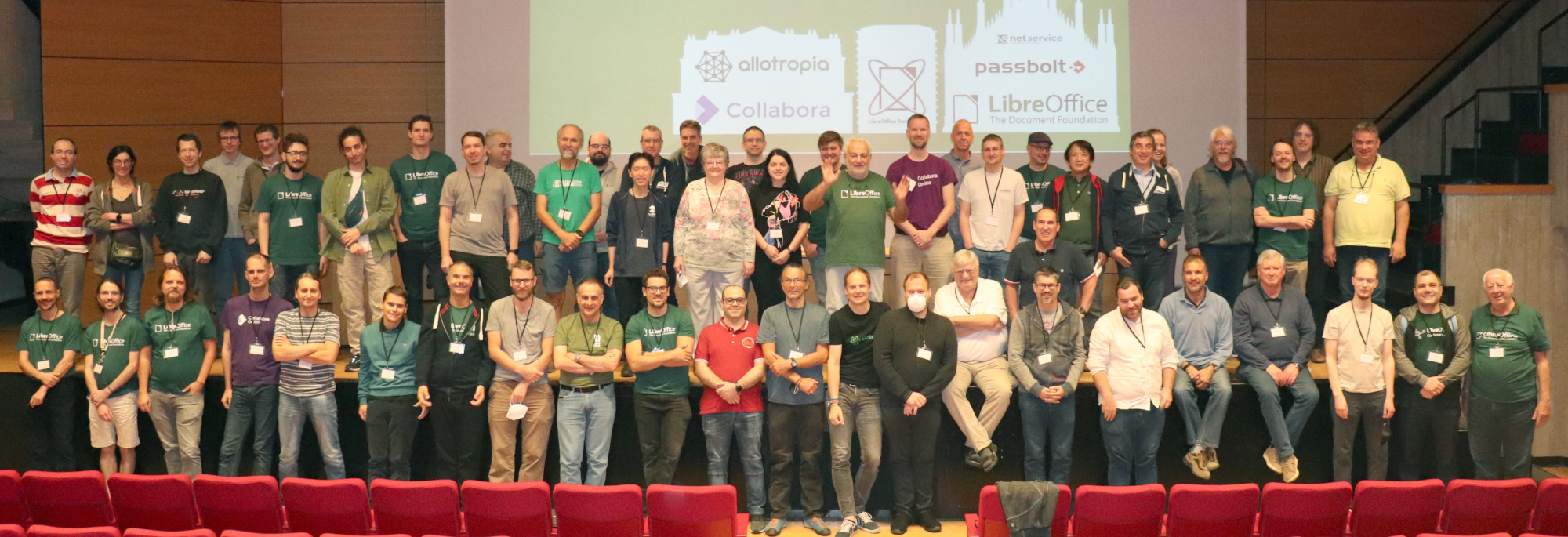
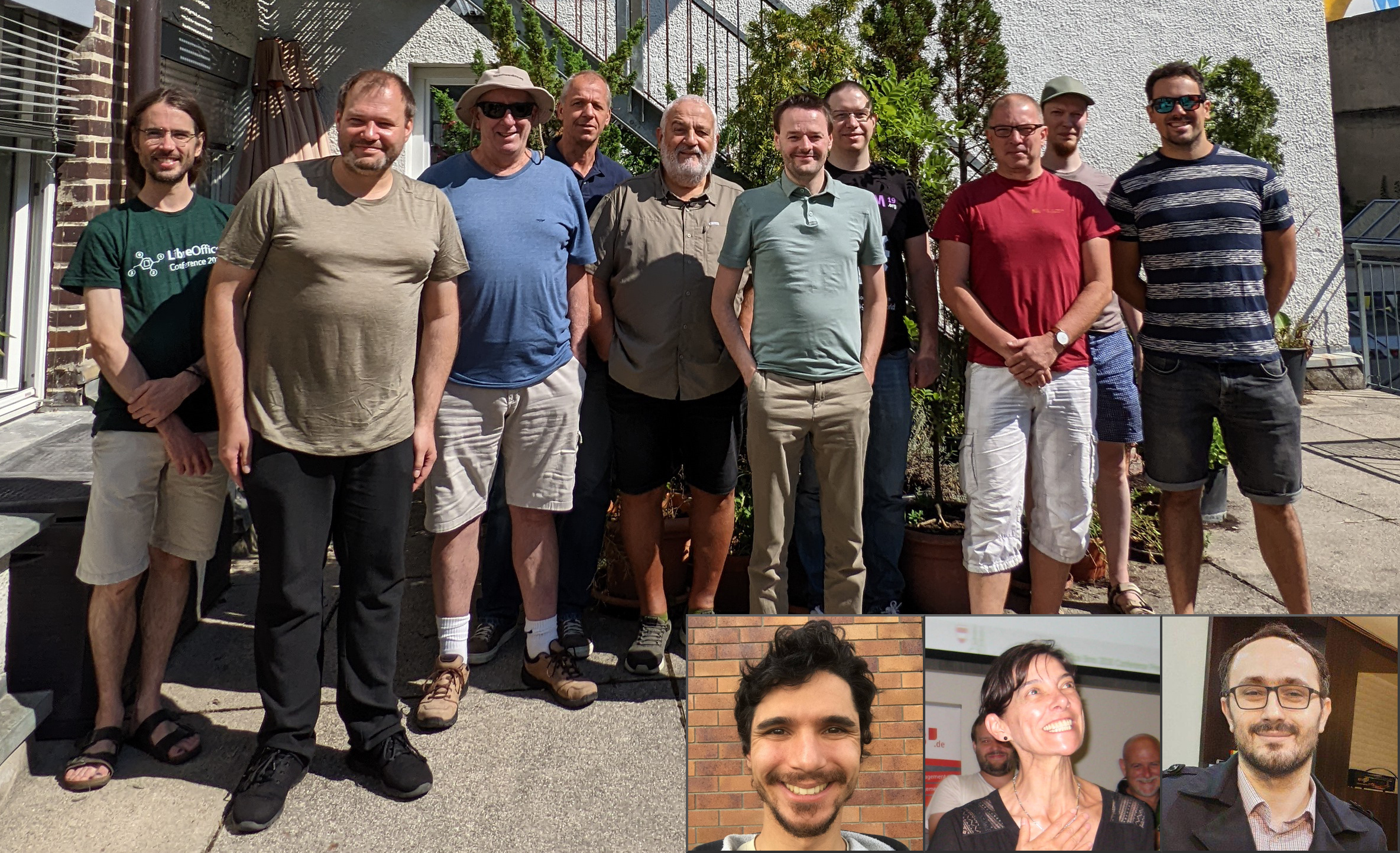
TDF team group photo

Note: this is one of two Developer positions currently available – the other focuses on RTL/CTL topics

The Document Foundation (TDF) is the non-profit entity behind the world’s leading free and open-source software office suite, LibreOffice. We are truly passionate about free software, the open source culture and about bringing new companies and people with fresh ideas into our community, especially in the second decade of our project. Look at what we did last year!

To improve features in LibreOffice, the office productivity suite for over 200 million users around the globe, we’re searching for a developer (m/f/d) to start work (from home) as soon as possible. The role includes:

  • Working on the LibreOffice codebase and build system
  • Focusing on accessibility in LibreOffice

The role requires the following:

  • Very good C++ development skills
  • Proven experience working on accessibility topics
  • Proven contributions to FOSS projects (show us your repos!)
  • Good team-playing skills
  • Experience with LibreOffice development is a plus

Speaking and writing English is a mandatory requirement. Another language like German, Spanish or Chinese is a bonus.

A previously established relationship within the developer community, as well as with other teams such as QA is a plus, but it is not mandatory at the start and can be achieved during the work itself.

As always, TDF will give some preference to individuals who have previously shown a commitment to TDF, including but not limited to members of TDF. Not being a member does not exclude any applicants from consideration.

Join us!

All jobs at The Document Foundation are remote jobs, where you can work from your home office or a co-working space. The work time during the day is flexible, apart from very few fixed meetings. The role is offered as full-time. Candidates that are resident in or willing to relocate to Germany will be employed directly by TDF. Otherwise, external payroll services will be used if available in the candidate’s country of residence.

Are you interested? Get in touch! We aim to schedule the first interview within two weeks of your application. You can also approach us any time for an informal chat, to learn about the role or in case of questions.

TDF welcomes applications from all suitably qualified persons regardless of their race, gender, disability, religion/belief, sexual orientation or age. Don’t be afraid to be different, and stay true to yourself. We like you that way!

We are looking forward to receiving your application, including information about you, when you are available for the job, and of course your financial expectations. Pointing to public repositories with your code is very helpful. Please send us an e-mail to developers@documentfoundation.org no later than February 10, 2023. If you haven’t received feedback by March 24, your application could not be considered.

Please note that there’s a holiday break from December 22 to January 9, so we might not reply to your email during that time – but we’ll follow-up as soon as possible. So if you want to apply, do so now!

Also note: we only accept applications from the applicant, and not from any intermediary.
Community Member Monday: 锁琨珑 (Kevin Suo)

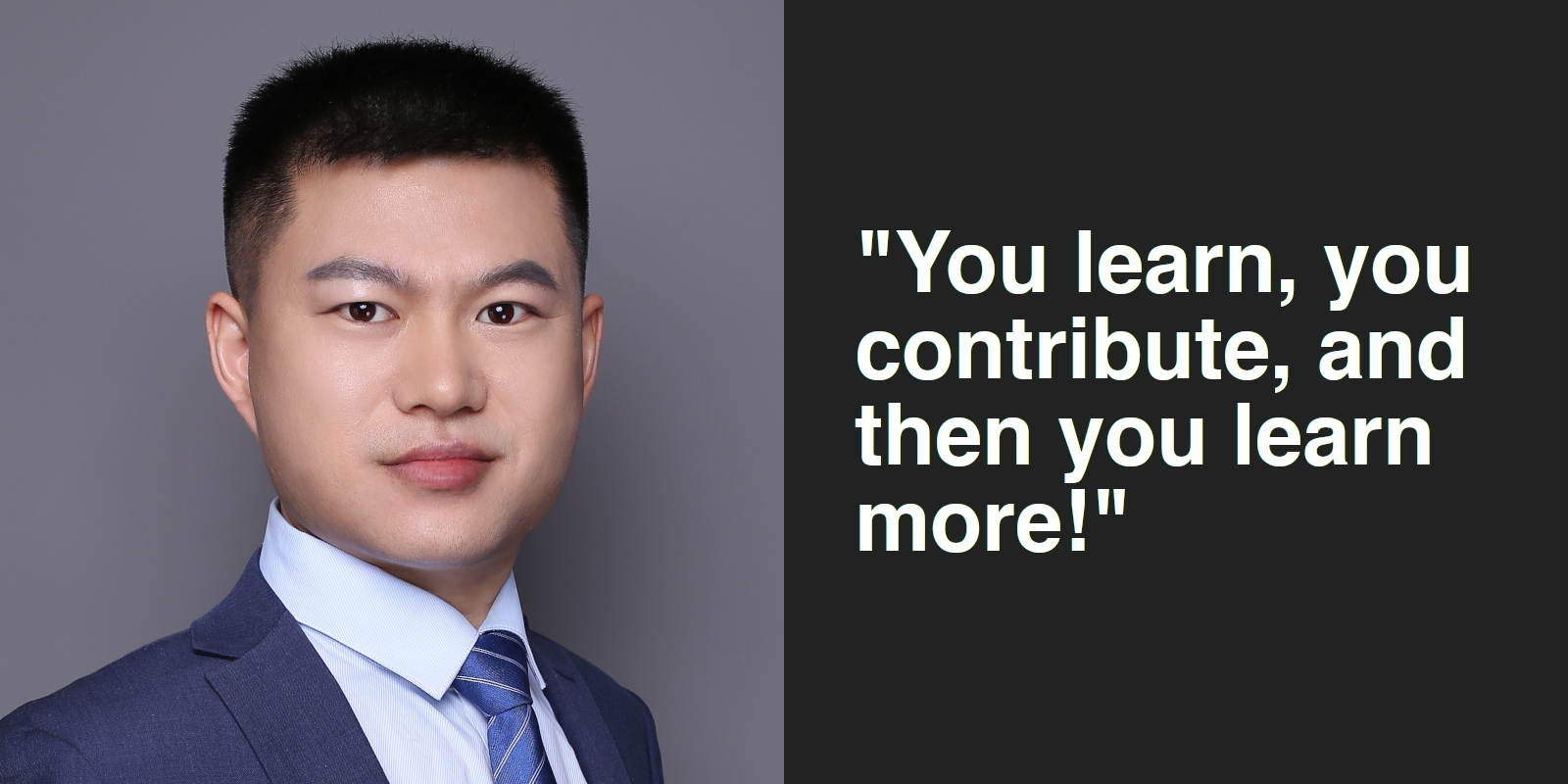
Photo of Kevin Suo

Today we’re talking to 锁琨珑 (Kevin Suo), who’s doing great work improving LibreOffice and fixing bugs…

Tell us a bit about yourself!

I’m 36 years old, and I was born in the Gansu Province of China. I live in Beijing and I’m working as an Of Counsel in a leading law firm in Beijing. Some people may think that I’m a lawyer. No, I am not a lawyer – I am a professional accountant. My team work as local counsel on behalf of clients defending on Antidumping and Countervailing Duty investigations initiated by authorities (e.g., the U.S. Department of Commerce, the European Union etc) against companies and industries in China, and accountants play an important role in this field.

Although I am very busy at work every day, I love the internet, computers and programming. I can program using Python+Pandas and SAS, and tools such as these have greatly helped me in my daily data analysis work. I’m also a Linuxer. Many years ago I used Ubuntu, Debian, Arch Linux, and even Gentoo, but now I stick to Fedora Workstation. Currently 99.9% of my daily work is done under Linux, including those mission-critical work we submitted to the U.S. DOC and EU authorities.

I also know some HTML, CSS and PHP, and I have a server running at home with a WordPress instance and a Nextcloud instance. The server also servers as a mirror of some of the Libreoffice bibisect repositories (it is very slow to download from the TDF server here in China, so I need to mirror them).

What are you working on in the LibreOffice project right now?

I started using LibreOffice many years ago, probably when I was in college (when it was the OpenOffice.org era). After that, I became a contributor to LibreOffice. I started with localisation and quality assurance (QA), reporting, testing and confirming bugs. Then I learned and started bibisecting. Soon, I started building LibreOffice by myself, and then I started to learn C++ and fix some easy bugs. I am even surprised by myself, that before contributing to LibreOffice I only learned very little of the C language (when I was in collage, as an “elective course”), and at that time I never thought I might learn and use C++.

Most of the commits I have made to LibreOffice were related to the pdfimport feature in the sdext module. I think I got involved in this module very randomly – I wanted to know more about the the LibreOffice code base, then I read the sdext pdfimport module by chance, and found that to understand the code I first need to read the PDF specifications!

Then I read the specifications, learned some C++ online, identified some bugs which have affected me on my daily work, and then found that I was able to fix them! Also, as I am trying to fix more bugs, I now find that I need to learn something about Unicode! That is a lot of fun. You learn, you contribute, and then you learn more!

Some of you may know that, recently, I fixed a bug related to right-to-left text mirroring in the Draw/Writer pdf import (i.e. tdf#104597) which has impacted many RTL (right-to-left text) users for a long time. That bug came to my view, since someone added me to CC due to several of my patches in the sdext pdfimport module. I got interested in that bug because, although I am a Chinese, I learned some Arabic characters and words in the mosque when I was young. Yes, I am a Chinese muslim!

When did you get involved in LibreOffice, and what was it like?

I don’t remember when I get involved, but my first commit to the core repository was in year 2014. Many people have helped me, e.g. Eike Rathke, Noel Grandin, Caolán McNamara, Mike Kaganski etc. At the beginning I thought everything is difficult, but now I feel comfortable.

What advice would you give for others who want to help out with the code?

I would like to say that, to contribute to LibreOffice, you do not need to be a programmer. An accountant can also contribute, given that you are desired to learn!

LibreOffice project and community recap: November 2022

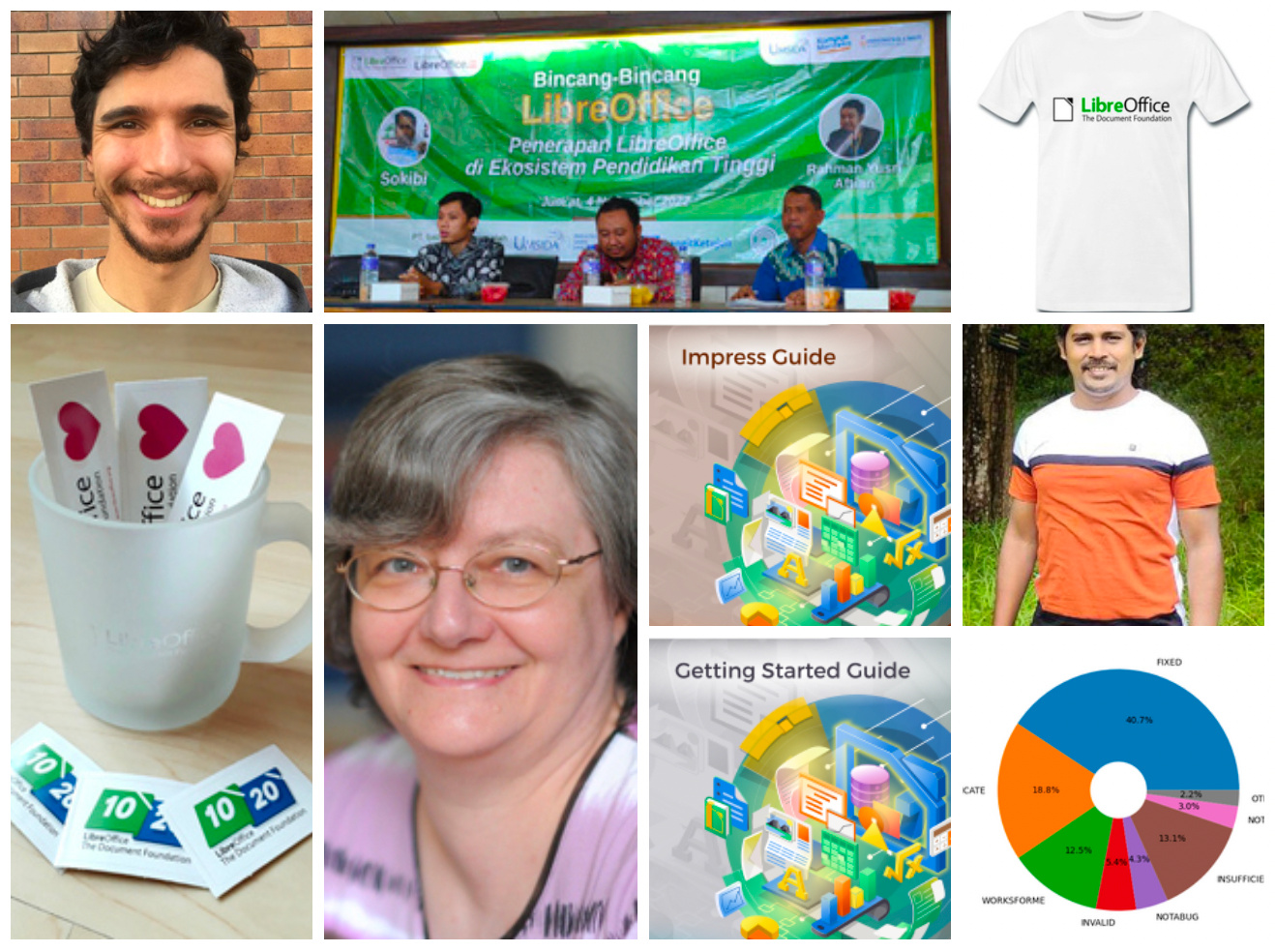
Recap banner

Here’s our summary of updates, events and activities in the LibreOffice project in the last four weeks – click the links to learn more…

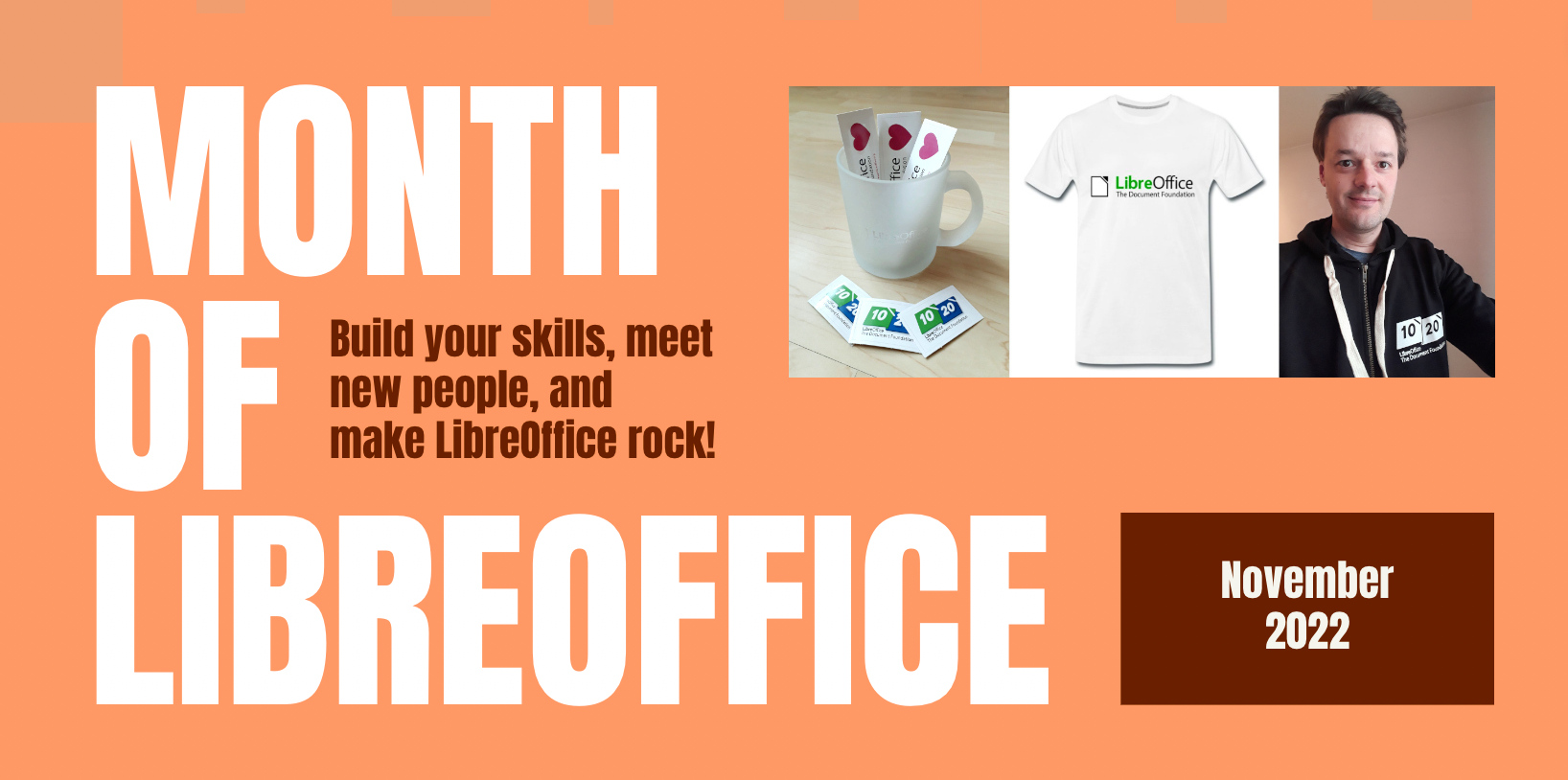
  • November was a Month of LibreOffice! This is something we do every six months, to say our thanks to everyone who contributes to the project – and encourage others to join in. 307 people won sticker packs – and a few others got some special bonus LibreOffice merchandise 😉

LibreOffice merchandise

  • Throughout the month, we edited and uploaded videos from our recent LibreOffice Conference 2022. All videos should be on this playlist now, apart from a couple which had problems with the sound:

Please confirm that you want to play a YouTube video. By accepting, you will be accessing content from YouTube, a service provided by an external third party.

YouTube privacy policy

If you accept this notice, your choice will be saved and the page will refresh.

Regina Henschel

  • Early in November, we announced LibreOffice 7.3.7, which is planned as the last release in the 7.3 branch. Users still using this version should start looking at the LibreOffice 7.4 family, now at 7.4.2, which has been extensively tested by millions of users worldwide. And later in the month, we released LibreOffice 7.4.3.

LibreOffice 7.3 banner

  • FOSDEM, the biggest European free software event, is coming up – and the first in-person meeting since 2022. Of course, LibreOffice and The Document Foundation will be there, and we put out a Call for Papers for the LibreOffice Technology devroom. See you there!

FOSDEM logo

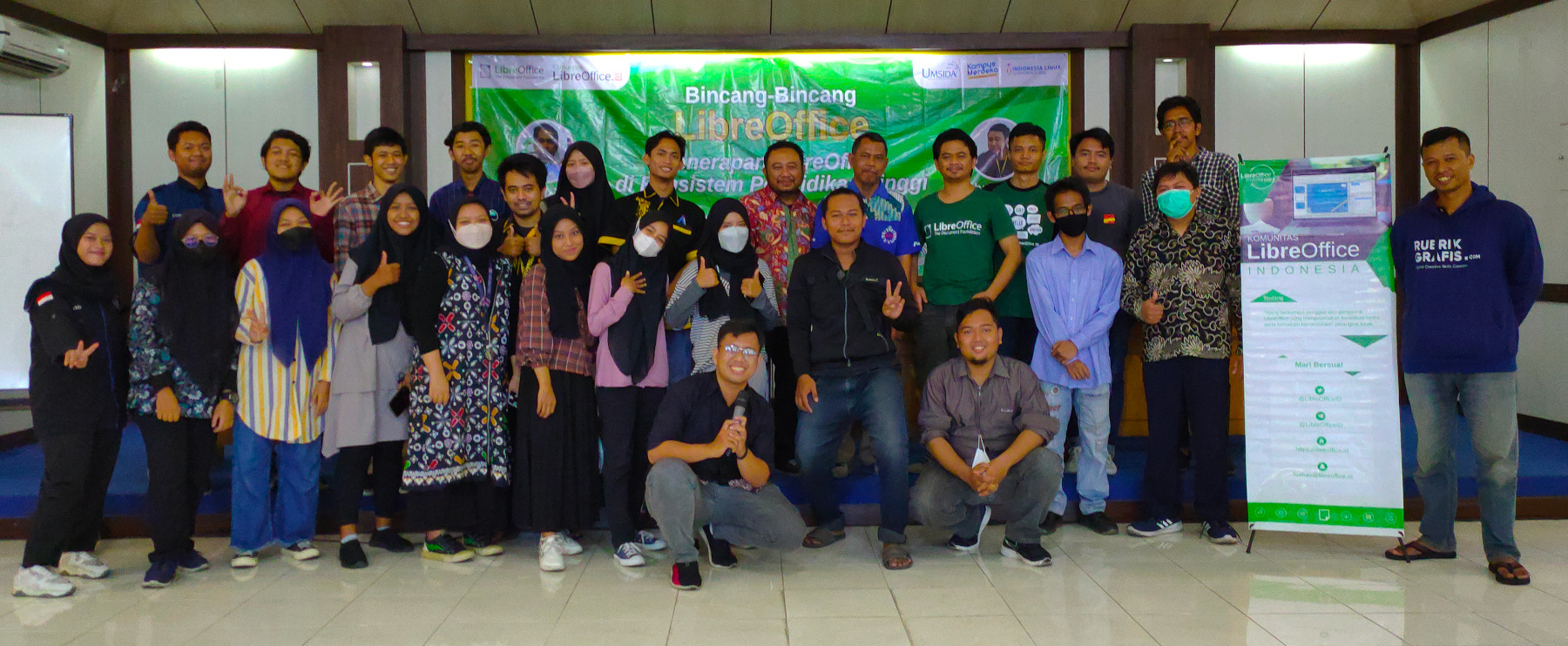
Indonesian community group photo

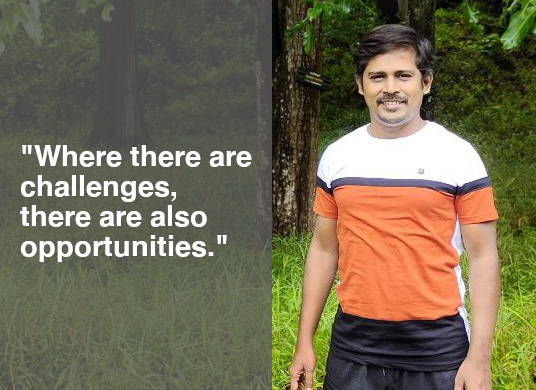
Muthuramalingam Krishnan

  • Did you know? You can dock colour palettes in many places in LibreOffice Draw. Harald Berger, from the German LibreOffice community, made a video demonstrating this:

Please confirm that you want to play a YouTube video. By accepting, you will be accessing content from YouTube, a service provided by an external third party.

YouTube privacy policy

If you accept this notice, your choice will be saved and the page will refresh.

Stéphane Guillou

  • Earlier in 2022, together with more than 100 European organisations and companies, The Document Foundation signed the Open Letter about the universal right to install any software on any device. Join us and sign the letter today.

Impress Guide cover

Keep in touch – follow us on Twitter, Facebook and Mastodon. Like what we do? Support our community with a donation – or join us and help to make LibreOffice even better!

Winners in the Month of LibreOffice, November 2022!

At the start of November, we began a new Month of LibreOffice, celebrating community contributions all across the project. We do these every six months – so how many people got sticker packs this time? Check it out…

Awesome work, everyone! Hundreds of people, all across the globe, have helped out in our projects and communities. We’re hugely thankful for your contributions – and, of course, everyone who’s listed on the wiki page can get a sticker pack, with these stickers and more:

How to claim

If you see your name (or username) on this page, get in touch! Email mike.saunders@documentfoundation.org with your name (or username) from the wiki page so that we can check, along with your postal address, and we’ll send you a bunch of stickers for your PC, laptop and other kit.

(Note: your address will only be used to post the stickers, and will be deleted immediately afterwards.) If you contributed to the project in November but you’re not on the wiki page, please let us know what you did, so that we can add you!

There is one more thing…

And we have an extra bonus: nine contributors have also been selected at random to get an extra piece of merchandise – a LibreOffice hoodie, T-shirt, rucksack or snazzy glass mug. Here are the winners (names or usernames) – we’ll get in touch personally with the details:

  • Aleksandar Popovic
  • vibrationoflife
  • Benyamin Limanto
  • Jürgen Kirsten
  • Tarcísio Ladeia de Oliveira
  • Omkar Acharekar
  • Jaroslav Kratochvil
  • Ettore Atalan
  • William Friedman

Congratulations to all the winners, and a big thanks once again to everyone who took part! Your contributions keep the LibreOffice project strong. We plan to have another Month of LibreOffice next year, but everyone is welcome to see what they can do for LibreOffice at any time!

LibreOffice Conference 2022 videos: Arabic/Persian/Klingon support, wiki cleaning, project sustainability

Here’s another batch of talks from the recent LibreOffice Conference 2022! Watch the individual videos below, or click here to view the playlist.


Arabic/Persian Text Justification: An Overview, with Hossein Nourikhah

Please confirm that you want to play a YouTube video. By accepting, you will be accessing content from YouTube, a service provided by an external third party.

YouTube privacy policy

If you accept this notice, your choice will be saved and the page will refresh.


The state of Right-to-Left language support in LibreOffice, with Eyal Rozenberg

Please confirm that you want to play a YouTube video. By accepting, you will be accessing content from YouTube, a service provided by an external third party.

YouTube privacy policy

If you accept this notice, your choice will be saved and the page will refresh.


Let’s try NLP of Klingon language using LibreOffice, with Koji Annoura

Please confirm that you want to play a YouTube video. By accepting, you will be accessing content from YouTube, a service provided by an external third party.

YouTube privacy policy

If you accept this notice, your choice will be saved and the page will refresh.


We keep the wiki squeaky clean, with Ilmari Lauhakangas

Please confirm that you want to play a YouTube video. By accepting, you will be accessing content from YouTube, a service provided by an external third party.

YouTube privacy policy

If you accept this notice, your choice will be saved and the page will refresh.


Improve the project sustainability, with Italo Vignoli

Please confirm that you want to play a YouTube video. By accepting, you will be accessing content from YouTube, a service provided by an external third party.

YouTube privacy policy

If you accept this notice, your choice will be saved and the page will refresh.

Welcome Stéphane Guillou, new QA Analyst for LibreOffice

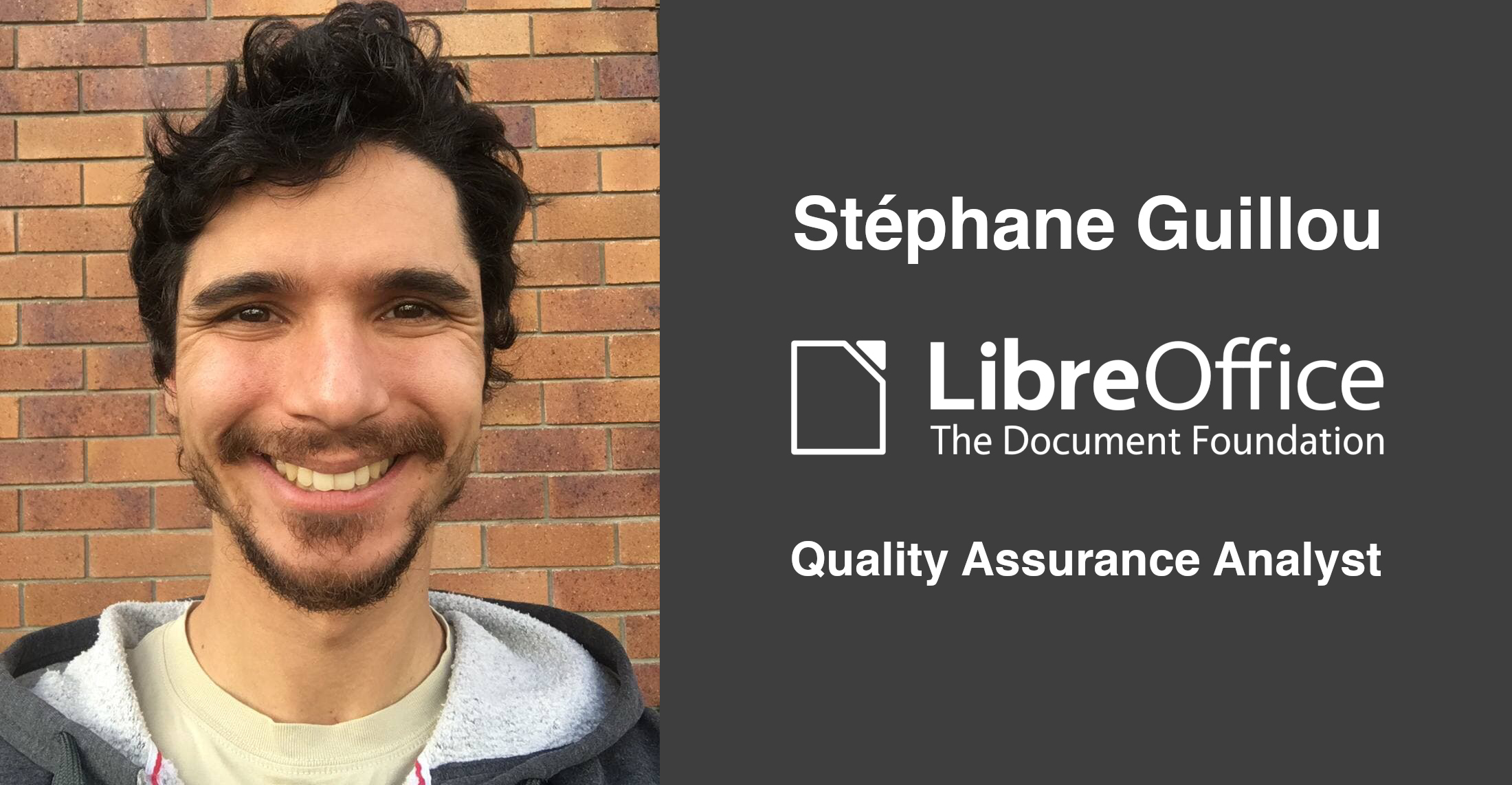
Photo portrait of Stéphane Guillou

We have a new team member at The Document Foundation, the non-profit entity behind LibreOffice! (That means we’re now 13 people.) Stéphane Guillou joins us as a Quality Assurance Analyst – so let’s get to know him better:

Tell us a bit about yourself!

I am from France, with roots also in Peru, but lived for the last 10 years in Australia with my awesome little family before coming back to France. We now live in Alsace, close to the forest in the Vosges mountains.

I studied plants, ecology and sustainability before working in agricultural research. I am still very passionate about plants and the environment, but my focus has moved towards supporting researchers in their data analysis, promoting Open Science principles and offering training about FLOSS research software, which I was able to do for the last 4 years at the University of Queensland’s Library, and before that as a certified instructor of the Carpentries organisation.

I am passionate about sharing information about Open Science, and contributing data to the Commons. You can for example find me on other wonderful projects like OpenStreetMap, iNaturalist and MusicBrainz.

When I am not parenting or working, I like spending time on electronic music, amateur radio and cycling.

What’s your new role at The Document Foundation?

I am the new Quality Assurance (QA) Analyst, and a lot of my time will be spent on triaging the issues users report on Bugzilla – our bug-reporting platform. There is a lot of activity on Bugzilla, and classifying and testing the reports is fundamental for us to focus on the most pressing issues, help the work developers are doing, and keep improving the software for everyone! Part of the work will also be to analyse and summarise the wealth of data available to help us see the bigger picture and make better decisions when allocating resources.

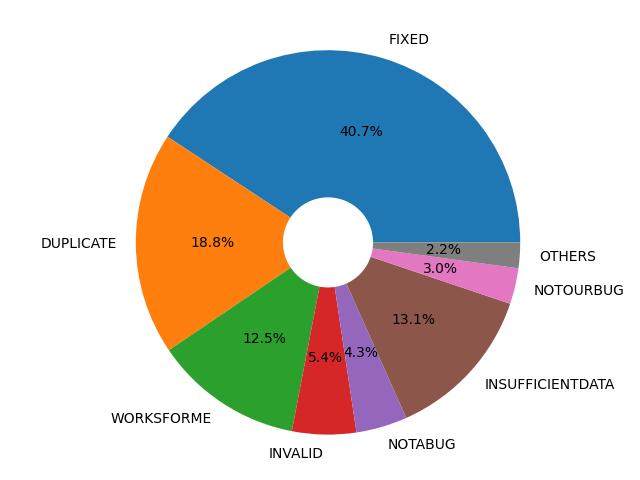
Pie chart showing the split between resolved bug statuses on Bugzilla. Four main categories are fixed (40.7%), duplicate (18.8%), insufficient data (13.1%) and works for me (12.5%).

Pie chart showing the split between resolved bug statuses on Bugzilla. Four main categories are “fixed” (40.7%), “duplicate” (18.8%), “insufficient data” (13.1%) and “works for me” (12.5%).

How did you get involved in LibreOffice, before you joined TDF?

I have used LibreOffice since it was first released in 2011, and have always liked reporting problems and helping out with the QA process in little bursts, just like I like doing with any FLOSS tool I use. I feel it’s a great way to give back to the community.

How can regular users of LibreOffice help out with the QA project?

Everyone can help our QA project by first using the software, and reporting problems when you encounter them. Have a look if the issue has been reported before, and if not, you might have found a new one! It’s important to not assume that someone has reported the issue before you. LibreOffice is a very customisable and rich office suite, so people use it in vastly different ways.

If you want to help some more, feel free to install development versions to test them, look at reports on Bugzilla to confirm issues and classify them, identify exactly when an issue arose (it’s called “bibisecting“), and share your learnings and processes with others! There is a wealth of tasks you can start on on our Wiki.

Thank you for your help building an office suite for all!

We’re really happy to have Stéphane on board! Donations from LibreOffice users help us to grow our team, maintain our infrastructure and support the communities working on LibreOffice. Support us here!