LibreOffice developers love to hack on code – but they also love to meet up, exchange ideas, share information, and enjoy good food! The LibreOffice Asia Conference 2019 took place on 25 and 26 May, and now the videos from the presentations are online. Check them out – there are 16 videos in total, and you can browse the playlist using the button in the top-right…
Please confirm that you want to play a YouTube video. By accepting, you will be accessing content from YouTube, a service provided by an external third party.
Here’s our summary of updates, events and activities in the LibreOffice project in the last four weeks – click the links to learn more!
ODF (the Open Document Format) is the native file format of LibreOffice, and is a fully open and standardised format, ideal for long-term document storage. At the start of the month, we announced COSM – the Community of ODF Specification Maintainers, to hold funds and to retain editors to work at the ODF Technical Committee. The goal is to accelerate development of the standard, and build up experienced editors. Find out more here.
We put the next part of our Annual Report 2018 online! Our native language communities around the world help to improve LibreOffice and share knowledge – and their passion and dedication is wonderful. LibreOffice wouldn’t be what it is today without their great work!
Meanwhile, work continues on LibreOffice 6.3 (due to be released in early August), and our QA community organised a Bug Hunting Session. Give us a hand in future sessions to ensure that LibreOffice stays rock-solid!
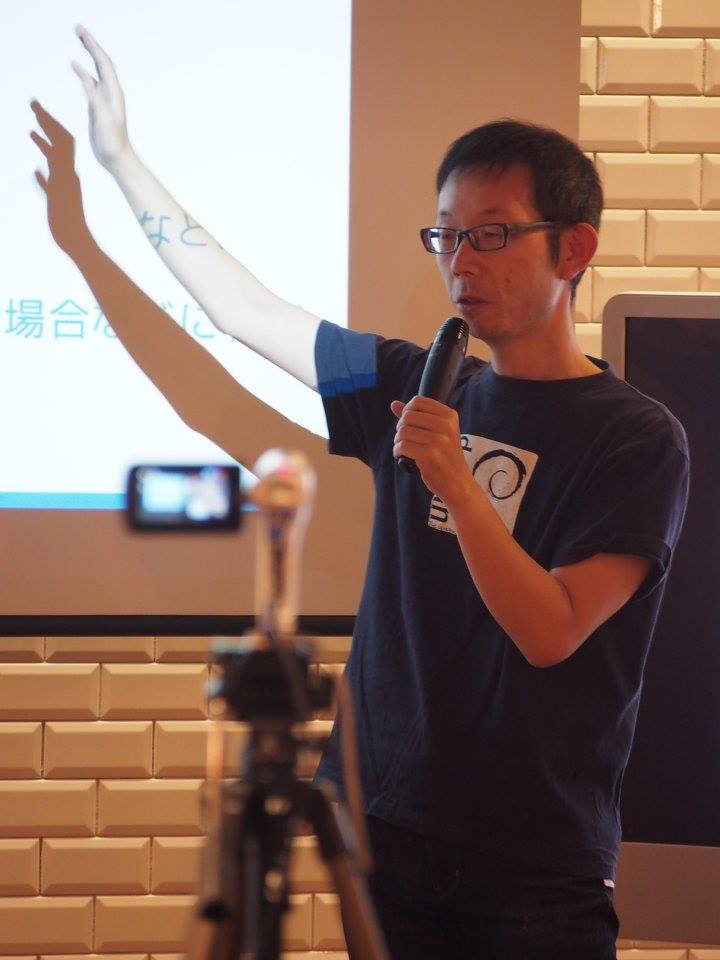
We talked to Jun Nogata, who helps out with the Japanese Ask LibreOffice website, and is also involved in marketing and public relations for the Japanese community.
Got some C++ knowledge? Want to explore the LibreOffice source code? We posted a guide to building the suite on Windows (as a follow up to our tutorial for GNU/Linux).
We already mentioned ODF earlier in this recap – well, also in July, we chatted to Regina Henschel about how the Open Document Format is developed, and how everyone can get involved.
Later in the month, we put another part of the Annual Report 2018 online: LibreOffice development. Check it out for a behind-the-scenes look at LibreOffice 6.2’s development process!
Members of the Canadian LibreOffice community set up LibreWaterloo, to improve their presence on the local scene.
On July 24th, TDF announced that the UK’s Government Digital Service (GDS) has joined the project’s Advisory Board. Back in 2014, the UK Cabinet Office announced the selection of the Open Document Format (ODF) for sharing and viewing government documents, so it’s good to have GDS on board to further the adoption of open standards.
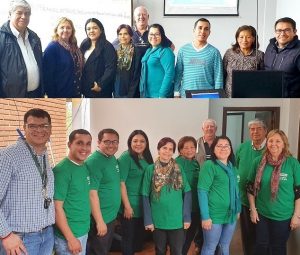
Linguistic challenges, women’s participation in FOSS, interoperability, professional training, migration, scripting and much more were hot topics in the conference held at the Facultad Politecnica of the Universidad Nacional de Asunción, Paraguay.
By Daniel A. Rodriguez.
The event started internally on Thursday 18 with a translation sprint of the LibreOffice Guarani team, with the assistance of Olivier Hallot (Brazil), LibreOffice volunteer translator for Brazilian Portuguese.
The Conference opened to public on Friday 19 in a ceremony that gathered the Minister of the Secretariat of Linguistic Policies (SPL), Ladislaa Alcaraz de Silvero, Prof. Limpia Ferreira Ortiz, FP-UNA Vice-Dean, members of the Guaraní Culture Atheneum, Prof. Mag. Alcides Torres Gutt, Coordinator of the Translation Team together with Italo Vignoli and Gustavo Pacheco representing The Document Foundation and the LibreOffice Community.
“The LibreOffice Latin American Conference is an event not only of technology, it is also a space for the study of new forms of productive organization. It will deal with technical topics such as development and quality control, but also with successful cases of migration and, with special attention, the translation into Guaraní, native of the American continent and official in Paraguay,” said the Vice-dean in her inaugural speech.
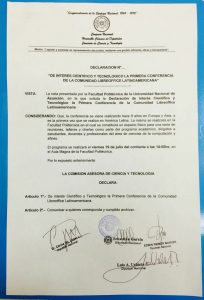
The conference initiative was declared of “Scientific and Technological Interest” by the Honorable Chamber of Deputies of Paraguay.
This regional conferences were carried out for 8 years in Europe and other continents, and for this time Paraguay was chosen as the venue, because it has a vibrant Free Software community, a special interest for the Guaraní language, and was completely organized by volunteers. Talks and workshops were held by speakers, members of the LibreOffice community, from Italy, Spain, Mexico, Costa Rica, Bolivia, Chile, Brazil, Argentina and Paraguay, from Thursday 18 to Saturday 20 of July at the Polytechnic Faculty of the National University of Asuncion in San Lorenzo campus.
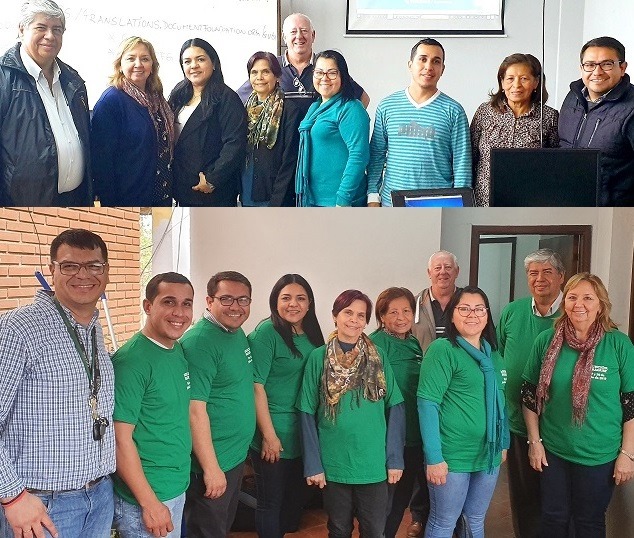
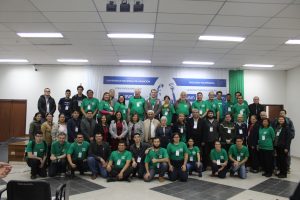
The first presentations covered the Hispanic community, the reality of the companies linked to the FLOSS in Paraguay and the difficulties faced by women workforce in the technological field. An official photo of the participants followed.
Starting the afternoon Henry Castro (Bolivia) talked on the development and technical challenges of LibreOffice Online. He was followed by José Gattica (Chile) talk on “Migration to LibreOffice in a vulnerable school”. Simultaneously, Mauricio Baeza (Mexico) gave the workshop on macros in the computer lab.
Xiomara Céspedes talked about the migration to LibreOffice and open document formats at the University of Costa Rica. She was followed by Renato Barsotti (Argentina) experience of the Faculty of Economics of the National University of Misiones (UnaM).
The next day morning, Olivier Hallot (Brazil) shared with the attendees the details about the importance of documenting the software. Simultaneously, Klaibson Ribeiro (Brazil) conducted the Calc workshop.
Italo Vignoli (Italy) talked about the characteristics of the LibreOffice community on a global scale, presenting graphs and figures to support the features and trends of the people involved in LibreOffice. He was followed after lunch by Xisco Fauli (Spain) on LibreOffice Development and Quality Control. At the same time, the certification team reviewed and approved the application of Rute Solipa (Portugal) for Professional Instructor and Xiomara Céspedes (Costa Rica) as Certified Migration Consultant in a video call session with Lothar Becker (Germany), Italo Vignoli and Gustavo Pacheco.
Italo Vignoli returned to give two presentations, the first one explaining the certification policy of The Document Foundation and the second one addressing the importance of adopting and using open documents formats such as the ODF standard.
The conference ended with the testimony of the participating students and the general public about the personal gains from the themes and knowledge presented at the conference and, in particular, the individual commitment to create a genuinely Paraguayan LibreOffice community and focus on LibreOffice translated into Guarani.
Berlin, July 22, 2019 – The Document Foundation (TDF) announces that the UK’s Government Digital Service (GDS) has joined the project’s Advisory Board, effective immediately.
The Government Digital Service (GDS) is part of the UK Cabinet Office [1]. It leads the digital transformation of Government in the UK, helping people interact with government more easily and supporting government to operate more effectively and efficiently.
In July 2014, the UK Cabinet Office announced the selection of the Open Document Format (ODF) for sharing and viewing government documents.
The Open Standards Team within GDS support and encourage the use of open standards in government. Their aim is to help identify and contribute to open standards for software interoperability and to promote data formats that will help to meet user needs across the UK government and support the delivery of common components.
“GDS has been a long-term supporter of the adoption of Open Document Format, and their participation in the TDF Advisory Board represents a strong endorsement of the project’s commitment to the advancement of open standards and ODF”, says Simon Phipps, TDF Director.
John Strudwick, Interim Director for Service Design and Assurance at GDS, said: “GDS are delighted to have joined the Advisory Board of TDF. We believe that open standards are important in meeting the needs that users have of Government and that ODF plays a big role in helping to deliver this.”
TDF Advisory Board’s (AB) [2] primary function is to represent supporters of the project, and to provide the Board of Directors (BoD) with advice and guidance. In addition, the AB is at the kernel of the LibreOffice ecosystem, and as such is key to the further development of the project.
If you’ve seen our LibreOffice contributor map, you’ll note that we have a few community members in north America. (Of course, the map doesn’t show absolutely everyone in the LibreOffice project – just people we’ve interviewed recently.) So we want to grow this community! Marc Paré has set up LibreWaterloo, to:
have a local presence on the Canadian scene with respect to the LibreOffice project and software. We would like to connect with local LibreOffice coders and users, and “to have fun” should be one of the pillars and principles we strive for.
So, how did Marc go about it, and what was the first meeting like? Here’s what he had to say:
I spoke at a meeting of the KW Non-Profit Sys Admin (KWNPSA) where I am a co-coordinator, and I announced the creation of the new LibreWaterloo community group. There, I did a two hour presentation on the status of The Document Foundation, along with LibreOffice and the benefits of starting a group.
There were approximately 15 people at the meeting, and a couple of people came to trouble-shoot their software; however, the meeting was not to trouble-shoot issues, but to discuss if there was an interest from the Sys Admin group.
We now have an organizing committee of three people, and we’ll meet in the next two or three weeks to start formalizing the community and shape its mission statement etc. I will be placing an advert in the local student newspaper at University of Waterloo announcing the community and hope to attract some young devs to the community, I also hope to meet with a local technical writer who teaches technical writing courses at our local college and universities – I will see if she would like to cooperate on her classes and perhaps have her students work on some of the LibreOffice Guides.
I also plan on contacting a national indigenous organization and see if they or we could help to organize indigenous language versions of LibreOffice. The Canadian government has put aside a large sum of money to help groups conserve indigenous languages in Canada; we are losing approximately one indigenous language every two-three weeks, as our indigenous elders are dying and their culture is also dying with them. I will see if we could apply for funds.
We will be organizing monthly meeting on a regular schedule and hope to have working groups set up sometime by October or November.
In 2018, 17,473 commits were made to the LibreOffice source code, from 223 authors. Here’s an overview of what they worked on…
Behind the scenes of LibreOffice 6.2
Throughout the second half of 2018, the developer community worked on a new major release: LibreOffice 6.2. Details about the end-user-facing new features are provided on this page, and in the following video – so in the rest of this blog post, we’ll focus on developer-related changes.
Please confirm that you want to play a YouTube video. By accepting, you will be accessing content from YouTube, a service provided by an external third party.
If you accept this notice, your choice will be saved and the page will refresh.
So, let’s get technical!
In terms of system requirements, the macOS minimum version was bumped up to 10.9 (and will be 10.10 in LibreOffice 6.3). Similarly, binary Linux x86 (32-bit) releases from The Document Foundation were deprecated, so there will be no Linux x86 builds produced by TDF after LibreOffice 6.2. However, this does not mean that Linux x86 compatibility will be removed; Linux distributions can still opt to build 32-bit binaries. See here for more details.
On the user interface front, there were other changes. Two new VCL plugins (qt5 and kde5) were implemented (with the KDE5 plugin extending the Qt5 one), to provide integration with KDE Plasma 5 and other Qt5-based desktop environments. These were mainly implemented by Katarína Behrens (CIB) and Jan-Marek Glogowski (City of Munich).
If the kde5 and the gtk3_kde5 plugins are installed, the desktop detection will now prefer the kde5 one. The qt5 plugin must be explicitly selected via SAL_USE_VCLPLUGIN=qt5, as it’s never selected automatically.
Native copy and paste of spreadsheet data in Writer tables was implemented by László Németh (NISZ): previously, you could paste a copied table as image, object, plain text, and as RTF; the latter resulting in a new table in Writer. In LibreOffice 6.2 you can paste directly in an existing table.
Data Validation now supports custom formulas thanks to Marco Cecchetti (Collabora), while Edit > Track Changes > Show no longer severely impacts performance in documents with many tracked changes. The document view is now capable of hiding the tracked changes, so they do not have to be rearranged in the document model to be hidden – implemented by Michael Stahl (CIB).
LibreLogo, the programming interface for graphic design and education got unit testing, IDE and compiler fixes and improvements (László Németh – FSF.hu Foundation). Meanwhile, work continued on the native GTK3 UI, as demonstrated by Caolan McNamara (Red Hat) at FOSDEM 2018:
Please confirm that you want to play a YouTube video. By accepting, you will be accessing content from YouTube, a service provided by an external third party.
If you accept this notice, your choice will be saved and the page will refresh.
Google Summer of Code
The Google Summer of Code (GSoC) takes place every year, and provides university students with funding to work on free and open source software. For 2018, seven LibreOffice developers were accepted into GSoC, and they worked on various features and updates. These improvements were presented in a session at the LibreOffice Conference in Tirana, Albania.
Daniel Silva showed his work on the revamped print dialog, which reorganised options into two tabs, to make them easier to find: a General tab, covering all components of the suite, and then a separate tab for component-specific features (ie those found in Writer, Calc, Impress and so forth). Altogether, this makes it easier for end users to find the options they need, without having to look through many different tabs.
Meanwhile, Mert Tümer worked on the LibreOffice Android Viewer as part of GSoC: he produced 23 patches, made up of nine new features and 14 bug fixes. Some of the new features include Export to PDF, printing, customising worksheets, and better language support.
Saurav Chirania implemented a logger for user interface testing, which logs interactions and stores them in a file, while Vikas Mahato worked on features for importing data from external sources, along with transformations for the data (38 types of transformation were implemented). Finally, Hrishabh Rajput worked on updating listbox widgets to separate read values from input values, Kshitij Pathania added some improvements to the Notebookbar, and Shobhan Mandal focused on adding support for Python in the LOEclipse plugin.
A big thanks to everyone who contributed code last year! Why not join them?
You don’t need to be the world’s best C++ wizard to get involved – just some C++ knowledge and willingness to explore the codebase is great!