LibreOffice case study: Flotte Karotte

LibreOffice in business

Companies around the world use LibreOffice to reduce costs, improve their privacy, and free themselves from dependence on single vendors. Today we’re talking to Flotte Karotte, a German company with 50 employees that recently made a generous donation to support the LibreOffice project and community:

What is Flotte Karotte?

Flotte Karotte is an organic delivery service. We have been in business since 1996. Starting out as a marketing channel for regional growers with the aim of bringing organic produce to the masses, we have since become a full-range supplier. This means that in addition to fruit and vegetables, we also deliver bread, meat and sausage, dairy products, pasta, grains/seeds, sauces, spreads, cosmetics, etc. In other words, everything you would find in an organic supermarket. However, we focus on brands that are loyal to the organic trade and are not usually sold in conventional food retail outlets. We also prioritise association products (Bioland, Demeter) over EC organic products wherever possible.

We attach great importance to seasonality and regionality. Of course, the latter cannot be achieved for all products (bananas). Wherever possible, we try to source from regional growers. We have been working with regional farmers and vegetable growers for years. What makes us special is that we can offer smaller farms in particular a secure marketing channel. This enables the farms to grow more different crops and thus promote diversity. They would not be able to sell these smaller quantities in the wholesale market.

We currently have around 50 employees working in the office, and as drivers and in packing. Sustainability is also important to us when it comes to mobility. Since 2017, we have been increasingly focusing on electric mobility and now deliver almost exclusively by electric vehicle. In the Essen Rüttenscheid district, we deliver exclusively by cargo bike with our partner Roman from Frachtradler.

Values: products, sustainability, cooperation

When did you start using free and open source software (FOSS)?

We have relied on open source from the very beginning. Among other reasons, this is of course due to cost considerations. However, it is also because, as in trade and cultivation, we are critical of the concentration of power and the associated dependence on a few providers in the software services sector.

Which apps do you use in the company?

We use Thunderbird as our email programme, Mozilla Firefox as our default browser, and LibreOffice as our office software (especially for word processing and spreadsheets). Our server runs on Linux, and we use Proxmox for virtualisation.

What have been your experiences with LibreOffice so far?

LibreOffice fully meets our requirements for office application software. There is only one compatibility issue with a public sector contractor who works with Microsoft. A formula used in their Excel spreadsheet is not supported by LibreOffice. However, the solution here should be for the public sector to become independent of proprietary software from the US.

Many thanks again to Flotte Karotte for their generous donation! We hope they continue to find LibreOffice useful for many years to come.

Czech translation of LibreOffice Calc Guide 25.2

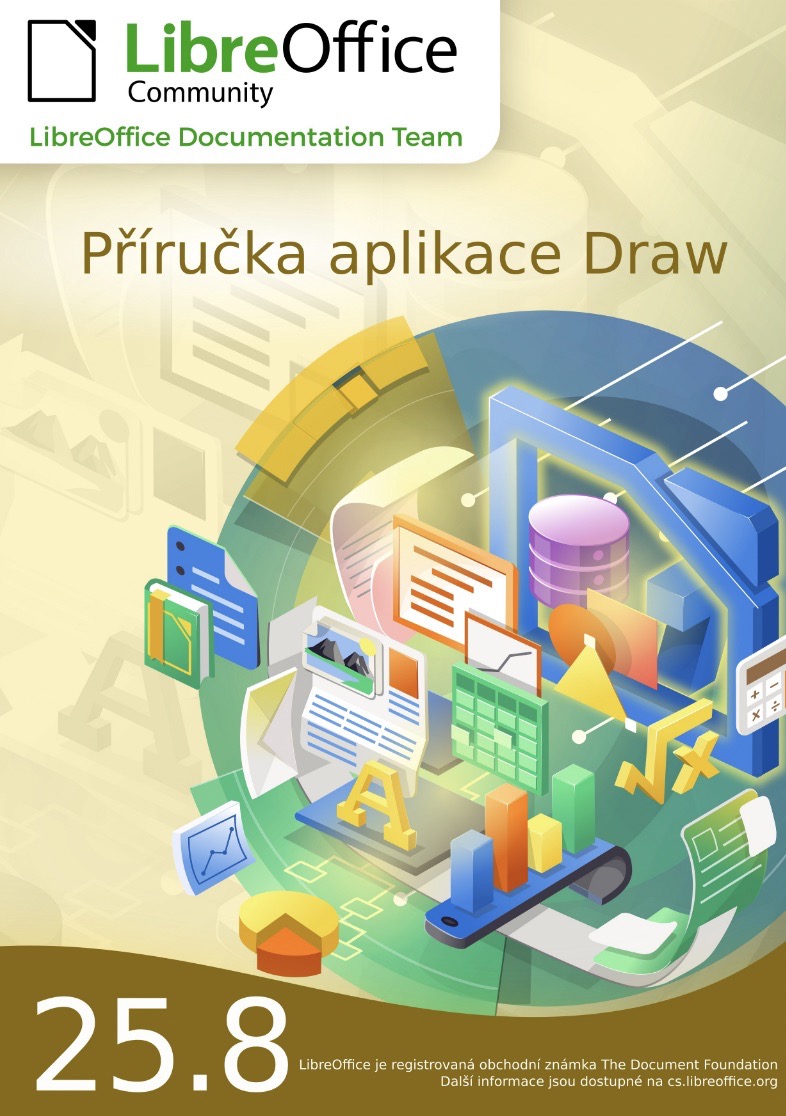
Czech LibreOffice Calc Guide cover

Zdeněk Crhonek (aka “raal”) from the Czech LibreOffice community writes:

The Czech translation of the LibreOffice Calc Guide 25.2 is now available, thanks to the endless efforts of our team. It was translated by Petr Kuběj, Radomír Strnad and me. The Czech screenshots were done by Roman Toman, Petr Kuběj and me. Preparation of the chapters for translation was done in OmegaT – machine translation as suggestions, reuse of old screenshots etc. was done by Miloš Šrámek. Thanks to everyone for the hard work, and if anyone would like to join the team, they are welcome to do so.

Great work everyone!

New “LibreOffice Expert 2025/2026” magazines available for schools and local communities

LibreOffice Expert magazines

A few weeks ago, Linux New Media released an updated version of its “LibreOffice Expert” magazine, which contains tutorials, tips and tricks about the office suite. And some articles were contributed by members of the LibreOffice community! The magazines come with DVDs that include LibreOffice for Linux, Windows and macOS, alongside extra templates, extensions, videos and guidebooks.

We have some copies to give away, for schools, universities, libraries and local communities. Ideally, we’d like to get these magazines out to places where internet connections aren’t always available – so that the users can really benefit from the DVDs.

So, if you can help us to distribute these magazines, drop us a line! Please note that we have 50 copies in total and can therefore only send a maximum of five copies to any one place, to make sure many communities get a chance. When you contact us, please include this information (any requests without information cannot be fulfilled and will be ignored):

  1. What you want to do with the magazines
  2. How many you want (1 – 5 copies)
  3. The address to which we should post them

Include all of that that information in an email to us and let’s see what we can do!

(Note: if you want to buy the magazine directly from the publisher, you can do so here.)

The Document Foundation announces LibreOffice 25.2.6

Berlin, 8 September 2025 – The Document Foundation announces the release of LibreOffice 25.2.6, the sixth maintenance release of the LibreOffice 25.2 family, available for download at www.libreoffice.org/download [1].

LibreOffice 25.2.6 is based on the LibreOffice Technology, which enables the development of desktop, mobile and cloud versions – either from TDF or from the ecosystem – that fully support the two ISO standards for document formats: the open ODF or Open Document Format (ODT, ODS and ODP) and the closed and proprietary Microsoft OOXML (DOCX, XLSX and PPTX).

Products based on the LibreOffice Technology are available for all major desktop operating systems (Windows, macOS, Linux and ChromeOS), mobile platforms (Android and iOS) and the cloud.

For enterprise-class deployments, TDF recommends a LibreOffice Enterprise optimized version from one of the ecosystem companies, with dedicated value-added features and other benefits such as SLAs and security patch backports for three to five years (www.libreoffice.org/download/libreoffice-in-business/).

English manuals for the LibreOffice 25.2 family are available for download at https://books.libreoffice.org/en/. End users can get first-level technical support from volunteers on the user mailing lists and the Ask LibreOffice website: ask.libreoffice.org.

Downloading LibreOffice

All available versions of LibreOffice for the desktop can be downloaded from the same website: www.libreoffice.org/download/.

LibreOffice users, free software advocates and community members can support The Document Foundation and the LibreOffice project by making a donation: https://www.libreoffice.org/donate.

[1] Fixes in RC1: wiki.documentfoundation.org/Releases/25.2.6/RC1. Fixes in RC2: wiki.documentfoundation.org/Releases/25.2.6/RC2.