The Document Foundation releases LibreOffice 6.2.4

Berlin, May 22, 2019 – The Document Foundation announces LibreOffice 6.2.4, the fourth bug and regression fixing release of the LibreOffice 6.2 family, targeted at tech-savvy individuals: early adopters, technology enthusiasts and power users.

LibreOffice’s individual users are helped by a global community of volunteers: https://www.libreoffice.org/get-help/community-support/. On the website and the wiki there are guides, manuals, tutorials and HowTos. Donations help us to make all of these resources available.

LibreOffice users are invited to join the community at https://www.libreoffice.org/community/get-involved/, to improve LibreOffice by contributing back in one of the following areas: development, documentation, infrastructure, localization, quality assurance, design or marketing.

Enterprise Deployments

LibreOffice 6.2.4 represents the bleeding edge in term of features for open source office suites, and as such is not optimized for enterprise class deployments, where features are less important than robustness. Users wanting a more mature version can download LibreOffice 6.1.6, which includes some months of back-ported fixes.

Organizations looking for an enterprise class application backed by support and service level agreements (SLA) should source a LibreOffice LTS (Long Term Supported) version from those TDF Advisory Board members who provide this product (https://www.documentfoundation.org/governance/advisory-board/).

Also, value-added services for enterprise class deployments – related to software support, migrations and training – should be sourced from certified professionals (https://www.libreoffice.org/get-help/professional-support/).

Sourcing software and/or services from the ecosystem of certified professionals represents the best support option for enterprises deploying LibreOffice on a large number of desktops. In fact, these activities are contributed back to the project under the form of improvements to the software and the community, and trigger a virtuous circle which is beneficial to users and all other stakeholders.

Availability of LibreOffice 6.2.4

LibreOffice 6.2.4 is immediately available from the following link: https://www.libreoffice.org/download/. Minimum requirements for proprietary operating systems are Microsoft Windows 7 SP1 and Apple macOS 10.9. Builds of the latest LibreOffice Online source code are available as Docker images: https://hub.docker.com/r/libreoffice/online/.

LibreOffice Online is fundamentally a server service, and should be installed and configured by adding cloud storage and an SSL certificate. It might be considered an enabling technology for the cloud services offered by ISPs or the private cloud of enterprises and large organizations.

LibreOffice users, free software advocates and community members can support The Document Foundation with a donation at https://www.libreoffice.org/donate.

LibreOffice 6.2.4 is built with document conversion libraries from the Document Liberation Project: https://www.documentliberation.org.
The Document Foundation and LibreOffice Online at OW2con 2019

OW2con 2019 is the annual open source event bringing together the OW2 community, technology experts, software architects, IT project managers and decision-makers from around the world. The conference will be hosted by the Orange Gardens Innovation Center, Paris-Châtillon, on June 12-13, 2019.

The central theme of OW2con 2019 is: “Open Source Toward Industry Maturity”. Indeed, with open source becoming mainstream, IT developers, vendors, users and even open source organisations such as OW2 have to adapt. Today, open source projects are becoming increasingly competitive and all IT developers, vendors and users must have an open source strategy.

During OW2con 2019, The Document Foundation and LibreOffice Online will be presented during two different talks:

  1. Breakout SessionAdding LibreOffice To Your Online Solution, managed by Michael Meeks (Collabora), Philippe Hemmel (Arawa) and Thorsten Behrens (CIB), on Wednesday June 12, from 1:45pm to 3:45pm.
    LibreOffice Online can be integrated into cloud solutions, as in the case of Nextcloud, ownCloud, Pydio and Seafile. The software is 100% open source and can be the perfect solution for GDPR issues in organizations. During the session it will be possible to get an overview of the application, and ask both technical and business-related questions.
  2. TalkIntroducing The Document Foundation, by Simon Phipps (TDF/OSI), on Thursday June 13, from 9:45am to 10:00am.
    The Document Foundation is one of OW2’s newest Affiliate organisations, and is a global charity based in Germany that works to promote open source productivity tools. Its flagship project, LibreOffice, is available across major desktop platforms and continues the fourth decade of impact from the code that started life as Star Writer on CP/M.

More information about OW2con 2019 are available on the event website: https://www.ow2con.org/view/2019/.

Month of LibreOffice, May 2019 – half way through!

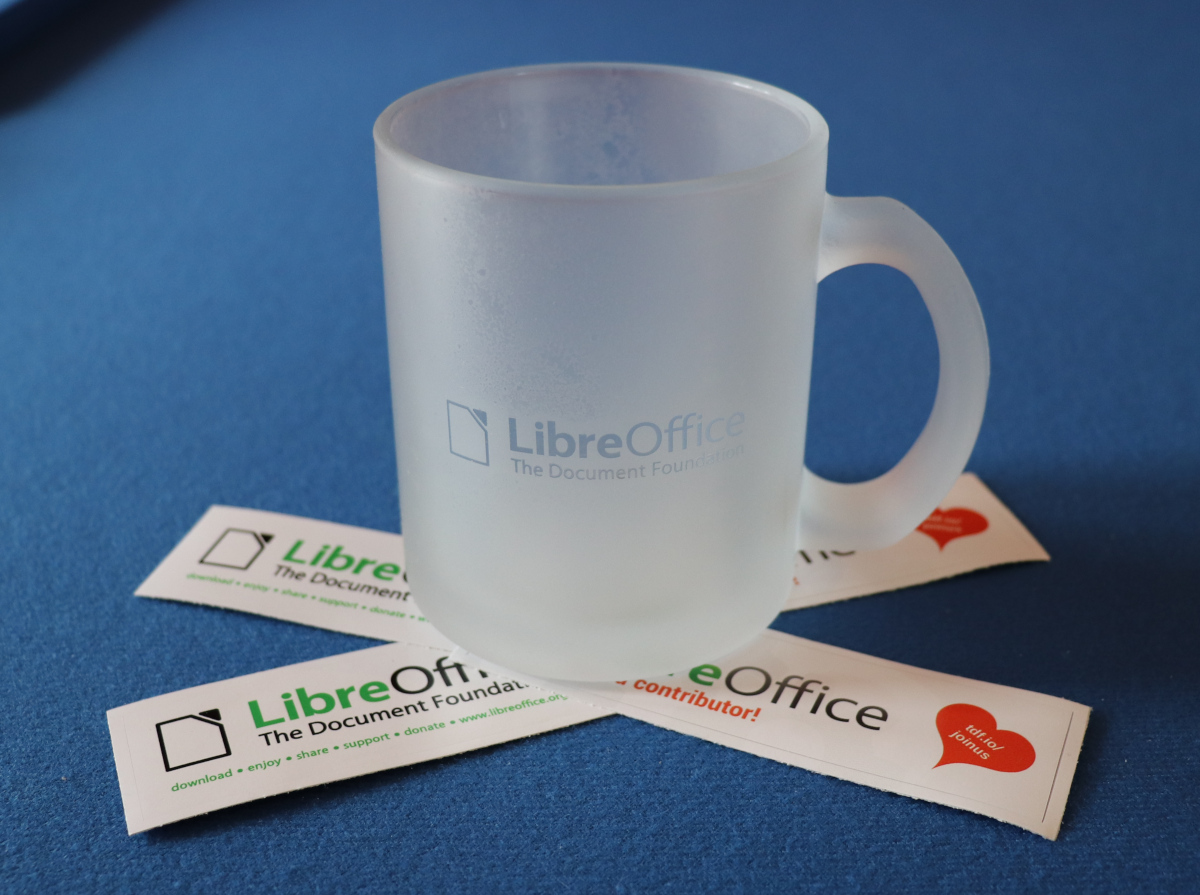
It’s the Month of LibreOffice, and we’re awarding sticker packs – and the chance to win cool mugs – to all contributors in the project! On this page we’re maintaining a list of names/usernames for people who’re helping out, and everyone there can claim a sticker pack at the end! We’ll also choose 10 people at random to get one of the mugs. So, how many packs have been awarded so far?

But there are still two weeks to go, so if your name isn’t there, check below to see how you can get involved! Many tasks only take 10 or 20 minutes, but make a big difference to the project. (And if you have already contributed this month, but your name isn’t there, email us with details and we’ll look into it.)

How to take part

There are many ways you can help out – and you don’t need to be a developer. For instance, you can be a…

  • Handy Helper, answering questions from users: over on Ask LibreOffice there are many users looking for help with the office suite. We’re keeping an eye on that site so if you give someone useful advice, you can claim your shiny stickers.
  • First Responder, helping to confirm new bug reports: go to our Bugzilla page and look for new bugs. If you can recreate one, add a comment like “CONFIRMED on Windows 10 and LibreOffice 6.2.3”. (Make sure you’re using the latest version of LibreOffice!)
  • Drum Beater, spreading the word: tell everyone about LibreOffice on Twitter or Mastodon! Just say why you love it or what you’re using it for, add the #libreoffice hashtag, and at the end of the month you can claim a sticker. (We have a maximum of 100 stickers for this category, in case the whole internet starts tweeting/tooting!)
  • Globetrotter, translating the user interface: LibreOffice is available in a wide range of languages, but its interface translations need to be kept up-to-date. Or maybe you want to translate the suite to a whole new language? Get involved here.
  • Code Cruncher, contributing source code: The codebase is big, but there are lots of places to get involved with small jobs. See our Developers page on the website and this page on the wiki to get started. Once you’ve submitted a patch, if it gets merged we’ll send you a sticker!
  • Docs Doctor, writing documentation: Another way to earn a badge is to help the LibreOffice documentation team. Whether you want to update the online help or add chapters to the handbooks, here’s where to start.

So dive in, get involved and help make LibreOffice better for millions of people around the world – and enjoy your sticker as thanks from us. We’ll be posting regular updates on this blog and our Mastodon and Twitter accounts over the next four weeks!

Community Member Monday: Vera Blagoveschenskaya

Today we’re talking to Vera from the Russian LibreOffice community, who has been especially active in our Quality Assurance (QA) project recently…

First, tell us a bit about yourself!

I live in Obninsk, Russia – it’s one of the major Russian science cities. You know, the first nuclear power plant was built in Obninsk. At the moment I work at BaseALT as a QA engineer. I really love testing! (I’ve noticed a minor bug in LibreOffice Writer while typing these words – I will surely report it later 🙂)

I’m also mother of a teenage girl, so a lot of my spare time is dedicated to supporting her interests. Now she is really into biking and swimming, and we dream of visiting the Tokyo Olympics in 2020.

What are you working on in LibreOffice at the moment? And is there anything you’d like to try in future?

I find and report bugs in Bugzilla and check fixes. In addition, I try to reproduce unconfirmed bugs and categorize them. For the future, well, it’s really hard to choose – there are so many options! But I undoubtedly would like to have more time to contribute to LibreOffice.

How did you get involved with LibreOffice – and what was the
experience like?

When I started to work in BaseALT, one of the tasks was to test LibreOffice for KDE 5.
I took part in the Bug Hunting Session for LibreOffice 6.2 in October 2018 and had success. I was mentioned in the November 2018 QA report; it was unexpected and very pleasant!

A bit later, Aleksei Nikiforov (who works at BaseALT as well) got involved in work and fixed some KDE 5 crashes. Now we work together, thereby continuing the tradition of contributing to LibreOffice. You know, BaseALT was formed from the ALT Linux Team, which helped to localize StarOffice a long time ago.

Finally, what do you see in the future for LibreOffice?

My opinion: LibreOffice needs to be promoted more widely. Most Windows users don’t know that there is a great and free alternative to Microsoft Office.

Thanks to Vera for her time and contributions! And indeed, we in the LibreOffice project would appreciate more help spreading the word – join our marketing community today!

Bringing people together: German LibreOffice Community Meeting, May 2019

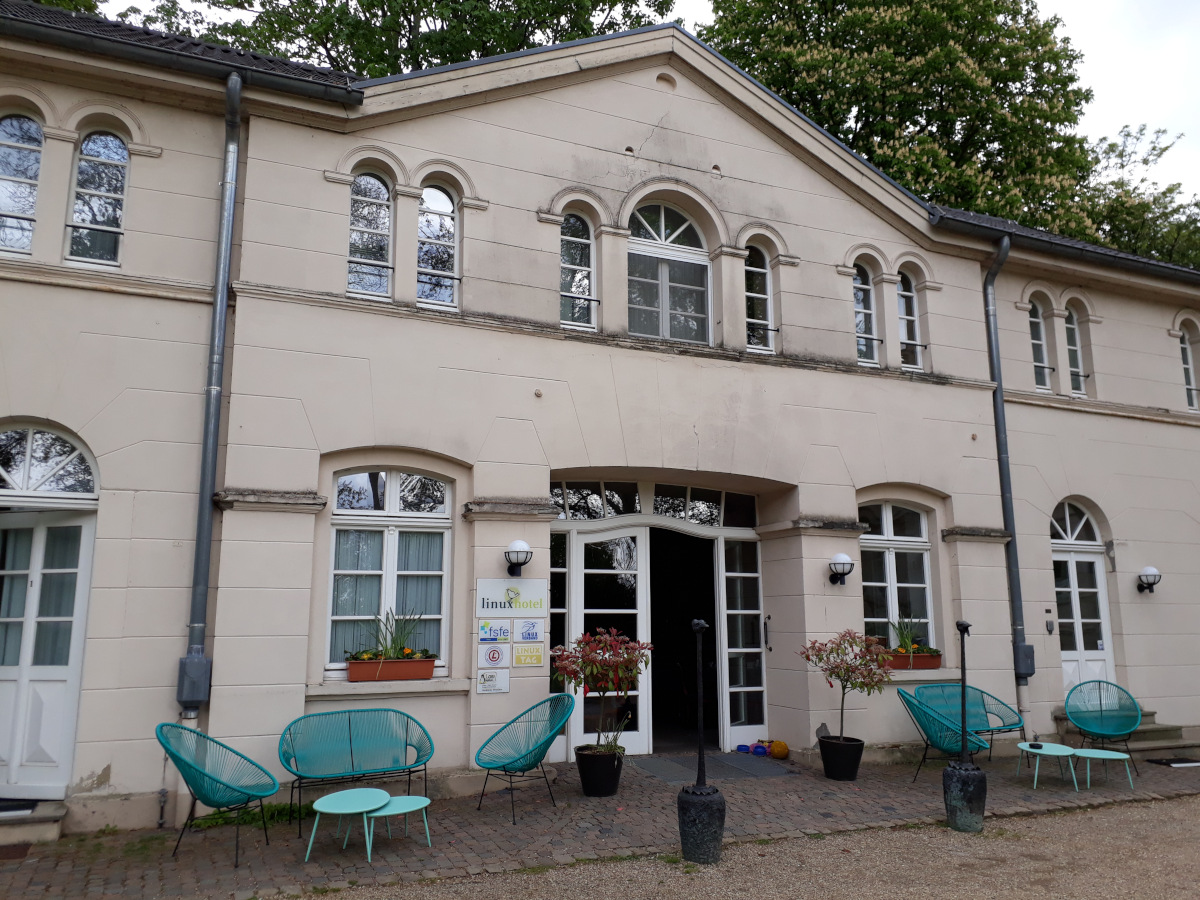
Free and open source software is all about community: meeting people, sharing knowledge and ideas, and having a good time! As you may know, LibreOffice is developed by a worldwide community, and every year, members of the German-speaking community meet to discuss the project’s status and future. In May, we met at Linuxhotel in Essen:

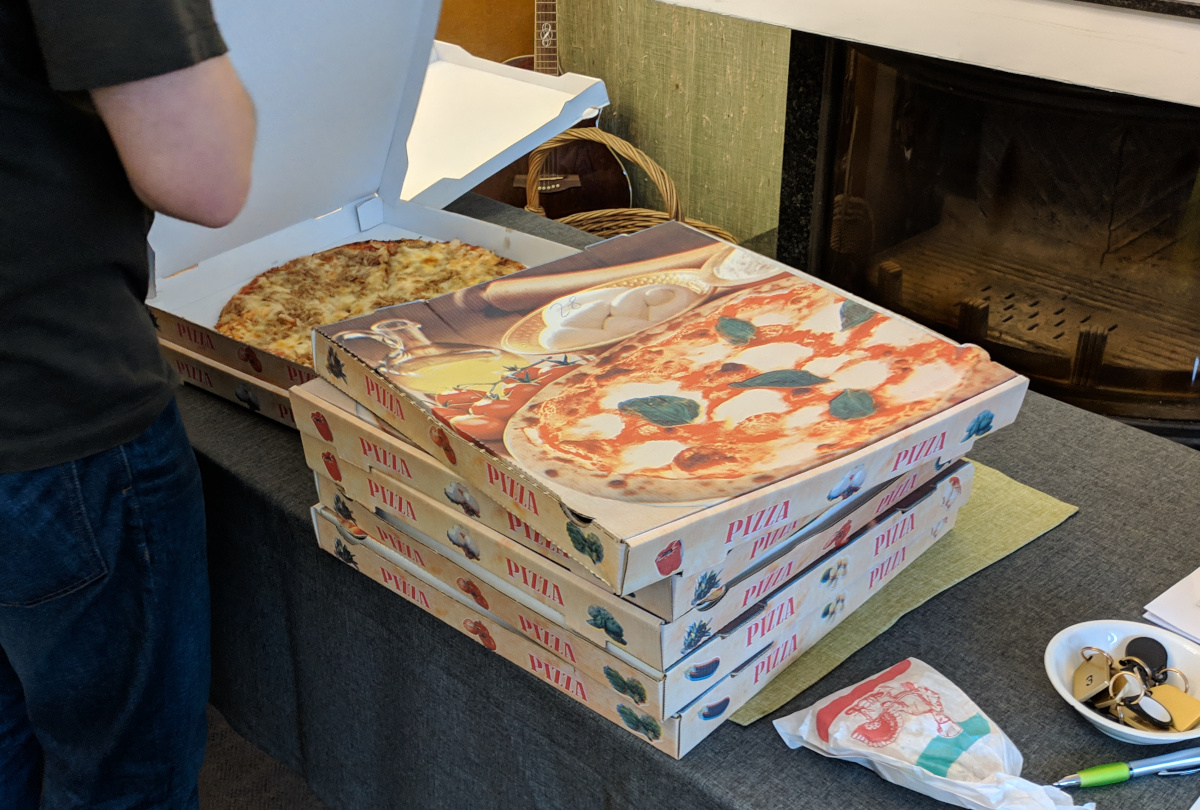
On Friday evening, we had an informal get-together with pizza and drinks. This was also an opportunity for new participants to get to know one another, while long-time LibreOffice supporters, who hadn’t met in a while, could catch up too.

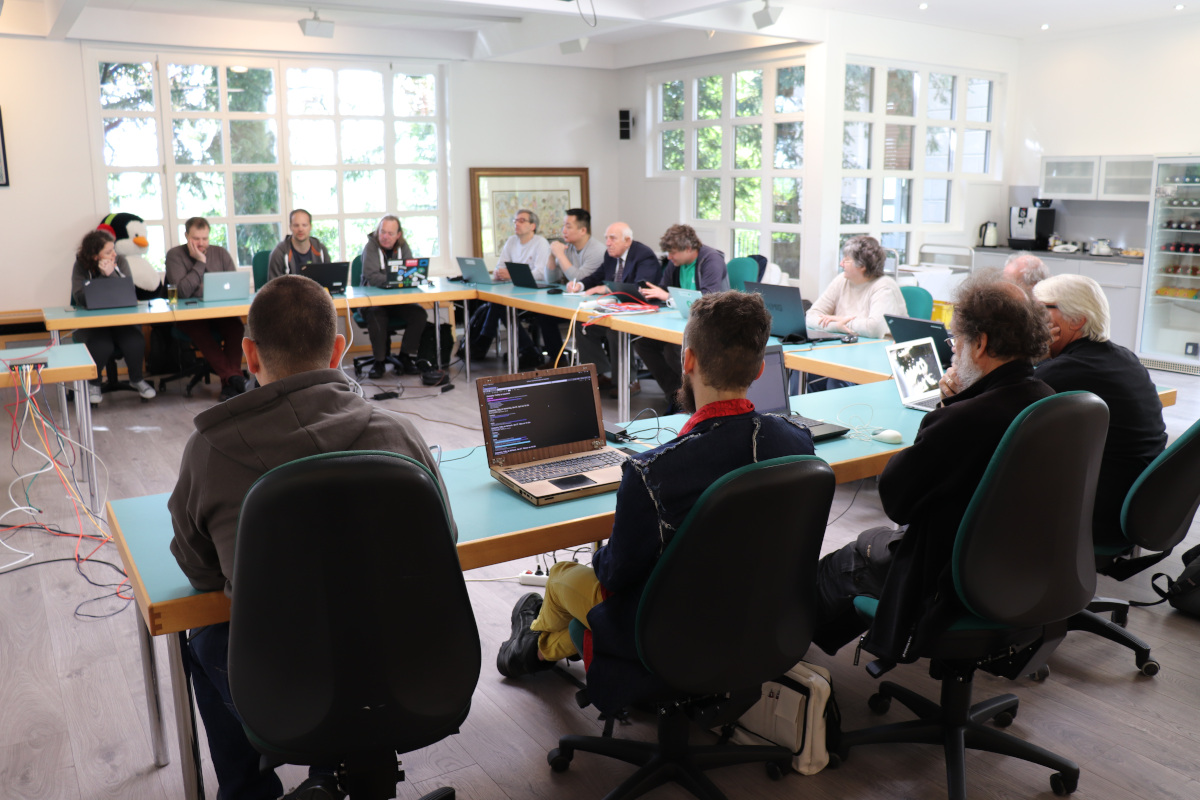
The main event started on Saturday:

15 people took part, from across the LibreOffice project: developers, event organisers, infrastructure maintainers, documentation editors, and TDF team and board members. We discussed many topics, which are detailed on the pad (in German), including: the structure of the German project; the various tools that we use (and how to consolidate them); and which events we should attend in the future.

In addition, we created a list of tasks to focus on in the coming weeks and months, assigned to various members of the community. As we’re a volunteer-led project, we always appreciate help, so if you’ve seen something on the pad that piques your interest, please join our mailing list and give us a hand!

After the discussions, we relaxed with some more food, drinks and games (Linuxhotel has a dart board). On Sunday morning, before everyone left, we had a quick final round of discussion, and a summary of what we’re planning to do.

On the whole, it was a great event and reminded us that in-person meetings are important, especially for projects that normally work together over the internet. Being able to discuss ideas face-to-face is invaluable – and of course, it’s great fun too. See you next year!

Follow us on Twitter, Mastodon, Facebook and Telegram!

OASIS announces the ODF Advocacy Open Project

The ODF Advocacy Open Project we have pre-announced at FOSDEM is now a reality. Yesterday, OASIS has released the following press release, which is just the first step of a new sustained activity focused on supporting the adoption of ODF – the only true standard document format available on the market – by governments, public administrations and enterprises worldwide, to increase interoperability (and thus knowledge sharing), reduce hidden costs associated to document management, and get rid of vendor lock-in.

OASIS Introduces Open Projects Program to Bridge Open Source and Standards Development

AirBus, CIB, Fujitsu, IBM, Red Hat, Siemens, Software AG, The Document Foundation, and others sponsor Open Projects

Boston, May 8, 2019 – OASIS, a global nonprofit consortium, today announced the launch of Open Projects, the first-of-its-kind program that creates a more transparent and collaborative future for open source and standards development. Open Projects gives communities the power to develop what they choose–APIs, code, specifications, reference implementations, guidelines– in one place, under open source licenses, with a path to recognition in global policy and procurement.

The lines between open source and open standards have been blurring for some time, and communities in both arenas have been calling for more flexibility and options for collaboration. Open Projects is a new approach that addresses the need for change in everything from handling IP to governance and decision-making, from funding to establishing trust and assuring quality.

“With Open Projects, we’re building a movement to transform the open source and standards world,” said Gershon Janssen, Chairman, OASIS Board of Directors. “We want to dissolve the barriers that separate communities. We want to empower groups with more control and streamlined governance. We want to support projects by giving them all the process they need–and not a bit more–so they can accomplish great things fast.”

Open Projects builds on the OASIS experience and reputation for producing quality work that’s been trusted and supported by governments and industries worldwide for more than 25 years.

“For many, open source has become a means of establishing de facto software standards. However, de facto standards are not recognized by many governments and institutions,” said Chris Ferris, IBM Fellow and CTO Open Tech for IBM. “OASIS Open Projects provides an important new opportunity to leverage the rapid innovation of open source in the process of developing open standards. The potential to achieve ISO, IEC, or ITU standards approval is a huge value for many important open source initiatives.” Ferris, who also holds a leadership position on the Hyperledger Fabric project, played an instrumental role in defining the OASIS Open Projects program and now serves on its Advisory Council.

The Open Projects program is being advanced by some of the most accomplished, regarded minds in open source today.

As part of the program announcement, OASIS is launching the first two Open Projects – Open Services for Lifecycle Collaboration (OSLC) and OpenDocument Format (ODF) Advocacy.

The OSLC Open Project advances a suite of standard REST APIs to connect data and achieve the digital thread across domains, applications, and organizations. It is sponsored by AirBus, Austrian Institute of Technology, Bank of America, Boeing, Dassault, Fujitsu, IBM, Koneksys, KTH Royal Institute of Technology, Red Hat, Siemens, Software AG, and Tasktop.

“OSLC helps create standard REST APIs that solve industry integration challenges,” said Andrew Berezovskyi of the KTH Royal Institute of Technology. “Open Projects enables the OSLC community to produce deliverables that meet requirements from various stakeholders without being hindered by the weight of foundation bureaucracy or the baggage that comes with financial, legal, technical, and marketing administration.”

The ODF Advocacy Open Project promotes the world’s leading document standard. After being approved as an OASIS Standard, ODF was recognized by ISO/IEC and endorsed by governments around the world as a way to ensure permanent access to data and eliminate the risk of vendor lock-in. The ODF Advocacy Open Project is sponsored by CIB and The Document Foundation.

“ODF guarantees perennial access to data that can be transferred in a transparent way between different apps, computers and operating systems, getting rid of hidden interoperability costs, vendor lock-in issues and license fees,” said Italo Vignoli, Co-Founder, The Document Foundation.

Additional Open Projects for blockchain and other areas will be announced in the coming months. Further details about OASIS Open Projects are available here or email info@oasis-open-projects.org.