LibreOffice Marketing Activities – TDF’s Annual Report 2024

TDF Annual Report 2024 banner

In 2024, The Document Foundation and its global LibreOffice community undertook a variety of marketing initiatives aimed at increasing visibility, fostering community engagement, and driving adoption of LibreOffice

(This is part of The Document Foundation’s Annual Report for 2024 – we’ll post the full version here soon.)

LibreOffice and Open Source Conference 2024 in Luxembourg

A major highlight of TDF’s 2024 marketing activities was the LibreOffice and Open Source Conference, held from October 10 to 12 in Luxembourg. The annual event brought together contributors from around the world, including developers, designers, documentation writers, translators, and marketers.

Marketing efforts for the conference included:

  • A targeted social media campaign promoting the event’s location, speakers, and agenda.
  • Outreach to local technology communities and universities in Luxembourg to boost participation.
  • The creation of promotional graphics and materials highlighting the conference themes and goals.
  • Live updates and content shared across LibreOffice’s social channels to engage a remote audience.
  • The conference acted as a vital showcase of LibreOffice’s progress, community strength, and future plans.

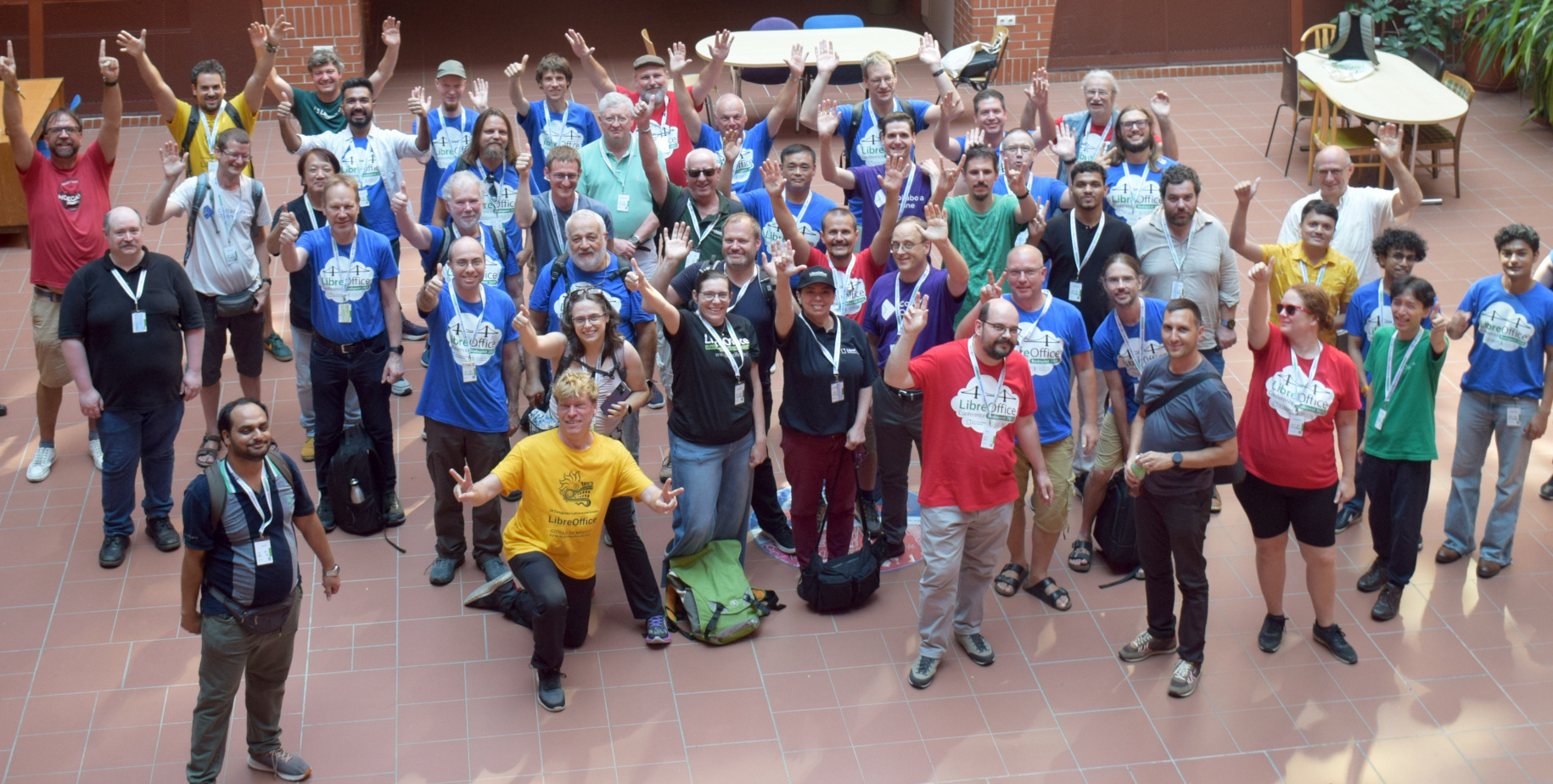
LibreOffice Conference 2024 group photo

“Month of LibreOffice” Campaigns

Throughout May and November 2024, TDF organized its recurring “Month of LibreOffice” initiative. This campaign aimed to recognize and reward community contributors across various roles, including development, documentation, QA and marketing.

Participants who contributed during the campaign period were acknowledged through:

  • Special edition badges awarded digitally.
  • Public recognition via blog posts and social media.
  • Incentives like stickers and merchandise shipped to selected contributors.

This initiative not only celebrated existing contributors but also attracted new participants interested in supporting open source software.

Month of LibreOffice stickers

Launch of the LibreOffice Podcast Series

In November 2024, TDF launched its LibreOffice Podcast, a new platform to discuss topics related to LibreOffice and the wider world of open source software. The podcast aimed to:

  • Share success stories from migrations to LibreOffice.
  • Offer insights into FOSS marketing strategies.
  • Feature interviews with developers and community leaders.
  • Provide behind-the-scenes looks at the ongoing work within TDF.

The first episode focused on marketing strategies for FOSS, with discussions on how to engage institutions and governments in adopting LibreOffice.

Please confirm that you want to play a YouTube video. By accepting, you will be accessing content from YouTube, a service provided by an external third party.

YouTube privacy policy

If you accept this notice, your choice will be saved and the page will refresh.

Enhanced Social Media and Content Strategy

In 2024, TDF expanded and optimized its social media presence. Alongside its traditional platforms like Twitter (X) and Facebook, TDF increased its focus on:

  • Mastodon: engaging the open-source community on federated social platforms.
  • LinkedIn: Sharing professional success stories, including case studies on large-scale LibreOffice deployments.
  • Regular posting of blog content, including release announcements, tutorials, and community spotlights.
  • Short video clips and graphics to make content more accessible and visually engaging.

These efforts aimed to grow the project’s audience, particularly among decision-makers in public administration and enterprises.

Native Language Community Outreach

TDF placed a strong emphasis on supporting native language communities. The marketing team worked with volunteers worldwide to produce localized materials, including:

  • Press releases for new LibreOffice versions.
  • Social media templates and visual assets.
  • Brochures explaining the benefits of LibreOffice in local contexts.

Several regions ran independent marketing initiatives, including:

  • Nepal: workshops for students on using LibreOffice Writer to create professional resumes.
  • India: local events demonstrating LibreOffice’s potential for government offices and educational institutions.

Software Freedom Day participants in Nepal

Workshops, Training and Community Events

Throughout the year, TDF organized workshops and training sessions aimed at onboarding new users and contributors. These included:

  • Online training for translators and QA testers.
  • Regional events offering hands-on experience with LibreOffice migrations.
  • Webinars aimed at IT administrators exploring LibreOffice deployment in enterprise environments.

The Open Source Workshops helped public sector organizations understand the benefits of LibreOffice and how it can replace proprietary office suites.

Outreachy and Template Development

LibreOffice participated in the Outreachy program, with a focus on developing new templates for LibreOffice Writer. These templates included resumes, reports, and business documents aimed at improving the user experience and broadening appeal, particularly for users migrating from proprietary suites.

Marketing activities highlighted:

  • How templates increase productivity.
  • The contributions of new developers and designers participating in the Outreachy program.
  • The availability of these templates through LibreOffice’s website and community channels.

Media and Press Relations

TDF continued its media relations work, distributing regular press releases covering:

  • New LibreOffice releases and features.
  • Major migrations by organizations and governments.
  • Events such as LibreOffice Conference and Month of LibreOffice campaigns.

TDF’s press outreach focused on reinforcing LibreOffice’s position as a cost-effective, secure, and privacy-respecting alternative to proprietary office suites.

Download Statistics and User Adoption

The marketing efforts in 2024 yielded significant results:

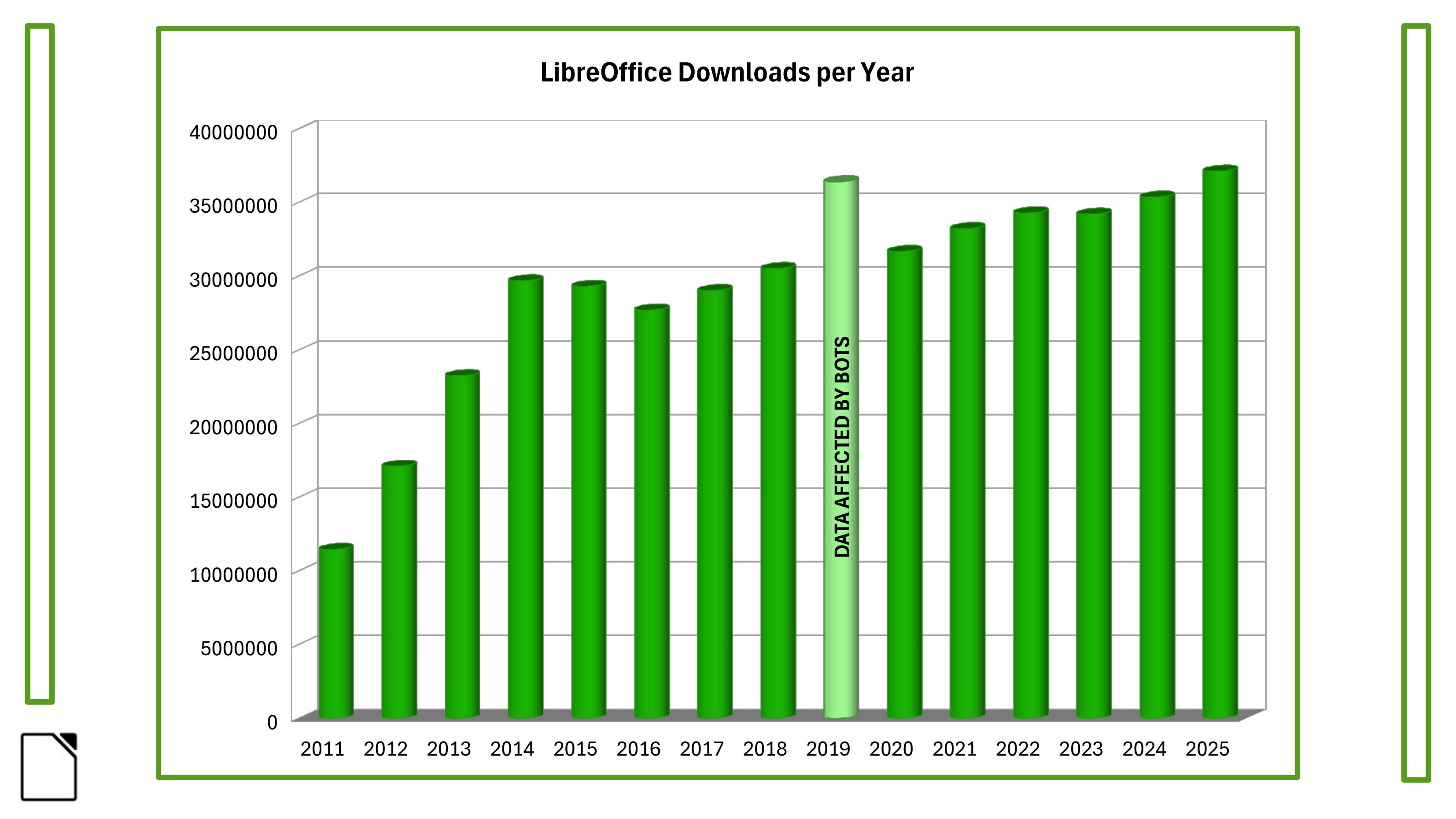
  • Download Milestone: by the end of 2024, LibreOffice surpassed 400 million cumulative downloads since its inception in 2011, with an average of 28.6 million downloads per year.
  • Weekly Downloads: Weekly downloads approached 1 million, marking the highest figures since 2023.
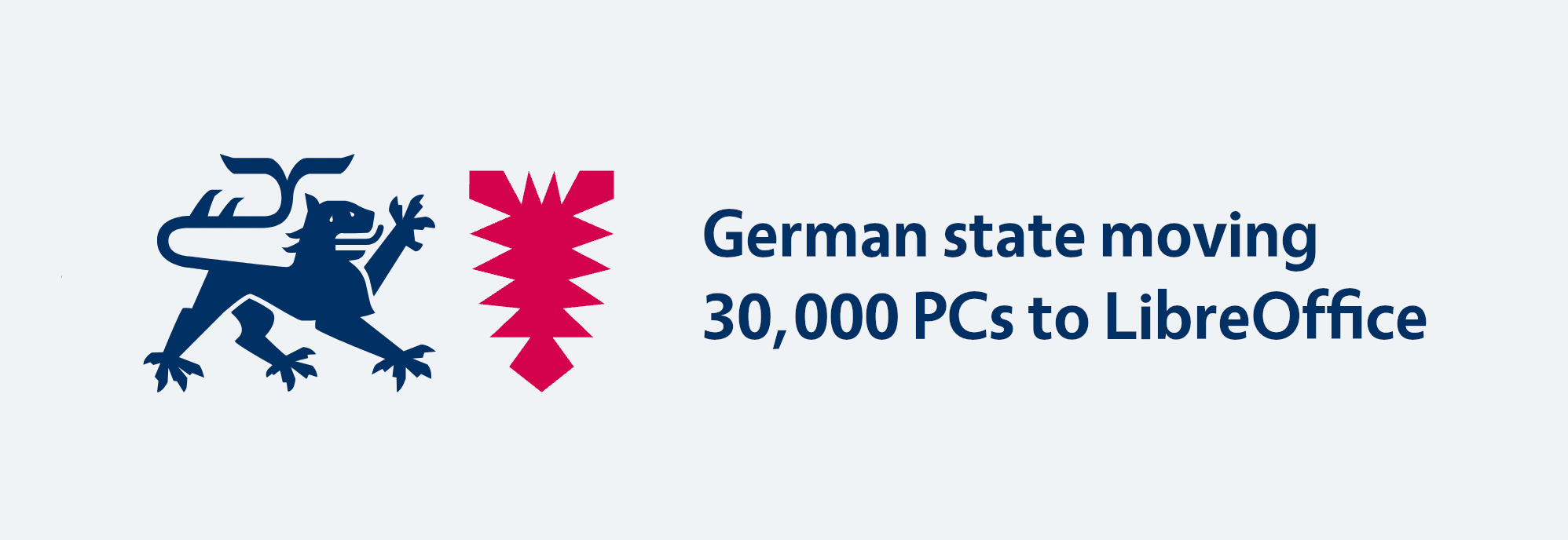
  • Public Sector Adoption: The German state of Schleswig-Holstein announced plans to migrate 30,000 PCs to LibreOffice, aiming for completion by 2026.

Schleswig-Holstein moving 30,000 PCs to LibreOffice

Conclusion

In 2024, through conferences, campaigns, podcasts, and media outreach, TDF advanced its mission of promoting free and open source software while making LibreOffice more accessible and trusted around the world. These marketing efforts not only amplified LibreOffice’s visibility but also demonstrated the value of community-driven open source projects in delivering professional-grade software solutions.

Like what we do? Support the LibreOffice project and The Document Foundation – get involved and help our volunteers, or make a donation. Thank you!

TDF and LibreOffice website, blogs and social media – Annual Report 2024

TDF Annual Report 2024 banner

Our two main websites are vital sources of information for The Document Foundation and the LibreOffice software. We also use our social media channels to raise awareness about our work, share information and encourage new contributors to join us

(This is part of The Document Foundation’s Annual Report for 2024 – we’ll post the full version here soon.)

TDF website

The Document Foundation website provides general information about the foundation (overview, statutes, code of conduct, financials and reports) and its governance (board of directors, membership committee, members, advisory board, and engineering steering committee), and about LibreOffice certification, including a list of certified developers, and professionals for migrations and trainings.

During 2024, the foundation’s website was visited 98,499 times, with 146,456 page views – a slight reduction in visits but also a slight growth in page views from 2023. Continent-wise, the largest chunk of visits were from Europe (52%), followed by North America (24%) and Asia (16%). And regarding software: the most visits were from PCs using the Windows (65%) operating system, followed by GNU/Linux (10%) and macOS (8%) and devices uses Android (6.2%), while for browsers: Chrome had 39%, followed by Firefox (16%) and Microsoft Edge (15%).

Matomo graph of visits to the website

LibreOffice website

The LibreOffice website provides information about the office suite and the document format, the various download options, how to get help, how to contribute to the project, events where users can get to know the LibreOffice community, and how to make a donation to support the project and the community.

In 2024, we continued to make improvements and tweaks to the website, updating the “Discover” and “New Features” sections of the site to reflect new versions of the software.

During 2024, the English-language LibreOffice website was visited 19,298,517 times (a 0.6% gain over 2023), with 46,065,236 page views (a 0.1% gain). Most visits were from Europe (52%), followed by Asia (20%), North America (15%) and South America (9%), from PCs using the Windows operating system (82%), followed by macOS (6%) and Linux (23%). Regarding web browsers, Chrome was the most popular (41%), followed by Microsoft Edge (29%) and Firefox (13%).

Matomo graph of visits to the website

Blogs

TDF’s blogs (like this one) are essential for communicating activities inside and around the project, including new releases of LibreOffice, community events and support for other free and open source initiatives. In 2024, we used them to post regular interviews with community members and provide updates from team members about documentation, marketing, QA, design and more.

Photo of Ndidi Folasade Ogboi

Blogs were also maintained by various native language communities including Japanese, Spanish, German and others. Thanks to the hard work of community members, we had press releases, tips and other articles translated into many languages, and picked up by local media organisations.

These native language blogs complement the information provided by the main blog in English, and by the two blogs managed by members of the design and the quality assurance projects, which provide updates about activities for the upcoming major releases.
In 2024, the blog had 100,180 visits and 131,174 page views – a drop in both cases of around 30% from the previous year. The press releases for LibreOffice 24.2 and 24.8 were the most popular posts, followed by the posts about the German state of Schleswig-Holstein moving 30,000 PCs from Microsoft Office/365 to LibreOffice.

Social media

In January 2024, our X (formerly known as Twitter) account (@LibreOffice) had 63,060 followers; by the end of the year, we had grown this to 68,870. Our most popular posts were for major releases of LibreOffice, and news about migrations to the suite. We posted customised images for “Community Member Monday” interviews with short quotes, encouraging more users to get involved with LibreOffice projects.

In addition, we focused not only on our own posts, but also retweeting announcements from the LibreOffice community members. We liked and reposted messages of support from end users – many of whom were surprised and thankful that a large project would show them support. To keep the content flowing, we reposted popular older tweets, and responded to individual messages.

On other social media platforms, we focused on growing our account on Mastodon, a Twitter-like open source, federated and self-hosted microblogging service. In 2024 we worked more on expanding our activities on our account @libreoffice@fosstodon.org, and from January to December, we grew our follower base from 25,440 to 29,326. We also joined Bluesky in late 2023 thanks to invites from a community member, and by December 2024 our follower count had reached 2,900.

Screenshot of LibreOffice account on Bluesky

Our Facebook page growth was smaller, from 63,348 page followers to 64,239. We’ve noticed a gradual reduction in activity on Facebook over the last few years, which reflects its changing audience, and the move towards other social media platforms. Nonetheless, Facebook still provides a good opportunity to interact with end users of LibreOffice, and every day we checked in to answer questions, get feedback, and post announcements/tips about the software.

YouTube channel

Our YouTube channel grew from 20,638 subscribers and 3,243,107 video views in January 2024 to 22,586 subscribers and 3,534,370 video views by the end of the year. The most popular videos were the “New Features” videos for LibreOffice 24.2 and 24.8, and we also added videos of talks, presentations and workshops from the LibreOffice Conference 2024.

At the end of 2024, we posted the first video from the new LibreOffice Podcast series, where Italo Vignoli and Mike Saunders from TDF talked about the challenges and opportunities in marketing free and open source software like LibreOffice. More podcasts are planned for 2025.

Please confirm that you want to play a YouTube video. By accepting, you will be accessing content from YouTube, a service provided by an external third party.

YouTube privacy policy

If you accept this notice, your choice will be saved and the page will refresh.

Like what we do? Support the LibreOffice project and The Document Foundation – get involved and help our volunteers, or make a donation. Thank you!

LibreOffice Quality Assurance (QA) in 2024 – TDF’s Annual Report

TDF Annual Report 2024 banner

Quality Assurance (QA) is a cornerstone of the LibreOffice project, thanks to the activity of a large number of volunteers and the feedback of many users who help in reporting bugs and regressions

(This is part of The Document Foundation’s Annual Report for 2024 – we’ll post the full version here soon.)

QA team work

In 2024, the QA team triaged thousands of bugs, bisected hundreds of regressions, and answered questions from countless bug reporters. As one of the most visible groups directly responding to end users, the QA team must be nimble and able to adapt to changes. In addition, it must deal with specific requests for help from other teams.

The QA team meets regularly on IRC on the #libreoffice-qa channel, which is the best medium for discussing bugs and regressions. The IRC channel provides an excellent opportunity to remain in close contact with team members, and to tutor new members in the art and skill of LibreOffice QA. This is bridged to the Telegram group.

During 2024, 5351 bugs were reported by 2463 users, which means 103 new bugs were reported every week on average. The QA team prepared monthly reports about their activity and posted on the QA blog.

Top 10 bug reporters

  • Eyal Rozenberg (211)
  • Gabor Kelemen (193)
  • Mike Kaganski (137)
  • Telesto (86)
  • Regina Henschel (85)
  • Xisco Faulí (82)
  • Stéphane Guillou (78)
  • peter josvai (75)
  • Rafael Lima (72)
  • Heiko Tietze (54)

Triaging

During 2024, 5086 bugs were triaged by 328 people. The top 10 bug triagers were:

  • Stéphane Guillou (stragu) (762)
  • Buovjaga (684)
  • m_a_riosv (499)
  • Heiko Tietze (374)
  • V Stuart Foote (241)
  • Mike Kaganski (232)
  • Julien Nabet (186)
  • Xisco Faulí (175)
  • ady (144)
  • Dieter (144)

Bibisecting

Also, during 2024, the QA team performed 561 bibisects of regressions by 30 people. The top 10 bisecters were:

  • raal (121)
  • Buovjaga (111)
  • Stéphane Guillou (104)
  • Xisco Faulí (91)
  • Gabor Kelemen (24)
  • Aron Budea (23)
  • Timur (14)
  • zcrhonek (10)
  • Mike Kaganski (9)
  • Justin L (8)

Like what we do? Support the LibreOffice project and The Document Foundation – get involved and help our volunteers, or make a donation. Thank you!

LibreOffice Documentation in 2024 – TDF’s Annual Report

LibreOffice Bookshelf

In 2024, the documentation community continued to update LibreOffice guidebooks, and the Help application

(This is part of The Document Foundation’s Annual Report for 2024 – we’ll post the full version here soon.)

New and translated guides

Throughout the year, the documentation project closed the gap between LibreOffice’s major releases, and the updates of the corresponding user guides. By the end of the year, all of the version 24.2 guides were updated to match the release of LibreOffice 24.8, and ready to continue for the forthcoming release – 25.2 – which arrived in February 2025. The goal of tracking the software releases closely was achieved, and the documentation team is now in a steady state of small updates between releases.

The updates and enhancements of the guides were an effort of all of the team, coordinated by Jean Weber (Writer and Getting Started Guide), Olivier Hallot (Calc Guide), Peter Schofield (Impress and Draw guides). A number of volunteers also worked in each guide by writing and reviewing contents and suggesting improvements. Special thanks to Jean Weber for making the guides available for sale in printed format via Lulu Inc.

LibreOffice 24.8 Getting Started Guide cover

LibreOffice Help updates

The documentation community also had a team of Help page bug fixes, closing Help documentation bugs, bridging gaps, fixing typos and improving quality, a must-have update to keep LibreOffice in-shape for its user base and documented reference of the application features. A total of 614 Help patches were merged in 2024. The Help pages, which are part of the LibreOffice codebase, were also refactored continuously for better maintenance and code readability. The localisation and translation team of volunteers was quick in flagging typos and English mistakes – while translating the Help content and the user interface.

ScriptForge libraries, and Wiki updates

The documentation community also had a nice contribution from Jean Pierre Ledure, Alain Romedenne and Rafael Lima, for the development of the ScriptForge macro library, in synchronization with the much-needed Help pages on the subject, a practice rarely followed by junior developers of LibreOffice. As we know, undocumented software is software that’s lacking; features that are unknown to the user can be a cause of costly calls to a help desk in corporate deployments. ScriptForge developments came together with their documentation, demonstrating the ScriptForge team’s professional maturity.

LibreOffice Bookshelf

In 2024, the documentation community also updated the LibreOffice Bookshelf – another download page for LibreOffice guides that is different from the current documentation page. The Bookshelf can be cloned and installed in organizations, libraries, colleges and schools, for immediate availability in controlled environments, as well as online reading of the guides. The Open Document Format chapters were transformed into static HTML pages, and are ready to display on computers, tablets and cell phones, bringing LibreOffice user guides closer to its public, anywhere, at any time.

Like what we do? Support the LibreOffice project and The Document Foundation – get involved and help our volunteers, or make a donation. Thank you!

TDF’s Annual Report 2024 – LibreOffice Conference

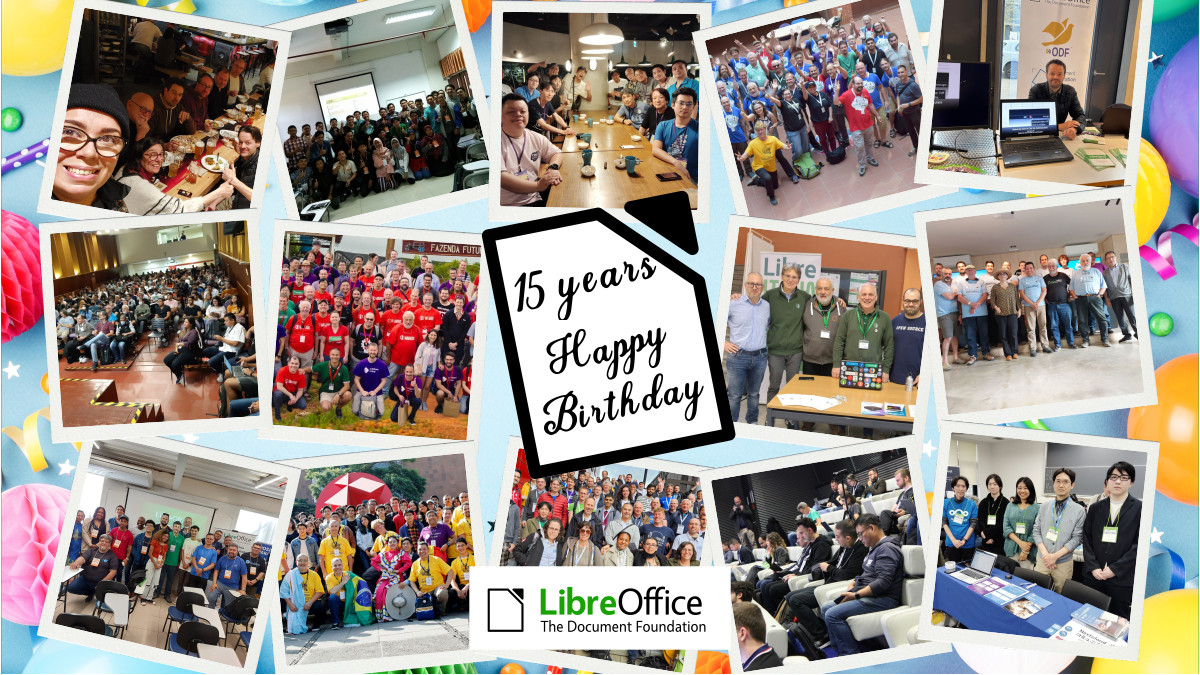
LibreOffice Conference 2024 group photo

The LibreOffice Conference is the annual gathering of the community, our end-users, developers, and everyone interested in free office software. In 2024, it took place in Luxembourg

(This is part of The Document Foundation’s Annual Report for 2024 – we’ll post the full version here soon.)

This was our third in-person conference after the COVID pandemic, following on from the Milan conference in 2022 and Bucharest conference in 2023, but we also lived-streamed sessions so that participants could watch remotely (and ask questions in our chat channels too).

The conference took place from 10 – 12 October 2024 in Belval, Esch-sur-Alzette, which is around a 20 minute train ride from Luxembourg City. As public transport is free in the whole country, attendees staying in the city didn’t need to buy tickets to attend the event in Belval.

Conference Tracks and extra sessions

Opening sessions were given by Eliane Domingos (chairperson of the Board of Directors at TDF), Serge Linkels (Managing Director of the Digital Learning Hub and 42 Luxembourg), and Stéphanie Obertin (Luxembourg’s Minister for Digitalisation and Minister for Research and Higher Education).

Then there were presentations and talks were given across various “tracks”, or categories: LibreOffice Development; ODF and Interoperability; LibreOffice Design and Accessibility; and LibreOffice Marketing. There were highly technical talks focused on specific areas of LibreOffice and source code, along with more open discussions about community building and recent updates from The Document Foundation.

The conference also had some extra tracks to broaden its scope beyond just LibreOffice, and raise awareness about free and open source software (cybersecurity, EdTech and Open Source Program Office).

A workshop for new developers was held in parallel with the main tracks over the three days of the conference, and many different things around LibreOffice development were discussed, including: bug reporting and triaging; Git and Gerrit basics; building LibreOffice from its source code; and automation via scripting.

Sponsoring and merchandise

Partner sponsors were Collabora Productivity, Passbolt and SnT (University of Luxembourg), while venue sponsors were Digital Learning Hub and 42 Luxembourg. The Luxembourg Media & Digital Design Centre organised the EdTech track, and local supporters were Business Events Luxembourg, LU-CIX, LIST and Luxembourg House of Cybersecurity. Thanks to the sponsors, attendees could get merchandise at the event, including T-shirts with the conference logo.

Full programme and videos

Full details about the event are available on our main conference website. For a quick overview of all the talks, including links to PDF versions of the presentations, see the schedule. 63 videos – covering almost all of the talks are available as a playlist on our YouTube channel:

Please confirm that you want to play a YouTube video. By accepting, you will be accessing content from YouTube, a service provided by an external third party.

YouTube privacy policy

If you accept this notice, your choice will be saved and the page will refresh.

Conference in 2025

Planning is already underway for the LibreOffice Conference 2025, which will take place in Budapest from September 1 – 5, following a vote from TDF members. Stay tuned to this blog for more details soon…

Like what we do? Support the LibreOffice project and The Document Foundation – get involved and help our volunteers, or make a donation. Thank you!

LibreOffice in 2024 – TDF’s Annual Report

TDF Annual Report 2024 banner

In 2024, LibreOffice celebrated its fourteenth birthday. Two new major versions of the suite introduced a variety of new features, while minor releases helped to improve stability as well

(This is part of The Document Foundation’s Annual Report for 2024 – we’ll post the full version here soon.)

LibreOffice 24.2

On January 31, LibreOffice 24.2 was officially released after six months of work. Developers at The Document Foundation, Collabora, allotropia, CIB, Red Hat, NISZ and other companies and organisations – along with volunteers – worked on many new features.

For instance, there were many improvements to the tabbed “NotebookBar” user interface, while styles support was added for comments. A new search field was added to the Functions sidebar deck in Calc, while in terms of accessibility, several significant improvements to the handling of mouse positions and the presentation of dialogue boxes via the Accessibility APIs were made, allowing screen readers to present them correctly. And regarding security, the “Sace with Password” dialogue box now has a password strength meter, which uses zxcvbn-c to determine the password strength.

TDF’s marketing and localisation community produced and translated a video (below) which demonstrated many of the new features in LibreOffice 24.2. This was linked to in the announcement, and embedded into various web news websites that covered the release. The video is also available on PeerTube.

Please confirm that you want to play a YouTube video. By accepting, you will be accessing content from YouTube, a service provided by an external third party.

YouTube privacy policy

If you accept this notice, your choice will be saved and the page will refresh.


LibreOffice 24.8

Later in the year, on August 22, TDF released LibreOffice 24.8. Based on the LibreOffice Technology platform for personal productivity on desktop, mobile and cloud, it provided a large number of interoperability improvements with Microsoft’s proprietary file formats.

In terms of features, this release added many improvements to the Navigator in Writer, including ding cross-references by drag-and-drop items, deleting footnotes and endnotes, and indicating images with broken links. In Calc, the functions FILTER, LET, RANDARRAY, SEQUENCE, SORT, SORTBY, UNIQUE, XLOOKUP and XMATCH were added, along with chart types “Pie-of-Pie” and “Bar-of-Pie” which break down a slice of a pie as a pie or bar sub-chart respectively (this also enables import of such charts from OOXML files created with Microsoft Office/365).

Many other features were added as well, and there were a large number of compatibility improvements. As with the previous release, TDF staff worked with the marketing ad localisation communities to make a video (also on PeerTube) to demonstrate some of the new features.

Please confirm that you want to play a YouTube video. By accepting, you will be accessing content from YouTube, a service provided by an external third party.

YouTube privacy policy

If you accept this notice, your choice will be saved and the page will refresh.


Regular improvements

We also released 14 minor updates with bug and security fixes:

  • LibreOffice 7.6.5 – February 22
  • LibreOffice 24.2.1 – February 29
  • LibreOffice 7.6.6 and 24.2.2 – March 28
  • LibreOffice 24.2.3 – May 2
  • LibreOffice 7.6.7 – May 10
  • LibreOffice 24.2.4 – June 6
  • LibreOffice 24.2.5 – July 11
  • LibreOffice 24.2.6 – September 5
  • LibreOffice 24.8.1 – September 12
  • LibreOffice 24.8.2 – September 27
  • LibreOffice 24.2.7 – October 31
  • LibreOffice 24.8.3 – November 14
  • LibreOffice 24.8.4 – December 19

Like what we do? Support the LibreOffice project and The Document Foundation – get involved and help our volunteers, or make a donation. Thank you!