Hispanic LibreOffice Community: Fourth virtual meeting

Daniel Armando Rodriguez writes:

On Saturday August 22, in the Ibero-American afternoon/evening, the Hispanic Community met for the fourth consecutive month with panelists who covered several topics related to the office suite par-excellence in the FLOSS world.

The event was broadcast live on YouTube and Facebook. The activity began at 16:00 UTC, extended for almost 4 hours and presented speakers of 6 nationalities recognized for their participation and collaboration in the project. All the talks are available on the LibreOffice Hispano channel.

  • Ismael Fanlo, from Spain, presented the work with sections in Writer.
  • Celia Palacios and Jazmín Hurtado, from Mexico, talked to us about social service at the Universidad Autónoma de la Ciudad de México and LibreOffice.
  • Daniel Rodriguez, from Argentina, spoke about the use of alternative fonts.
  • Xiomara Céspedes, from Costa Rica, gave a presentation on Mail Merge.
  • Ameck Bozo, from Venezuela, showed how to work with Linear Regressions in Calc.
  • Emiliano Gonzalez, from Spain, spoke about Base: Forms / Reports, HSQLDB / Firebird.
  • Klaibson Ribeiro, from Brazil, gave a talk on the Integration of Zotero with Writer.
  • Andrea Navarro, from Argentina, presented the creation and management of thesis and final works with LibreOffice.

This was, of course, an open event – free and aimed at anyone who is interested in knowing a little more about LibreOffice. Also, we thank our friend Servio Paladines from the Latin Community of Free Technologies, who managed the live broadcast.

Community Member Monday: Tomáš Chvátal

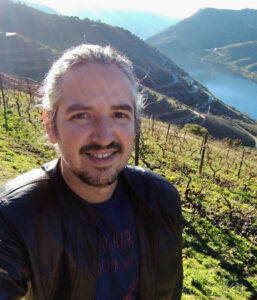
Today we’re talking to Tomáš Chvátal from the Czech LibreOffice community, who recently decided to become a Member of The Document Foundation…

To start, tell us a bit about yourself!

I am from Prague, Czech Republic, where I work for SUSE as a Team Lead for software development/packaging. For SUSE and openSUSE I am responsible for the LibreOffice packages, and ensure they are built and delivered for everyone.

In my spare time I play with my parrots, read books and generally just slack around 🙂

Why did you decide to become a member of TDF?

I think the ability to open documents – created wherever and however – should not be limited by having to pay to view the content. For instance, when you’re communicating with the government, you should not be tied to paid services, and there should be no hurdles for anyone.

What are you working on in the LibreOffice project right now?

Mostly making sure the package is fresh and crispy on the openSUSE and SUSE stack, and fixing all the reported issues found by the users.

SUSE has a partnership with Collabora Productivity, and as such we also fix various compatibility issues between Microsoft Office and LibreOffice to make it easier for people to switch to free (and better :P) alternatives.

Anything else you plan to do in the future?

I do not really radically plan to change my contributions. Put simply, I will keep making sure that LibreOffice keeps working, and whenever the current pandemic boils over, promote The Document Foundation at conferences again.

Thanks to Tomáš for all his contributions! Everyone who’s active in the LibreOffice community is welcome to join The Document Foundation, and help to shape the future of the software:

Please confirm that you want to play a YouTube video. By accepting, you will be accessing content from YouTube, a service provided by an external third party.

YouTube privacy policy

If you accept this notice, your choice will be saved and the page will refresh.

Community Member Monday: Pulkit Krishna

Today we’re talking to Pulkit Krishna, who’s a new member of The Document Foundation, the non-profit entity behind LibreOffice. He’s also active in our documentation community…

Hi Krishna! Tell us a bit about yourself…

I am from Bihar, India. I am a teacher by profession, and technical writing is my hobby.

Why did you decide to become a member of TDF?

In my country, very few people know that there are other office suites than Microsoft Office. They do not know that there is a suite that’s free and open source software. I am not talking about everyone – but the majority of people.

By becoming a member, I think I can help to spread the word, that there is a very good free office suite, LibreOffice. Also, almost everybody in my country thinks that to become a part of a software community, you have to be a developer. I want to remove this stereotype. I am not a developer and yet I am a member of TDF.

What are you working on in the LibreOffice project right now?

Currently, I am working on updating the Base Guide to version 6.4. The base guide 6.2 was translated from German, but for version 6.4 we are updating it from 6.2. It is going to be a quick update, because Base has not changed much.

Anything else you plan to do in the future? What does LibreOffice really need right now?

As the Base Guide 6.2 was translated from German, its English could be improved. Also, there are some translation mistakes. I plan to rewrite the whole guide for 7.0. The screenshots in the guide are old – they need to be updated. I am going to use the format suggested by Dan Lewis.

In the future, I would also like to spread the word about LibreOffice in my country. Although the government has declared that free and open source software should be promoted, very few people in my country even know that such a thing exists.

Thanks, Krishna! Indeed, our marketing community is reaching out and spreading the word – everyone is welcome to join and give us a hand!

50 Open Badges awarded for top LibreOffice translators!

A few months ago, we announced Open Badges for LibreOffice contributors. These are custom images with embedded metadata, awarded to our most active community members to say thanks for their great work!

The metadata describes the contributor’s work, and the badge can be verified using an external service. Open Badges are used by other free software projects, such as Fedora.

Anyway, today we’re awarding 50 Open Badges to the most active members in our localisation community, based on Weblate activity so far this year. Congratulations to everyone who got a badge – we’ve emailed it to you! Here’s the list of winners:

  • Joan Montané
  • Adam Rak
  • jwtiyar ali nariman
  • Paul Roos
  • Mihkel Tõnnov
  • Modestas Rimkus
  • Adolfo Jayme Barrientos
  • Donald Rogers
  • Valter Mura
  • eglejasu
  • Stanislav Horáček
  • Asier Sarasua Garmendia
  • Kolbjørn Stuestøl
  • Dimitris Spingos
  • Xosé
  • Tolmantas
  • Andika Triwidada
  • Baurzhan Muftakhidinov
  • Mihail Balabanov
  • tmtfx
  • Còdaze Veneto
  • Cheng-Chia Tseng
  • Karl Morten Ramberg
  • Christian Kühl
  • Stuart Swales
  • Ming Hua
  • Tuomas Hietala
  • Bachka
  • Andreas Pettersson
  • Yaron Shahrabani
  • Євген Кондратюк
  • Sérgio Marques
  • Jean-Baptiste Faure
  • Jørgen Madsen
  • Michael Wolf
  • gpopac
  • Ayhan YALÇINSOY
  • Miloš Šrámek
  • Milo Ivir
  • Ingmārs Dīriņš
  • Xuacu Saturio
  • Xandru Martino Ruz
  • kees538
  • Rhoslyn Prys
  • Khairul Aizat Kamarudzzaman
  • SteenRønnow
  • Sveinn í Felli
  • Jeanmi2403
  • kompilainenn
  • vpanter

We’ll be issuing more badges in the coming months, so stay tuned to the blog for more…

LibreOffice monthly recap: July 2020 – News, events and more…

Here’s our summary of updates, events and activities in the LibreOffice project in the last four weeks – click the links to learn more…

  • At the start of the month, we announced a Bug Hunting Session for LibreOffice 7.0 RC1. Yes, the next major release is just around the corner! You can still help us to test it before the official announcement, which is due next week…

  • But we’re still maintaining the LibreOffice 6.4 branch, and on July 2, we announced LibreOffice 6.4.5. It includes over 100 bug fixes and improvements to document compatibility and interoperability with software from other vendors.
  • In recent months, TDF and the community have been discussing marketing plans for the next five years. How can we keep the LibreOffice project sustainable in the long term? Volunteers are a huge part of the project and we’re immensely grateful for them, but companies in the ecosystem also write the majority of the source code to implement new features, so it’s important that they prosper too. See the first update and second update.
  • On July 13, we talked to Khairul Aizat Kamarudzzaman about his work in the LibreOffice community, helping with advocacy and marketing. He recently decided to become a Member of The Document Foundation – welcome on board!

  • Speaking of Members, TDF’s Membership Committee has elections coming up. The mission of the Committee is to administer membership applications and renewals following the criteria defined in the Foundation’s Statutes.

  • July 19 marked 20 years of free and open source office suites, as Sun Microsystems announced on July 19 2000 that StarOffice, which it recently acquired, would become free and open source software. This, of course, became OpenOffice, and lives on today in the form of LibreOffice, the most active and developed successor project.

  • With the ongoing coronavirus pandemic, many communities are meeting online, such as the Spanish-speaking LibreOffice community. They had a live broadcast with a series of talks, over six hours, covering translations, migrations and LibreOffice Online.

  • The joint openSUSE + LibreOffice conference will take place in October, and we’ve extended the Call for Papers until August 4. Join us, give a talk about your favourite topic, and let’s share knowledge together!

  • Lastly, we talked to Sandra Louvezo, another new TDF Member, about her experiences in the LibreOffice community in Congo. A big thanks to Sandra, and everyone in our growing LibreOffice communities in Africa, for all their great work.

Keep in touch – follow us on Twitter, Facebook and Mastodon. Like what we do? Support our community with a donation – or join us and help to make LibreOffice even better for everyone!

Community Member Monday: Sandra Louvezo

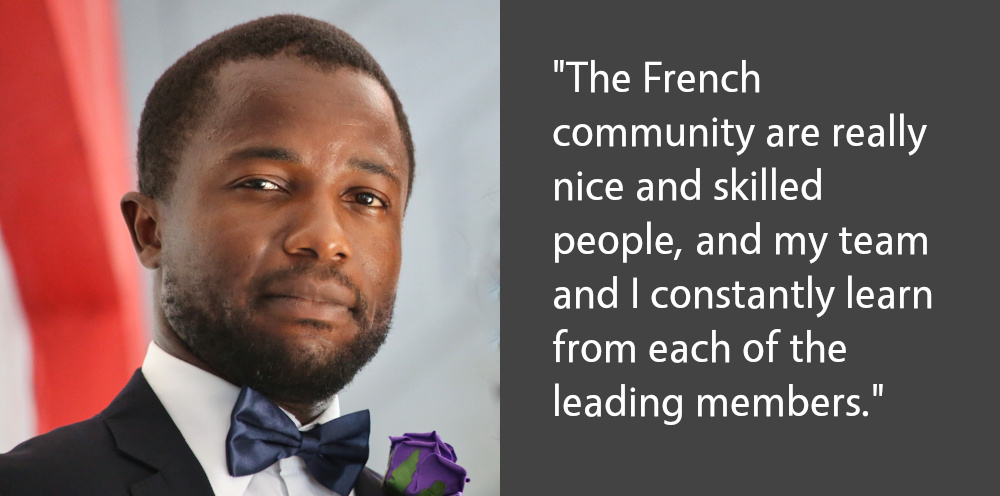
Today we’re talking to Sandra Louvezo, who is helping to spread the word about LibreOffice and FOSS in Congo. Also, she recently became a Member of The Document Foundation, the non-profit entity behind LibreOffice…

To start with, tell us a bit about yourself!

I was born on August 31, 1984 in Pointe-Noire, the economic capital of Congo-Brazzaville. I achieved a BAC+3 in Human Resources Attaché at the Magrebin Institute of Science and Technology in Tunis, Tunisia (IMSET) in 2008.

Then I returned to Congo in 2009, where I worked for five years in local companies as an Accounting Assistant – Claims Writer – Head of Life and Health Insurance services at the Huet de Baroquer group, under the H branch in B Congo Insurance. Then I was Director of Human Resources in a service subsidiary and provision of Health, Safety and Environment (HSE) staff for two years.

For the past two years, until now, I have started my own business as a motivational and personal development coach, as well as a nutritional coach and caterer.

What are you working on in the LibreOffice project right now?

In Pointe-Noire I belong to a community called “Librists”. Our goal is to help people discover the world of open source software here in Congo – which very few people know about. I am responsible for training people to use the LibreOffice suite, and we have named the training “SPRINT”, which lasts 60 days per component starting from Writer, Calc, Impress etc.

The aim of this sprint is to help users learn the applications, and get their comments, to then bring back to the LibreOffice Francophone community, to which I also belong. Then we can continue to improve LibreOffice.

Why did you decide to become a member of TDF?

I decided to become a member in order to raise awareness, mobilize people, and bring LibreOffice to my country and Africa in general. Discovering LibreOffice and open source was a delight for me, and I want to teach others this life lesson: contribute back to open source, and help make the world a better place.

Anything else you plan to do in the future?

I am training to prepare the next SPRINT, which will start from the end of July to the beginning of August 2020 in several African countries such as: Congo Brazzaville, Cameroon, the Democratic Republic of Congo, Togo, Senegal and Benign. For 60 days, users will learn to use and discover LibreOffice Writer in the form of exercises, and the answers will be returned at the end of ech day.

The goal is to be present, so that each African country discovers LibreOffice and builds a mini community around it, before we start to offer the application to the different companies that have everything to gain from using it.

Thanks to Sandra for all her contributions! Our native language communities are always open for more help – so if you want LibreOffice and its website localised in your language, give us a hand!