Behind the scenes at TDF: Quality Assurance (QA)

Towards the end of the year, The Document Foundation would like to share achievements in 2014 with our community and our generous donours, to whom we’d like to express our sincerest gratitude and thanks for their incredible and wonderful support and their invaluable contributions!

As a start, Robinson Tryon, who is in charge of Quality Assurance (QA) since August, and summarizes the efforts in this important area:robinson-in-brussels

Hi all,

I’m Robinson Tryon and I’m a QA Engineer for The Document Foundation. I became quite interested in computers in high school and got my first taste of Free Software playing around with RedHat Linux on a spare machine.

In college I started to study computer science in earnest, and found myself very interested in the topics of human-computer interaction and computing freedom. I can’t remember who first introduced me to the Free Software Foundation, but I have fond memories from my undergraduate years of attending annual membership meetings at MIT and thinking of how I’d like to get a job where I could spend my time working on Free Software.

In the years since I graduated with a degree in computer science, I’ve been fortunate to be able to work with a number of different organizations and labs on Free Software projects. I’ve worked on a multimedia engine used to create training simulations for doctors and first-responders, tools for teaching non-technical people how to use programs such as git and ssh, and a series of web-based games designed to help libraries, museums, and other organizations crowd-source metadata for images and video in their collections. I was very excited to join the Document Foundation this year and bring my experience to the LibreOffice project.

My first contributions to LibreOffice came early-on in 2010 when the project was just starting out. The renewed energy and community-focus espoused by the leaders heartened me, and the reduced barriers to contribution sounded very promising. I tested out new builds and made a few small edits to the wiki, but didn’t get seriously involved until a couple of years later. Up until that point, I was just a user.

When I was still in college, I remember running Sun’s OpenOffice.org off of a Knoppix LiveCD. I desperately wanted to find an alternative to running MS-Office to type up all of my papers and reports, and just using a text editor wasn’t quite cutting it. Although I wasn’t always able to work on my own desktop computer in my dorm room, carrying around a Knoppix CD made it possible for me to boot-up and run a Free Software office suite on the public cluster machines.

By the time LibreOffice had its first release, I had upgraded from the CD and could carry around Free Software programs on a USB stick, ready to be run on any computer. I currently carry a USB stick with builds of LibreOffice for Windows, GNU/Linux, and Mac. My thinking is that if a friend ever needs a hand opening documents on a computer, it’d be great for me to have the right tool ready to go for them. In fact, using LibreOffice to help out a friend is what got me very involved with LibreOffice and the QA Team.

A friend of mine had a large number of documents in proprietary formats (word processing, spreadsheet, etc..) and reading through the LibreOffice documentation I found out that the suite has some excellent tools for conversion of documents from one format to another, including the ability to bulk-convert via the command line one hundred documents as easily as one document. While I was doing my research, I started to chat with contributors to the LibreOffice project, I attended a couple of QA Meetings, and before I knew it was an active member of the QA Team!

When I first started out contributing to LibreOffice, I focused on some basic bug triage tasks and filled-in missing pages on the TDF wiki. As my understanding of the project and its members grew, I was able to make contributions to Bugzilla, to the BSA, and MediaWiki, and was able to help set up tools such as ownCloud. I currently work on a large number of different QA tasks for LibreOffice, including generating binary-bisection or “bibisect” repositories, improving and updating QA documentation on the TDF wiki, and overseeing the implementation of improvements to Bugzilla. Right now I’m gaining experience as a Release Engineer for LibreOffice.

In addition to the technical tasks I undertake for LibreOffice, I work on LibreOffice outreach — both in the US and abroad. Although we have a large number of active users, only a small fraction of them are active contributors. We are always looking to expand the number of contributors in each of our teams, and are excited about getting more people involved in QA through our BugHunting sessions and LibreFests.

A LibreFest is usually a one or two-day event in which various LibreOffice teams may participate. LibreFests, just like hackfests, are typically held in person, as that’s the best way for us to collaborate with and teach new contributors. When the QA Team participates in a LibreFest, users are asked to perform basic or advanced bug triage, to bibisect regressions, and to file new bugs that they observe. With experienced LibreOffice team members present, users feel much more comfortable stepping outside their comfort zone and taking on QA tasks that they wouldn’t try to tackle by themselves.

In our BugHunting sessions, we spend a weekend (usually Fri-Sun) testing the latest builds of a new Release Branch. One of the tools we use to test the builds is MozTrap — a test case management system that help to ensure greater reliability and consistency. Through extensive use of LibreOffice, we hope to shake-out any obvious bugs and squash them before going further in with the release process.

Speaking of BugHunting sessions, this weekend (Dec 19-21), we’ll be having a BugHunting session for the upcoming 4.4 Release Branch. We’ve worked to make it easy for newcomers to participate. To join in, or just for more information, see: https://wiki.documentfoundation.org/BugHunting_Session_4.4.0_RC1

LibreOffice 4.4.0 bug hunting sessionIf you’re looking for a way to participate in LibreOffice, or just curious about what we do in QA, please stop by our mailing list or our IRC channel. There’s so much more that we do that can’t be contained in a single blog post, and we’d love to tell you all about it!

The Document Foundation (TDF) announces Certification for LibreOffice Migration and LibreOffice Training Professionals

Berlin, November 5, 2014 – The Document Foundation announces Certification for LibreOffice Migrations and LibreOffice Training Professionals, open to TDF Members until April 2015 and then to all free software advocates. Details are available at http://www.documentfoundation.org/certification.

“LibreOffice Certification is an absolute first for a community based project, and has been developed adapting existing best practices to the different reality of the TDF ecosystem,” says Italo Vignoli, Chairman of TDF Certification Committee. “We want to recognize the skills of free software advocates who are able to provide value added services to large organizations deploying LibreOffice. Once certified, they will be recognized as LibreOffice experts and ambassadors.”
The Certification Committee has also appointed several Certified Professionals for Migrations and Trainings, who will help the Board of Directors in peer reviewing other TDF Members who will apply for certification in either discipline.

Certified Professionals for Migrations and Trainings are: Lothar Becker (.riess), Eliane Domingos de Sousa (EDX Informatica), Sophie Gautier (independent), Olivier Hallot (EDX Informatica), Thomas Krumbein (independent), Leif Lodahl (Magenta), Marina Latini (Studio Storti), Cor Nouws (Nou&Off), Gustavo Buzzatti Pacheco (independent), Stefano Paggetti (Regione Umbria), Jacqueline Rahemipour (independent), Charles H. Schulz (independent), and Italo Vignoli (independent). These 13 certified professionals join the 42 developers certified since October 2010.

Certified Professionals are able to assist enterprise deployments of LibreOffice by providing the following services:

  • migration consultancy: migration feasibility assessment, project management, migration strategy, communications, and other migration related services;
  • training: creation and delivery of training courses for trainers and end users, and evaluation of training effectiveness;
  • professional Level 3 support: feature development and bug fixing to solve application and interoperability problems.

The lists of Certified Professionals can be accessed from the certification website: http://www.documentfoundation.org/certification.

About The Document Foundation (TDF)

The Document Foundation is an independent, self-governing and meritocratic organization, based on Free Software ethos and incorporated in Germany as a not for profit entity. TDF is focused on the development of LibreOffice – the best free office suite ever – chosen by the global community as the legitimate heir of OOo, and as such adopted by a growing number of public administrations, enterprises and SMBs for desktop productivity.

TDF is accessible to individuals and organizations who agree with its core values and participate in its activities. At the end of October 2014, the foundation has over 200 members and over 3,000 volunteer contributors worldwide.

LibreOffice Conference 2015 in Aarhus, Denmark, from September 23 to September 25, 2015

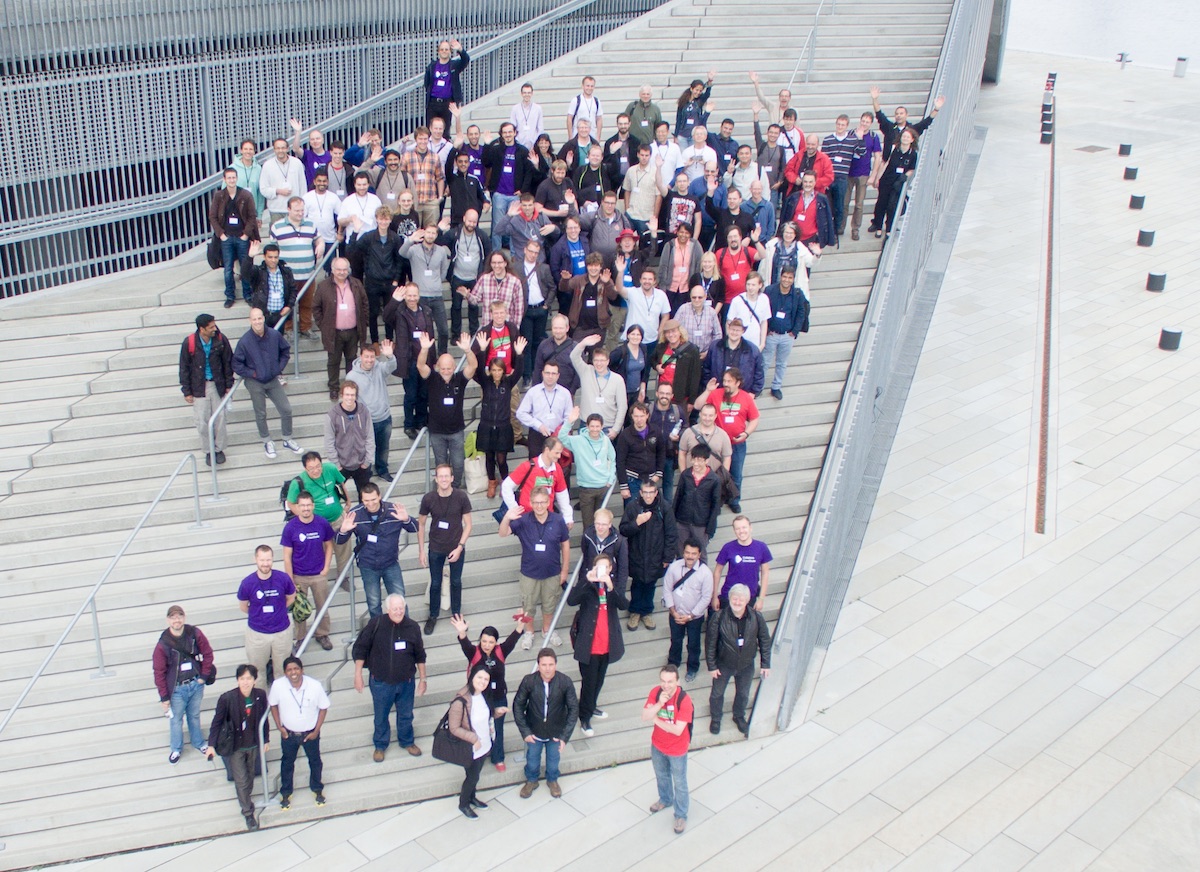
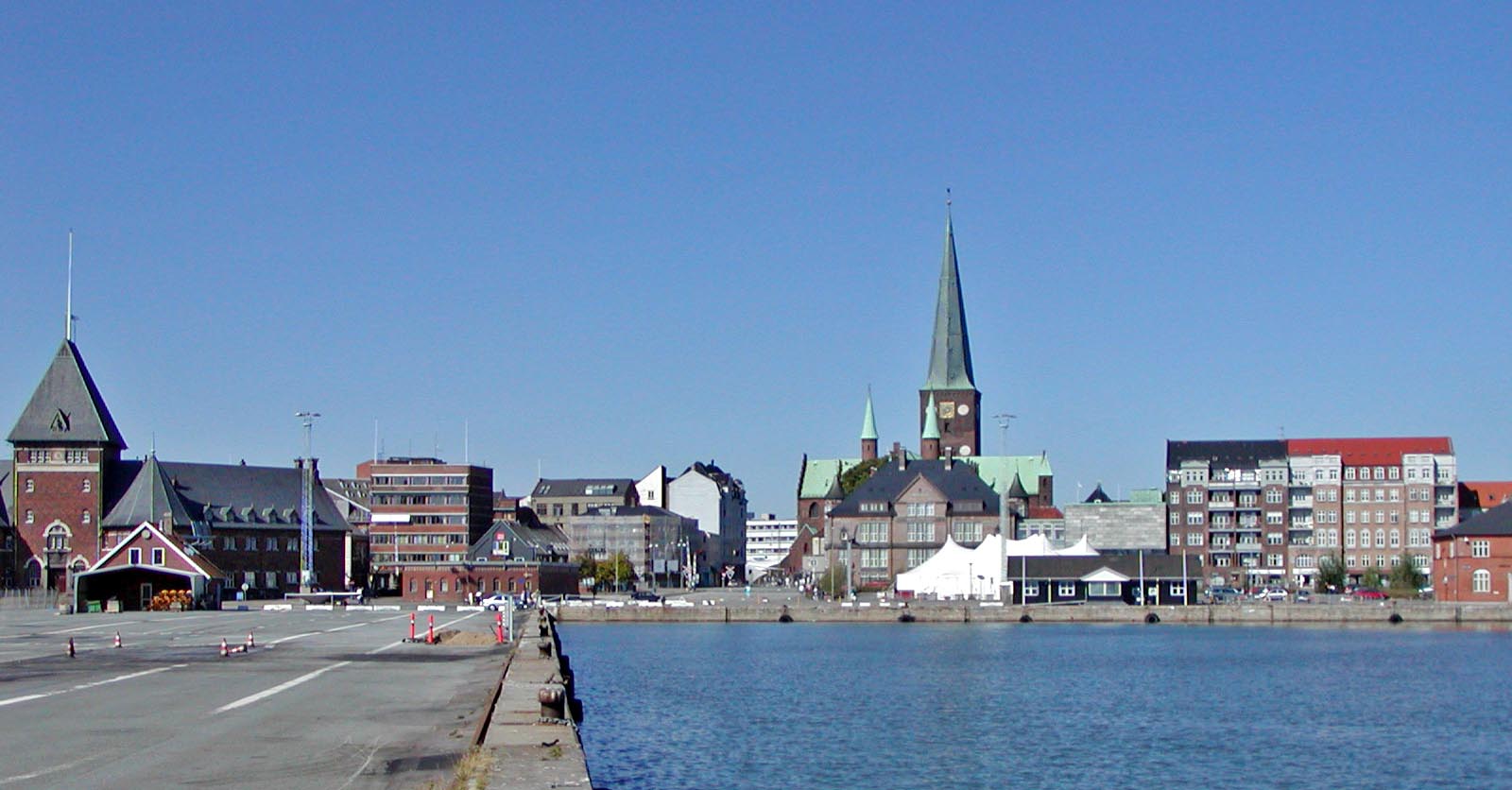
Aarhus WaterfrontBerlin, October 17, 2014 – The Document Foundation (TDF) announces that the LibreOffice Conference 2015 will be jointly organized by the Danish LibreOffice community in collaboration with local F/OSS groups and the Aarhus municipality, and hosted at the brand new Urban Media Space, from September 23 to September 25, 2015.

In addition, on September 22 the LibreOffice community will gather for several face-to-face meetings: Board of Directors, Advisory Board, Engineering Steering Committee, and Certification Committee.

Aarhus is a city of education, knowledge and research. Its university is internationally recognized for its contributions within, among other fields, social sciences, technology and science. Aarhus is known to attract talented students from around the world which also provides the city with a great diversity.

“Hosting the LibreOffice Conference will be an exciting opportunity for the entire Danish free software community”, says Leif Lodahl, a long time leader of the Danish LibreOffice community, a founder of The Document Foundation, and the architect of several large migration projects to LibreOffice. “We are looking forward to welcoming LibreOffice volunteers and advocates from every corner of the world”.

Support The Document Foundation

LibreOffice users, free software advocates and community members can support The Document Foundation with a donation at http://donate.libreoffice.org. Money collected will be used to strengthen the foundation, support development related activities such as QA and localization, expand the infrastructure, and accelerate marketing activities to increase the awareness of the project, both at global and local level.

100,000 thanks

100,000 donations in 500 days, from May 1st, 2013, to October 13, 2014, with an average of 200 donations per day.

Three square numbers which have a greater meaning than their actual one, for the entire free software ecosystem.

Together with volunteers, contributing their time, and Advisory Board members, investing in The Document Foundation, individual donors are making the dream of an independent self-sustaining free software foundation – capable of pushing the best free office suite to the next level of awesomeness – a solid, enduring reality.

Back in 2010, when the independent foundation was announced, one of the most frequent objections was based on the false assumption that a large free software project cannot exist without a single large corporate sponsor.

After four years, we can not only affirm that the dream has come true, but that the dream has a bright future.

Thanks to donations, we have been able to fund hackfests (like the upcoming one in Toulouse, France, on November 15/16), QA volunteer netbooks for bug triage, tinderboxes for developers, improvements of ask.libreoffice.org for non-english users, LibreOffice booths at exhibitions, native language community events, a stronger independent infrastructure, and so on.

What is more important, we have been able to demonstrate that a large free software project does not need a single large corporate sponsor to thrive, but can rely on a diverse ecosystem based on companies but also on volunteers, supported by individual donors.

Companies come and go, while volunteers – and hopefully individual donors – stay.

So far, they have had the unique power of making a ten year long dream come true, and become history. With a simple donation at http://donate.libreoffice.org, they can keep the history alive, forever.

100,000 thanks, again.

Membership Committee upcoming election

Thorsten Behrens, Chairman of the Board at The Document Foundation, has announced the elections for the Membership Committee.

Dear Community,

all members of The Document Foundation are called to vote on a new Membership Committee. Therefore, the Board of Directors hereby announces the elections to the Membership Committee with the following timeline:

  1. 2014-07-19: announcement of the elections (this e-mail); and start of the nomination phase
  2. 2014-08-27, 24:00 CET/UTC+2: end of the nomination phase
  3. 2014-09-04, 00:00 CET/UTC+2: official start of the elections
  4. 2014-09-11, 24:00 CET/UTC+2: end of the elections
  5. 2014-09-12: announcement of the preliminary results; and start of the challenging phase
  6. 2014-09-17, 24:00 CET/UTC+2: end of the challenging phase
  7. 2014-09-18: official announcement of the final results
  8. 2014-09-19: new Membership Committee officially in charge

Members of The Document Foundation as of 2014-07-01 are eligible to vote in the elections, and any eligible voter can also be elected to the Membership Committee. Members may self-nominate.

To announce your candidacy, send a message to board-discuss@documentfoundation.org with your full name, e-mail, corporate affiliation (if any), and a description of your reasons for
wanting to serve as a committee member. All candidates should also send a summary of their candicacy announcement to elections@documentfoundation.org – a compilation of the summaries will be mailed to all registered voters prior to the elections. Summaries should be no more than 75 words of continuous text (so no bullet lists or multiple paragraphs) and must be received by the nomination deadline given above.

Available slots will be filled by a single transferable vote system, seats filled in decreasing order of preference. This election is according to our statutes, and the term of office is two years.

All discussion related to the elections should be held on board-discuss@documentfoundation.org where members are invited to ask questions to one or all candidates. Instructions explaining how to vote will be sent via e-mail to all eligible voters in time before the election.

The board will announce preliminary results as soon as possible after the elections close, along with instructions on how to access the votes archive and how to independently verify the vote count.

Any eligible voter may challenge the preliminary results by e-mailing elections@documentfoundation.org within the aforementioned deadline. Once any challenges have been resolved, the board shall announce the final results.

Any questions regarding these procedures should be directed to the board by e-mail to elections@documentfoundation.org

We are looking forward to all candidacies, and would like to thank you for your work, engagement and dedication for The Document Foundation!

On behalf of the Board of Directors,
Thorsten Behrens

LibreOffice Conference 2015 Call for Locations will open soon

Berlin, April 16, 2014 – The Document Foundation (TDF) will open the Call for Locations for the LibreOffice Conference 2015 on May 1st, 2014. Candidate cities will be able to submit proposals during May and June 2014. Details of the Call for Locations are available on the TDF Wiki: https://wiki.documentfoundation.org/Events/2015/LibreOffice_Annual_Conference/Call_for_Location.

The location of the 2015 LibreOffice Conference will be announced at the end of July, so that the winning team may attend the 2014 LibreOffice Conference in Bern, Switzerland (September 2nd to September 5th).

“The LibreOffice Conference is a large event, which spans over four days and is a unique gathering opportunity for our growing community. Starting from 2014, we intend to present next year location at the previous conference”, says Thorsten Behrens, Chairman of The Document Foundation. “This also offers a chance to involve next year’s team during the last phase of the organization, in order to ensure that they are acquainted with the process”.

For additional information: conference@libreoffice.org.