LibreOffice @ FOSDEM ’17

FOSDEM banner

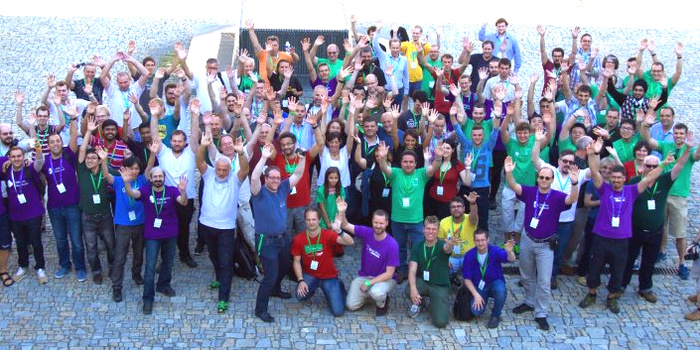
FOSDEM is the biggest gathering of free and open source software (FOSS) developers in Europe. It takes place every year in early February, at the Université Libre in Brussels, and it’s a great event for discovering new technology, exchanging ideas and generally enjoying the community around FOSS.

This year, the Open Document Editors devroom was home to many talks and presentations about LibreOffice – including development, design, documentation, LibreOffice Online and other topics.

We have now uploaded all of the videos to our YouTube channel, so click play below to start watching (and use the icon in the top-left to choose others in the playlist). Alternatively, scroll on for a full list of presentations and links to the videos.

Please confirm that you want to play a YouTube video. By accepting, you will be accessing content from YouTube, a service provided by an external third party.

YouTube privacy policy

If you accept this notice, your choice will be saved and the page will refresh.

Full list of presentations:

Like what you see? Click here to get involved – you too could be presenting awesome new technology in the future!

Updates from events: Turkey, Taiwan and Japan

Today marks five years since The Document Foundation (TDF) was legally incorporated in Berlin, Germany. We want to celebrate this anniversary by highlighting some recent activities and events from our Native Language Projects. These communities have been instrumental to the growth of TDF and LibreOffice, and are one of our most important assets.

Turkey

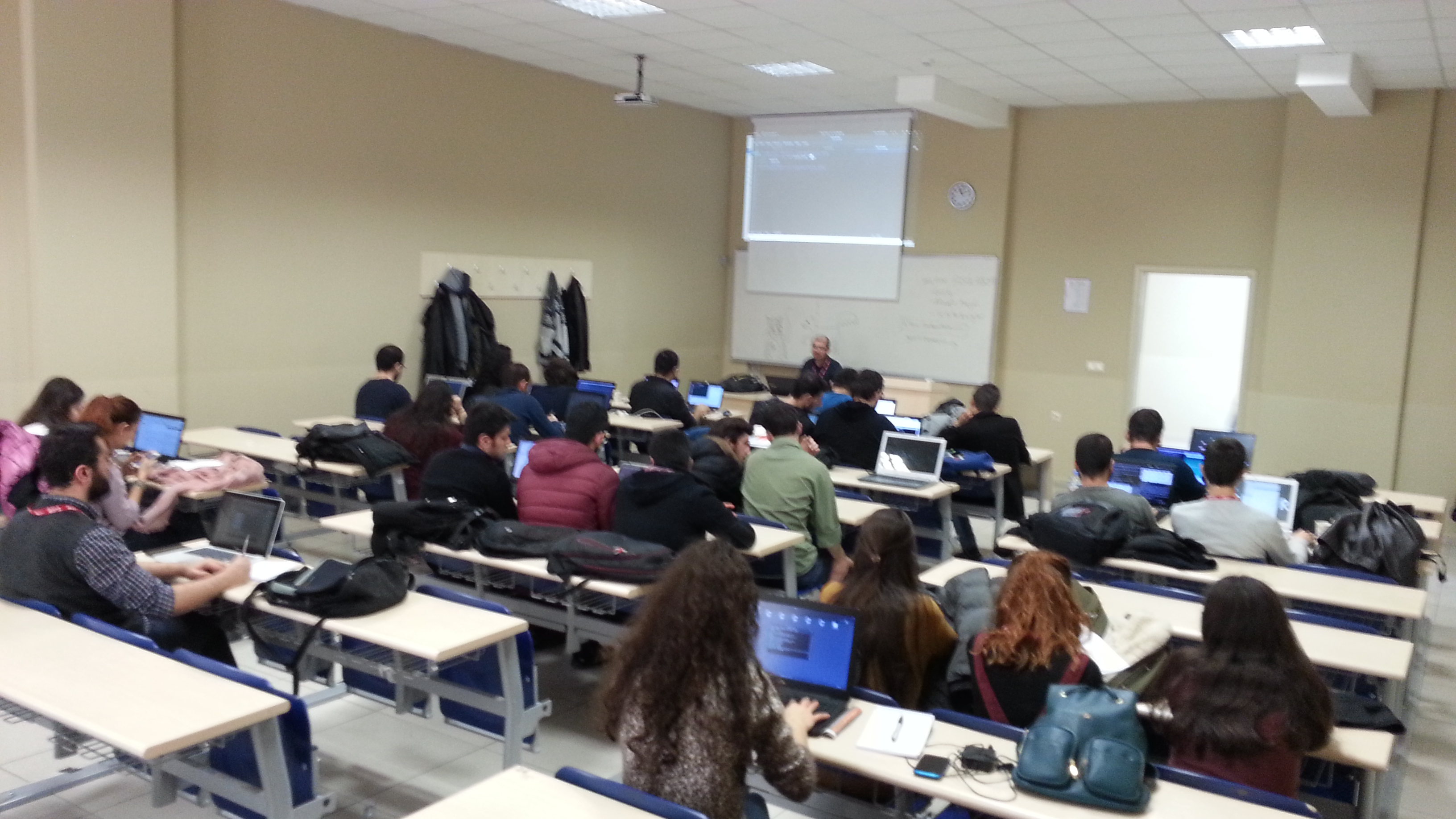
The Turkish community recently attended the Academic Informatics Conference 2017 in Aksaray, from 8 to 10 of February, with several LibreOffice related activities.

A general presentation was done by Muhammet Kara and Gökhan Gurbetoğlu in the first session (first half of the first day).

In the second half of the first day, the attendees were introduced to the LibreOffice development environment, and the tools used in the process (Gerrit, Vim, Git…). The attendees were walked through the process of joining the LibreOffice community, and building the LibreOffice source code for the first time.

Attendees who had relatively older computers were provided with SSH access to a 32-core machine, courtesy of TUBITAK ULAKBIM. The last session (first half of the second day) was held like a hackfest. Questions from attendees were answered by the speakers.

LibreOffice community members were pleased to see that the participants were eager to learn about the software, and together they established a WhatsApp group for further communication. A more detailed presentation about LibreOffice development activities in Turkey was given by Gülşah Köse and Muhammet Kara on the last day (morning) of the conference.

Taiwan

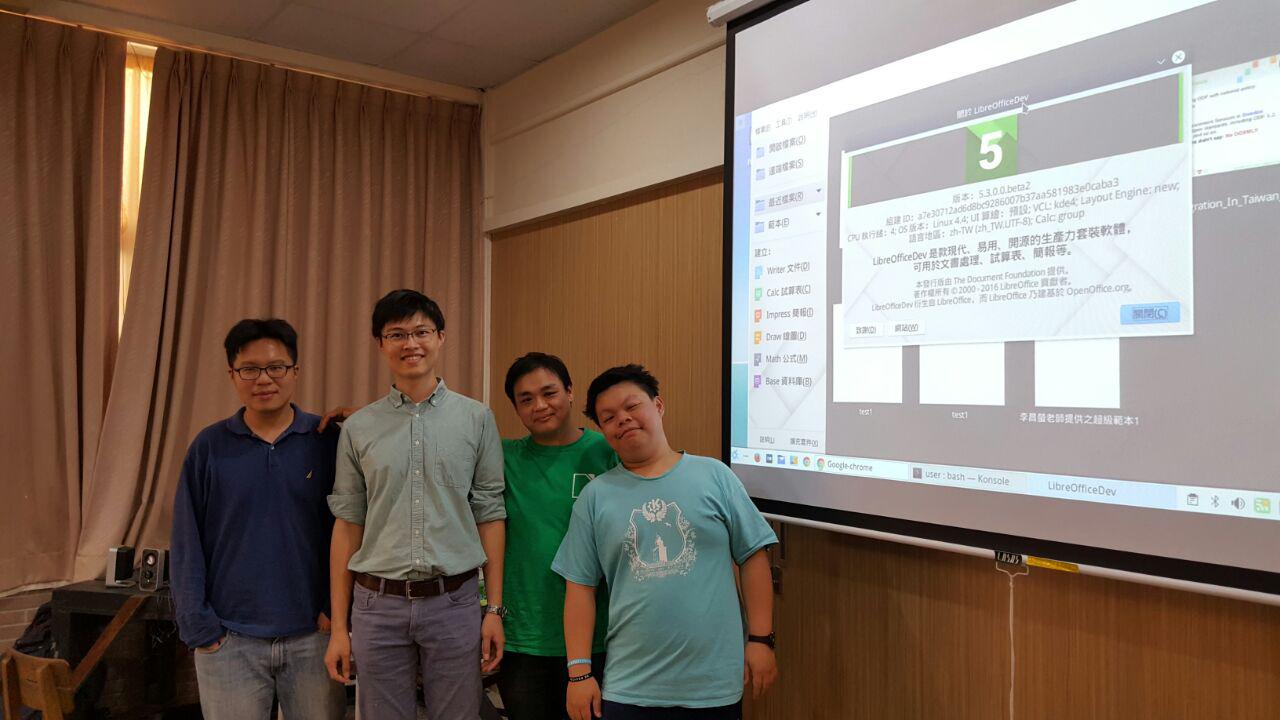
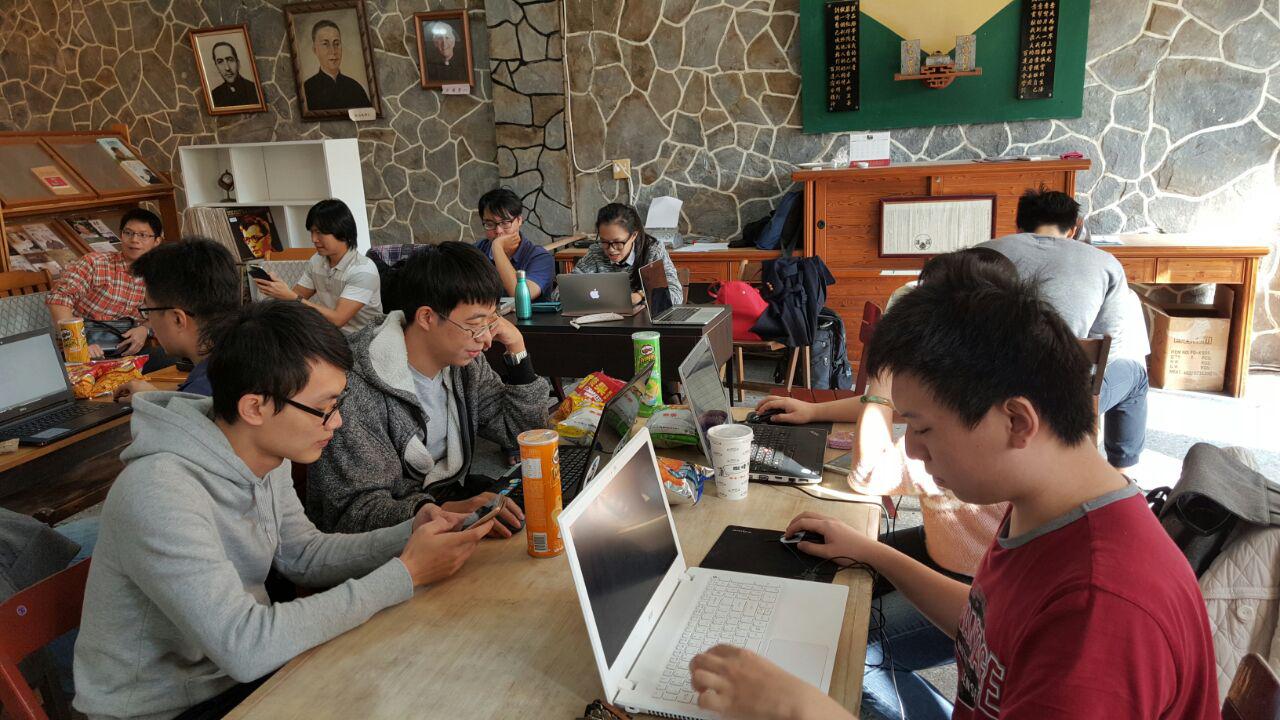
The first LibreOffice QA Sprint in Taiwan – organized by Software Liberty Association Taiwan and supported by two professors of the Department of Computer Science and Engineer, National Cheng-Kung University: Professor Joseph Chung-Ping Young and Alvin Wen-Yu Su – was held in Tainan City on December 17, 2016. In this four-hour sprint the attendees found and reported many issues. Attendees were students, teachers, employees of enterprises and governments, LibreOffice developers and lecturers, and all four TDF members in Taiwan.

Early in the afternoon, a live video-session with Italo Vignoli, one of the core members of The Document Foundation, gave most of the attendees exposure to the international community for the first time.

Han Lu, a student in NCKU, summarized the issues found by attendees. After the summary, Franklin Weng explained how to report bugs on the LibreOffice Bugzilla. Also, Cheng-Chia Tseng introduced the Pootle translation platform for LibreOffice and gave some tips on how to translate LibreOffice.

Japan

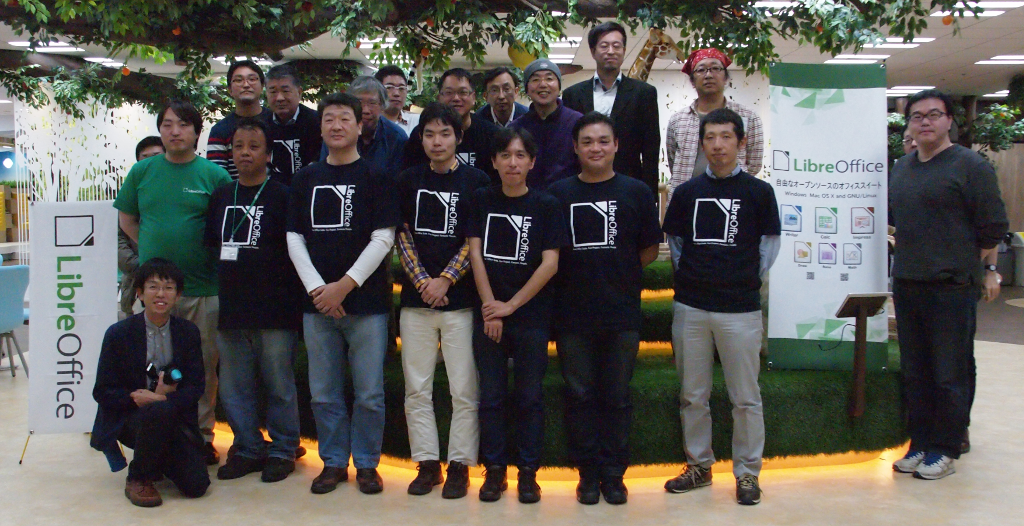
LibreOffice Kaigi 2016.12, Japan’s annual LibreOffice conference, was organized in early December 2016 with great success! The word Kaigi is the Japanese word 会議, which means conference. The name means not only Japanese regional, but also Japanese users-specific.

Around 25 people gathered and enjoyed several talks (migration to Open Document Format in Taiwan, by Franklin Weng, LibreOffice/ODF and styles, maintaining Math and Japanese translation), along with a few lightning talks and a panel discussion.

Celebrating “I Love Free Software Day” 2017

I love free software

LibreOffice is free software. This means that it’s totally free of charge to download and use – a benefit that many people appreciate. But free software is about much more than just saving money; it’s about having freedom to control our own computers and devices. Free software is incredibly important for digital freedoms, security, privacy and civil rights. All together, free software is a movement.

So what defines free software, compared to proprietary software? The Free Software Foundation outlines four key freedoms that we should have as users of the software. Here’s a summary:

  • The freedom to run the program as you wish, for any purpose
  • The freedom to study how the program works, and change its source code
  • The freedom to redistribute copies so you can help your friends and colleagues
  • The freedom to distribute copies of your modified versions to others, so that they can benefit

Fundamental to this is the license under which the software is made available. LibreOffice is released under the Mozilla Public License Version 2.0, a free and open source license that lets everyone share the program – and gives everyone the right to study how it works and modify it.

The importance of freedom

Free software is essential to the success of LibreOffice. Because of the license it uses, anyone can join our community and help to improve the software. The low cost of ownership means that developing countries can reap the benefits of LibreOffice without having to spend large amounts of money. And no company can take LibreOffice and lock it up as proprietary, closed software forever.

Now, most LibreOffice users are not software developers. And they may ask: “Apart from the low cost, how do I benefit from LibreOffice being free software?” The best response to this is: with free software, you control your computer. With proprietary, closed software – where you can’t study how it works or modify it – the software controls you. Sure, some proprietary software may look tempting in terms of technical features, but without the four freedoms listed above, you don’t truly have control of your software, your computer and your data. Someone else does.

One common misconception is that free software means no money for developers. This simply isn’t true! While the software itself is free to download, many companies make money by providing extra services on top: documentation, technical support, and bespoke features. Look at our certified developers, for instance, and then consider all of the companies making money around the GNU/Linux ecosystem. You can develop free software, help make the world a better place, and still earn a good living as well!

A big thank you

Of course, LibreOffice is just one example of a well-known free software project. Others include GNU/Linux, Firefox and KDE – but there are thousands more. Today we celebrate the vibrant, rich and active communities around the web that are working hard to provide us with all of this great software – so we’d like to say a big thank you to all LibreOffice developers, and indeed everyone else working on free and open source projects.

Keep up the great work!

LibreOffice conference Brno

LibreOffice 5.3: A week in stats

We announced LibreOffice 5.3 one week ago, and a lot has happened in the meantime! Here’s a summary of downloads, web page views, social media activity and other statistics. We’ve also compared these to the LibreOffice 5.2 first week stats to see how the project and community is progressing…

410,472 downloads of LibreOffice 5.3

This is a 32% increase over the first week of LibreOffice 5.2 – and note that it only includes downloads from our servers and mirrors, and not other sources (such as Linux distribution package repositories).

378,719 unique visitors to our website

Here we have a major 77% increase over the same period for the last release. In addition, there were 834,959 page views.

3,293 donations to The Document Foundation

Donations help our project and community in many ways – infrastructure, documentation, events, marketing, and more. Compared to the first week of LibreOffice 5.2, the number of donations increased by 79%.

77,878 views of our New Features videos

More big growth here – the videos for LibreOffice 5.2 had 37,252 views in comparison, so this is a 109% increase. A lot of this growth can be attributed to the many news articles on the web that embedded the videos for readers to watch.

Now, how about social media?

30,298 people reached by the announcement on Facebook

Our Facebook community is growing steadily, and here we see a 21% increase over the same statistic for LibreOffice 5.2. The announcement was liked by 851 people and shared 213 times. Meanwhile, our Google+ post received 229 likes (up from 115 for the previous version).

So there’s plenty to be happy about, but there are some areas where we can improve as well:

20,203 impressions from the announcement tweet

This is a 42% decrease compared to the tweet for LibreOffice 5.2. There are many possible reasons for this decrease, some out of our control, but we’ll revise our strategy for the next release to ensure that the Twittersphere keeps talking about us. Similarly, Reddit activity around the release wasn’t quite as strong this time: links to the LibreOffice 5.3 announcement on the blog received 486 upvotes, compared to 632 for last time, so that’s something to work on as well.

But on the whole, we can see that the project and community is growing well. Thanks to everyone who helped out with marketing, promotion and social media activity around the release!

Download LibreOffice 5.3 here

LibreOffice contributor interview: Tamás Bunth

LibreOffice developers, testers, translators and documentation authors are working hard on LibreOffice 5.3, which is due for release in early February. One contributor to the project, Tamás Bunth, has been helping to improve Base, the database front-end of the suite. We caught up with him to ask how he got involved with LibreOffice and what the community is like…

Where do you live, and are you active on IRC channels or social media?

I’m Hungarian, and I live in Budapest. My IRC nickname is Wastack (the name comes from the game Heroes of Might and Magic, one of my favourite games from childhood – Wastack is a barbarian hero). I’m on Facebook too: https://www.facebook.com/btomi96.

Do you work for a LibreOffice-related company or just contribute in your spare time?

I did some work for Libreoffice as a Google Summer of Code (GSoC) student last year. In the future I’ll contribute in my spare time.

How did you get involved with LibreOffice?

One of my roommates in my student hostel suggested that we should try GSoC. I was searching for an end user application written in Java or C++, since these are the languages I’m comfortable with. As I looked at the Easy Hacks I realised that I may be able to solve some of these, and the developer community was helpful as well.

What areas of the project do you normally work on? Anything else you want to tackle?

My GSoC project was to upgrade the internal Firebird database management system, which is used by LibreOffice Base, and solve related bugs, which makes Firebird an experimental feature. Therefore, I got to know the drivers in some detail, and I think I’ll stick to this area in the future.

What was your initial experience of contributing to LibreOffice like?

When I first looked at the C++ code in the repository, it was scary, since even a simple string is called OUString. After that I found some UNO interfaces, and I really don’t know what was going on there. Of course, after some time and guidance from my mentor things got much clearer.

Which is your preferred text editor – and why?

Vim is my favourite. Well, I don’t now many other editors, but Vim is highly customisable. I like the recording feature too.

What do you do when you’re not working on LibreOffice?

I am a 2nd year Bachelor of Science student of Budapest University of Technology and Economics. In my free time I go rowing. This year I got 4th place on the National Championship of Hungary in eights crew. I’ve achieved two first places there, but I’ve never been in an international race. It is one of my future goals.

Any other hobbies or projects you’re working on?

When I still have some free time, I like writing little computer games. I started with a simple snake game using Flash several years ago, which was followed by a Tetris with Java Swing and a multiplayer Tron game using TCP (still Java). Currently, I have an incomplete project of a browser game, where you have to move simultaneously with figures on a map. It is written in JavaScript, with Node.js on the server side.

Thanks Tamás! And thanks to everyone else who’s working on making LibreOffice 5.3 the best release yet. If you’re reading this and want to join a friendly and busy community promoting open standards and document liberation, get involved!

LibreOffice contributor interview: Hazel Russman


A new year begins, and we kick off with our first LibreOffice contributor interview of 2017. This time we’re talking to Hazel Russman who helps out with documentation and translations…

Where do you live, and are you active on social media?

I’m British and live in North London. I don’t do social media but I have a web page at www.hrussman.entadsl.com.

Do you work for a LibreOffice-related company or just contribute in your spare time?

I’m retired. I help out the documentation team mainly as a translator and proofreader.

How did you get involved with LibreOffice?

I wrote a novel some years ago and used OpenOffice.org to get it into shape for self-publishing. I wanted to give something back, and the OOo site suggested that time might be more valuable than money. When LibreOffice forked off, I moved over to their team.

What areas of the project do you normally work on? Anything else you want to tackle?

I’ve done quite a bit of translation from German into English, especially for Base, which has an excellent German handbook. Until I translated it, there was hardly anything on Base in English. English is my native language, but I grew up in a German-speaking home. My parents were refugees from Hitler. I’m also quite well known on the team as a proofreader.

What was your initial experience of contributing to LibreOffice like?

Interesting and very satisfying. But I’ve never been much interested in socialising online.

Which is your preferred text editor, and why?

For plain text, I like gVim. It has all the Vim keyboard commands but also graphical controls. The best of both worlds, you might say. I do a bit of coding in my spare time and for that I use Geany. Both Vim and Geany do syntax checking, which is a great help.

What do you do when you’re not working on LibreOffice?

Lots of things! I have a dog who takes up a lot of my time. I am active in my local church and play the cello as part of an instrumental group attached to the church’s gospel choir. I am also quite active on Linux Questions, which is the only social networking that I can be bothered with.

Thanks Hazel! We’ll be posting more interviews over the coming weeks and months, so if you want to join the LibreOffice community, pop over to tdf.io/joinus and choose how you want to get involved. We look forward to your input and contributions!