Annual Report: TDF’s infrastructure in 2021
In 2021, the infrastructure team migrated our “Ask LibreOffice” site to Discourse, deployed a Decidim instance, and assisted with video streaming during the LibreOffice Conference.

(This is part of The Document Foundation’s Annual Report for 2021 – we’ll post the full version here soon.)

LibreOffice’s infrastructure team is responsible for maintaining the hardware, virtual machines and services that enable the wider community to develop, market, test, localize and improve the software. The public infrastructure is powered by around 50 kernel-based virtual machines (KVMs) spread across four hypervisors, plugged to an internal 10Gbps switch, hosted at Manitu in St. Wendel (Germany), and managed with libvirt and its KVM/QEMU driver. The virtual disk images are typically stored in GlusterFS volumes – distributed across the hypervisors – except for some transient disks (such as cache) where the IOPS requirement is higher and the redundancy less important.

As 2021 marked another “pandemic year” with only online events, the infrastructure team helped to make these a pleasant experience from home. Notably, they deployed a Pretalx instance to manage conference submissions and the schedule, and put in place a streaming backend based on Jitsi/Jibri/RTMP during the annual conference, thereby providing several participation options to chose from.
Ask LibreOffice

After several months of tests and feedback from the community, the infra team also concluded the migration of LibreOffice’s Q&A platform (“Ask LibreOffice”) to Discourse. Over 65,000 questions and 130,000 replies from 50,000 users — spanning over 17 languages — were imported, with a focus on preserving post attribution and overall layout. The metric collection engines (Matomo as well as the public Grimoire Dashboard) were updated to reflect that change.

Also on the community participation front, the infrastructure team deployed a Decidim instance to structure debate and encourage democratic participation from community members. The instance is currently still under test.

On the Continuous Integration (CI) front, the team deployed new buildbots for Windows and Linux baselines, as well as a buildbot for the WebAssembly (WASM) effort. They also migrated and refactored the bibisect setup to better suit the needs of the quality assurance community.

Backends

As for the backends: Debian GNU/Linux 11 (codename “Bullseye”) was released in the middle of 2021, and the team upgraded most of TDF’s virtual machines accordingly during the second half of the year. However, for the lower layers of the virtualization stack, the upgrade is planned for 2022. Furthermore, lots of work was done in planning the restructuring of database engines, most notably around Point-in-Time Recovery; this work was driven by contributor Brett Cornwall. Finally, the team assisted the Membership Committee with the architecture of the back-end side of their new tooling.

Like what we do? Support the LibreOffice project and The Document Foundation – get involved and help our volunteers, or consider making a donation. Thank you!

Announcement of LibreOffice 7.2.7 Community

Berlin, May 12, 2022 – LibreOffice 7.2.7 Community, the seventh minor release of the LibreOffice 7.2 family, targeted at desktop productivity, is available for download from https://www.libreoffice.org/download/.

End user support is provided by volunteers via email and online resources: https://www.libreoffice.org/get-help/community-support/. On the website and the wiki there are guides, manuals, tutorials and HowTos. Donations help us to make all of these resources available.

For enterprise-class deployments, TDF strongly recommends the LibreOffice Enterprise family of applications from ecosystem partners, with long-term support options, professional assistance, custom features and Service Level Agreements: https://www.libreoffice.org/download/libreoffice-in-business/.

LibreOffice 7.2.7’s changelog pages are available on TDF’s wiki: https://wiki.documentfoundation.org/Releases/7.2.7/RC1 (changed in RC1) and https://wiki.documentfoundation.org/Releases/7.2.7/RC2 (changed in RC2).

LibreOffice Community and the LibreOffice Enterprise family of products are based on the LibreOffice Technology platform, the result of years of development efforts with the objective of providing a state of the art office suite not only for the desktop but also for mobile and the cloud.

LibreOffice Technology based products for Android and iOS are listed here: https://www.libreoffice.org/download/android-and-ios/, while for App Stores and ChromeOS are listed here: https://www.libreoffice.org/download/libreoffice-from-microsoft-and-mac-app-stores/

LibreOffice users, free software advocates and community members can provide financial support to The Document Foundation with a donation via PayPal, credit card or other tools at https://www.libreoffice.org/donate.

LibreOffice 7.2.7 is built with document conversion libraries from the Document Liberation Project: https://www.documentliberation.org.

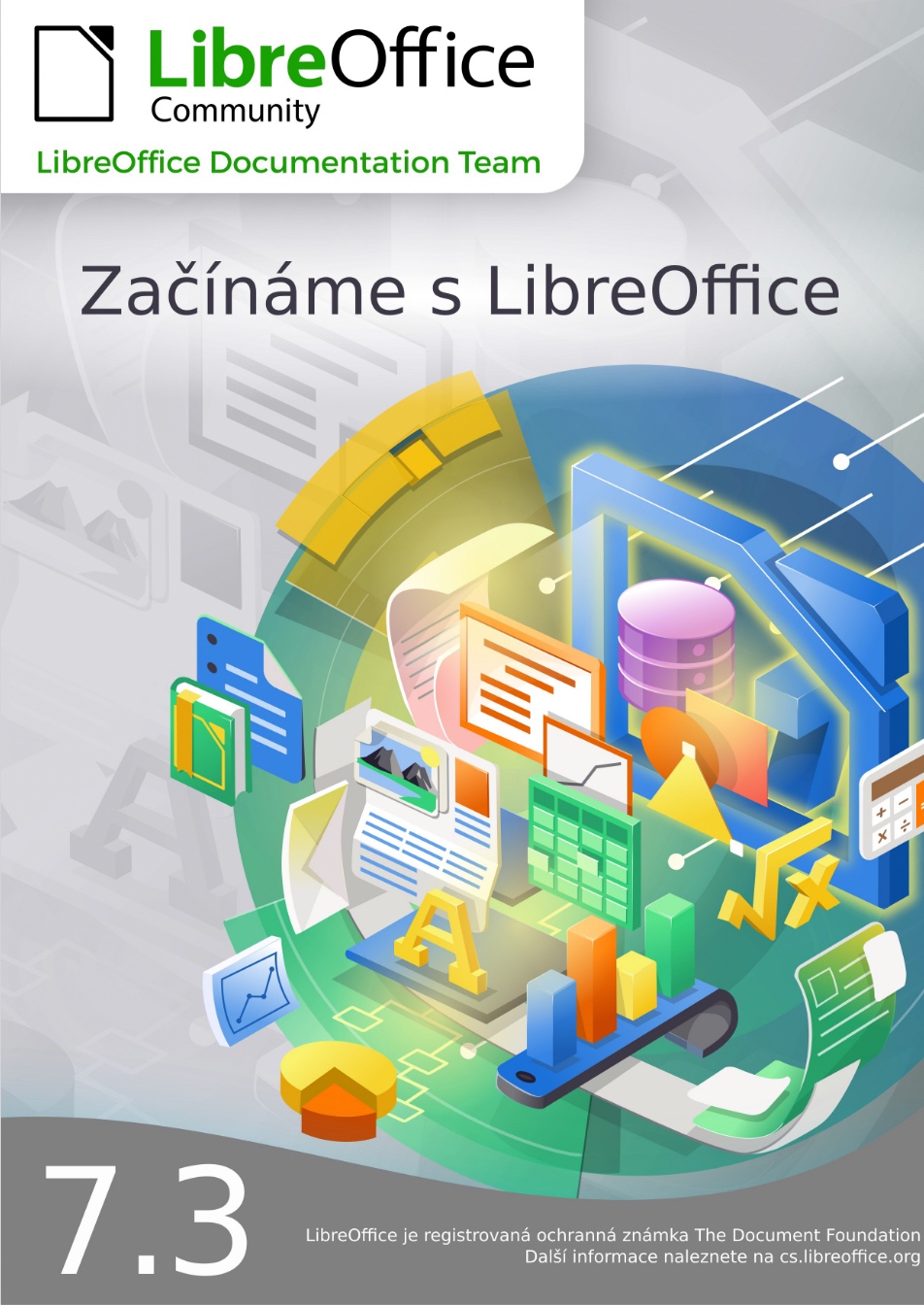
Czech translation of LibreOffice Getting Started Guide 7.3

Zdeněk Crhonek (aka “raal”) from the Czech LibreOffice community writes:

The Czech team has finished its translation of the LibreOffice Getting Started Guide 7.3. As usual it was team work, namely: translations by Petr Kuběj, Zdeněk Crhonek and Ludmila Chládková; localized pictures by Roman Toman; and technical support from Miloš Šrámek. Thanks to all the team for their work! The Czech translation of the guide 7.3 is available for download on this page.

Indeed, many thanks to everyone in the Czech community for their work! Learn more about LibreOffice’s documentation project here.

Annual Report: LibreOffice Quality Assurance in 2021

Quality Assurance (QA) is a cornerstone of the LibreOffice project, thanks to the activity of a large number of volunteers and the feedback of many users who help in reporting bugs and regressions.

(This is part of The Document Foundation’s Annual Report for 2021 – we’ll post the full version here soon.)

In 2021, the QA team triaged thousands of bugs, bisected hundreds of regressions, and answered questions from countless bug reporters. As one of the most visible groups directly responding to end users, the QA team must be nimble and able to adapt to changes. In addition, it must deal with specific requests for help from other teams.

The QA team meets regularly on IRC on the #libreoffice-qa channel, which is the best medium for discussing bugs and regressions. The IRC channel provides an excellent opportunity to remain in close contact with team members, and to tutor new members in the art and skill of LibreOffice QA. This is bridged to the Telegram group.

During 2021, 6,804 bugs were reported by 3,022 users, which means 131 new bugs were reported every week on average.

Top 10 bug reporters

  • Telesto (571)
  • NISZ LibreOffice Team (296)
  • Regina Henschel (126)
  • Mike Kaganski (115)
  • Xisco Faulí (104)
  • Eyal Rozenberg (87)
  • Rafael Lima (66)
  • sdc.blanco (60)
  • Valek Filippov (54)
  • Colin (50)

Bug Hunting, Bibisecting

In July 2021, the QA Team organized an online Bug Hunting Session for LibreOffice 7.2. This provided the opportunity for all users, especially those with technical knowledge, to test pre-release versions and provide their feedback in the IRC channel and Telegram group. They were helped to report and confirm bugs, which led to improved stability in the final release.

Also, during 2021, the QA team performed 652 bibisects of regressions.

Top 10 Bisecters

  • Xisco Faulí (166)
  • Timur (85)
  • Aron Budea (68)
  • raal (66)
  • Buovjaga (48)
  • Telesto (46)
  • NISZ LibreOffice Team (29)
  • Justin L (23)
  • Roman Kuznetsov (23)
  • Kevin Suo (18)

Learn more about the QA project on this page, and give the team a hand!

Like what we do? Support the LibreOffice project and The Document Foundation – get involved and help our volunteers, or consider making a donation. Thank you!

LibreOffice 7.3.3 Community available for download

LibreOffice is now available for download also on SourceForge

Berlin, May 4, 2022 – LibreOffice 7.3.3 Community, the third minor release of the LibreOffice 7.3 family, targeted at technology enthusiasts and power users, is available for download from https://www.libreoffice.org/download/. In addition to the LibreOffice website, starting from tomorrow it will be possible to download LibreOffice from SourceForge: https://sourceforge.net/projects/libreoffice/files/libreoffice/stable/.

Logan Abbott, SourceForge’s President and COO, says: “We’re happy to add to our open source download library an amazing open source office suite such as LibreOffice, which is without a doubt one of the best office suites ever and one which I personally use often. I highly recommend it to anyone that needs a powerful FOSS office suite.”

The LibreOffice 7.3 family offers the highest level of compatibility in the office suite market segment, starting with native support for the OpenDocument Format (ODF) – beating proprietary formats in the areas of security and robustness – to superior support for DOCX, XLSX and PPTX files.

Microsoft files are still based on the proprietary format deprecated by ISO in 2008, which is artificially complex, and not on the ISO approved standard. This lack of respect for the ISO standard format may create issues to LibreOffice, and is a huge obstacle for transparent interoperability.

LibreOffice for enterprise deployments

For enterprise-class deployments, TDF strongly recommends the LibreOffice Enterprise family of applications from ecosystem partners, with long-term support options, professional assistance, custom features and Service Level Agreements: https://www.libreoffice.org/download/libreoffice-in-business/.

LibreOffice Community and the LibreOffice Enterprise family of products are based on the LibreOffice Technology platform, the result of years of development efforts with the objective of providing a state of the art office suite not only for the desktop but also for mobile and the cloud.

Products based on LibreOffice Technology are available for major desktop operating systems (Windows, macOS, Linux and Chrome OS), mobile platforms (Android and iOS) and the cloud. They may have a different name, according to each company brand strategy, but they share the same LibreOffice unique advantages, robustness and flexibility.

Availability of LibreOffice 7.3.3 Community

LibreOffice 7.3.3 Community represents the bleeding edge in term of features for open source office suites. For users whose main objective is personal productivity and therefore prefer a release that has undergone more testing and bug fixing over the new features, The Document Foundation provides LibreOffice 7.2.6 and soon LibreOffice 7.2.7.

LibreOffice 7.3.3 change log pages are available on TDF’s wiki: https://wiki.documentfoundation.org/Releases/7.3.3/RC1 (changed in RC1) and https://wiki.documentfoundation.org/Releases/7.3.3/RC2 (changed in RC2). Over 80 bugs and regressions have been solved.

LibreOffice Technology based products for Android and iOS are listed here: https://www.libreoffice.org/download/android-and-ios/, while for App Stores and ChromeOS are listed here: https://www.libreoffice.org/download/libreoffice-from-microsoft-and-mac-app-stores/

LibreOffice individual users are assisted by a global community of volunteers: https://www.libreoffice.org/get-help/community-support/. On the website and the wiki there are guides, manuals, tutorials and HowTos. Donations help the project to make all of these resources available.

LibreOffice users are invited to join the community at https://ask.libreoffice.org, where they can get and provide user-to-user support. People willing to contribute their time and professional skills to the project can visit the dedicated website at https://whatcanidoforlibreoffice.org.

LibreOffice users, free software advocates and community members can provide financial support to The Document Foundation with a donation via PayPal, credit card or other tools at https://www.libreoffice.org/donate.

LibreOffice 7.3.3 is built with document conversion libraries from the Document Liberation Project: https://www.documentliberation.org.

LibreOffice project and community recap: April 2022

Here’s our summary of updates, events and activities in the LibreOffice project in the last four weeks – click the links to learn more…

  • How do different free and open source software projects do mentorship, and how can we all learn from each other? Daniel Garcia Moreno (EndlessOS Foundation and GNOME), Emily Gonyer (openSUSE), Ilmari Lauhakangas (The Document Foundation), and Marie Nordin (Fedora) discuss this in a panel moderated by Ben Cotton:

Please confirm that you want to play a YouTube video. By accepting, you will be accessing content from YouTube, a service provided by an external third party.

YouTube privacy policy

If you accept this notice, your choice will be saved and the page will refresh.

Keep in touch – follow us on Twitter, Facebook and Mastodon. Like what we do? Support our community with a donation – or join us and help to make LibreOffice even better!