LibreOffice project and community recap: July 2022

Here’s our summary of updates, events and activities in the LibreOffice project in the last four weeks – click the links to learn more…

  • Looking for work? We opened up two new roles at The Document Foundation, the non-profit entity behind LibreOffice. The first is a Web Technology Engineer, and the second for a Quality Assurance Analyst. Join our small and friendly team, and let’s do more great things with LibreOffice 💪

  • Then we caught up with Peter Schofield, who’s helping out in LibreOffice’s documentation community.

  • In July, we had one update to the software: LibreOffice 7.3.5, with over 80 bug and compatibility fixes. Meanwhile, our community continued to add the final touches to LibreOffice 7.4, due in mid-August…

  • Finally in July, we chatted with Juan C. Sanz who lives in northern Spain and also works on guidebooks for LibreOffice. Many thanks to Juan, Peter and Ring for all their work!

Keep in touch – follow us on Twitter, Facebook and Mastodon. Like what we do? Support our community with a donation – or join us and help to make LibreOffice even better!

Community Member Monday: Juan C. Sanz

Today we’re chatting with Juan C. Sanz, who helps out in many LibreOffice projects: documentation, translations, user help and more…

Tell us a bit about yourself!

I live in the city of Logroño, in the autonomous community of La Rioja (famous for its wines), in the north of Spain. Although I like reading a lot, my main passion is computers in general.

Almost all the time I have been working as a helicopter engineer, but due to my passion, while I was working, I studied to get a degree in Computer Science (Programming) and I was working as a programmer for a while without leaving my main job with helicopters.

When did you join the LibreOffice community, and how was the experience?

I like to say that I have been collaborating with LibreOffice since before LibreOffice existed and it is really true, how is that possible?

Well, my history with LibreOffice started, like many of us, in OpenOffice.

When I discovered the existence of OpenOffice I loved both the program and the possibility of getting it for free (then I didn’t know about FLOSS – I thought only about “gratis”). But at the same time, I realized that there was no documentation available in Spanish. While searching, I came across that phrase, which I don’t remember exactly, but it says something like “if you can’t find what you want, collaborate to make it”, so I joined the OpenOffice documentation team at ODFAuthors and there, together with a mini-team (I don’t think there were more than a couple of active collaborators at that time) I started translating the Getting Started Guide into Spanish.

I don’t know if it was by chance or because there was movement, but soon some more contributors joined and we managed to translate and publish the complete guide.

Shortly after finishing the Getting Started Guide, convulsive times came and ended with the fork that gave birth to LibreOffice.

The few of us who were in the Spanish documentation team at that time, decided that, for the time, we would collaborate with both branches and our first work for LibreOffice was to rebrand the OpenOffice guide to adapt it to LibreOffice, that is, we took advantage of all the previous work in OpenOffice for the first LibreOffice guide in Spanish. That’s why I say that I worked (we worked) on LibreOffice before it existed.

Since those times I haven’t stopped collaborating in the documentation team, but, like almost everyone, I have collaborated in other places, like helping to translate the user interface, the help for users in Ask or Telegram, the wiki, I have even submitted a patch! (Although my skills as a programmer are already quite outdated.)

And here I am, collaborating, hopefully for a long time!

Anything else you plan to do in the future? What does LibreOffice really need?

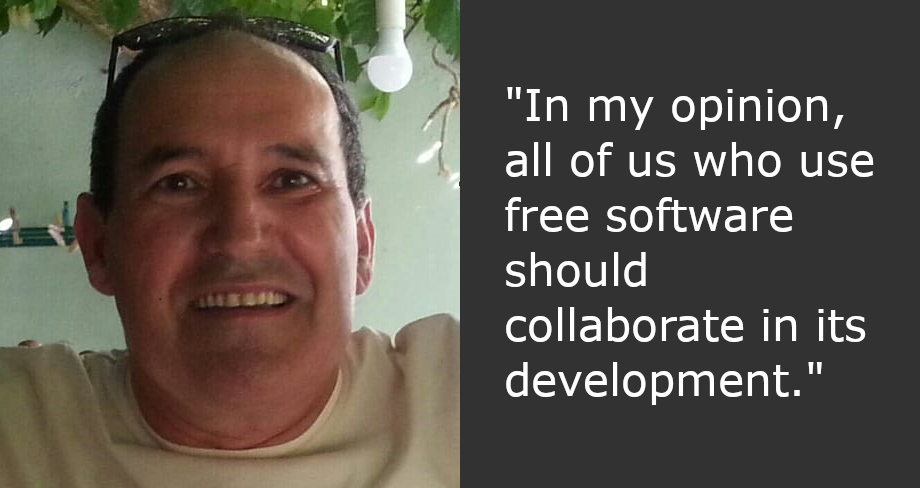
In all this time that I have been collaborating with LibreOffice, I have missed more collaboration with the project. Although there are many contributors in all fields, I think they are not enough. In my opinion, all of us who use free software should collaborate in its development by contributing our skills (or also economically), but personal collaboration seems to me essential for the improvement and dissemination of the project.

Many thanks to Juan for all his contributions! All LibreOffice users are welcome to get involved, learn new skills – and make LibreOffice even better for millions of users!

Join the LibreOffice Team as a Quality Assurance Analyst (m/f/d), 40h per week, remote

The Document Foundation (TDF) is the non-profit entity behind the world’s leading open source office suite, LibreOffice. We are truly passionate about free software, the open source culture and about bringing new companies and people with fresh ideas into our community, especially in the second decade of our project.

Quality Assurance Analyst

To improve the quality assurance process of LibreOffice, the office productivity suite for over 200 million users around the globe 🌎, we’re searching for a Quality Assurance Analyst (m/f/d) to start work as soon as possible.

The role, which is scheduled for 40 hours per week, includes among other items:

  • Help community outreach to encourage more people to join the QA team
  • Help on-boarding new QA contributors
  • Foster communication between QA and other teams, like engineering and documentation
  • Triage unconfirmed bugs that are not handled in a reasonable time
  • Categorize confirmed bugs
  • Retest old reports
  • Analyze regression bugs identified longer than a month
  • Based on bug categorization support the Board of Directors with Bugzilla metrics about possible impact of development project proposals
  • Support the Board of Directors in proper understanding of LibreOffice features that may be worth further developing by providing relevant data from Bugzilla
  • Help with informing decision-making towards improving the ODF standard and file-format interoperability in general

The role requires the following:

  • Good understanding of office suites and LibreOffice in particular from a user’s viewpoint
  • Understanding of many of the features within each component and ability to learn other features quickly
  • Understanding of Bugzilla or another bugtracking system
  • An understanding of quality assurance procedures
  • Essential understanding of Git

Bonus points if you have:

  • A firm understanding of bibisect process used in LibreOffice QA
  • Python coding and/or test automation experience
  • UX experience
  • C++ coding experience

Speaking and writing English fluently is a mandatory requirement. Another language like German, Spanish or Chinese is a bonus.

A previously established relationship within the quality assurance team as well as with other teams including development and marketing, and with the users is a plus, but it is not mandatory at the start and can be achieved during the work itself.

As always, TDF will give some preference to individuals who have previously shown a commitment to TDF, including but not limited to members of TDF. Not being a member does not exclude any applicants from consideration.

Here’s how a typical day in your new role might look like:

You start your day by looking in unconfirmed bugs. There, you read the bug description and look at the provided samples, and try to find out if the bug is reproducible or not. You try to categorize the bug and add useful information and add relevant people to the page.

You try to determine if the bug is a regression or not, and if it is, bibisect the bug and add the one who has introduced the regression.

You should be able to communicate effectively with the current QA team and also work with the new contributors and help them grow their skills where needed and encourage them to become active in different areas of the QA process. Especially for new contributors, you will introduce them not only to our community culture, but also to our variety of tools and methods including Bugzilla, bibisect and others.

Join us!

TDF welcomes applications from all suitably qualified persons regardless of their race, sex, disability, religion/belief, sexual orientation or age.

All jobs at The Document Foundation are remote jobs 🌟, where you can work from your home office or a co-working space. The work time ⌚ during the day is flexible, apart from very few fixed meetings. The role is offered as full-time, 40 hours per week. For technical reasons we are currently accepting applications only from countries where remote.com offers active payroll services.

Are you interested? Get in touch! We aim to schedule the first interview within two weeks of your application. You can also approach us anytime for an informal chat to learn about the role or in case of questions.

TDF welcomes applications from all suitably qualified persons regardless of their race, gender, disability, religion/belief, sexual orientation or age. Don’t be afraid to be different, and stay true to yourself. We like you that way!

We are looking forward to receiving your application, including information about you, when you are available for the job, and of course your financial expectations. Pointing to public repositories with your code is very helpful. Please send us an e-mail to qa.application@documentfoundation.org no later than September 1, 2022. If you haven’t received feedback by September 30, 2022, your application could not be considered.

Note: We do not accept agency resumes. Please do not forward resumes to any recruiting alias or employee.

LibreOffice 7.3.5 Community available for download

Berlin, July 21, 2022 – LibreOffice 7.3.5 Community, the fifth minor release of the LibreOffice 7.3 family, targeted at personal productivity users, is available for download from https://www.libreoffice.org/download. Users of previous versions of LibreOffice should update immediately, as this is now the release suggested for deployment in production environments.

The LibreOffice 7.3 family offers the highest level of compatibility in the office suite market segment, starting with native support for the OpenDocument Format (ODF) – beating proprietary formats in the areas of security and robustness – to superior support for DOCX, XLSX and PPTX files.

Microsoft files are still based on the proprietary format deprecated by ISO in 2008, which is artificially complex, and not on the ISO approved standard. This lack of respect for the ISO standard format may create issues to LibreOffice, and is a huge obstacle for transparent interoperability.

LibreOffice for enterprise deployments

For enterprise-class deployments, TDF strongly recommends the LibreOffice Enterprise family of applications from ecosystem partners, with long-term support options, professional assistance, custom features and Service Level Agreements: https://www.libreoffice.org/download/libreoffice-in-business

LibreOffice Community and the LibreOffice Enterprise family of products are based on the LibreOffice Technology platform, the result of years of development efforts with the objective of providing a state of the art office suite not only for the desktop but also for mobile and the cloud.

Products based on LibreOffice Technology are available for major desktop operating systems (Windows, macOS, Linux and Chrome OS), mobile platforms (Android and iOS) and the cloud. They may have a different name, according to each company brand strategy, but they share the same LibreOffice unique advantages, robustness and flexibility.

Availability of LibreOffice 7.3.5 Community

LibreOffice 7.3.5 Community is the best office suite for personal productivity, and is immediately available from https://www.libreoffice.org/download for Windows, macOS (for Apple and Intel processors) and Linux.

LibreOffice 7.3.5 change log pages are available on TDF’s wiki: https://wiki.documentfoundation.org/Releases/7.3.5/RC1 (changed in RC1) and https://wiki.documentfoundation.org/Releases/7.3.5/RC2 (changed in RC2). Over 80 bugs and regressions have been solved.

LibreOffice Technology based products for Android and iOS are listed here: https://www.libreoffice.org/download/android-and-ios, while for App Stores and ChromeOS are listed here: https://www.libreoffice.org/download/libreoffice-from-microsoft-and-mac-app-stores

LibreOffice individual users are assisted by a global community of volunteers: https://www.libreoffice.org/get-help/community-support. On the website and the wiki there are guides, manuals, tutorials and HowTos. Donations help the project to make all of these resources available.

LibreOffice users are invited to join the community at https://ask.libreoffice.org, where they can get and provide user-to-user support. People willing to contribute their time and professional skills to the project can visit the dedicated website at https://whatcanidoforlibreoffice.org.

LibreOffice users, free software advocates and community members can provide financial support to The Document Foundation with a donation via PayPal, credit card or other tools at https://www.libreoffice.org/donate.

LibreOffice 7.3.5 is built with document conversion libraries from the Document Liberation Project: https://www.documentliberation.org.

Community Member Monday: Peter Schofield

Today we’re talking to Peter Schofield from LibreOffice’s documentation community

Tell us a bit about yourself!

I am Yorkshire bred and born, which was a very long time ago. Left home at 16 to join the Royal Air Force. Served for almost 19 years as an Aircraft Technician, which is where my engineering knowledge started.

Became interested in Technical Writing in the early 80s and became qualified as a Technical Writer in 1985. This has enabled me to work in aviation, defence, mining, plant machinery, construction, electronics, telecommunications, computer peripherals and software. This did involve working in several countries, which has given me a very broad outlook on life.

Now official retired from paid work and have settled down in Poland with my lovely Polish wife.

How did you get involved in LibreOffice?

First came across an early version of LibreOffice in the 90s when I started using Star Office, which then became OpenOffice. I have always been interested in open software being freely available to users to help them save money, not having having to pay the big corporations.

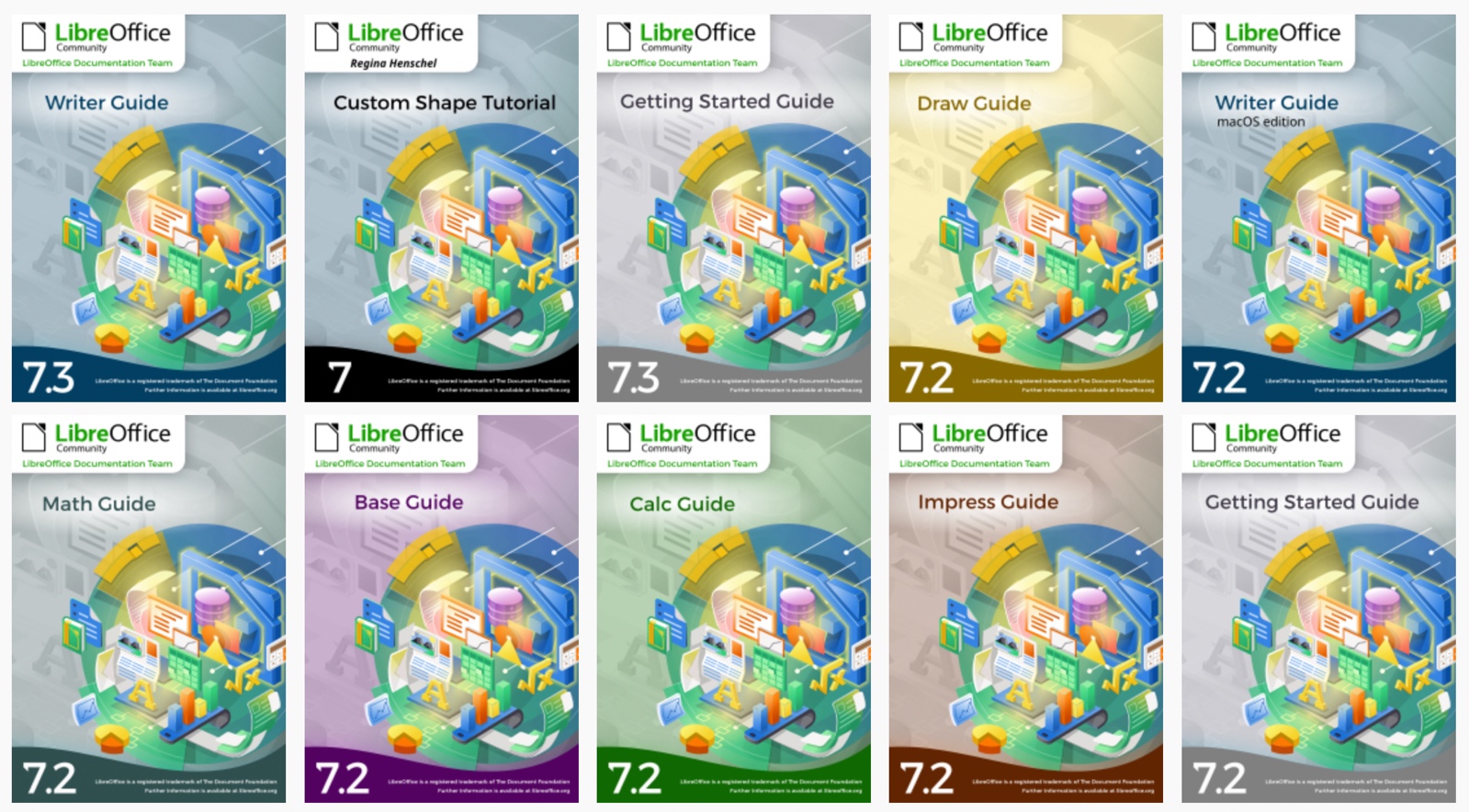
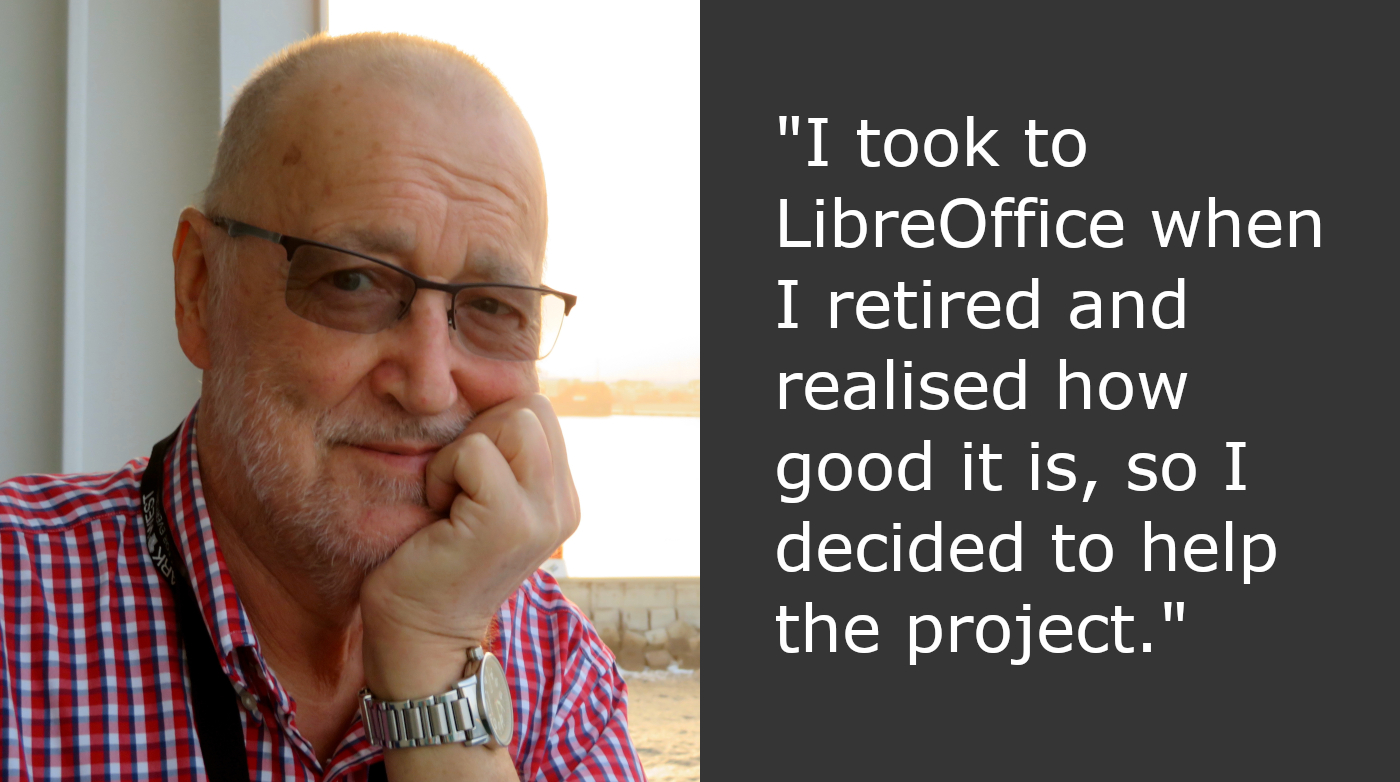
I took to LibreOffice when I retired and realised how good it is, so I decided to help the project. This gave me the chance to create user guides that LibreOffice users could easily understand (I hope). I am now in charge of the Impress and Draw user guides and starting to upgrade both of them to LibreOffice 7.4.

What else are you planning to work on?

My plans for the future is continue being a willing volunteer on the LibreOffice Documentation Team with the hope that I can improve usability of the user guides for the majority of users. I do believe that some parts of the LibreOffice user guides do need improvement because of the poor language used. With this in mind, I am now updating the template to help improve the quality of the user guides. This means that there are hints and ideas in the template on how to improve ones writing.

Eventually I would like to see all the user guides using an easy to understand English. This means it would make the text easier to translate into the languages LibreOffice is available in, and make the English easier to understand for users where English is not their first language. This idea is already in practice with several companies throughout the world. These companies use one of the versions of Simplified English that are available.

Many thanks to Peter for all his help! Everyone is welcome to join the Documentation Team and build up skills for a potential career in technical writing…