
The Document Foundation in 2023 – Annual Report

TDF Annual Report 2023 banner

In 2023 we had elections for the foundation’s Board of Directors, along with regular Advisory Board calls, and support for other projects and activities

(This is part of The Document Foundation’s Annual Report for 2023 – we’ll post the full version here soon. And note that this section is only about TDF’s activities – we’ll post about all the changes and improvements to LibreOffice soon too!)

Election of new Board of Directors

The “BoD” is the Foundation’s Board of Directors, the main administration of the Foundation’s projects and teams. Directors are directly elected by community members every two years, and serve for a two-year term. The Board of Directors consists of seven (7) members and three (3) deputies. The Board of Directors may launch any other teams or committees ad hoc if necessary.

TDF’s Membership Committee announced the election in October, opening the nomination phase for candidates. The final list of candidates was published on December 11, and this was immediately followed by three live “town-hall” Q+A meetings with the candidates, so that community members could ask questions and discuss the responses. We made video recordings of these meetings, and posted them on our video channel, for those who couldn’t take part live.

On December 29, the Membership Committee announced the preliminary results, along with a challenging phase for members to check their votes. On January 11, 2024, we announced the final results, with the following confirmed as full Board Members: Sophie Gautier, László Németh, Simon Phipps, Italo Vignoli, Bjoern Michaelsen, Eliane Domingos and Eike Rathke. Deputy members: Osvaldo Gervasi, Paolo Vecchi and Mike Saunders.
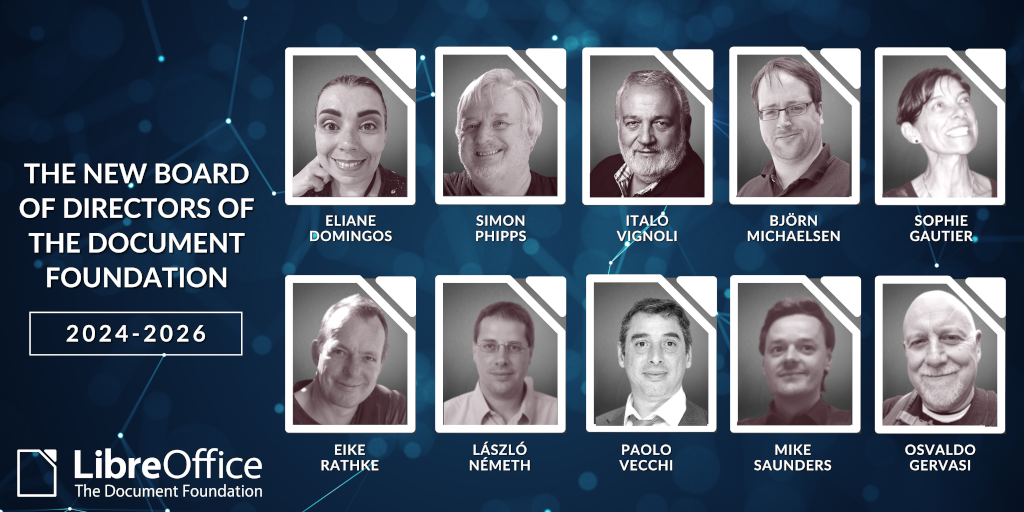
TDF Board of Directors

TDF would like to say thank you to all past and current members of the Board for their service to the community, and to all candidates for running.

Advisory Board members and meetings

The Document Foundation relies on its Advisory Board Members in order to receive advice and support. The Advisory Board’s primary function is to represent The Document Foundation’s supporters and to provide the Board of Directors with advice, guidance and proposals. Current members are Adfinis SyGroup, allotropia software GmbH, Collabora, GNOME, CAGE Technologies Inc, City of Munich (Landeshaupstadt München), Open Source Business Alliance (OSBA), Software in the Public Interest (SPI), KDE e.V., and the Free Software Foundation Europe (FSFE).

Throughout the year, TDF had regular calls with representatives of the Advisory Board. Staff and Board members at TDF provided updates on the foundation, LibreOffice software and community, and described plans and activities for the future. Advisory Board members were invited to provide valuable feedback on TDF’s work, and various ideas and proposals were discussed during the calls. TDF would like to express its thanks to all of the members for their help and support.

New team members

In January, we welcomed Juan José González, TDF’s new Web Technology Engineer to the team. “JJ” (as he’s informally known) dedicates his time to support, fix and improve the experience of TDF’s websites and services. He started with the extensions site, the place where users can get templates and extensions for LibreOffice. He began by replying to reported issues from users and improving the overall experience.
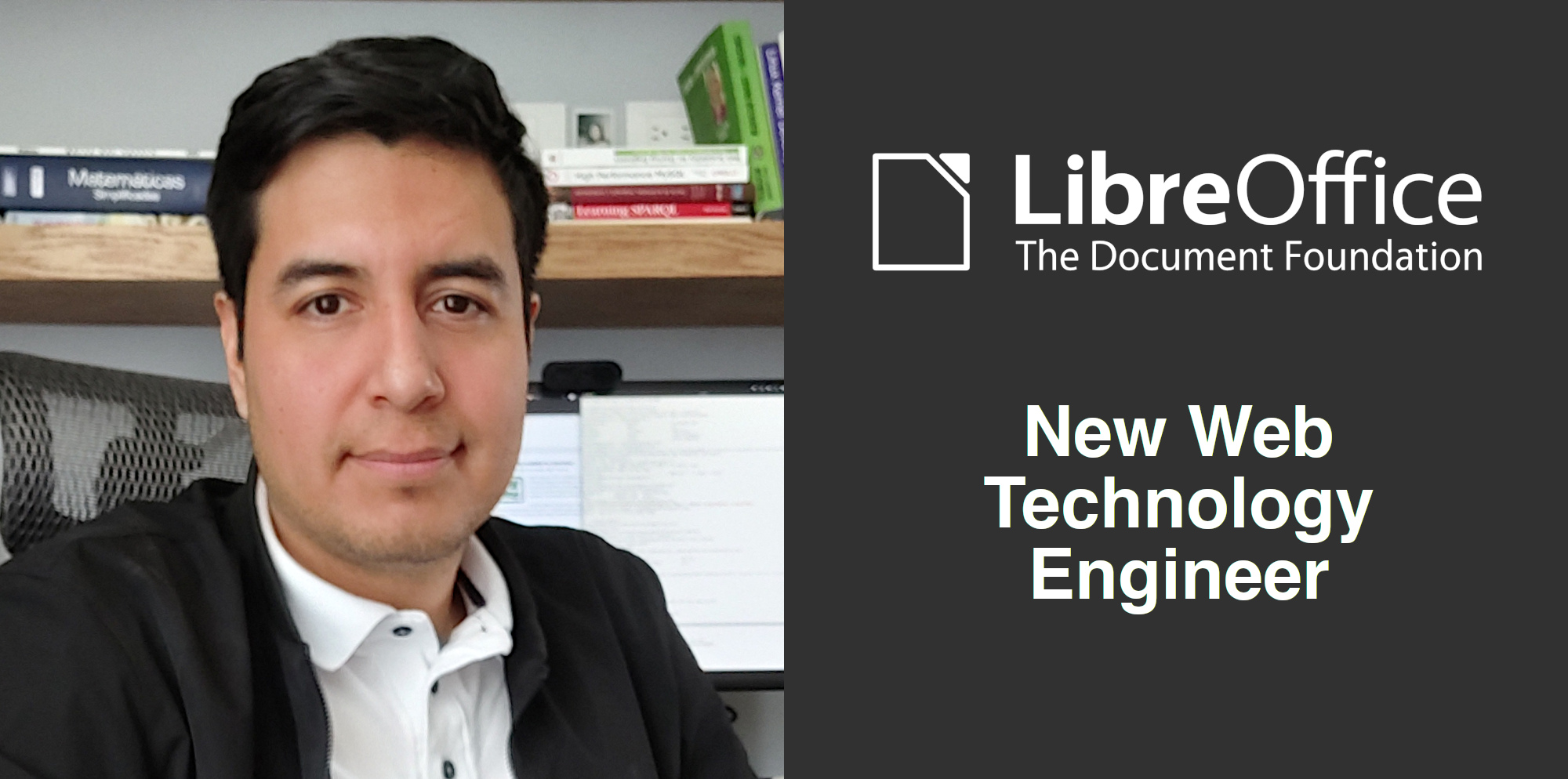
Juan José González

Then, in July, our team was expanded by Michael Weghorn who joined as a LibreOffice Developer, focusing initially on accessibility – ie improving the experience for users with limited vision or motor impairments. His initial focus was fixing problems encountered in the user interface when using LibreOffice with a screen reader.
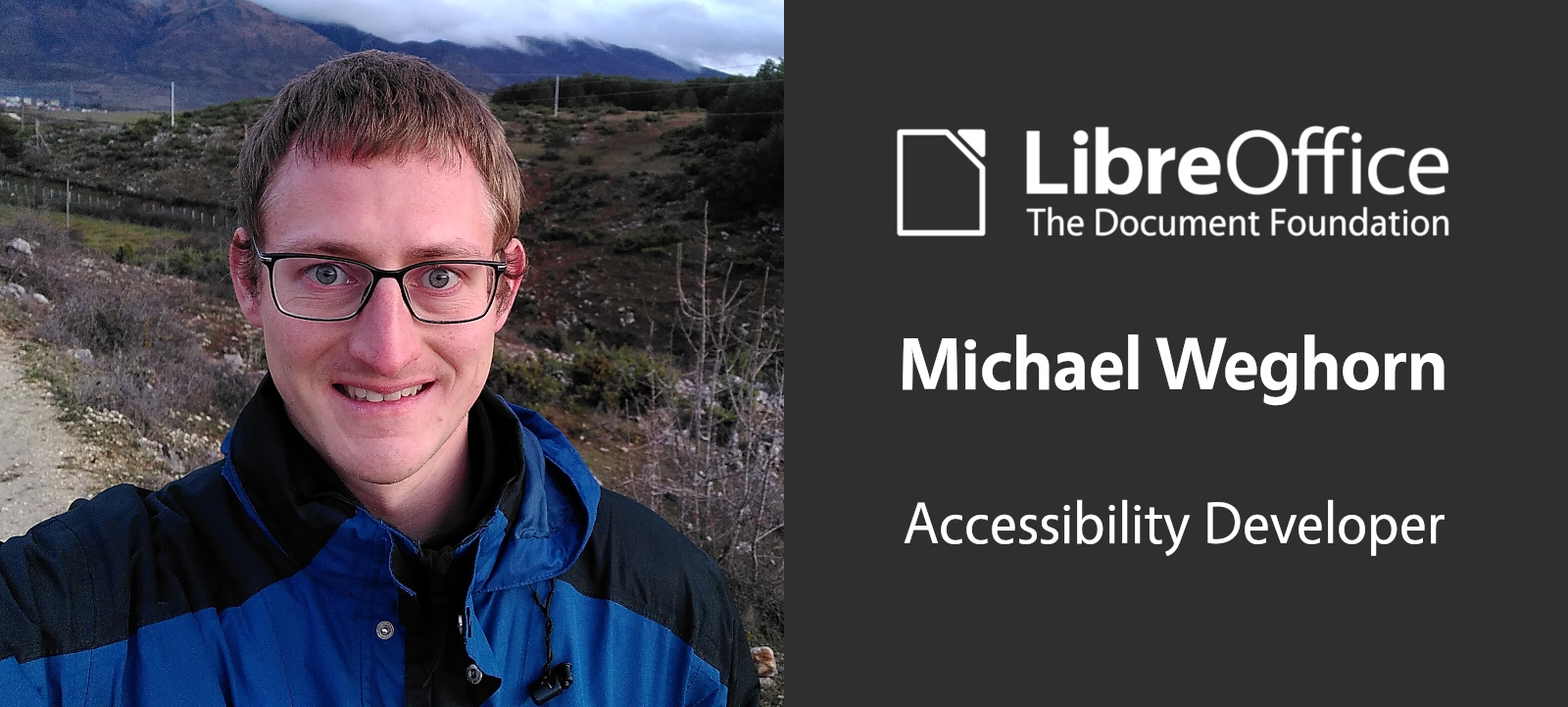
Michael Weghorn

Highlights of activities

Throughout the year, TDF supported – and provided information about – various campaigns and events, via this blog and our social media channels. For instance, in March we celebrated International Women’s Day, looking forward to a world that’s diverse, equitable, and inclusive. One of our goals in TDF is to encourage more women to join our community (such as “LibreLadies”).

In April, we reported about TDF’s policy-related activities in the European Union. TDF has been involved in several discussions about policies which can affect or are affecting the adoption of free and open source software (FOSS), or the freedom of users’ choice for hardware, operating systems and software. A freedom of choice which should be protected by laws, especially when involving public administrations (with a strong focus on schools and universities, where future citizens grow up).

In May, we announced projects selected for LibreOffice in the Google Summer of Code 2023, while in June we collaborated with Thunderbird, an open source email client (which is very often used alongside LibreOffice) to see how we can make our applications work better together.
LibreOffice and Thunderbird logos

Then, in July, our Membership Committee announced a new membership management system called Proteus. In August we posted about Weblate (translation tool) improvements funded by TDF, and in November we supported freedom and the sustainable use of electronic products in the European Union.

Finally, throughout the year we celebrated our community of translators, who provide LibreOffice in over 110 different languages (with more hopefully becoming available in the future), more than any other software. This helps us to fulfil one of the most important objectives of The Document Foundation: “to support the preservation of mother tongues by encouraging all people to translate, document, support, and promote our office productivity tools in their native language”. Today, there are over four billion people in the world who can use LibreOffice in their native languages. We are very thankful to our hard-working community members who make all of this possible.

Like what we do? Support the LibreOffice project and The Document Foundation – get involved and help our volunteers, or consider making a donation. Thank you!

LibreOffice Conference Call for Papers

Berlin, May 4, 2015 – LibreOffice Conference will be held in Aarhus, Denmark, on September 23-25, 2015, at the Urban Media Space and is hosted by the Aarhus Municipality. The Document Foundation invites members and volunteers to submit proposals for papers.

Proposals should be filed by July 15, 2015, in order to guarantee that they will be considered for inclusion in the conference program.

a) Development, APIs, Extensions, Future Technology
b) Quality Assurance
c) Localization, Documentation and Native Language Projects
d) Appealing Libreoffice: Ease of Use, Design and Accessibility
e) Enterprise Deployments and Migrations, Certifications and Best Practices
f) Open Document Format, Document Liberation and Interoperability
g) Building a successful business around LibreOffice.

The Call for Paper page is available at the following address: http://conference.libreoffice.org/2015/call-for-papers/.

Proposals, including a short bio of the speaker (max 500 characters) as well as a short abstract of the contents (max 1,000 characters), should be sent to the program committee address: conference@libreoffice.org.

Presentations, case studies, workshops and technical talks will discuss a subject in depth, and will last 60 minutes (including Q&A). Lightning talks will cover a specific topic and will last 20 minutes (including Q&A). Sessions will be streamed live and recorded for download.

Whether you are a seasoned presenter, or have never stood up in public before, if you have something interesting to share about LibreOffice we definitely want to hear from you!

LibreOffice 4.3: today, you can’t own a better office suite

  • Better OOXML interoperability, and support of legacy Mac file formats

  • Better comment management, and highly intuitive spreadsheet handling

  • 3D models in Impress, and support for “monster” paragraphs

Berlin, July 30, 2014 – The Document Foundation announces LibreOffice 4.3, the 8th major release of the free office suite since the birth of the project in September 2010. The application includes the combined effort of thousands of volunteers and hundreds of developers, and has reached a point of maturity that makes it suitable for every kind of deployment, if backed by value added services by the growing LibreOffice ecosystem.

LibreOffice 4.3 offers a large number of improvements and new features, including:

  • Document interoperability: support of OOXML Strict, OOXML graphics improvements (DrawingML, theme fonts, preservation of drawing styles and attributes), embedding OOXML files inside another OOXML file, support of 30 new Excel formulas, support of MS Works spreadsheets and databases, and Mac legacy file formats such as ClarisWorks, ClarisResolve, MacWorks, SuperPaint, and more.
  • Comment management: comments can now be printed in the document margin, formatted in a better way, and imported and exported – including nested comments – in ODF, DOC, OOXML and RTF documents, for improved productivity and better collaboration.

  • Intuitive spreadsheet handling: Calc now allows the performing of several tasks more intuitively, thanks to the smarter highlighting of formulas in cells, the display of the number of selected rows and columns in the status bar, the ability to start editing a cell with the content of the cell above it, and being able to fully select text conversion models by the user.

  • 3D models in Impress: support of animated 3D models in the new open glTF format, plus initial support for Collada and kmz files that are found in Google Warehouse, in order to add a fresh new look and animations to keynotes (support of this feature is currently on Windows and Linux versions only).

LibreOffice 4.3 also support “monster” paragraphs exceeding 65,000 characters (an example of an 11 years old bug solved thanks to the modernization of the OOo source code, which is an exclusive function of LibreOffice). In addition, the accessibility technology on Windows has become a standard feature, thanks to the improvements based on IBM’s IAccessible2 framework.

The entire list of new features and improvements of LibreOffice 4.3 is here: https://wiki.documentfoundation.org/ReleaseNotes/4.3.

“The LibreOffice project shows that a large free software community can live and thrive without the patronage of a software vendor, to liberate PC desktops”, says Thorsten Behrens, Chairman of The Document Foundation. “Today, you can’t own a better office suite than LibreOffice, in term of features, interoperability, support for document standards and independence. After many years, LibreOffice brings the control of the PC desktop back into the hands of the users”.

According to the Coverity Scan service, joined by LibreOffice in October 2012, the quality of LibreOffice source code has improved dramatically during the last two years, with a reduction of the defect density per 1,000 lines of code from an above the average 1.11 to an industry leading 0.08 (for more information: http://softwareintegrity.coverity.com/register-for-libreoffice-scan-report.html).

People interested in technical details about the release can access the change logs here: https://wiki.documentfoundation.org/Releases/4.3.0/RC1 (fixed in RC1), here: https://wiki.documentfoundation.org/Releases/4.3.0/RC2 (fixed in RC2), here: https://wiki.documentfoundation.org/Releases/4.3.0/RC3 (fixed in RC3) and here: https://wiki.documentfoundation.org/Releases/4.3.0/RC4 (fixed in RC4).

Download LibreOffice

LibreOffice 4.3 and LibreOffice 4.2.6 – which will be released on Friday – are available for download from the following link: http://www.libreoffice.org/download/. Extensions and templates to supplement the installation of the software and add specific features can be found here: http://extensions.libreoffice.org/.

LibreOffice users, free software advocates and community members can support The Document Foundation with a donation at http://donate.libreoffice.org. Money collected will be used to enhance the project both at global and local level.

About The Document Foundation (TDF)

The Document Foundation is an independent, self-governing and meritocratic organization, based on Free Software ethos and incorporated in Germany as a not for profit entity. TDF is focused on the development of LibreOffice – the best free office suite ever – chosen by the global community as the legitimate heir of OOo, and as such adopted by a growing number of public administrations, enterprises and SMBs for desktop productivity.

TDF is accessible to individuals and organizations who agree with its core values and contribute to its activities. At the end of June 2014, the foundation has just over 200 members and well over 3,000 volunteer contributors worldwide.

Media Contacts: https://www.documentfoundation.org/contact/.

LibreOffice Conference 2014 in Bern, Switzerland, from September 2 to September 5, 2014

Berlin, February 13, 2014 – The Document Foundation (TDF) announces that the LibreOffice Conference 2014 will be jointly organized by the Swiss Open Systems User Group (CH Open, http://www.ch-open.ch) and the Research Center for Digital Sustainability of the Institute of Information Systems at the University of Bern (http://www.iwi.unibe.ch/content/index_eng.html), and hosted by the University of Bern, from September 3 to September 5, 2014.

In addition, on September 2 the LibreOffice community will gather for several face-to-face meetings: Board of Directors, Engineering Steering Committee, and Certification Committee. During the conference week, TDF will also organize the first certification training session for migration and training candidates.

Bern is the federal city of Switzerland and the seat of the parliament, government and administration of the Swiss Confederation, the Canton of Bern and the City of Bern. The old city is a UNESCO world heritage site since 1982.

“Holding the LibreOffice Conference in the city of Bern will definitely improve the awareness of Open Source software in Switzerland, and hopefully trigger the migration process in public administrations which has already started in France, Germany and Italy”, say Nicholas Christener and Matthias Stürmer, leaders of the organization committee.

Support The Document Foundation

LibreOffice users, free software advocates and community members can support The Document Foundation with a donation at http://donate.libreoffice.org. Money collected will be used to expand the infrastructure, and support marketing activities to increase the awareness of the project, both at global and local level.

The Document Foundation announces LibreOffice 4.0.6

Berlin, October 24, 2013 – The Document Foundation (TDF) announces LibreOffice 4.0.6, for Windows, OS X and Linux, the sixth and probably last minor release of the LibreOffice 4.0 family, targeted to corporate deployments – when backed by professional support – and conservative users.

LibreOffice 4.0.6 solves almost 70 bugs and regressions over the previous release, thanks to the work of an increasing number of QA volunteers.

LibreOffice 4.0.6 is available for immediate download from the following link: http://www.libreoffice.org/download/. Change logs are available at the following links: https://wiki.documentfoundation.org/Releases/4.0.6/RC1 (fixed in 4.0.6.1) and https://wiki.documentfoundation.org/Releases/4.0.6/RC2 (fixed in 4.0.6.2).

LibreOffice 4.0.6 is not meant to be adopted by users of the more advanced LibreOffice 4.1.x family, which offers additional features. LibreOffice 4.1.3 will be announced soon.

The Document Foundation announces LibreOffice 4.1.1

The Spanish region of Valencia migrates to LibreOffice 120,000 PCs

Berlin, August 29, 2013 – The Document Foundation (TDF) announces LibreOffice 4.1.1, for Windows, Mac OS X and Linux. This is the first minor release of the LibreOffice 4.1 family, which features a large number of improved interoperability features with proprietary and legacy file formats.

The new release is a step forward in the process of improving the overall quality and stability of LibreOffice 4.1. For enterprise adoptions, though, The Document Foundation suggests LibreOffice 4.0.5, backed by certified professionals.

LibreOffice 4.1.1 arrives a few days after the announcement of the Spanish autonomous region of Valencia’s migration to LibreOffice on 120,000 PCs, which will save the government some 1.5 million Euro per year on proprietary software licenses.

The LibreOffice ecosystem continues to grow at a steady pace, with an average of over 100 active developers per month since February 2013. These figures tops the cumulative number of over 700 new developers attracted by the project since the announcement on September 28, 2010.

LibreOffice 4.1.1 is available for immediate download from the following link: http://www.libreoffice.org/download/. Change logs are available at the following links: https://wiki.documentfoundation.org/Releases/4.1.1/RC1 (fixed in 4.1.1.1) and https://wiki.documentfoundation.org/Releases/4.1.1/RC2 (fixed in 4.1.1.2).

About The Document Foundation (TDF)

The Document Foundation is an open, independent, self-governing, meritocratic organization, which builds on ten years of dedicated work by the OpenOffice.org Community. TDF was created in the belief that the culture born of an independent foundation brings out the best in corporate and volunteer contributors, and will deliver the best free office suite ever. TDF is open to any individual who agrees with its core values and contributes to its activities, and welcomes corporate participation, e.g. by sponsoring individuals to work as equals alongside other contributors in the community. As of June 30, 2013, TDF has 159 members and over 3.000 volunteers and contributors worldwide.

Media Contacts

Florian Effenberger (based near Munich, Germany, UTC+1)
Phone: +49 8341 99660880 – Mobile: +49 151 14424108 – E-mail: floeff@documentfoundation.org
Charles H. Schulz (based in Paris, France, UTC+1)
Mobile: +33 6 98655424 – E-mail: charles.schulz@documentfoundation.org
Eliane Domingos de Sousa (based in Rio de Janeiro, Brazil, UTC-3)
E-mail: elianedomingos@documentfoundation.org – Skype: elianedomingos
Italo Vignoli (based in Milan, Italy, UTC+1)
Mobile: +39 348 5653829 – E-mail: italo.vignoli@documentfoundation.org – Skype: italovignoli – GTalk: italo.vignoli@gmail.com