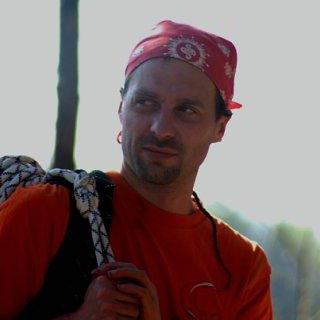
LibreOffice contributor interview: Alex Arnaud

The LibreOffice community tries to make the software as accessible as possible – in other words, usable for people with special needs or requirements. Alex Arnaud is working to make the suite more accessible for users with visual impairments, and discusses his experiences and the challenges ahead in our latest interview…
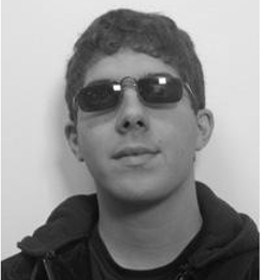
LibreOffice contributor Alex ArnaudWhere are you from, and if you’re active on IRC, what’s your nickname?

I am French, and my IRC nickname is “alexarnaud”.


Do you work for a LibreOffice-related company or just work on it in your spare time?

Alongside the Hypra team, I am based in Paris. I am visually impaired and I use my computer with a screen magnifier and a screen reader. I use, on a daily-basis, the Universal Accessible OS (UAS) based on Debian GNU/Linux both for my professional and personal needs. I used GNOME before (and its magnifier), but given the important efforts that Hypra has poured into this project and the constant improvement of the, I have decided to switch about a year ago.

I’ve been working at Hypra since September 2015 as a project manager, leading the development of the visual-assistance stack (Compiz). I soon intend to join the company as a shareholder as I feel now totally involved in the startup’s ambition: making accessibility a key competitive advantage for Linux, and ultimately expanding the benefits of free software to the general public, beginning with visually impaired people. LibreOffice being one of the cornerstones of free software, I am contributing to the LibreOffice community inside the quality assurance (QA) team, mostly on my working time.


How did you get involved with LibreOffice?

When joining Hypra, my blind friends and colleagues Jean-Philippe and Raphael kept telling me: “Since version 4.3, LibreOffice is regressing on accessibility for blind people”. So far so good – we provide version 4.2 for our customers because it is actually the latest version usable for blind and visually impaired people. But we deem such an evolution is not sustainable on the long-run.

That is why we have decided to get involved, beginning with an accessibility audit on the user side. I’ve looked into all the LibreOffice bugs related to GNU/Linux and accessibility, and checked their validity and updated them as a consequence.

After that I started to become an accessibility bug hunter for the LibreOffice QA team and I have reported lots of bugs related to Writer, Calc and Impress. I see myself as a kind of “whistle-blower” about accessibility inside the community. Most of the sighted-users do not know that software has to be accessible for all people, so my job is raising awareness and hence trying to be a driver of change.


What was your initial experience of contributing to LibreOffice like?

My initial experience with LibreOffice was in 2011. I reported bugs about the accessibility of LibreOffice for Windows – I sent them directly in a mailing list. In 2011, on Windows, it was completely impossible to use LibreOffice with a screen magnifier so I chose to use IBM Lotus Symphony, which was usable for a low-vision person.


What areas of the code do you normally work on? Anything else you want to tackle?

I am a user of the Orca screen reader (the screen reader being also useful for large array of people from the elderly to the visually impaired), so I can easily check if something is accessible for everyone. I focus on the user interface and the communication of LibreOffice with assistive technologies through the AT-SPI2 protocol.

I’m only working on the user side because I don’t know how to compile and how to debug LibreOffice – I just know QA-related things like how to check which version introduces a regression, for example. Testing and reporting bugs is huge work that requires attention and patience. I spent most part of my time tracking features and verifying whether they are usable for disabled people.


What is your vision for the future, or what would you most like to see improved in LibreOffice?

Free software entails a huge ethical and philosophical promise. It drives many expectations and hopes for average users in terms of social inclusion and privacy. It also provides enormous opportunities to reshape the relationships people have with technologies, focusing more on training and support, rather than on the cost of technologies themselves. This is a driver for social change. But to cope with these expectations, I believe we have to make sure that LibreOffice, being one of the cornerstones of free software, enables social inclusion.

Why should we keep adding features if we haven’t them usable for all? Can we accept it if a mainstream project such as LibreOffice keeps excluding people? As a matter of fact, I’ve noticed that there are accessibility bugs, originally coming from the OpenOffice.org code, that were reported more than 5 fives years ago… We can’t let the status quo prevail!


What do you do when you’re not working on LibreOffice?

I spend most of my spare time reading books and listening to radio podcasts to discover more in depth about how the world works. I’m fascinated by Noam Chomsky’s point of view about democracy and information. I find his famous book “Manufacturing Consent – The Political Economy of the Mass Media” extremely clarifying about the role of the media industry in a democratic country.

I also appreciate spending time with other people, with my family and with my friends.


What was the very first program you wrote?

If my memory serves me well, it was a very little social network.


Which is your preferred text editor? And why?

I’ve been using Emacs as my primary text editor since the day I discovered it. It’s really a pleasure for me to work with it because it help me to overcome my vision troubles.

In fact, I use a screen magnifier program that follows the cursor position. In some programs like “man”, “less” and “more” I can’t move the cursor inside the text – and that forces me to use the mouse, which makes my work more difficult.

With Emacs I can read manual pages inside a buffer, and I can use a command-line and move inside it – it is so convenient for me!


Why would you say there are few bug reports related to accessibility on GNU/Linux?

I would forward you to an interesting message posted years ago by Samuel Thibault (main contributor of the Debian accessibility team). For a blind person, if an application is not accessible enough it is completely impossible to report a bug.

Regular users that have disabilities spend more time than people without them, just to do things in their life. Information technology is a bridge between inaccessible hard things (newspaper, administrative things, TV programs, etc) and the accessible digital world.

It is really indispensable for blind people – for example – to be efficient in their lives when finding information related to their city, communicating with people by e-mail (letters are inaccessible), finding their path with GPS, producing and reading documents, finding a job of course – and so much more!

I have a dream: we work on free software, especially in this case LibreOffice, and everyone can work on the accessibility side and improve the life of everyone else. We need more manpower! Here’s a link to the meta-bug related to accessibility stuff on GNU/Linux.

I’m often available on IRC (Freenode network) on the channel of the libreoffice-design team (#libreoffice-design). Please ping me if you have questions relating to accessibility.

Thanks to Arnaud for his time and in-depth answers. For those reading this who want to get involved and help to make LibreOffice more accessible, join us today!

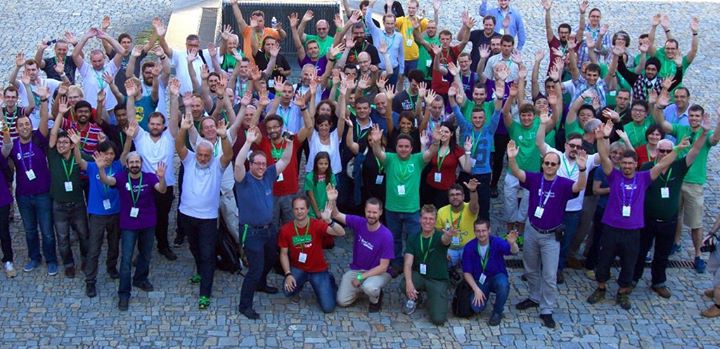
Video interview: Xisco Fauli, QA engineer for LibreOffice

Xisco Fauli works for The Document Foundation as a quality assurance engineer, helping the QA community handle bug reports, triaging and bibisecting. We talked to him about projects he’s working on, and how everyone can get involved:

Please confirm that you want to play a YouTube video. By accepting, you will be accessing content from YouTube, a service provided by an external third party.

YouTube privacy policy

If you accept this notice, your choice will be saved and the page will refresh.

The Document Foundation releases LibreOffice 5.3.2

Berlin, April 6, 2017 – The Document Foundation (TDF) releases LibreOffice 5.3.2, the 2nd minor release of the LibreOffice 5.3 family, focused on bleeding edge features, and as such targeted at technology enthusiasts, early adopters, and power users. LibreOffice 5.3.2 integrates over 50 patches, with a large number of fixes related to RTF and DOCX documents.

For all other users and enterprise deployments, TDF suggests LibreOffice 5.2.6, with the backing of professional support by certified professionals (updated list available at http://www.libreoffice.org/get-help/professional-support/).

People interested in technical details about the release can access the change log with a detailed list of all patches here: https://wiki.documentfoundation.org/Releases/5.3.2/RC1 (fixed in RC1) and here: https://wiki.documentfoundation.org/Releases/5.3.2/RC2 (fixed in RC2).

Download LibreOffice

LibreOffice 5.3.2 is immediately available for download from the following link: https://www.libreoffice.org/download/download/.

LibreOffice users, free software advocates, and community members can support The Document Foundation with a donation at http://donate.libreoffice.org.

Several companies sitting in TDF Advisory Board (http://www.documentfoundation.org/governance/advisory-board/) are providing either value added Long Term Supported versions of LibreOffice or consultancy services for migrations and training, based on best practices distilled by The Document Foundation.

Video interview: Heiko Tietze, LibreOffice UX mentor

At FOSDEM this year, we made video interviews with members of the LibreOffice community and staff at The Document Foundation. We’ll be editing and uploading them regularly to the blog, so stay tuned! We start with Heiko Tietze, who is The Document Foundation’s UX (user experience) mentor and works with the design community:

Please confirm that you want to play a YouTube video. By accepting, you will be accessing content from YouTube, a service provided by an external third party.

YouTube privacy policy

If you accept this notice, your choice will be saved and the page will refresh.

LibreOffice Conference 2018: Call for location

LibreOffice Conference 2016

We’re currently organising the LibreOffice Conference 2017, which will be held in Rome from September 27 – 29. But we like to plan even further ahead, so today we’re putting out a Call for Location for 2018’s conference.

Why are we doing this so early? Well, we want to give the 2018 conference organiser a chance to attend this year’s conference to see how it works. So if you’re a member of the LibreOffice community and are interested in organising 2018’s conference in your town or city, you can write up a proposal. All the details are on the wiki, including what you need to know in advance, and what your proposal should contain.

The deadline for proposals is June 30 2017. We’ve already had great conferences in Paris, Berlin, Milan, Bern, Aarhus and Brno – and we look forward to hearing your ideas!

LibreOffice Contributor Interview: Lera Goncharuk

Our native language projects benefit enormously from volunteers around the world, who help make LibreOffice a success in many different locations. In our latest contributor interview, we talk to Lera Goncharuk who is active in the Russian community, helping out with translations and documentation.

LibreOffice contributor Lera GoncharukWhat is your IRC nickname, nationality and current location?

I am “tagezi” in the IRC channels on Freenode, as well as The Document Foundation (TDF) wiki, but my friends call me Lera – that is a short version of my full name, Valerii. I was born in the USSR and lived in the Russian Federation the biggest part of my life. Now I live in Finland.

Do you work for a LibreOffice-related company or just contribute in your spare time?

I have been using Linux as my primary operating system since 2004 on a daily basis. And I started to use LibreOffice since the early days of the project’s formation, which came to replace OpenOffice.org.

What areas of the project do you normally work on? Anything else you want to tackle?

My main goal is translating documentation, wiki articles and news for the Russian community. But in addition, I have made a few patches for the Help system, and I have been trying to improve the formatting and navigation of the wiki pages. I am also a TDF wiki administrator and moderator of Russian-speaking communities in Google+ and Facebook, and I sometimes write articles about LibreOffice on my blog.

What was your initial experience of contributing to LibreOffice like?

At that time, I was working in Calc, visualizing data using charts. And I saw that I couldn’t find good Russian articles about using charts in LibreOffice. There is a proverb: “If you want something done well, do it yourself.” So I did that, starting to write articles myself, and now there are several available – not only about charts in Calc, but also on general topics related to LibreOffice.

In 2014, one member of the Russian-speaking community asked me for help with finding mistakes in the Russian interface of LibreOffice Calc 4.3. I began to help, and in the process found out more about the needs of the community, its concerns, and its hopes. And my next step was to start translating the TDF wiki. So I came to global LibreOffice community.

Which is your preferred text editor? And why?

I can use any text editor. Even if I have never worked in it, I can master it quickly. But I prefer to work in either Vim or LibreOffice Writer. I use Vim when I need to write or edit low-level texts such as source code or documents in markup languages like XML and HTML. Perhaps this is just a habit. When I switched to Linux, Vim was the first editor I used, and at the beginning I experienced significant difficulties – but about a week later, I was able to deal with simple tasks, to make templates and write simple scripts.

A month later, my skills improved, and now I cannot imagine how I could get along without it. For higher-level texts, when the text needs to be edited and printed by other people, I use LibreOffice Writer. I really like its implementation of the style concept, which helps to quickly create and edit documents with a complex structure. I use other editors and IDEs when necessary – when a problem requires a specific editor. But that happens less and less.

How much time do you spend on the project? What do you do when you’re not working on LibreOffice?

I devote myself to the LibreOffice community at least a few hours a day, typically four to six hours per day. In addition, I also often use LibreOffice on a daily basis. I have a radio-amateur database, several calculators for fast computations, and I often use Calc for data processing. Based on it I take notes and gather thoughts, which then grow into ideas and articles for my blog. Therefore, I can say that LibreOffice is an essential part of my life. The rest of the time, when I am not engaged in LibreOffice-related activities, I devote myself to my family or to learning new stuff.

Do you have any hobbies or interests you want to mention?

I am a radio-amateur and I like history and hiking. Especially the latter, because it lets me get distance from everyday routine, to refresh my mind and to come back to the project being full of energy and with new ideas. The rest are just ways to relax, to switch activities, when there is no opportunity to go to mountains.

What would you advice to people considering joining the LibreOffice community?

First of all, welcome. Do not be shy, but try instead. Many people think: “I’m not a developer. I don’t know programming languages, so how can I be useful?” In fact, developers constitute the community core, but the community is much bigger. There are many people around them: teams of documentation, localization, QA and marketing. All these people play important roles in the community.

Who will write documentation and translations, or spread the word about LibreOffice, if not these other people? There are a variety of tasks and jobs that satisfy any taste. Even if your English isn’t perfect and you don’t know programming, you can contribute to your local LibreOffice community. So, there is work for everyone, waiting for to come and do it. In my experience, the LibreOffice community is like a big family. You always can get support and help if you have difficulties. So welcome – the doors are open for you.

Thanks Lera! And as he says, there are so many ways to get involved with LibreOffice – so join us today and help make the software better for millions of users around the world. We look forward to meeting you!

The Document Foundation All Rights Reserved 2025
Proudly powered by WordPress | Theme: Refined Magazine Pro by Candid Themes.