LibreOffice and Google Summer of Code 2020: The results

Google Summer of Code logo

This year, LibreOffice was once again a mentoring organization in the Google Summer of Code (GSoC) a global programme focused on bringing more student developers into free and open source software development. We ran six projects – and all were finished successfully. Students and mentors enjoyed the time, and here we present some of the achievements, which should make their way into LibreOffice 7.1 in early February 2021!

You can experiment with the new functionality by using daily builds and report any problems in our bug tracker.


Styles Inspector for Writer by Shivam Kumar Singh

Mentors: Tomaž Vajngerl, Mikhail Kaganskiy (Collabora)

Dealing with styles and formatting in complex documents can become tedious, especially when you are working on something you did not create yourself. The Styles Inspector implemented by Shivam conveniently displays all the properties of the elements making up a document. It will surely become an essential tool for Writer experts.

Learn more about the Styles Inspector in the final report.
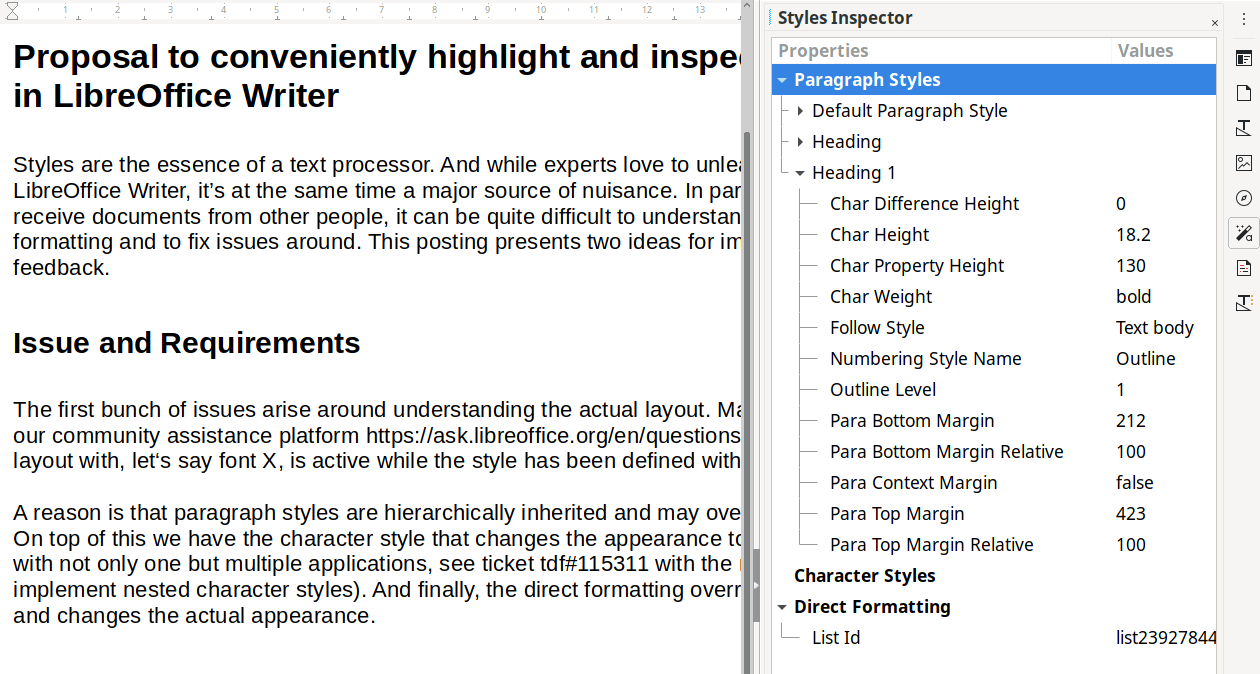
Styles Inspector


Additions – Tight integration of extensions by Yusuf Keten

Mentor: Muhammet Kara (Collabora)

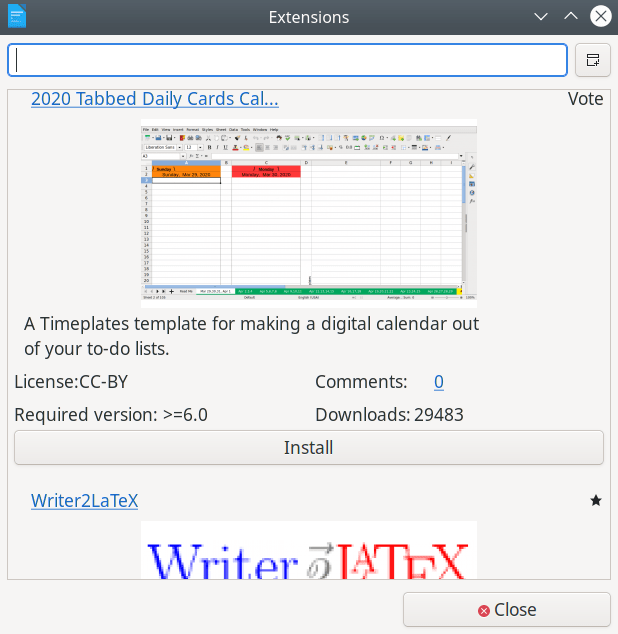
Thanks to the work of Yusuf, users are now able to fetch extensions, templates and other resources as well as discover guide books without ever leaving LibreOffice.

Learn more about Additions in the final report.
Additions


Extending the UI testing framework by Ahmed ElShreif

Mentor: Markus Mohrhard

A domain-specific language (DSL) for LibreOffice’s Python-based UI testing framework was originally implemented by Saurav Chirania in 2018. Ahmed ElShreif continued the work in 2019 and now tackled further improvements in the DSL and in the testing framework itself. This means that the automated quality assurance system is better at preventing bugs from slipping into LibreOffice.

Learn more about the UI testing project in the final report.


Impress shape animations with a real physics engine by Sarper Akdemir

Mentor: Thorsten Behrens (CIB)

Sarper added the ability to enrich presentations with animations powered by the physics simulator engine Box2D.

Please confirm that you want to play a YouTube video. By accepting, you will be accessing content from YouTube, a service provided by an external third party.

YouTube privacy policy

If you accept this notice, your choice will be saved and the page will refresh.

Learn more about the physics engine project in the final report.


Moving the gallery code to a friendly format by Aditya Sahu

Mentors: Tomaž Vajngerl, Michael Meeks (Collabora)

It was not simple to work on galleries due to them being stored in a custom binary format. Now Aditya got us out of this unfortunate situation and designers will have a much easier time.

Learn more about the gallery project in the final report.


Blurry shadows by Ahmad Ganzouri

Mentors: Tomaž Vajngerl, Miklos Vajna (Collabora)

Shapes and objects in LibreOffice used to only support hard shadows. Now Ahmad implemented proper blurriness for the shadows, supporting both ODF and OOXML formats.

Blurry shadows

Learn more about blurry shadows in the final report.


Wrapping up

Many thanks to all students who spent their summer time improving LibreOffice. You are awesome! And special thanks also to the mentors who always put so much love and energy into these tasks. That‘s what makes LibreOffice rock.

Now we are looking forward to next year’s GsoC. If you are interested, why not prepare early? Learn more at out wiki page where some ideas are listed. Participating in GSoC is a great way to build your skills, and show future employers what you’re capable of!
Community Member Monday: Pranam Lashkari (Collabora/GSoC)

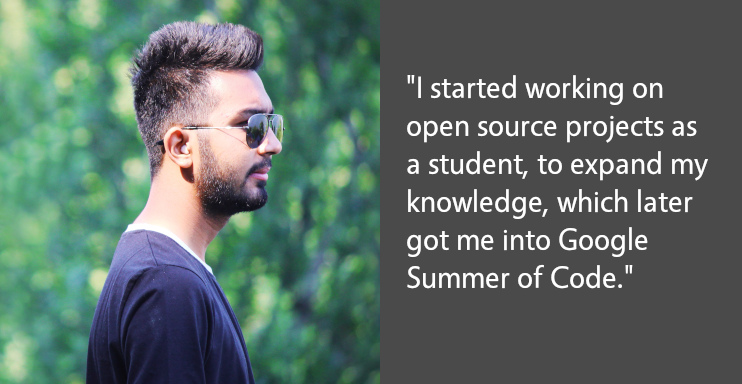
Today we’re talking to Pranam Lashkari from our Indian community, who is working in the LibreOffice ecosystem at Collabora, improving the web-based version of the suite…

First off, tell us a bit about yourself!

Pranam! (It means namaste, and yes, that’s my name too 😂). I live in Rajkot, a city in the middle of the state of Gujarat in India. I am a computer engineer who started working on open source projects as a student, to expand my knowledge, which later got me into Google Summer of Code – twice as a student, and this year I became a mentor and a maintainer of one of the Boost C++ Libraries called GIL (Generic Image Library).

The eagerness for always working in open source led me to work with Collabora Productivity, where I’m privileged to work full-time to take LibreOffice development further. So far, all the code I have written in my life is open source.

When I am not programming, I like to spend my time playing cricket (or any sport), doing some observational astronomy, or reading things related to science.

You can find me on LinkedIn and GitHub.

What are you working on in the LibreOffice project right now?

Most of my work is focused on LibreOffice Online, which also happens to be the project behind the mobile version of Collabora Office. I started by removing the Poco framework, and then adding major features like smooth scrolling in mobile.

Currently, I am working on desktop browser version of LibreOffice Online, where I try to align features with the core version. On the other hand, in the mobile version, I solve different bugs in mobile wizards and enable new features which are not yet available in mobile. While working on the mobile wizard, I also try to optimize the performance wherever possible by avoiding and reducing unnecessary communication with the server – and making things look more snappy on mobile.

Why did you decide to become a member of The Document Foundation?

I love it when my code is used by people. Having a large number of users of LibreOffice attracted me to be a developer in TDF projects, and I am very thankful to Jan Holesovsky and Michael Meeks for giving me this wonderful opportunity and helping me get started and grow.

At first, I wasn’t aware of the existence of such programmes where one can become a member, until I received an email inviting me to apply to become a member of TDF because of my continuous involvement in TDF projects the last six months. I decided to apply for the membership because it would help me align the development with the goals set by the organisation, and get a clear picture of further required development.

The best way to move forward is by collaborating and becoming a part of the project. By becoming a member, I also wish to give my feedback on decisions and strategies.

Anything else you plan to do in the future? What does LibreOffice really need?

In my work for Collabora, we focus on what our customers and partners most want to be done next – always something interesting.

Finally, one thing I would like to add: working on these projects which are involved in changing the user experience forever is one of the best experiences I have had as a developer. I would like to thank Collabora and TDF for this.

TDF says: we’d like to thank you, Pranam, for all your work! A strong and healthy ecosystem is essential for the future of LibreOffice, so we’re glad you’re enjoying working for Collabora and improving LibreOffice Online. Cheers!

Build your skills – join our online hackfest during the LibreOffice conference!

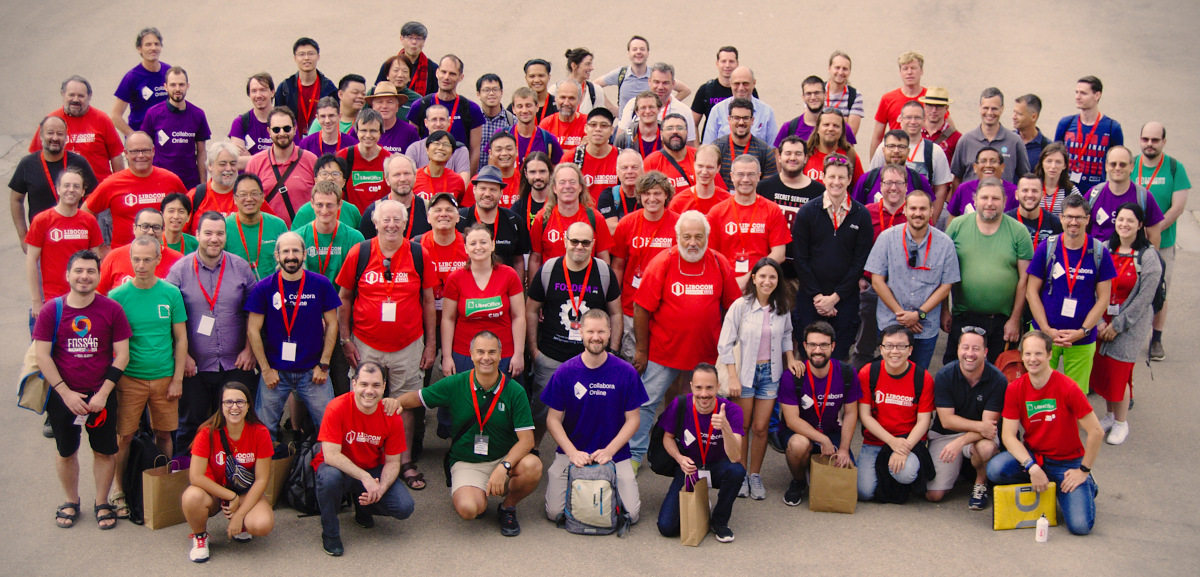
Who makes LibreOffice? How can you – as a user – get involved in the community? And what can you contribute to the project? Well, we’ll answer all of these questions, and more, in an upcoming online “hackfest” during the LibreOffice conference. This is a virtual event where the world’s foremost LibreOffice experts will be at hand, to answer your questions about contributing to the project. You can see how they work and “how the sausage is made”, as they say!

There are many ways to help out:

  • Designing the user interface
  • Improving the features and functionality with C++ programming
  • Updating the documentation
  • Translating the app and website
  • Starting cool marketing campaigns
  • Confirming bug reports from other users

And much more. By joining a well-known and well-established FOSS project like LibreOffice, you can build up your skillset for future career options. And also meet new people and have fun!

So, do you have a question about contributing? If so, please send your questions to ilmari.lauhakangas@libreoffice.org by 27 September 2020.

A panel of experts will convene to present on your questions and topics. Everyone is welcome to join and ask further questions. In the case that your spontaneous questions render the experts speechless, answers will be provided after the event. The duration of the event is one hour.

We look forward to hearing from you!

Join our team! Job Search for a Development Mentor (m/f/d) – #202007-01

The Document Foundation (TDF) is the non-profit entity behind the world’s leading open source office suite, LibreOffice. It’s comprised of a team of highly skilled and motivated people, working on infrastructure, design, documentation, QA, marketing and other tasks. We’re passionate about free software and bringing people into our community.

To grow our volunteer community, in particular for code contributions, we’re searching for

a Development Mentor (m/f/d)

to start work as soon as possible. If you’re interested in the role, which is offered on a part- or full-time basis, you ideally have:

  • previous experience in remote work
  • been a long-time contributor to one or more FLOSS communities
  • excellent communication skills, with enthusiasm for mentoring – a fluent command of the English language (written and spoken) is expected
  • coding experience in several FLOSS code bases and programming languages, including LibreOffice
  • demonstrable C++ coding experience of at least five years, plus active knowledge of at least one more language used in LibreOffice (e.g. Python or Java)
  • willingness to regularly travel to Hackfests & conferences in Europe and globally
  • self-driven and a good team player; interested in working together with our team

The remote job role involves working from home at your location and includes among other items:

Work with our existing team in the LibreOffice community on topics including:

  • building relationships between the community and new contributors
  • identifying and on-boarding new contributors
  • affirming and encouraging their contribution
  • encouraging them to join IRC and other communication channels to meet the community
  • building relationships with domain experts for deeper learning
  • attracting new contributors by promoting the project
  • interaction with UX volunteers

Shape and create development mentoring including:

  • helping to onboard new contributors by
    • positively reviewing their code contributions
    • improving their C++ programming skills & design, and coding style
    • introducing them to our tooling and culture
  • designing, and define easy tasks for new contributors
  • maintaining our technical documentation, e.g.
    • developer guide
    • wiki articles
    • code comments
  • helping to review the results of development tenders produced by TDF
  • goals-oriented and with a laser-sharp focus to grow excellent LibreOffice core contributors, our perfect candidate will come up with creative ways to find and attract volunteers

Previous experience with such tasks is highly welcome, so is using free software. Speaking and writing English fluently is a mandatory requirement.

The work time during the day is flexible, apart from some fixed times when availability is required (e.g. during meetings).

TDF welcomes applications from all suitably qualified persons regardless of their race, gender, disability, religion/belief, sexual orientation or age.

As always, TDF will give some preference to individuals who have previously shown a commitment to TDF, including but not limited to members of TDF. Not being a member, or never having contributed before, does not exclude any applicants from consideration.

TDF is looking forward to receiving your applications, including curriculum vitae, your financial expectations, and the earliest date of your availability, via e-mail to tender20200701@documentfoundation.org no later than September 15, 2020.

If you haven’t received feedback by October 30, 2020, your application could not be considered.

LibreOffice 7.0 RC1 Bug Hunting Session

LibreOffice 7.0 is being developed by our worldwide community, and is due to be released in early August 2020 – see the release notes describing the new features here.

In order to find, report and triage bugs, the LibreOffice QA team is organizing the second Bug Hunting Session for LibreOffice 7.0 on Monday July 6, 2020. Tests will be performed on the first Release Candidate version, which will be available on the pre-releases server the day of the event. Builds will be available for Linux (DEB and RPM), macOS and Windows.

Mentors will be available from 07:00 UTC to 19:00 UTC for questions or help in the IRC channel #libreoffice-qa and the Telegram QA Channel. Of course, hunting bugs will be possible also on other days, as the builds of this particular Release Candidate (LibreOffice 7.0.0 RC1) will be available until mid July. Check the Release Plan.

During the day there will be a dedicated session to test the new SKIA Graphics Engine integration from 14:00 and 16:00 UTC.

All details of the first bug hunting session are available on the wiki. LibreOffice is a volunteer-driven community project, so please help us to test – we appreciate it!

Community Member Monday: Andreas Heinisch

Today we’re talking to Andreas Heinisch, who recently became a member of The Document Foundation, the non-profit entity behind LibreOffice…

Tell us a bit about yourself!

I am from South Tyrol, and live near the city of Meran/Merano on the mountain side. I studied computer science, and teach informatics, physics and mathematics at the local high schools. In my spare time, I like to go hiking, climbing, and of course programming 🙂

What are you working on in the LibreOffice project right now?

At the moment I am part of the Macro team, and try to solve some of the bug reports. I don’t remember exactly, but I think that I contributed to about over a dozen of them. Personally, I think macros are not without controversy due to the security concerns, but they are widely used in order to automate some easy tasks.

Why did you decide to become a member of TDF?

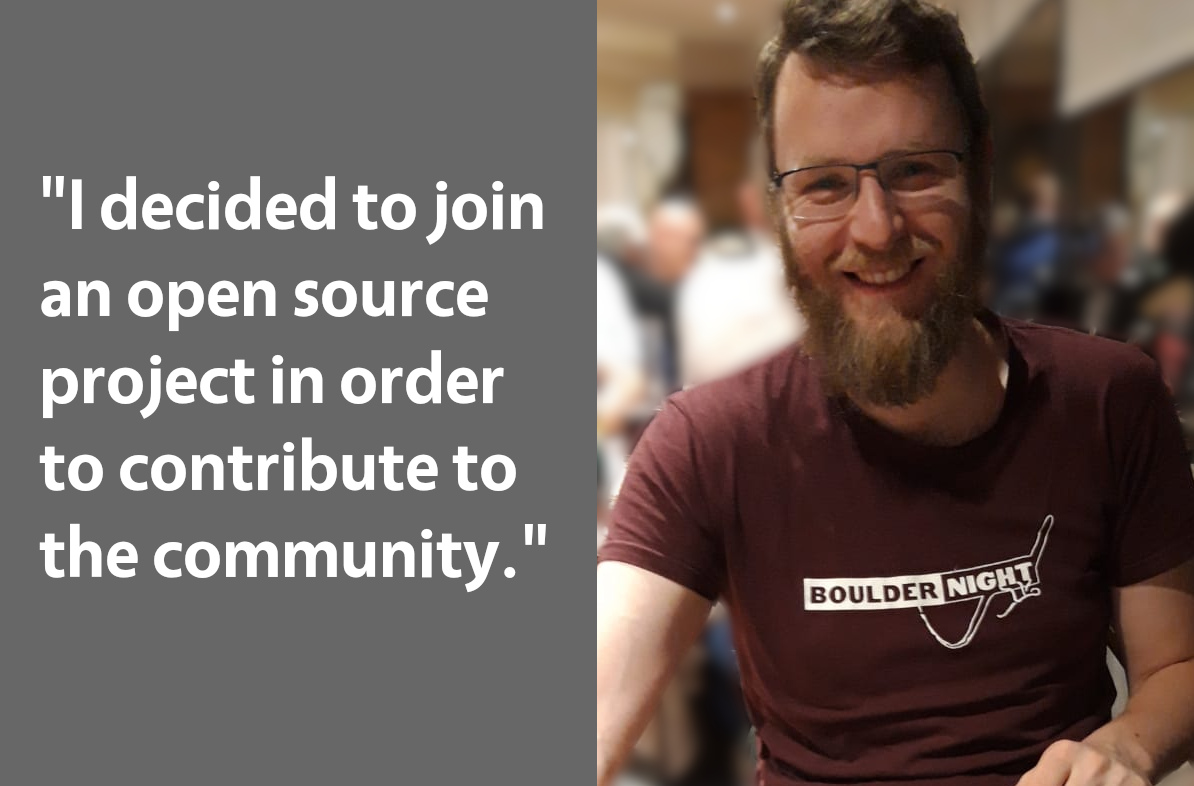
In my teaching activity, there’s only a small part where I can really program or solve some challenging problems. So I decided to join an open source project in order to contribute to the community, get in touch with current software lifecycle technologies and to improve or contribute to existing widely used software. To be honest: LibreOffice was the first product which came to my mind.

In addition, I think that local public administrations should not invest only in proprietary software solutions, which abuse their market position.

Anything else you plan to do in the future?

In the future I want to promote LibreOffice for our local high school, and to encourage more students to contribute to open source software. For this reason, I think that the help pages of LibreOffice should be revisited and simplified in order to attract more people to improve and contribute to such a great product.

Thanks to Andreas for all his work! Everyone in the LibreOffice project is welcome to apply as a member of TDF – check out this short video for more info…

Please confirm that you want to play a YouTube video. By accepting, you will be accessing content from YouTube, a service provided by an external third party.

YouTube privacy policy

If you accept this notice, your choice will be saved and the page will refresh.