Annual Report 2018: The Document Foundation

Every year, The Document Foundation produces an Annual Report, detailing its activities in the projects and community. We’ll be posting parts of it here on the blog, while we prepare a final printed version…

Election of TDF Chairperson and Deputy

In February, the Board of Directors of The Document Foundation – during its first meeting of the new term – confirmed Marina Latini in the role of Chairwoman, and appointed Björn Michaelsen to the role of Deputy Chairman.

Marina said: “Our project is growing fast with contributors from several countries, and we need to focus much more on lowering the barriers to being a really welcoming community. I would like our community to become as inclusive as possible, and never leave out those who, just in appearance, look different to us. Openness is a state of mind.”

Björn, who had previously served as a Deputy on the Board, added: “I am encouraged to see strong contributors to the project as new candidates in this election, and hope to share the duty of serving with them, together providing a strong and reasonable voice of independent and unaffiliated input in the Board. Ultimately, I hope after this one last term I can confidently leave TDF’s Board with many new diverse and independent voices in all parts of the project and foundation, and retire back to spending my contributions more on – for instance – the source code again.”

New Advisory Board member

In May, TDF announced that BPM-Conseil, a company focused on open source business intelligence and based in Lyon (France), had joined the project’s Advisory Board. BPM-Conseil will develop the integration of LibreOffice with its business intelligence solutions Aklabox and Vanilla, and also create business intelligence-related extensions for LibreOffice.

BPM-Conseil is focused both on development of open source business intelligence solutions and on the related consultancy and integration activities. The company has a large roster of clients in France, such as the Ministries of Environment, Energy and Sea, Lyon Metropole, Nimes Metropole and City, La Rochelle Agglomeration, Haute and Basse Normandie, the Aveyron Department, and the University of Corsica.

Tenders

In 2017, TDF launched four tenders aimed at sharing knowledge about improving LibreOffice in several strategic areas, where the tasks are beyond the capabilities of independent volunteer developers. In 2018, companies selected to implement two of the tenders reported back on their work.

Firstly, Collabora was selected for the tender “improve image handling in LibreOffice (#201705-01)”. A new image life-cycle was developed, with simpler memory management for handling images and new swapping strategy. The results were incorporated into the LibreOffice 6.1 release – and a more detailed technical description of the work is on the blog, in order to share knowledge and experience from this project with the developer community and the general public.

The second tender, “implement HSQLDB binary format import in LibreOffice (#201705-03)”, was also assigned to Collabora and implemented by Tamás Bunth. He developed a mechanism to import database files with high fidelity from the HSQLDB binary file format, used by many existing ODB files, by reading the Java serialization code, and writing a filter to import all data into LibreOffice Base. The objective was to remove the legacy Java/HSQLDB database and to simplify the move to Firebird. More details are provided here.

Highlights of activities

Throughout the year, TDF supported initiatives and campaigns from other organisations that promote free and open source software. For instance, in February, we joined “I love Free Software Day”, a campaign by the Free Software Foundation Europe (FSFE). As they explain: “We should remember the power of a simple ‘thank you’ to motivate Free Software contributors in their important work for society. And the 14th of February is the ideal day to do that.”
March 27 was “Document Freedom Day 2018”, a campaign about open standards and document formats, aimed at non-technical people. The goal is to make regular users more aware of interoperability issues, and the importance of storing documents (and indeed any kind of data) in open and standardised formats. This helps users to avoid vendor lock-in, giving them more freedom to use the software they want – and this is also important for governments, companies and organisations.

In September, we joined the “International Day against DRM”. DRM, or Digital Rights Management, is a set of access control technologies for restricting the use of proprietary hardware and copyrighted works, by controlling the use, modification, and distribution of copyrighted works. Instead of educating users, companies prefer to restrict them from exercising their legal rights under the copyright law.

DRM is an epidemic spreading across the web, infiltrating homes, classrooms, workplaces, and just about everywhere else users can go. Tools, technologies, books, games, movies, and music are coming to us locked down with DRM, whether they are streaming or claim to be locally hosted. TDF supports the International Day Against DRM as part of its daily fight to make content sharing available to all individuals, and to educate them to adopt open standards to foster innovation.

Document Liberation Project

TDF also hosts and supports the Document Liberation Project (DLP), a sister project of LibreOffice, which fosters the development of software libraries that can import and export data in many different file formats. DLP libraries are used by many free and open source software projects, such as Inkscape, Scribus and LibreOffice, and help users to get control of their data – especially from old and proprietary file formats. In 2018, new libraries were added to the DLP project and the community produced videos encouraging people to contribute. Learn more about DLP in this quick video:

Please confirm that you want to play a YouTube video. By accepting, you will be accessing content from YouTube, a service provided by an external third party.

YouTube privacy policy

If you accept this notice, your choice will be saved and the page will refresh.
This was all possible thanks to your generous donations – support us today!

Community Member Monday: Vera Blagoveschenskaya

Today we’re talking to Vera from the Russian LibreOffice community, who has been especially active in our Quality Assurance (QA) project recently…

First, tell us a bit about yourself!

I live in Obninsk, Russia – it’s one of the major Russian science cities. You know, the first nuclear power plant was built in Obninsk. At the moment I work at BaseALT as a QA engineer. I really love testing! (I’ve noticed a minor bug in LibreOffice Writer while typing these words – I will surely report it later 🙂)

I’m also mother of a teenage girl, so a lot of my spare time is dedicated to supporting her interests. Now she is really into biking and swimming, and we dream of visiting the Tokyo Olympics in 2020.

What are you working on in LibreOffice at the moment? And is there anything you’d like to try in future?

I find and report bugs in Bugzilla and check fixes. In addition, I try to reproduce unconfirmed bugs and categorize them. For the future, well, it’s really hard to choose – there are so many options! But I undoubtedly would like to have more time to contribute to LibreOffice.

How did you get involved with LibreOffice – and what was the
experience like?

When I started to work in BaseALT, one of the tasks was to test LibreOffice for KDE 5.
I took part in the Bug Hunting Session for LibreOffice 6.2 in October 2018 and had success. I was mentioned in the November 2018 QA report; it was unexpected and very pleasant!

A bit later, Aleksei Nikiforov (who works at BaseALT as well) got involved in work and fixed some KDE 5 crashes. Now we work together, thereby continuing the tradition of contributing to LibreOffice. You know, BaseALT was formed from the ALT Linux Team, which helped to localize StarOffice a long time ago.

Finally, what do you see in the future for LibreOffice?

My opinion: LibreOffice needs to be promoted more widely. Most Windows users don’t know that there is a great and free alternative to Microsoft Office.

Thanks to Vera for her time and contributions! And indeed, we in the LibreOffice project would appreciate more help spreading the word – join our marketing community today!

Bringing people together: German LibreOffice Community Meeting, May 2019

Free and open source software is all about community: meeting people, sharing knowledge and ideas, and having a good time! As you may know, LibreOffice is developed by a worldwide community, and every year, members of the German-speaking community meet to discuss the project’s status and future. In May, we met at Linuxhotel in Essen:

On Friday evening, we had an informal get-together with pizza and drinks. This was also an opportunity for new participants to get to know one another, while long-time LibreOffice supporters, who hadn’t met in a while, could catch up too.

The main event started on Saturday:

15 people took part, from across the LibreOffice project: developers, event organisers, infrastructure maintainers, documentation editors, and TDF team and board members. We discussed many topics, which are detailed on the pad (in German), including: the structure of the German project; the various tools that we use (and how to consolidate them); and which events we should attend in the future.

In addition, we created a list of tasks to focus on in the coming weeks and months, assigned to various members of the community. As we’re a volunteer-led project, we always appreciate help, so if you’ve seen something on the pad that piques your interest, please join our mailing list and give us a hand!

After the discussions, we relaxed with some more food, drinks and games (Linuxhotel has a dart board). On Sunday morning, before everyone left, we had a quick final round of discussion, and a summary of what we’re planning to do.

On the whole, it was a great event and reminded us that in-person meetings are important, especially for projects that normally work together over the internet. Being able to discuss ideas face-to-face is invaluable – and of course, it’s great fun too. See you next year!

Follow us on Twitter, Mastodon, Facebook and Telegram!

Next C++ workshop: Binary Trees, 9 May at 18:00 UTC

Boost your C++ skills with the help of LibreOffice developers! We’re running regular workshops which focus on a specific topic, and are accompanied by a real-time IRC meeting. For the next one, the topic is Binary Trees. Start by watching this presentation:

Please confirm that you want to play a YouTube video. By accepting, you will be accessing content from YouTube, a service provided by an external third party.

YouTube privacy policy

If you accept this notice, your choice will be saved and the page will refresh.
And check out the suggested EasyHacks.

Then join us for a discussion via our #libreoffice-dev IRC channel. You can ask experienced LibreOffice developers questions, and learn more about the language. See you then!

Starting today: The Month of LibreOffice, May 2019 – get cool merchandise!

LibreOffice is made by a community of developers and supporters around the world. This month, we want to say a big thanks to everyone who helps out – and encourage more people to join our friendly community as well! So how are we going to do this?

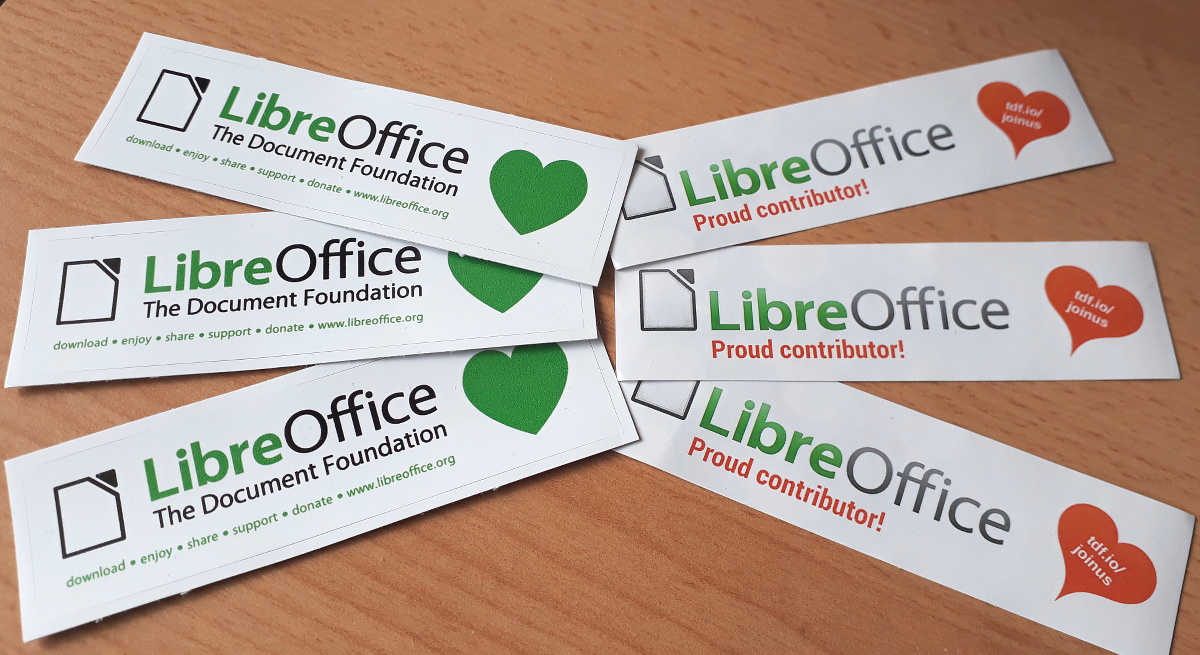
Well, everyone who contributes can claim an awesome sticker pack at the end of the month:

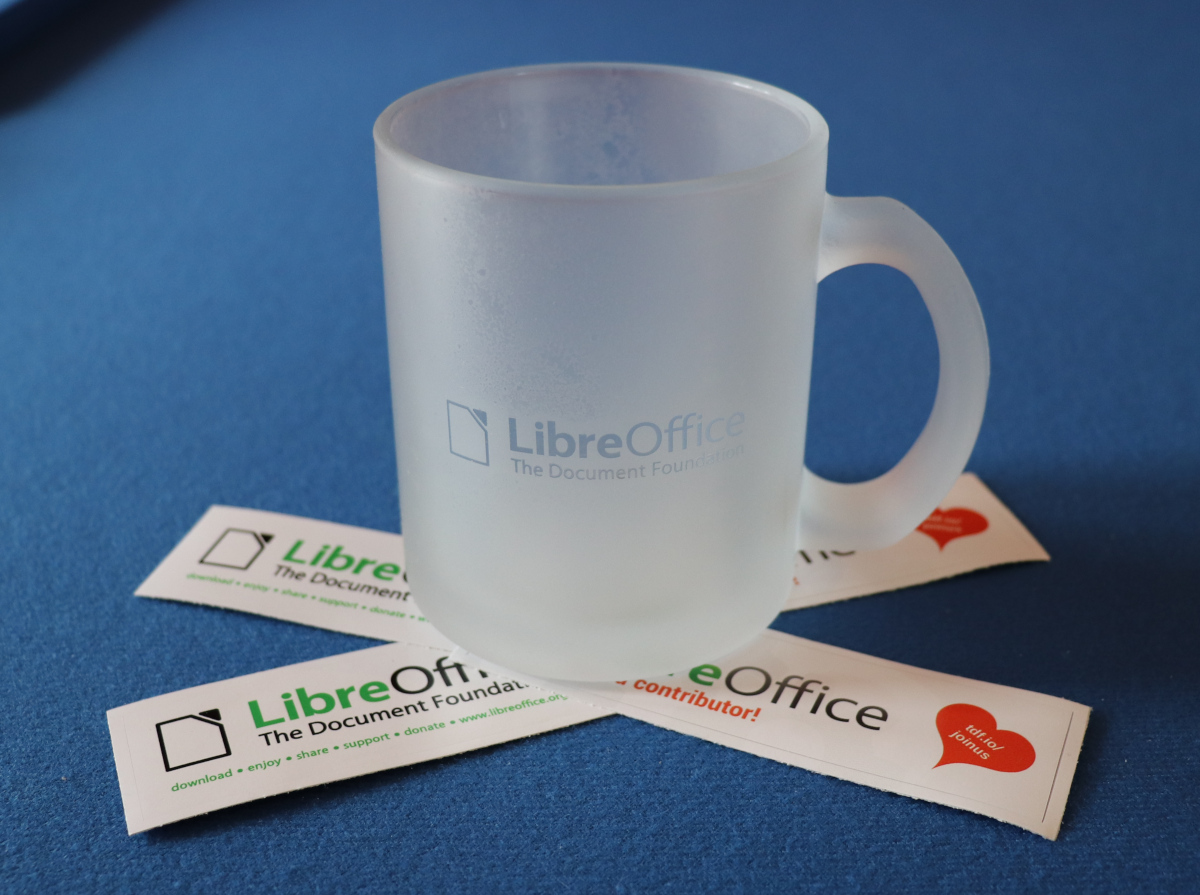
And even better, we’ll also choose 10 contributors at random to receive an exclusive glass LibreOffice mug:

How to take part

So, let’s get started! There are many ways you can help out – and you don’t need to be a developer. For instance, you can be a…

  • Handy Helper, answering questions from users: over on Ask LibreOffice there are many users looking for help with the office suite. We’re keeping an eye on that site so if you give someone useful advice, you can claim your shiny stickers.
  • First Responder, helping to confirm new bug reports: go to our Bugzilla page and look for new bugs. If you can recreate one, add a comment like “CONFIRMED on Windows 10 and LibreOffice 6.2.3”. (Make sure you’re using the latest version of LibreOffice!)
  • Drum Beater, spreading the word: tell everyone about LibreOffice on Twitter or Mastodon! Just say why you love it or what you’re using it for, add the #libreoffice hashtag, and at the end of the month you can claim a sticker. (We have a maximum of 100 stickers for this category, in case the whole internet starts tweeting/tooting!)
  • Globetrotter, translating the user interface: LibreOffice is available in a wide range of languages, but its interface translations need to be kept up-to-date. Or maybe you want to translate the suite to a whole new language? Get involved here.
  • Code Cruncher, contributing source code: The codebase is big, but there are lots of places to get involved with small jobs. See our Developers page on the website and this page on the wiki to get started. Once you’ve submitted a patch, if it gets merged we’ll send you a sticker!
  • Docs Doctor, writing documentation: Another way to earn a badge is to help the LibreOffice documentation team. Whether you want to update the online help or add chapters to the handbooks, here’s where to start.

So there’s plenty to do! As the contributions come in, we’ll be updating this page every day with usernames. So dive in, get involved and help make LibreOffice better for millions of people around the world – and enjoy your sticker as thanks from us. We’ll be posting regular updates on this blog and our Mastodon and Twitter accounts over the next four weeks!

LibreOffice monthly recap: April 2019

Check out our regular summary of events and updates in the last month!

  • We reported back from the Chemnitzer Linux-Tage 2019, where the LibreOffice community had a stand with flyers, stickers and other goodies. We also held some talks about LibreOffice and The Document Foundation – it was great to meet so many passionate Free Software fans there!

  • On April 8, we had a chat with Biraj Karmakar from the Indian community. Biraj helps out with translations and QA (quality assurance) – so if you’re reading this, are based in India and want to join our project, let us know and we can put you in touch with the community there!

  • In another Community Member Monday interview, we Roman Kuznetsov from Russia told us about his experiences joining the project. “I got valuable experience communicating with a worldwide community, along with some practice in English, working in Bugzilla and making good bug reports”, he said.

  • Finally, we geared up preparations for a new Month of LibreOffice! This time, along with sticker packs for all contributions, we’ll also give out 10 awesome LibreOffice mugs to randomly selected participants at the end of the month. But how can you take part? Well, just check this blog tomorrow for all the details!

Keep in touch – follow us on Twitter, Facebook and Mastodon. Like what we do? Support our community with a donation – or join us and help to make LibreOffice even better!