The Document Foundation welcomes Kopano to the project’s Advisory Board

Berlin, September 26, 2017 – The Document Foundation (TDF) announced today that Kopano, the leading European provider of open source groupware and collaboration software, has joined the project’s Advisory Board. Kopano wants to contribute to the project in areas of its expertise, for example in user experience.

Kopano is a continuation of Zarafa. It offers a platform for communication, content sharing and self-organization, is entirely modular, and provides third party software vendors with simple integration options (e.g. via widgets).

Most features and integrations are available via a browser, thanks to Kopano WebApp, while smartphones, tablets and Outlook can be connected through Z-Push – the open source implementation of the Exchange ActiveSync Protocol (EAS). Kopano’s desktop client DeskApp is available for Windows, macOS and Linux.

Solutions like Kopano, combined with LibreOffice, help users to free themselves from the dependency of Microsoft and other cloud software, and enable companies to retain freedom and ownership of their data and software stack.

“Kopano is a welcome addition to the LibreOffice community, as they are extending the reach of LibreOffice in self-hosted Enterprise-environments by integrating LibreOffice Online with their collaboration solution. By becoming a member of the project’s Advisory Board, Kopano will provide experiences and insights necessary to improve the presence of LibreOffice Online”, says Simon Phipps, TDF Board Member.

“With our collaboration-products for messaging, ChatOps, Video Meetings, e-mail and groupware we offer the benefits of cloud-software in a self-hosted open source-stack. A powerful LibreOffice Online is the missing puzzle-piece for Enterprise-customers to keep their whole stack of modern collaboration under their own control”, says Brian Joseph, CEO of Kopano.

TDF Advisory Board’s (AB) primary function is to represent sponsors of the project, and to provide the Board of Directors (BoD) with advice, guidance and proposals. In addition, the AB is at the kernel of the LibreOffice ecosystem, and as such is key to the further development of the project.

About Kopano

Kopano is a leading European provider of open source groupware and collaboration software serving thousands of customers ranging from European governments to larger organizations. As a continuation of Zarafa, Kopano puts messaging, collaborative editing, video meetings, email and calendaring in one single interface. Website: https://kopano.com

 

LibreOffice Certification is now available to FSF Members

Yesterday, the Free Software Foundation (FSF) announced that the opportunity to apply for LibreOffice certification for migrations and training is now available to FSF Associate Members. In 2015, TDF began offering LibreOffice certification to certify “individuals actively promoting LibreOffice deployments, thanks to their competence in specific areas” including development and L3 support, migrations to LibreOffice, and LibreOffice training. In 2017, TDF Certification Committee decided to open the certification process to members of other FLOSS projects, starting from those sitting in TDF Advisory Board.

People certified in LibreOffice migrations and training are able to help companies and government offices make the switch away from proprietary office suites, and that raises the value of a deep understanding of LibreOffice. Italo Vignoli, Chair of the LibreOffice Certification Committee, said: “By extending LibreOffice certification to FSF members, we are widening the reach of our program to foster migrations to LibreOffice. In several geographies, the availability of certified professionals has triggered a number of large deployments in public administrations and enterprises.”

Call to Action: Hackfests “The New Generation”

LibreOffice’s development community has been growing steadily for seven years, thanks to the great enthusiasm demonstrated by several core members. They have mentored an entirely new generation of LibreOffice developers, also thanks to Hackfests and other face-to-face meeting opportunities such as FOSDEM and the LibreOffice Conference.

After seven years is now the right time to start thinking about the new generation of Hackfests. For several reasons, their number has decreased over the last couple of years, and they have never really gone beyond European borders (even with core developers flying over the Atlantic to attract potential new developers).

Bjoern Michaelsen will be hosting a conference call to discuss HackFests “The New Generation” on Sunday, September 17, at 4:30PM CEST (Berlin time, or UTC +2). Everyone interested is warmly invited to participate, especially from LibreOffice native language communities around the world.

If you cannot connect, make your voice heard by sending a couple of ideas by email to the Projects mailing list: projects@global.libreoffice.org.

Public Money? Public Code!

The Document Foundation joins FSFE campaign

31 organisations ask to improve public procurement of software


Digital services offered and used by public administrations are the critical infrastructure of 21st-century democratic nations. To establish trustworthy systems, government agencies must ensure they have full control over systems at the core of our digital infrastructure. This is rarely the case today due to restrictive software licences.

Today, 31 organisations are publishing an open letter in which they call for lawmakers to advance legislation requiring publicly financed software developed for the public sector be made available under a Free and Open Source Software licence. The initial signatories include CCC, EDRi, Free Software Foundation Europe, KDE, Open Knowledge Foundation Germany, openSUSE, Open Source Business Alliance, Open Source Initiative, The Document Foundation, Wikimedia Deutschland, as well as several others; they ask individuals and other organisation to sign the open letter. The open letter will be sent to candidates for the German Parliament election and, during the coming months, until the 2019 EU parliament elections, to other representatives of the EU and EU member states.

“Because the source code of proprietary software is often a business secret, it radically increases the difficulty of discovering both accidental and intentional security flaws in critical software. Reverse engineering proprietary software to improve or strengthen it is an absolute necessity in today’s environment, but this basic technical requirement is unlawful in many circumstances and jurisdictions. With critical infrastructure such as hospitals, automobile factories, and freight shippers having all been brought offline this year due to flaws concealed within proprietary software, unauditable code is a liability that states can no longer subsidize with special legal privileges without incurring a cost denominated in lives.

Right now, the blueprints for much of our most critical public infrastructure are simply unavailable to the public. By aligning public funding with a Free Software requirement — “Free” referring to public code availability, not cost — we can find and fix flaws before they are used to turn the lights out in the next hospital.” says Edward Snowden, President of the Freedom of the Press Foundation about the “Public Money Public Code” campaign launch.

Public institutions spend millions of euros each year on the development of new software tailored to their needs. The procurement choices of the public sector play a significant role in determining which companies are allowed to compete and what software is supported with tax payers’ money. Public administrations on all levels frequently have problems sharing code with each other, even if they funded its complete development. Furthermore, without the option for independent third parties to run audits or other security checks on the code, sensible citizen data is at risk.

“We need software that fosters the sharing of good ideas and solutions. Only like this will we be able to improve digital services for people all over Europe. We need software that guarantees freedom of choice, access, and competition. We need software that helps public administrations regain full control of their critical digital infrastructure, allowing them to become and remain independent from a handful of companies,” says Matthias Kirschner, President of the Free Software Foundation Europe.

That is why the signatories call on representatives all around Europe to modernise their digital infrastructure to allow other public administrations, companies, or individuals to freely use, study, share and improve applications developed with public money. Thereby providing safeguards for the public administration against being locked in to services from specific companies that use restrictive licences to hinder competition, and ensuring that the source code is accessible so that back doors and security holes can be fixed without depending on only one service provider.

“Public bodies are financed through taxes. They should spend funds responsibly and in the most efficient way possible. If it is public money, it should be public code as well!”, says Kirschner.

Please confirm that you want to play a YouTube video. By accepting, you will be accessing content from YouTube, a service provided by an external third party.

YouTube privacy policy

If you accept this notice, your choice will be saved and the page will refresh.

REMEMBER TO SIGN THE OPEN LETTER

Surpassed the 40,000 closed bugs milestone

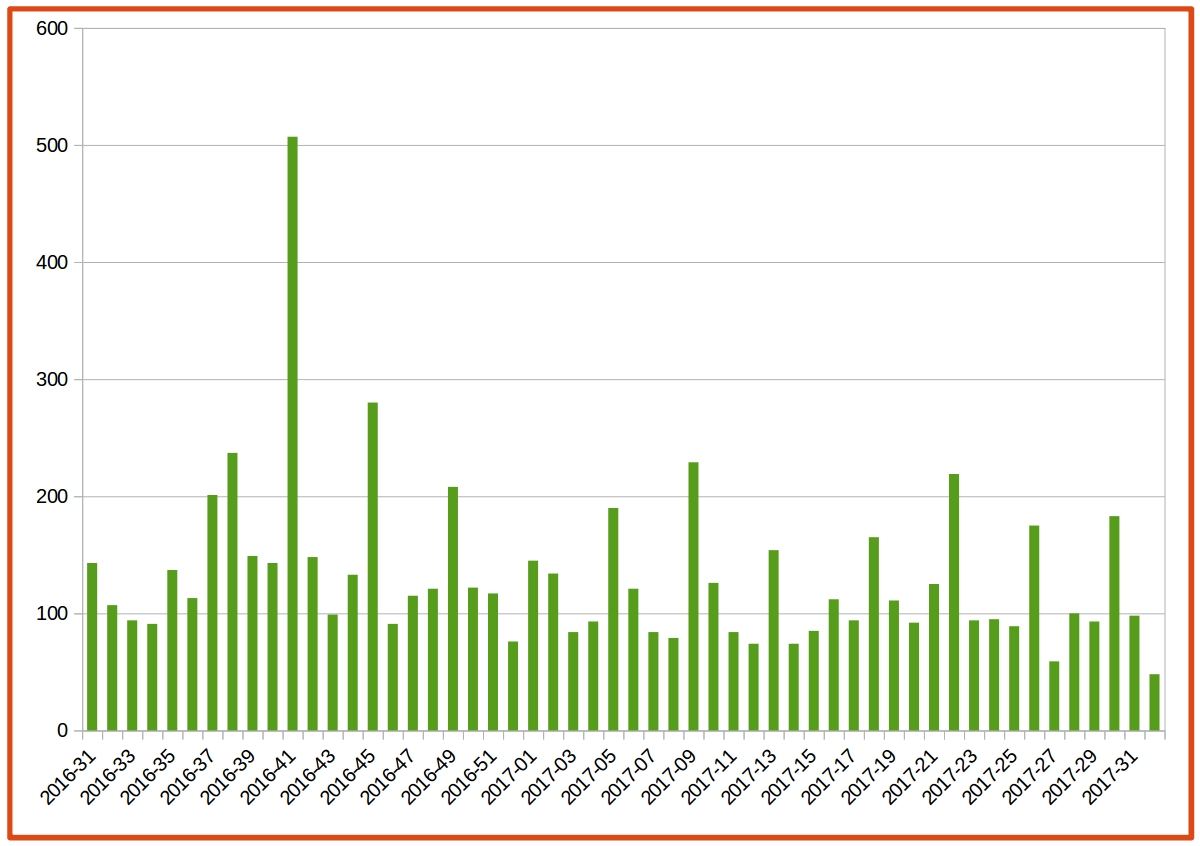
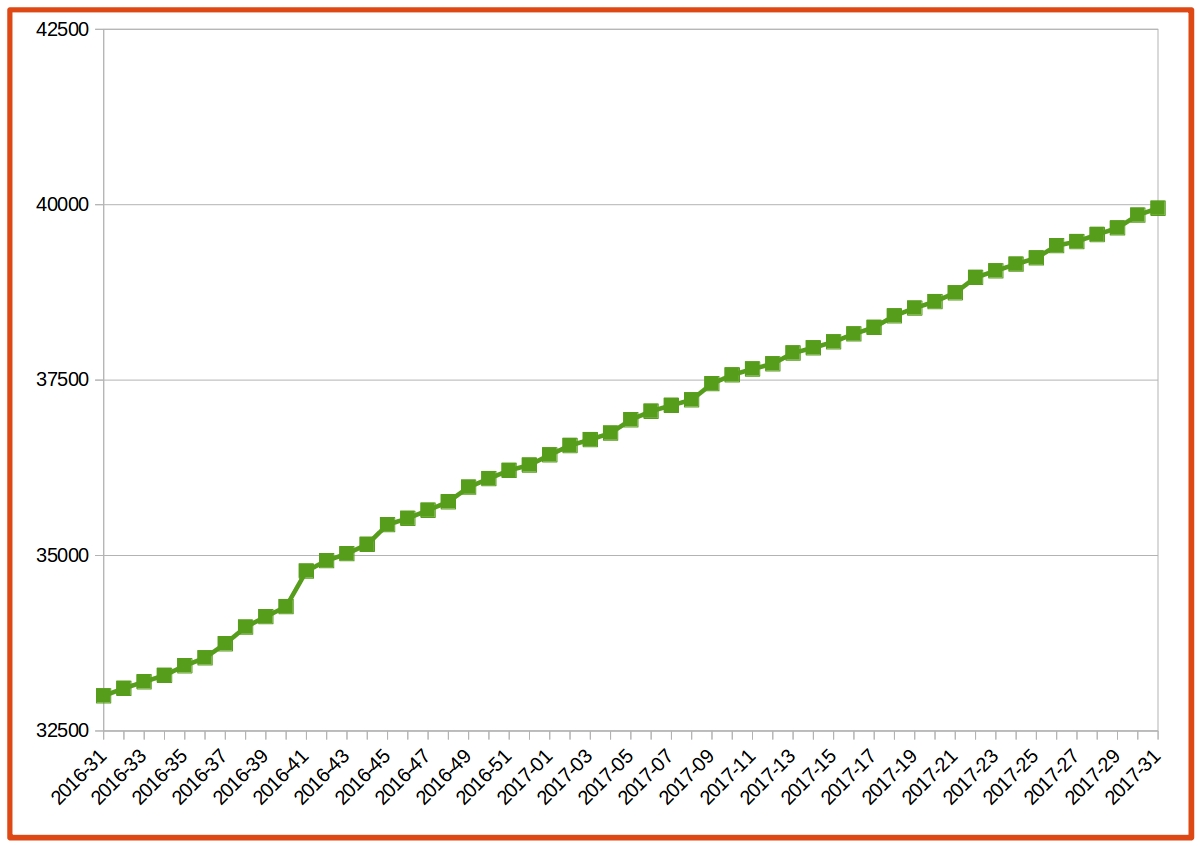
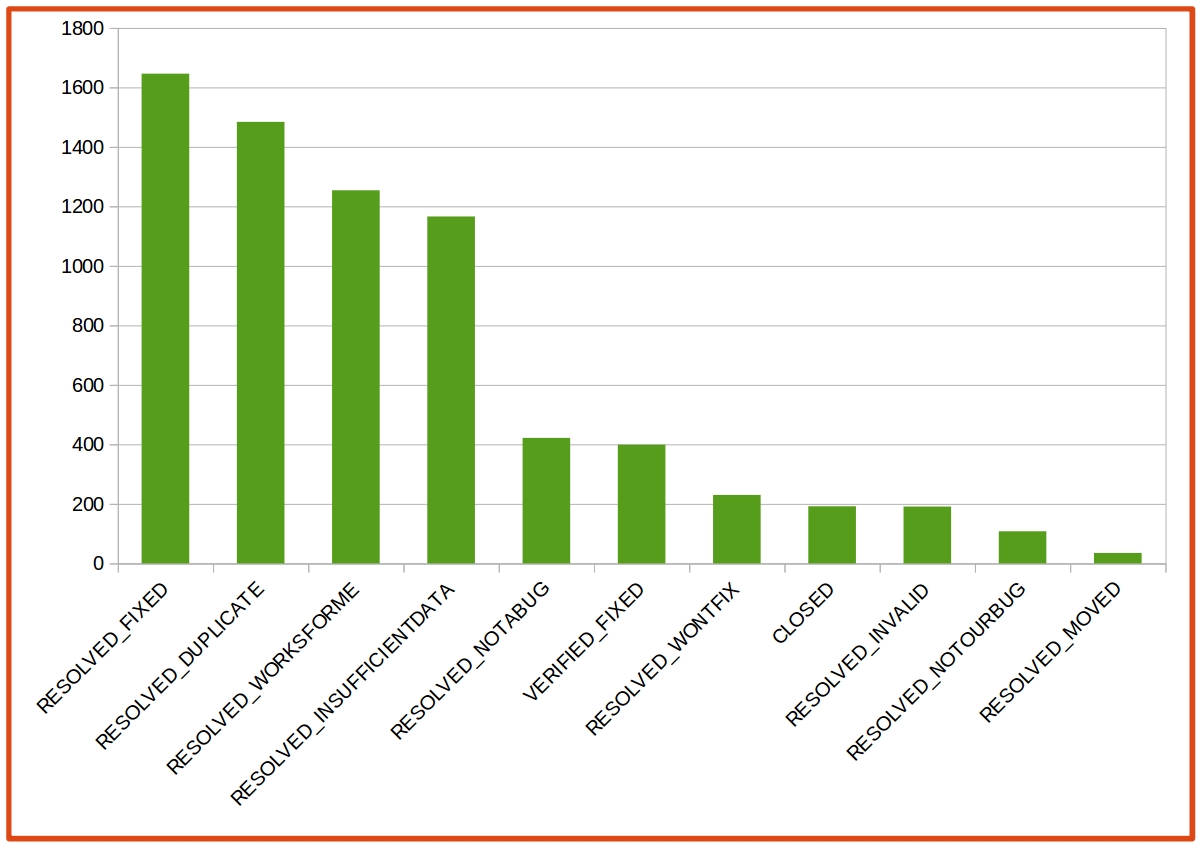
As Tommy kindly mentioned on the QA mailing list, this week the LibreOffice project has surpassed the 40,000 resolved bugs milestone – a huge achievement demonstrating the enormous amount of effort the community puts into software quality. If we take a look at the numbers from August 2016 (the month we started to collect data from Bugzilla) up to now, 7,143 bugs have been closed during this year, with an average of 133 bugs closed each week.

Let’s see some charts for the mentioned timeframe.

Number of bugs closed each week
Accumulative number of bugs closed
Statuses of the bugs closed

Get Involved!
So, you’ve seen what the QA team is doing across the LibreOffice project – why not get involved and help out? Even if you only have half an hour of spare time each week, by confirming bugs (and fixes) you can make LibreOffice better for millions of people around the world. And in addition, you build up valuable experience working with a large project and open source community – which could be very useful for a future career! Discover more about the QA team in our video interview with QA engineer Xisco Fauli.

(Notes about this blog post: raw data can be checked here. For more stats, visit the stats page in the QA wiki.)

Meeting the Taiwanese community

I have just visited Taiwan to attend COSCUP, meet representatives of the Taiwanese government and the local community, and run a certification session. Generally speaking, it was a very positive trip, because I was able to get a grasp of the activities at every level. Taiwan is definitely one of the strongholds of The Document Foundation.

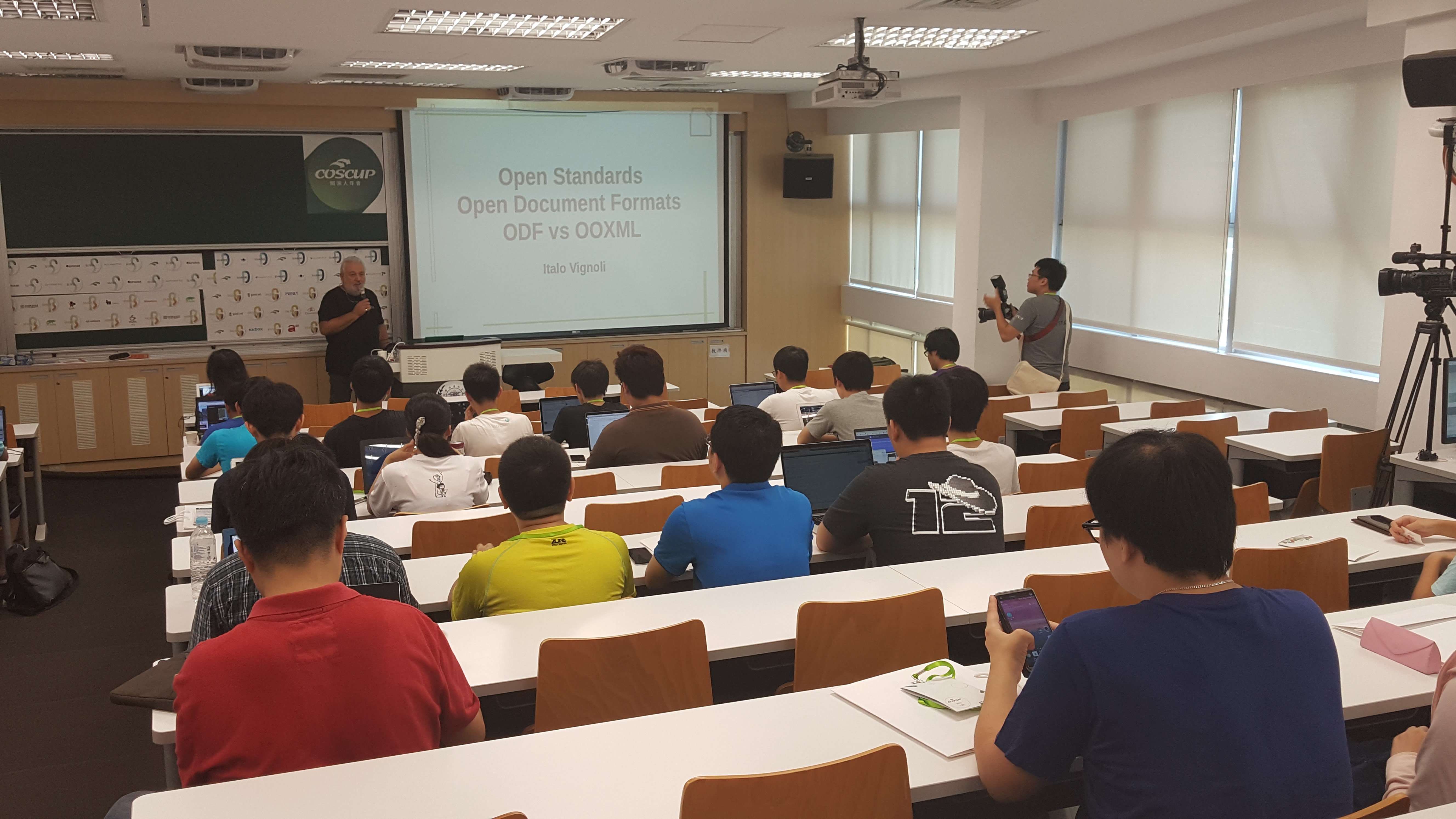
COSCUP is the annual conference held by the Taiwanese Open source community since 2006. This year, the event has returned to its original location at the National Taiwan University on August 5/6, with a number of community managed tracks. ODF and LibreOffice were featured during the first day, when I was able to present about the advantages of ODF over OOXML to a large audience of Taiwanese people – mostly young students – who asked several questions. Taiwan is one of the countries moving to ODF, so the topic is rather hot.

The meeting with representatives of the Taiwanese government, led by Digital Minister Audrey Tang, was organized on Monday, August 7, in the early afternoon. During the meeting, we discussed the situation of the migrations to ODF in Europe, together with the opportunities and the challenges faced by every government. I learned about the digital strategy of the Taiwanese government, and about the investments they are doing to introduce open source software to the next generations of citizens. Digital Minister Audrey Tang asked about the evolution of LibreOffice in the cloud.

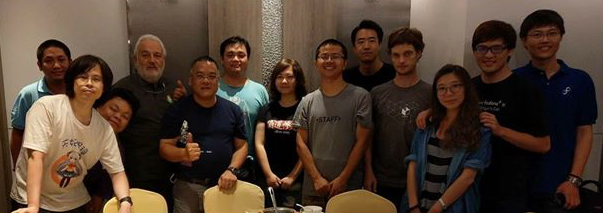
The meeting with the Taiwanese LibreOffice community spanned over a couple of events: a dinner on Saturday night, during which I had the opportunity to taste some real Chinese and Taiwanese dishes (which are rather different from their European equivalents), and a meetup on Monday night, during which I could talk about ODF vs OOXML, to provide some competitive marketing background on the topic. Moving from OOXML to ODF is not easy, not even in countries where the decision is backed by the government like Taiwan. It is therefore important that all community members know the differences between the two document formats and the advantages of ODF in term of interoperability and costs over OOXML.

I would like to take the opportunity of thanking LibreOffice Taiwanese community for the organization of my presence in the island, and congratulate the Taiwanese government for their comprehensive digital strategy to support not only open source software and open standards but also the education of a new generation of digital citizens.