Join the LibreOffice Team as a Paid Developer focusing on scripting support, preferably full-time, remote (m/f/d)

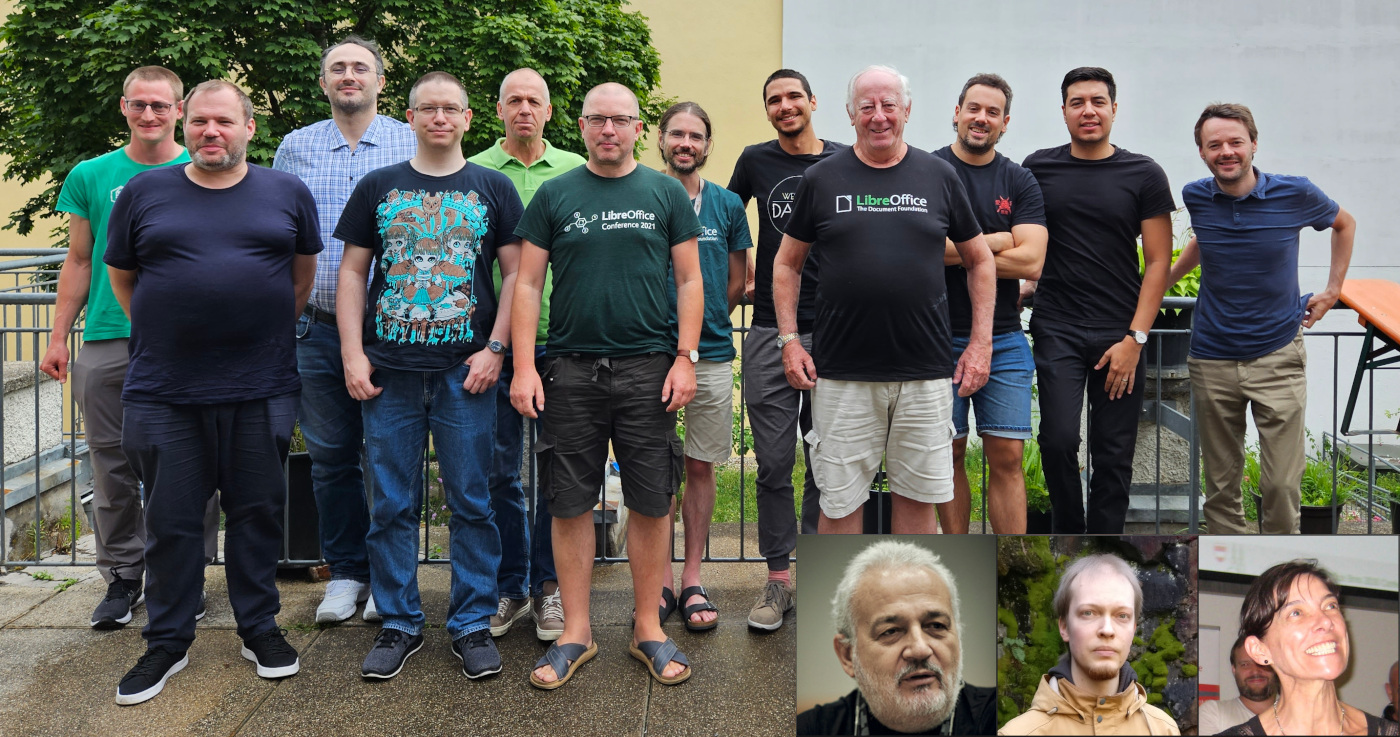
The Document Foundation's team

Love LibreOffice development? Want to turn your passion into a paid job? We are The Document Foundation (TDF), the non-profit entity behind LibreOffice. We’re passionate about free software, the open source culture and about bringing new companies and people with fresh ideas into our community.

To improve the scripting support of LibreOffice, the office productivity suite for over 200 million users around the globe, we’re searching for a developer (m/f/d) to start work (from home) as soon as possible. This is what you’ll do:

  • Work on the LibreOffice codebase (mostly C++)
  • Focus on scripting and the use of UNO API, including script developer experience with internal and external IDEs
  • Fix bugs, implement new features, and improve the quality of scripting-related code in LibreOffice
  • Document what you do, actively share knowledge in public with volunteers and contributors via blog posts, workshops and conference talks, so other developers and users have an easier time learning about your work

Examples of tasks:

  • Add support for Interactive Python
  • Make macro recording production-ready
  • Reimplement JavaScript support in order to drop Rhino dependency
  • Improve VBA compatibility
  • Improve auto-completion support

What we want from you:

  • Very good C++ development skills
  • Proven experience working with some of the scripting languages supported by LibreOffice
  • Good team-playing skills
  • Speaking and writing English

Previous contributions to FOSS projects (show us your repos!) are a plus. A previously established relationship within the developer community, as well as with other teams such as QA is a plus, but it is not mandatory at the start and can be achieved during the work itself.

As always, TDF will give some preference to individuals who have previously shown a commitment to TDF, including but not limited to members of TDF. Not being a member does not exclude any applicants from consideration.

Join us!

All jobs at The Document Foundation are remote jobs, where you can work from your home office or a co-working space. The work time during the day is flexible, apart from a few fixed meetings. The role is offered as full-time (ideally 40 hours per week). While we prefer full-time for the role, part-time applications, or proposals to grow the hours over time, will be considered. Candidates that are resident in (or willing to relocate to) Germany will be employed directly by TDF. Otherwise, external payroll services will be used if available in the candidate’s country of residence.

Are you interested? Get in touch!

TDF welcomes applications from all suitably qualified persons regardless of their race, sex, gender, disability, religion/belief, sexual orientation or age. Don’t be afraid to be different, and stay true to yourself. We like you that way! 😊

We’re looking forward to receiving your application, including information about you (your resume), when you are available for the job, and of course your financial expectations. We expect you to provide details about your C++ experience. Pointing to public repositories with your code is very helpful. Please send us an e-mail to developers@documentfoundation.org no later than November 17, 2025. If you haven’t received feedback by December 15, 2025, your application could not be considered.

Also note: we only accept applications from the applicant, and not from any intermediary. We do not accept agency resumes. Please do not forward resumes to any recruiting alias or employee.

LibreOffice and Google Summer of Code 2025: The results

Google Summer of Code logo

This year, LibreOffice was once again a mentoring organization in the Google Summer of Code (GSoC), a global program focused on bringing more developers into free and open source software development. Seven projects were finished successfully. Contributors and mentors enjoyed the time, and here we present some of the achievements, which should make their way into LibreOffice 26.2 in early February 2026!

You can experiment with the new features by using daily builds and report any problems in our bug tracker.


Import Markdown files into LibreOffice Writer by Ujjawal Kumar Chouhan

Mentors: Thorsten Behrens (Collabora), Ilmari Lauhakangas (TDF)

Requests to add support for the simple text formatting language known as Markdown to LibreOffice have been more and more frequent. These days Markdown is often encountered in forum posts, chat messages and readme files. In fact, the content of the website of The Document Foundation is written in Markdown.

Thanks to this project, LibreOffice now supports importing Markdown files and pasting Markdown content into Writer as well as pasting Markdown tables into Calc. The supported dialect is CommonMark with GitHub-style table syntax and the library used is MD4C.

Additionally, Collabora developers added support for exporting to Markdown from Writer.

Learn more about Markdown import in the final report.


New Dialog To Edit Table Styles by Karthik Godha

Mentors: Heiko Tietze (TDF), Rafael Lima

LibreOffice does not yet support proper styles for tables, but has a system for applying direct formatting to them. Before Karthik’s work, it was only possible to add new formatting templates, while now existing ones can be edited as well. At the time of writing this, the feature has not yet been merged into the code base, but hopefully it will appear in the next weeks.

Learn more about the table styles project in the final report.


Python code auto-completion by Manish Bera

Mentors: Xisco Faulí, Hossein Nourikhah (TDF)

Power users are sure to love the improvements brought to Python support by this project. Now Python IDEs are able to provide auto-completion for LibreOffice UNO API methods and properties, flag type errors and display information about parameters and types.

Learn more about the Python auto-completion project in the final report.


BASIC IDE code auto-completion by Devansh Varshney

Mentors: Jonathan Clark, Hossein Nourikhah (TDF), Rafael Lima

BASIC macro developers are not forgotten: this project implemented an object browser, allowing the macro author to see all the available and used methods and properties, including the whole UNO API. A helpful view for details is shown, reducing the need to dig through the API documentation. After this foundational achievement, the next goal is to add context-aware auto-completion to the BASIC IDE editor.

Learn more about the BASIC auto-completion project in the final report.


Rust UNO Language Binding by Mohamed Ali Mohamed

Mentor: Stephan Bergmann (Collabora)

Rust is a popular type safe programming language, which can now be used to write LibreOffice extensions or do any kind of scripting and processing via the UNO API.

Learn more about the Rust binding in the final report.


Implement report builder in C++ by Adam Seskunas

Mentors: Michael Weghorn, Hossein Nourikhah (TDF)

The Report Builder produces Writer documents from Base files. While it might not be the most popular feature in LibreOffice, there have been increasing concerns about the maintainability of the current Java-based tool. The first group of people to celebrate Adam’s reimplementation will surely be Linux package maintainers, who had even started omitting the feature entirely. At the time of writing this, the feature has not yet been merged into the code base.

Learn more about the C++ Report Builder in the final report.


Rework Impress slideshow to use DrawingLayer primitives by Shardul Vikram Singh

Mentors: Thorsten Behrens, Sarper Akdemir (Collabora)

This is important modernising work happening under the hood of Impress. The project mostly completed the rework on Linux, laying a foundation for rendering modernisation on other platforms. The code itself lives in a separate feature branch for now and will not be merged for LibreOffice 26.2.

Learn more about the slideshow rework in the final report.

Wrapping up

Many thanks to all contributors who spent their summer time improving LibreOffice. You are awesome! And special thanks also to the mentors who always put so much love and energy into these tasks. That’s what makes LibreOffice rock.

Now we are looking forward to next year’s GSoC. If you are interested, why not prepare early? Learn more at out wiki page where some ideas are listed.

Participating in GSoC is a great way to build your skills, and show future employers what you’re capable of!


Join the LibreOffice Team as a Paid Developer focusing on the Base database application, preferably full-time, remote (m/f/d)

The Document Foundation's team

Love LibreOffice development? Want to turn your passion into a paid job? We are The Document Foundation (TDF), the non-profit entity behind LibreOffice. We’re passionate about free software, the open source culture and about bringing new companies and people with fresh ideas into our community.

To improve the Base database application of LibreOffice, the office productivity suite for over 200 million users around the globe, we’re searching for a developer (m/f/d) to start work (from home) as soon as possible. This is what you’ll do:

  • Work on the LibreOffice codebase (mostly C++)
  • Focus on Base, its frontend and backend features and all the ways databases are used elsewhere in the software
  • Fix bugs, implement new features, and improve the quality of database code in LibreOffice
  • Document what you do, actively share knowledge in public with volunteers and contributors via blog posts, workshops and conference talks, so other developers and users have an easier time learning about your work

Examples of tasks:

  • Polish the Firebird integration
  • Improve the tool for migrating databases from HSQLDB to Firebird
  • Make the new C++-based Report Builder production-ready
  • Add support for SQLite databases

What we want from you:

  • Very good C++ development skills
  • Proven experience working with databases
  • Good team-playing skills
  • Speaking and writing English

Previous contributions to FOSS projects (show us your repos!) are a plus. A previously established relationship within the developer community, as well as with other teams such as QA is a plus, but it is not mandatory at the start and can be achieved during the work itself.

As always, TDF will give some preference to individuals who have previously shown a commitment to TDF, including but not limited to members of TDF. Not being a member does not exclude any applicants from consideration.

Join us!

All jobs at The Document Foundation are remote jobs, where you can work from your home office or a co-working space. The work time during the day is flexible, apart from a few fixed meetings. The role is offered as full-time (ideally 40 hours per week). While we prefer full-time for the role, part-time applications, or proposals to grow the hours over time, will be considered. Candidates that are resident in (or willing to relocate to) Germany will be employed directly by TDF. Otherwise, external payroll services will be used if available in the candidate’s country of residence.

Are you interested? Get in touch! We aim to schedule the first interview within two weeks of your application. You can also approach us any time for an informal chat, to learn about the role or in case of questions.

TDF welcomes applications from all suitably qualified persons regardless of their race, sex, gender, disability, religion/belief, sexual orientation or age. Don’t be afraid to be different, and stay true to yourself. We like you that way! 😊

We’re looking forward to receiving your application, including information about you (your resume), when you are available for the job, and of course your financial expectations. We expect you to provide details about your C++ experience. Pointing to public repositories with your code is very helpful. Please send us an e-mail to developers@documentfoundation.org no later than October 22, 2025. If you haven’t received feedback by November 20, 2025, your application could not be considered.

Also note: we only accept applications from the applicant, and not from any intermediary. We do not accept agency resumes. Please do not forward resumes to any recruiting alias or employee.

Join the LibreOffice Team as a Paid Developer focusing on UI with initial emphasis on macOS, preferably full-time, remote (m/f/d)

The Document Foundation's team

Love LibreOffice development? Want to turn your passion into a paid job? We are The Document Foundation (TDF), the non-profit entity behind LibreOffice. We’re passionate about free software, the open source culture and about bringing new companies and people with fresh ideas into our community.

To improve the user interface of LibreOffice, the office productivity suite for over 200 million users around the globe, we’re searching for a developer (m/f/d) to start work (from home) as soon as possible. This is what you’ll do:

  • Work on the LibreOffice codebase (mostly C++)
  • Focus on LibreOffice’s user interface, in the way it is rendered and laid out
  • Fix bugs, implement new features, and improve the quality of the UI code in LibreOffice while working together with the design team and other contributors
  • Document what you do, actively share knowledge in public with volunteers and contributors via blog posts, workshops and conference talks, so other developers and users have an easier time learning about your work

Examples of tasks:

  • Convert the remaining uses of macOS Carbon API to Cocoa and move from deprecated functions to supported ones
  • Rework the code responsible for the Tabbed UI and other alternative UIs to make it consistent with the rest of the UI

What we want from you:

  • Very good C++ development skills
  • Proven experience working on macOS
  • Proven experience working with UI toolkits
  • Good understanding of graphics programming
  • Good team-playing skills
  • Speaking and writing English

Previous development experience under Windows and Linux and contributions to FOSS projects (show us your repos!) are a plus. A previously established relationship within the developer community, as well as with other teams such as QA is a plus, but it is not mandatory at the start and can be achieved during the work itself.

As always, TDF will give some preference to individuals who have previously shown a commitment to TDF, including but not limited to members of TDF. Not being a member does not exclude any applicants from consideration.

Join us!

All jobs at The Document Foundation are remote jobs, where you can work from your home office or a co-working space. The work time during the day is flexible, apart from a few fixed meetings. The role is offered as full-time (ideally 40 hours per week). While we prefer full-time for the role, part-time applications, or proposals to grow the hours over time, will be considered. Candidates that are resident in (or willing to relocate to) Germany will be employed directly by TDF. Otherwise, external payroll services will be used if available in the candidate’s country of residence.

Are you interested? Get in touch! We aim to schedule the first interview within two weeks of your application. You can also approach us any time for an informal chat, to learn about the role or in case of questions.

TDF welcomes applications from all suitably qualified persons regardless of their race, sex, gender, disability, religion/belief, sexual orientation or age. Don’t be afraid to be different, and stay true to yourself. We like you that way! 😊

We’re looking forward to receiving your application, including information about you (your resume), when you are available for the job, and of course your financial expectations. Pointing to public repositories with your code is very helpful. Please send us an e-mail to developers@documentfoundation.org no later than September 12, 2025. If you haven’t received feedback by October 13, 2025, your application could not be considered.

Also note: we only accept applications from the applicant, and not from any intermediary. We do not accept agency resumes. Please do not forward resumes to any recruiting alias or employee.

Projects selected for LibreOffice in the Google Summer of Code 2025

The LibreOffice Google Summer of Code projects have been selected for 2025.

  • Adam Seskunas – Implement Report Builder in C++: replacing the current Java-based Report Builder with a new solution will improve maintainability and remove one of the last remaining dependencies on Java.
  • Karthik Godha – New dialog to edit Table Styles: Writer and Calc have a feature called AutoFormat styles with the possibility to add custom styles. This project will make it possible to edit existing table styles.
  • Devansh Varshney – BASIC IDE code auto-completion: rudimentary auto-completion for BASIC macro authors is already available, but this project will make the feature much more helpful.
  • Manish Bera – Python code auto-completion: currently there is no support at all for Python auto-completion when developing scripts for LibreOffice, so this will be quite a welcome addition.
  • Mohamed Ali Mohamed – Rust UNO language binding: last year LibreOffice received support for Lua and the latest .NET and now it’s time to make it possible to use the API with Rust.
  • Ujjawal Kumar – Import Markdown files into Writer: Markdown is a rather popular markup language for quickly formatting text in blog content, comments, chats and more. Requests to support it have increased recently, so it makes sense to tackle it.
  • Shardul Vikram Singh – Rework Impress slideshow to use DrawingLayer primitives: this is one of those projects that are incomprehensible to most users, but really important for the long term maintenance of the code.

Good luck to the contributors – we appreciate their work on these important features and improvements! And thanks to our mentors for assisting them: Thorsten Behrens, Stephan Bergmann and Sarper Akdemir (allotropia); Rafael Lima; Jonathan Clark, Heiko Tietze, Xisco Faulí, Michael Weghorn and Hossein Nourikhah (TDF).

Between August 25 and September 1, contributors will submit their code, project summaries, and final evaluations of their mentors. Find out more about the timeline here, and check out more details about the projects on this page.

LibreOffice is in the Google Summer of Code 2025!

GSoC logo

Everyone loves having shiny new features in LibreOffice. But how do we get them? Many are developed by volunteers and people in the ecosystem.

But another great source of new features is the Google Summer of Code (GSoC), a global, online program focused on bringing new contributors into open source software development. GSoC Contributors work with open source organisations on a 12+ week programming project under the guidance of mentors.

And we’re happy to announce that for 2025’s GSoC, LibreOffice is once again taking part!

Find out more here