The Latin American LibreOffice Community proudly invites you to join our 2023 Latin American LibreOffice Conference – LATAM 2023.
Please confirm that you want to play a YouTube video. By accepting, you will be accessing content from YouTube, a service provided by an external third party.
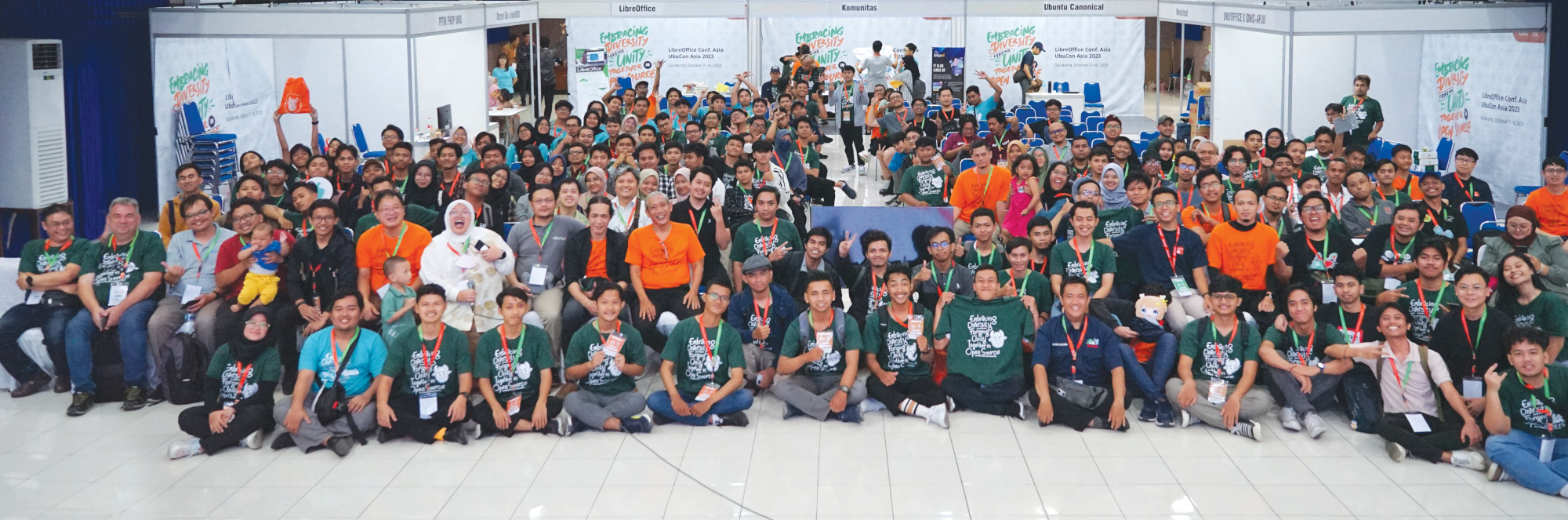
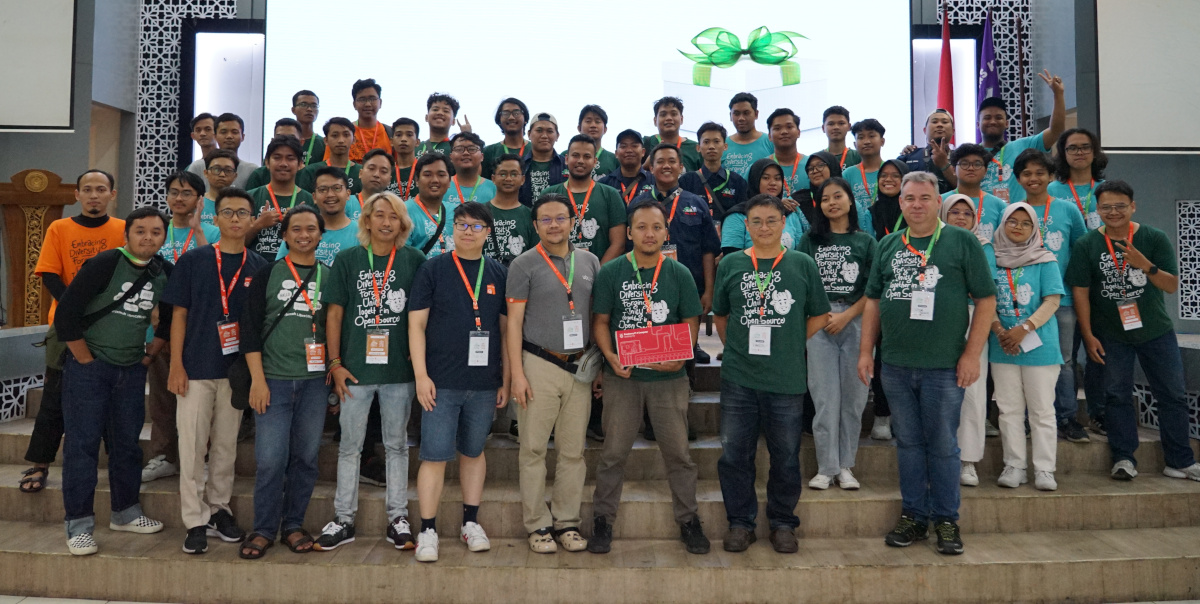
The LibreOffice Conf. Asia 2023 took place on 7 – 8 October 2023 in Surakarta, Indonesia. This event was held simultaneously and collaboratively with UbuCon Asia 2023 at the same place, with the official name “LibreOffice Conf. Asia & UbuCon Asia 2003” (LOUCA23). The following is a report and summary of the activities, which were attended by 500+ participants from many countries in the Asia region.
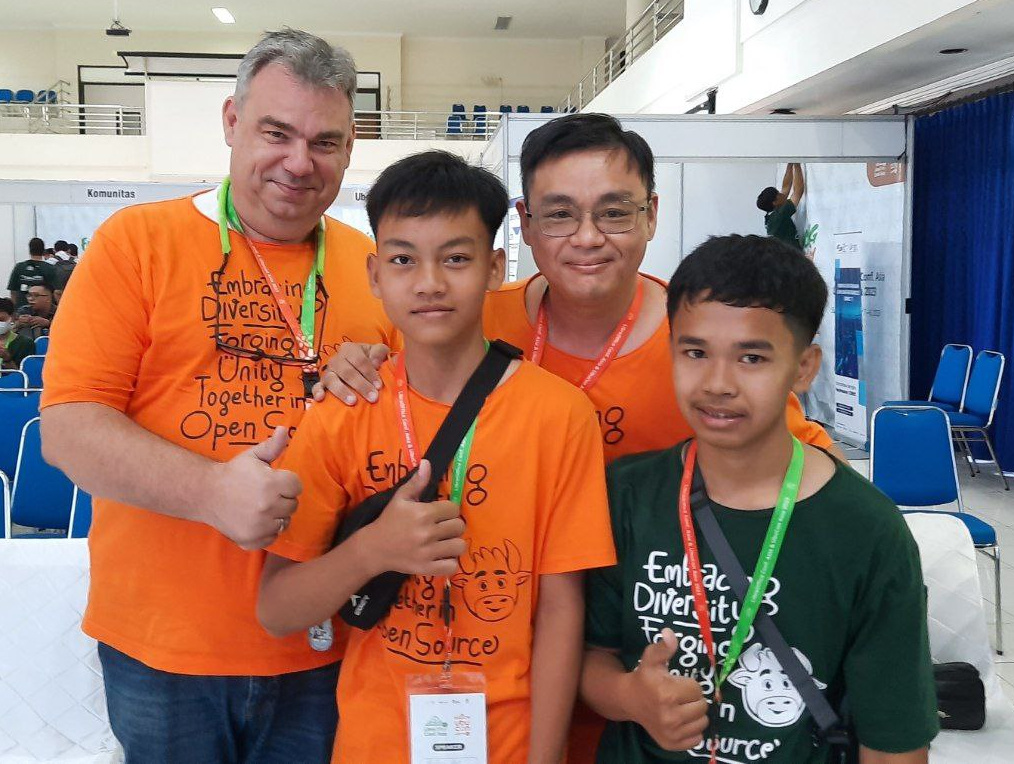
The main theme of this event was “Embracing Diversity – Forging Unity Together in Open Source”. Collaboratively organizing it together with UbuCon Asia was a concrete form of the theme promoted by the organizers. Similarly, you can also see celebrations of diversity at this event from the various backgrounds of the speakers who attended; there were 22 speakers at the LibreOffice Conf. Asia, from a total of 45 speakers who came from various countries: Indonesia (of course), Taiwan, Japan, Malaysia, Timor Leste, Korea and Germany. The diversity of ages is also interesting, considering that in LOUCA23 the youngest presenter was only 15 years old!
Several LibreOffice colleagues sent a special greeting video to the organizers. This is a great gift and encouragement for the LibreOffice community in the Asia region. Also special thanks to “Uncle” Italo who took the time to make a video presentation about LibreOffice – we really appreciate it!
Please confirm that you want to play a YouTube video. By accepting, you will be accessing content from YouTube, a service provided by an external third party.
If you accept this notice, your choice will be saved and the page will refresh.
Please confirm that you want to play a YouTube video. By accepting, you will be accessing content from YouTube, a service provided by an external third party.
If you accept this notice, your choice will be saved and the page will refresh.
LibreOffice Conf. Asia was held for 2 days on 7 and 8 October 2023. Andik Nur Ahmad was the keynote speaker on the first day, with the topic “Calc – to Explore the Data of a Popular MOBA Game”, followed by Lothar K. Becker and Franklin Weng with the topic “The Document Foundation’s Community and Membership: How Do They Work, and How to Get in” on the second day. Details about the topics that were presented some time ago at the event can be found on this page.
After busy activities from morning to afternoon, in the evening the organizers invited speakers, local committee members and event volunteers to special dinner. This was a relaxed moment to chit-chat, have casual discussions and laugh together. For the volunteers who were very busy during the event, of course this was also a very valuable moment, because on this occasion they could interact with the great speakers more freely and relaxedly.
However, the LibreOffice Conf. Asia 2023 could not have been held successfully without the active contribution of local communities who are members of the volunteer team. Several communities that actively contributed to this event include; Gimpscape ID (FOSS design community), OpenInfra ID, Paguyuban Linux Surakarta (Surakarta Linux Community), Kelompok Linux Arek Surabaya (Surabaya Linux Community, one of the oldest Linux Communities in Indonesia), and Linux Nurul Fikri (Nurul Fikri High School Linux Community).
The total number of volunteers for this activity was 45 people – and special thanks to all of them, who helped to organise and run activities from mornings to evenings. As a form of appreciation, at the end of the event, the LibreOffice Indonesia community gave special prizes to these ‘MVP’ volunteers.
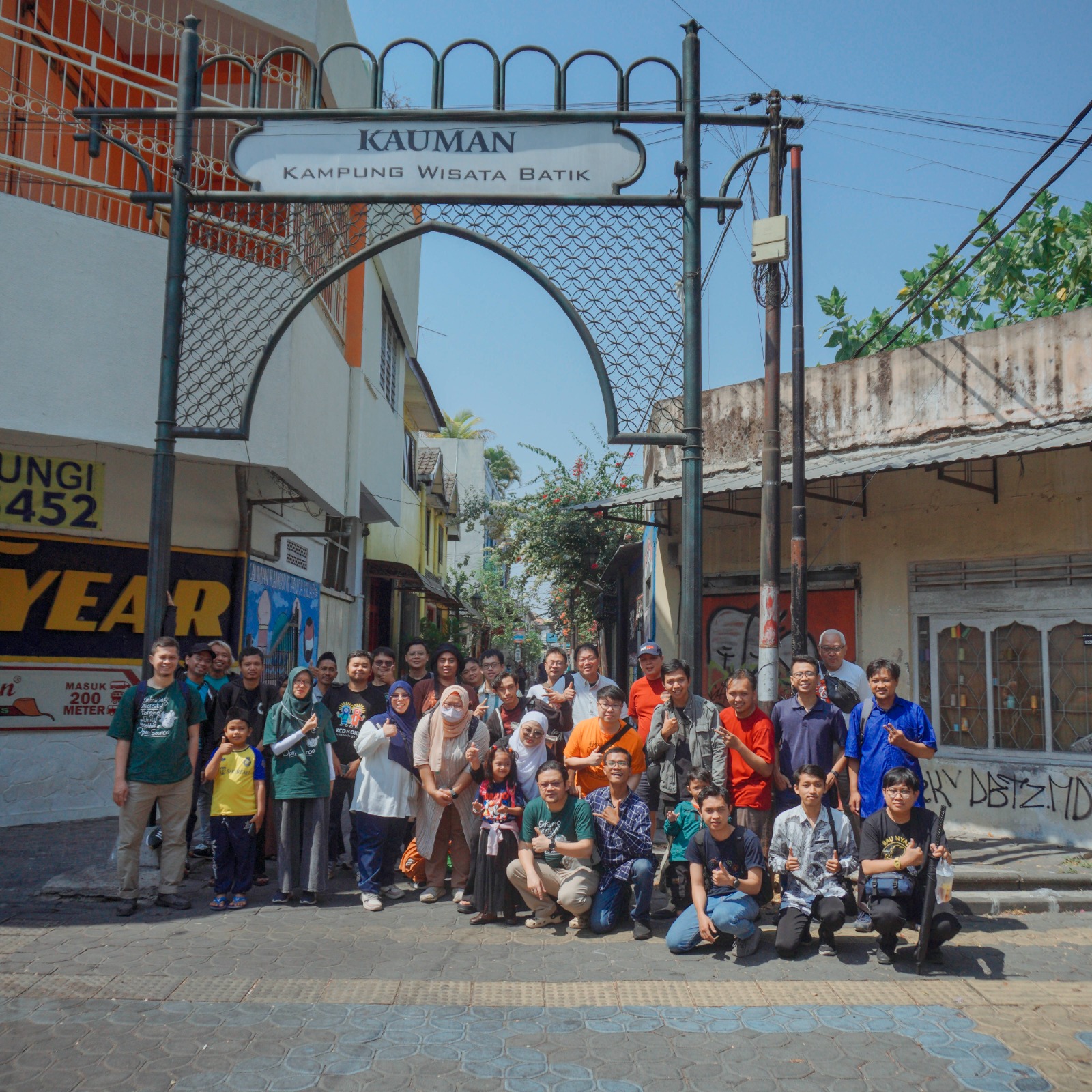
But the excitement of the LibreOffice Conf. Asia didn’t stop after the main activities were finished. On October 9, we invited speakers to enjoy several interesting destinations in Surakarta. Unfortunately, some speakers were unable to take part due to flight schedules and the like. Apart from that, the organizers also provided a special page for all participants to share their stories about LibreOffice Conf. Asia 2023on this page.
The community version of the documentation photos can be accessed via the shared album. In the future, speaker slides and video documentation from each session will be published on the the LibreOffice ID YouTube channel.
Finally, thanks to The Document Foundation which was a platinum sponsor, and thank you to the organizers (special thanks to Rania Amina and Ahmad Haris). See you at the LibreOffice Conf. Asia 2024!
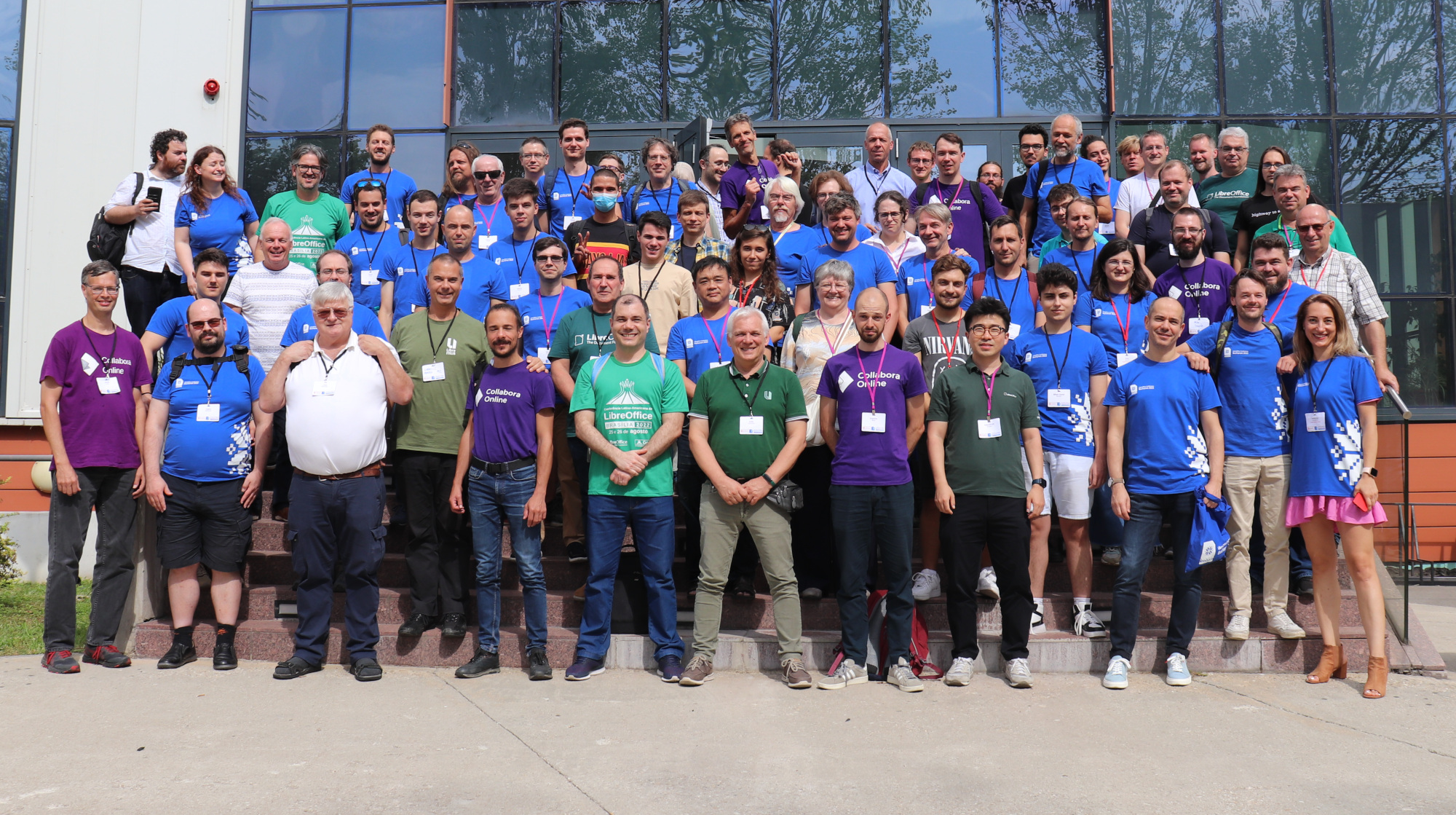
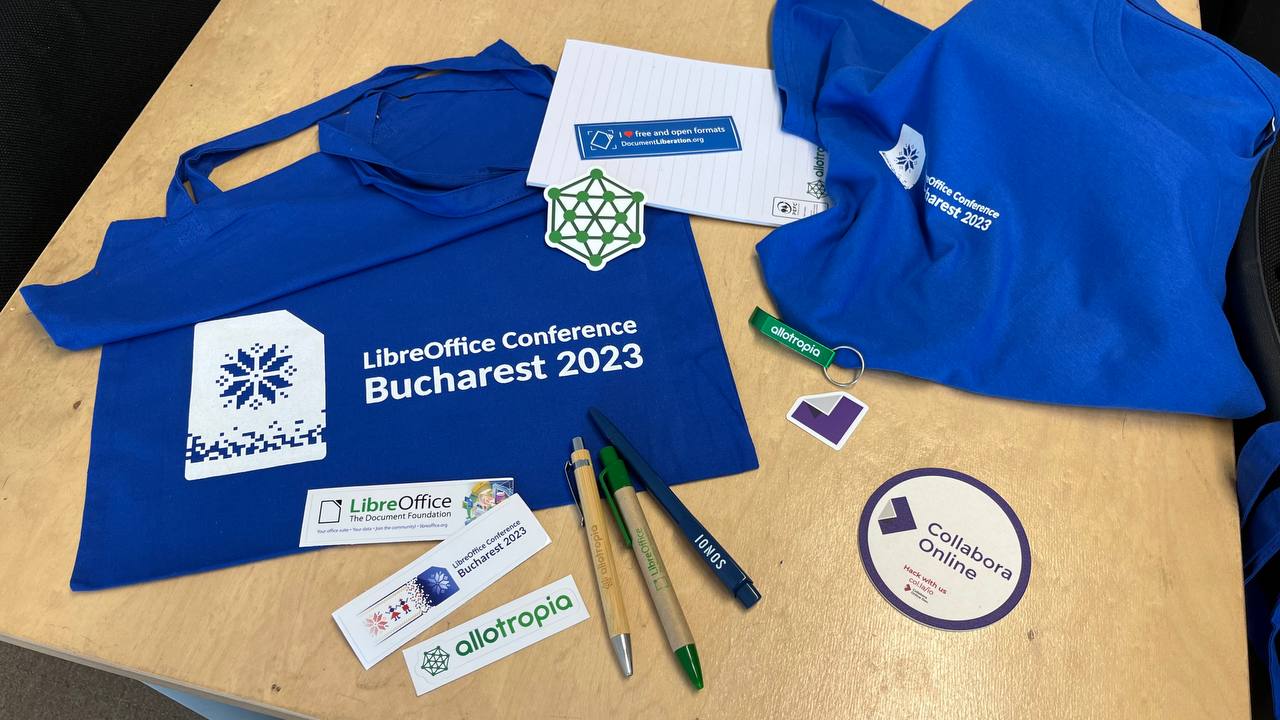
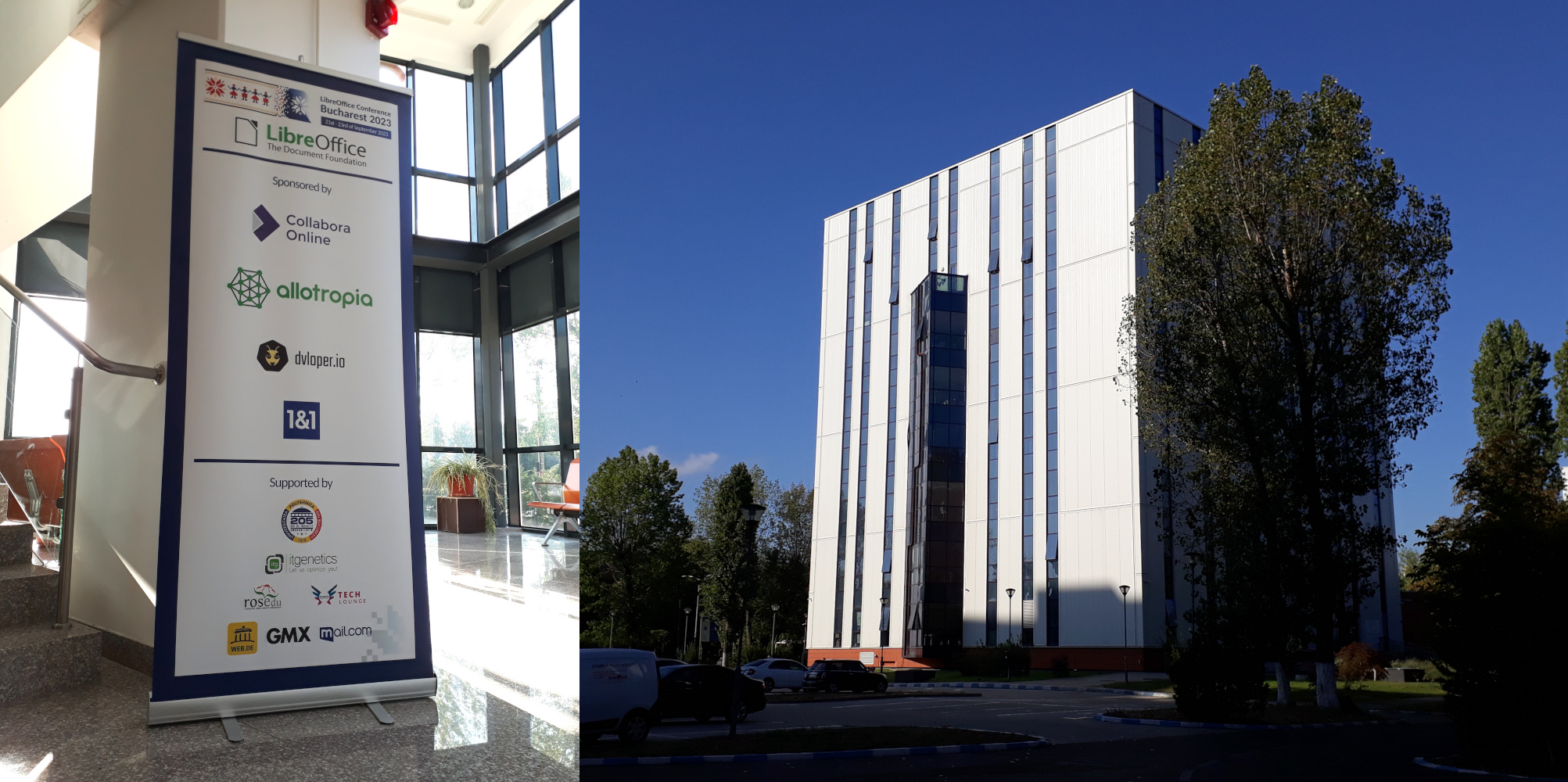
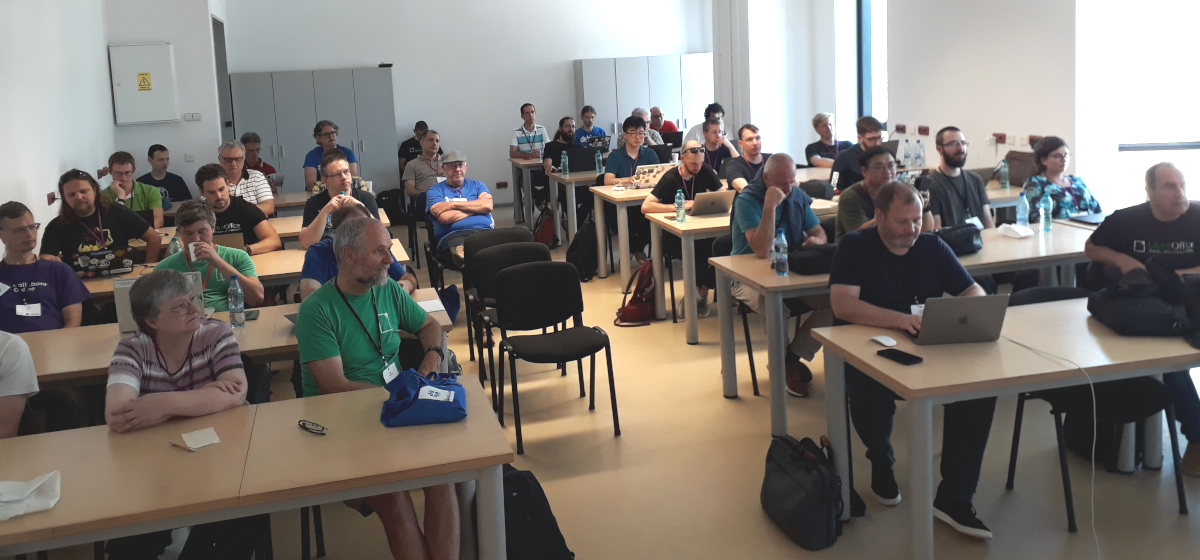
Last month we had our yearly LibreOffice Conference, this time taking place in Bucharest, the capital city of Romania. And it was a great event! We had over 100 participants in-person, with more joining online, watching the streams and sending in video presentations.
The conference took place in the Politehnica University campus, with talks divided into two rooms, and a separate workshop covering LibreOffice development running alongside the main tracks.
Before the main talks started, we had an informal Community Session to discuss various topics, including growing local communities, LibreOffice Liaisons, and Weblate improvements.
Then the main event started, with first an opening presentation by 1&1 Internet Development, one of the sponsors and organisers of the conference:
Please confirm that you want to play a YouTube video. By accepting, you will be accessing content from YouTube, a service provided by an external third party.
If you accept this notice, your choice will be saved and the page will refresh.
This was followed by a keynote presentation from sponsor Collabora Productivity:
Please confirm that you want to play a YouTube video. By accepting, you will be accessing content from YouTube, a service provided by an external third party.
If you accept this notice, your choice will be saved and the page will refresh.
And then allotropia, which also sponsored the event:
Please confirm that you want to play a YouTube video. By accepting, you will be accessing content from YouTube, a service provided by an external third party.
If you accept this notice, your choice will be saved and the page will refresh.
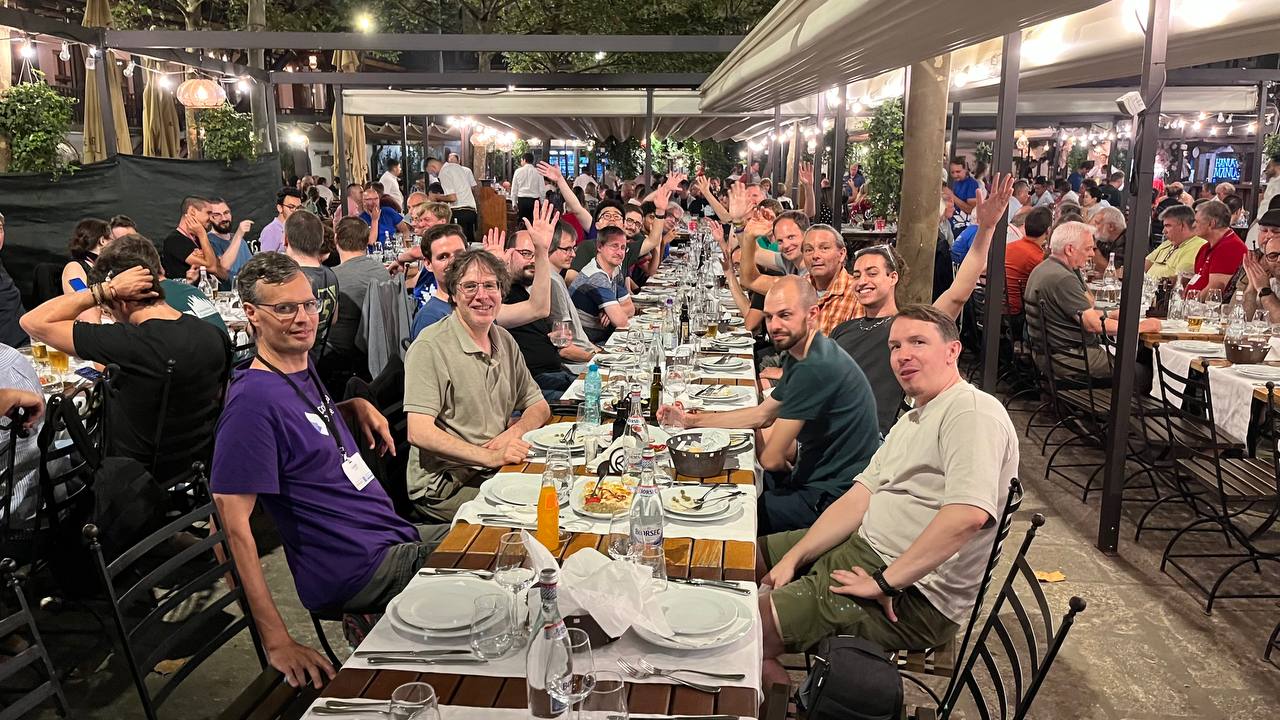
But the conference had more than talks and workshops! We also had an awesome community dinner:
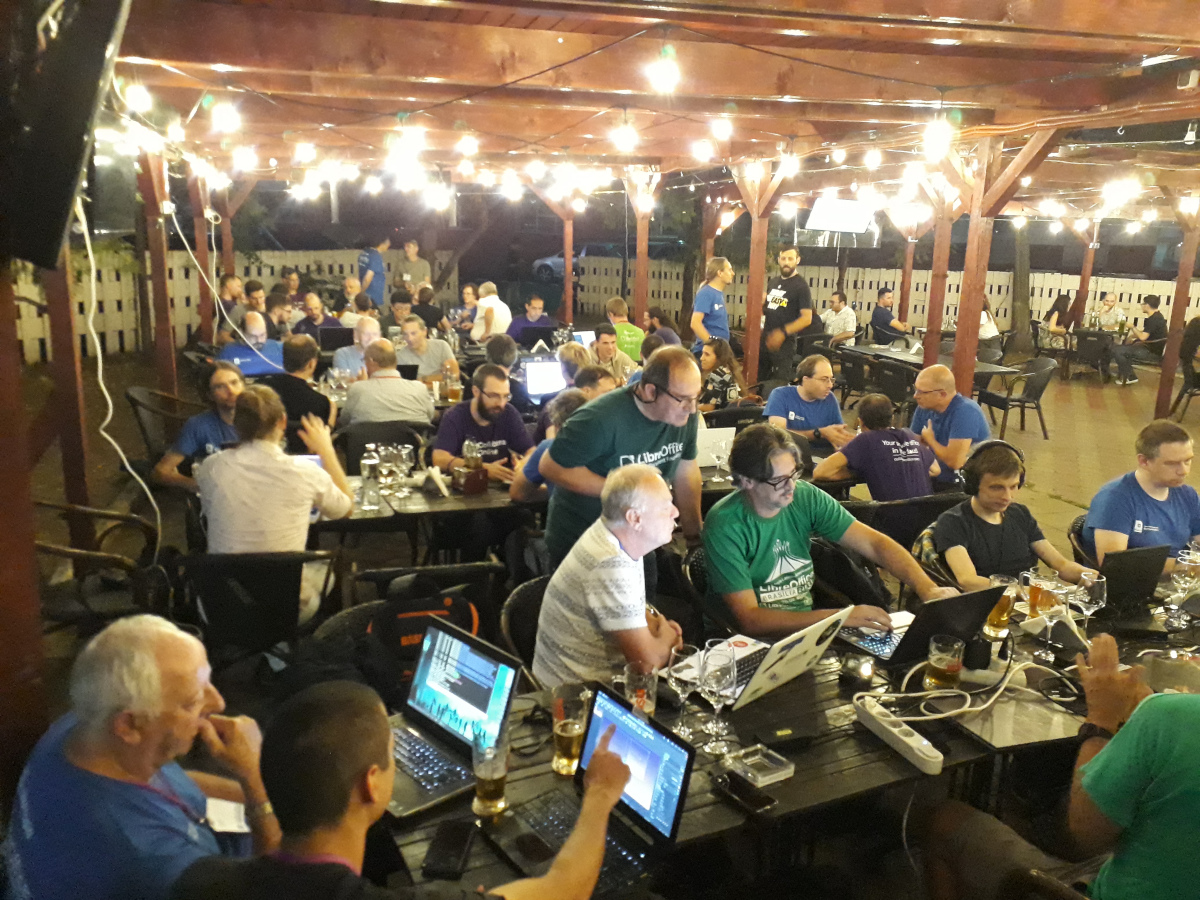
…and a hackfest, which was also accompanied by delicious pizza:
A playlist of videos from the conference is below (and we’re still adding more, so keep an eye on it). And we’re already looking forward to 2024’s conference! The location hasn’t been decided just yet, but we’ll announce it on this blog in due time…
Please confirm that you want to play a YouTube video. By accepting, you will be accessing content from YouTube, a service provided by an external third party.
In the Czech Republic, the beginning of October means that free software enthusiasts meet in Prague at LinuxDays, the biggest event of this kind in the country. This year’s conference was even more awaited, as it was organized after four years of a coronavirus break.
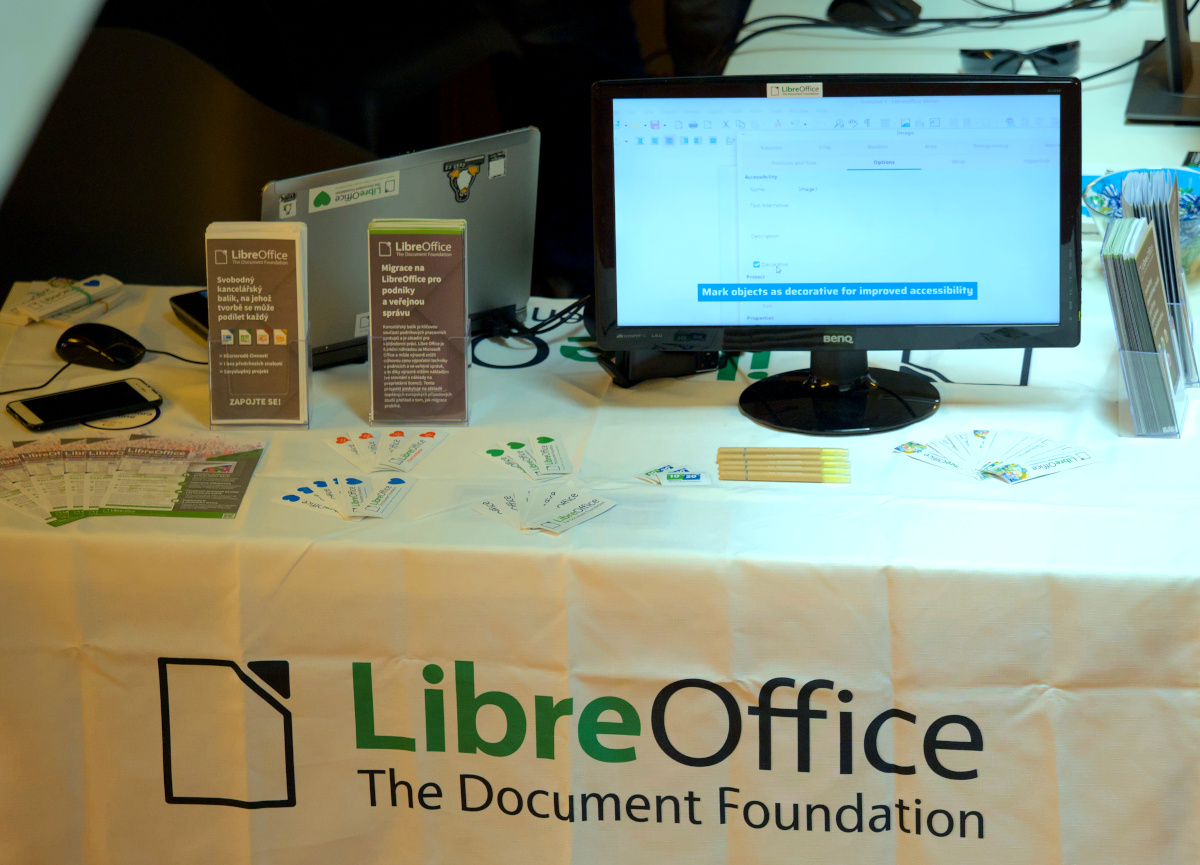
LibreOffice has had its booth here for many years, and we were proud to represent the project again amongst presentations of other open source flagships, and related local organizations. More than thousand of visitors proved that interest didn’t vanish during the break – and many of them stopped at our booth to share their experience, grab some merchandise (provided thanks to TDF), ask a question or discuss a particular topic.
Some popular topics were mentioned quite often. For instance, the online version is much more known and discussed than before; however, sometimes we were still able to surprise attenders that such a tool is available. Also, we didn’t expect that editing of PDF files in Draw is so appreciated, or there was interest in working with LaTeX and Markdown formats.
The conference program offered also specialized talks and some questions reflect extensive knowledge of the visitors. We discussed batch configuration of installed applications using an extension, the experimental version using WebAssembly, and compiling of the software.
Regardless of its importance, it is always rewarding to solve an issue. Thus, we were happy to advise how to construct a specific formula in Calc, and to inform that not saving solver settings (bug #38948) has been fixed in LibreOffice 7.6. Moreover, these two points are examples of issues that were asked by the same visitors already years ago.
It was encouraging to talk with people of the younger generations, including discussions about how they learn office suites in their schools. It seems that the free software world can still offer a lot and be attractive for them.
We hope that these examples of what we touched on during these two intensive days illustrate that offline events provide a valuable point of view on the software and the community, both contributors and users. If there is such a meeting in your country, don’t hesitate to attend it and get (or provide) feedback about our office suite there!
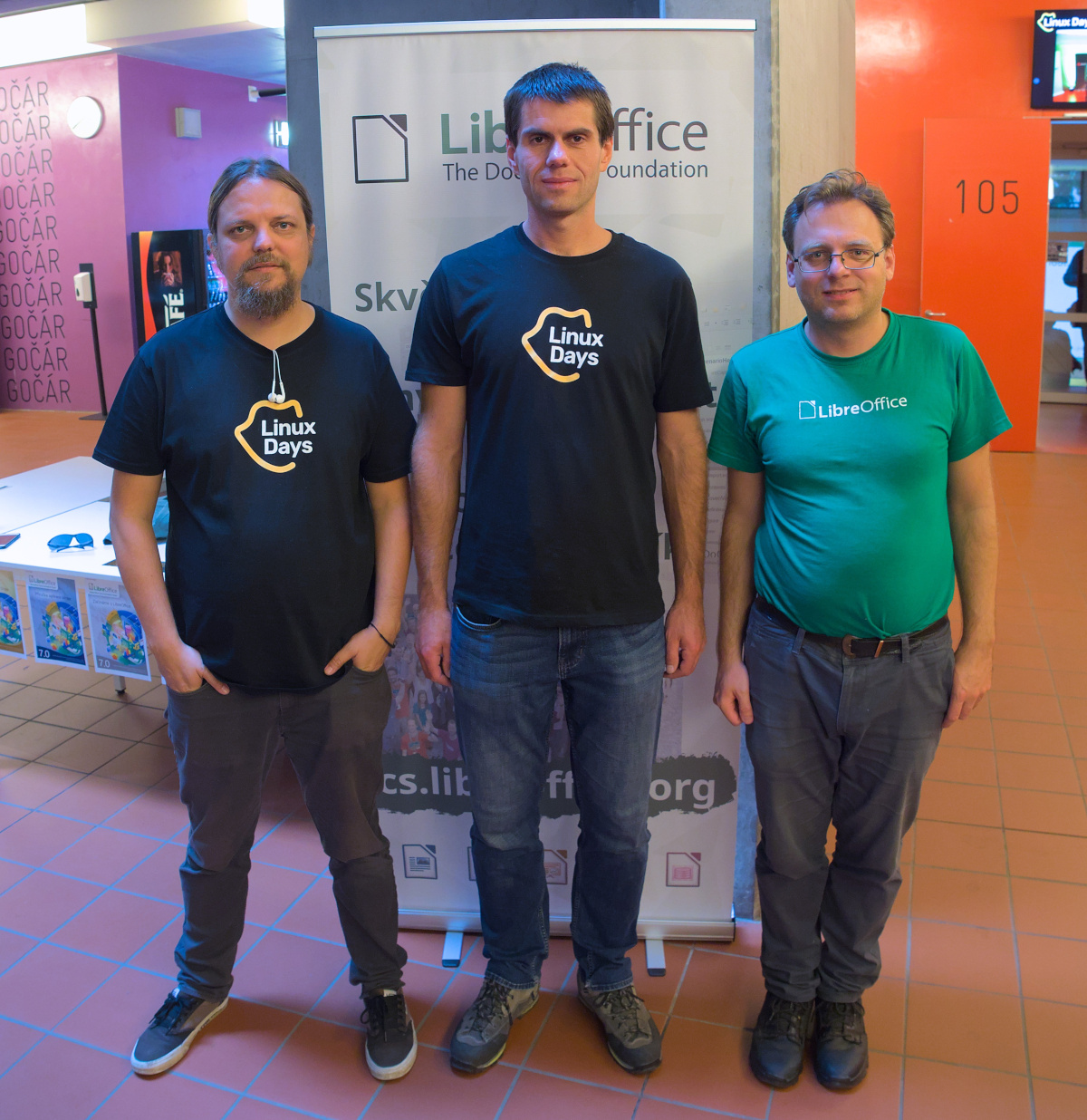
Many thanks to Stanislav, Petr and Zdeněk for attending, and their great help in the LibreOffice project!
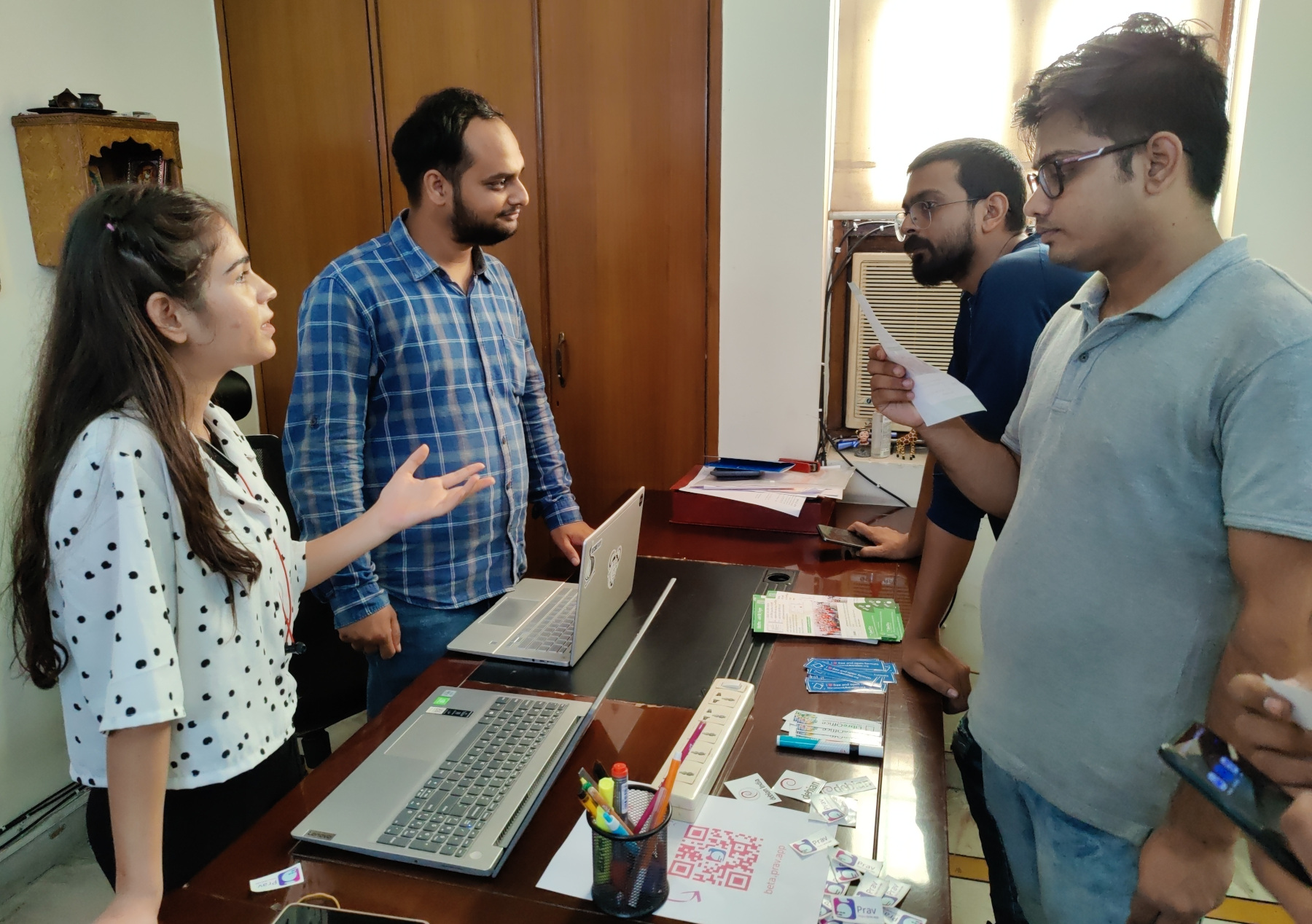
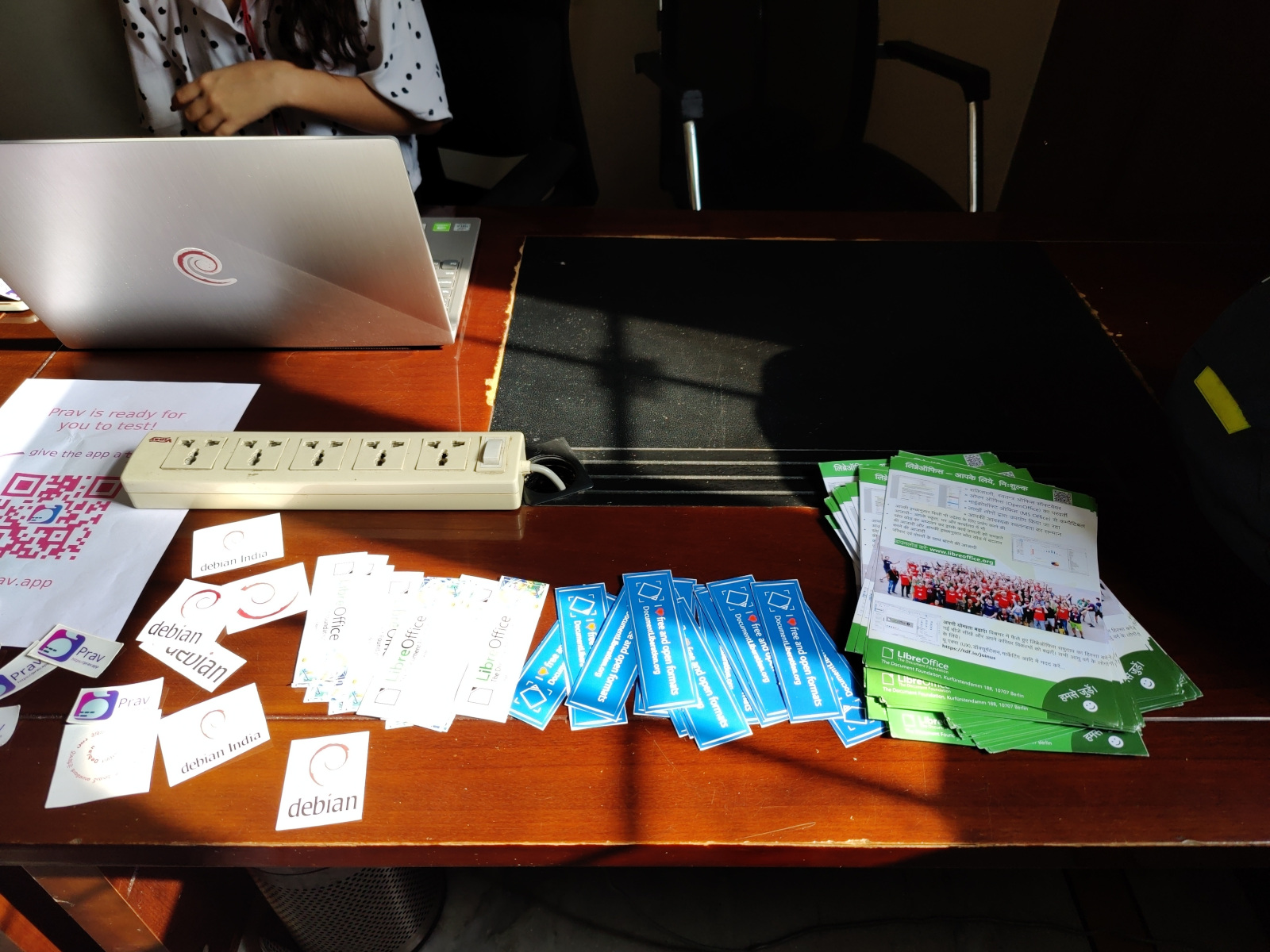
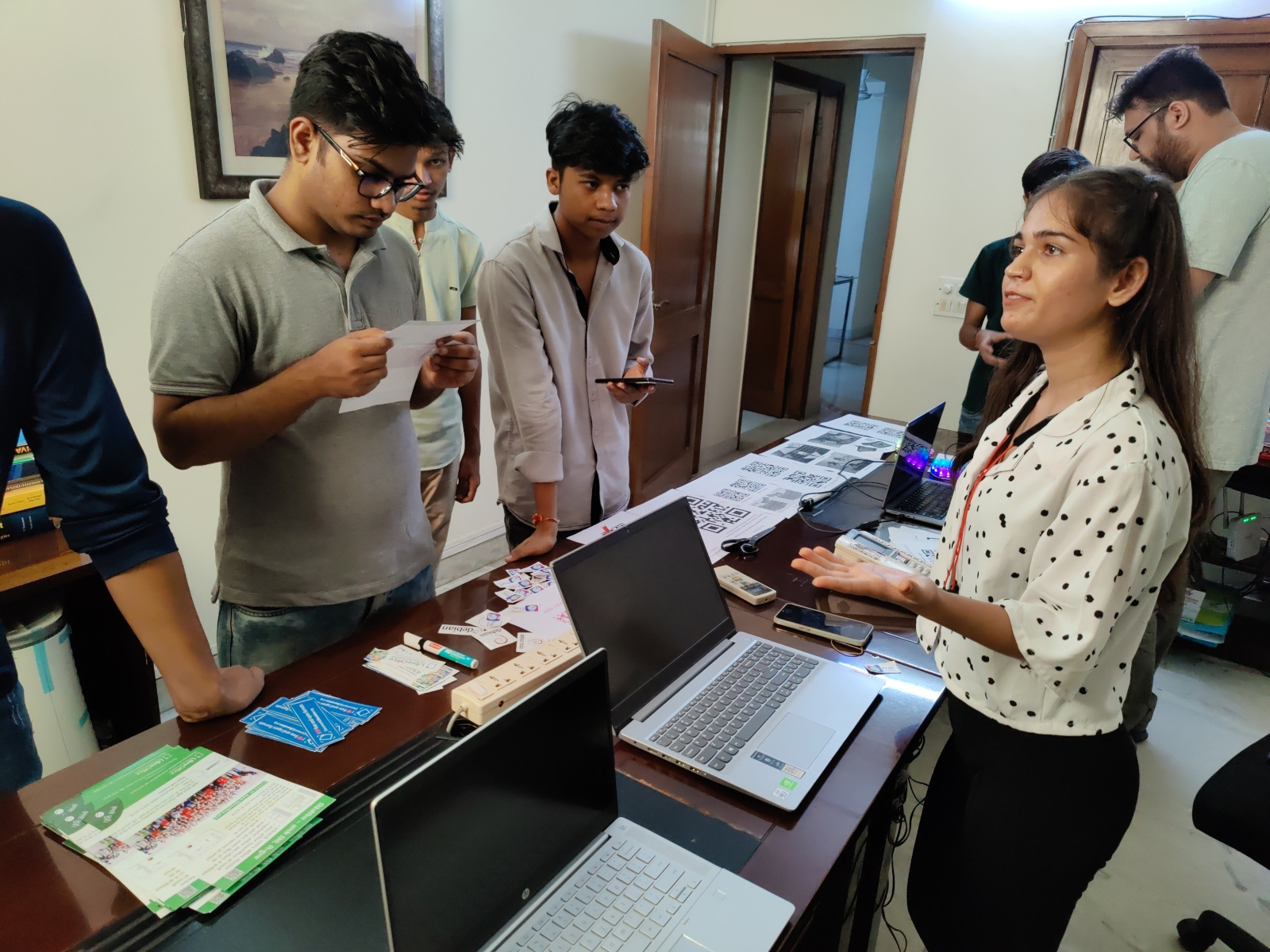
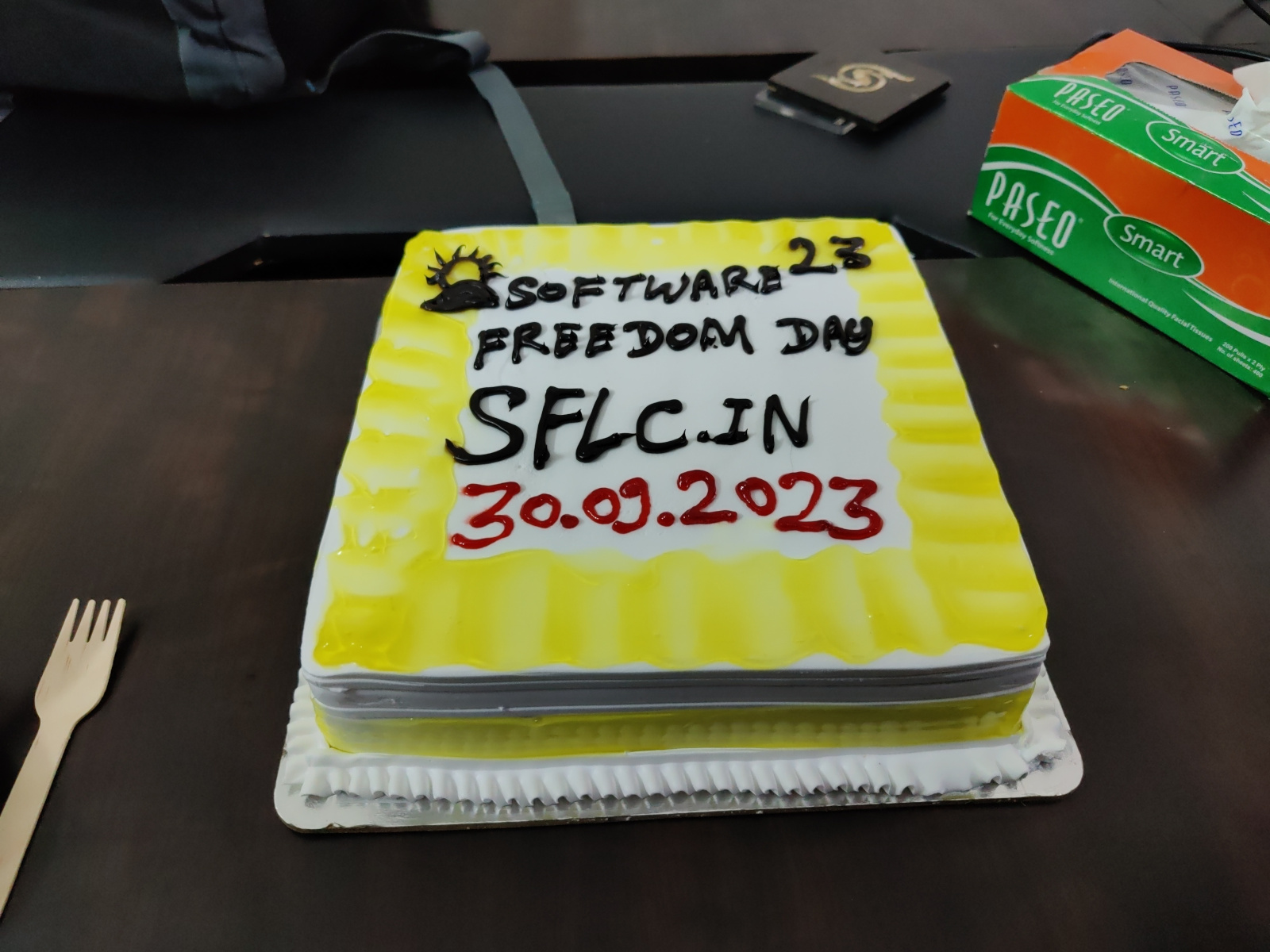
On September 30 in Delhi, the Software Freedom Law Centre (SFLC) organised an event to celebrate Software Freedom Day. Ravi Dwivedi was there with a stand and merchandise, with help from Surbhi, to raise awareness about LibreOffice.
Free Software enthusiasts from around Delhi attended the event. A lot of them were already familiar with LibreOffice. One person asked about the Document Liberation Project sticker and what it stands for; Ravi explained to them about it, and they got to learn about free formats and proprietary formats.
A few weeks ago, we had our yearly conference, this time in Bucharest, Romania. And now we’ve uploaded the first batch of videos from the event. Check out the playlist:
Please confirm that you want to play a YouTube video. By accepting, you will be accessing content from YouTube, a service provided by an external third party.