LibreOffice monthly recap: April 2020

Here’s our summary of updates, events and activities in the LibreOffice project in the last four weeks – click the links to learn more…

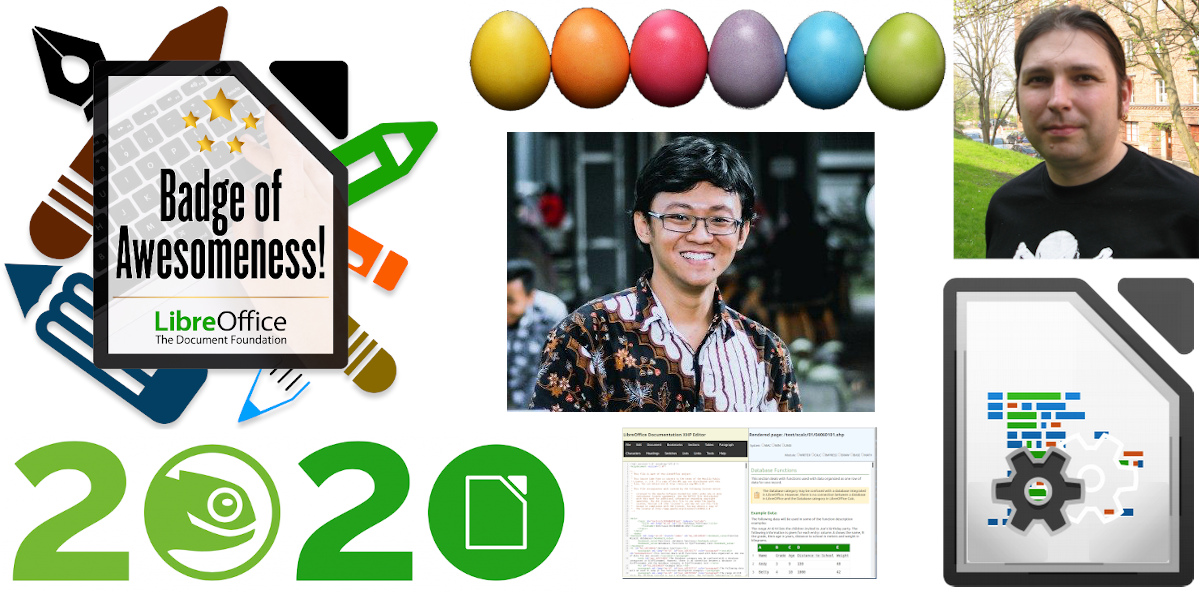
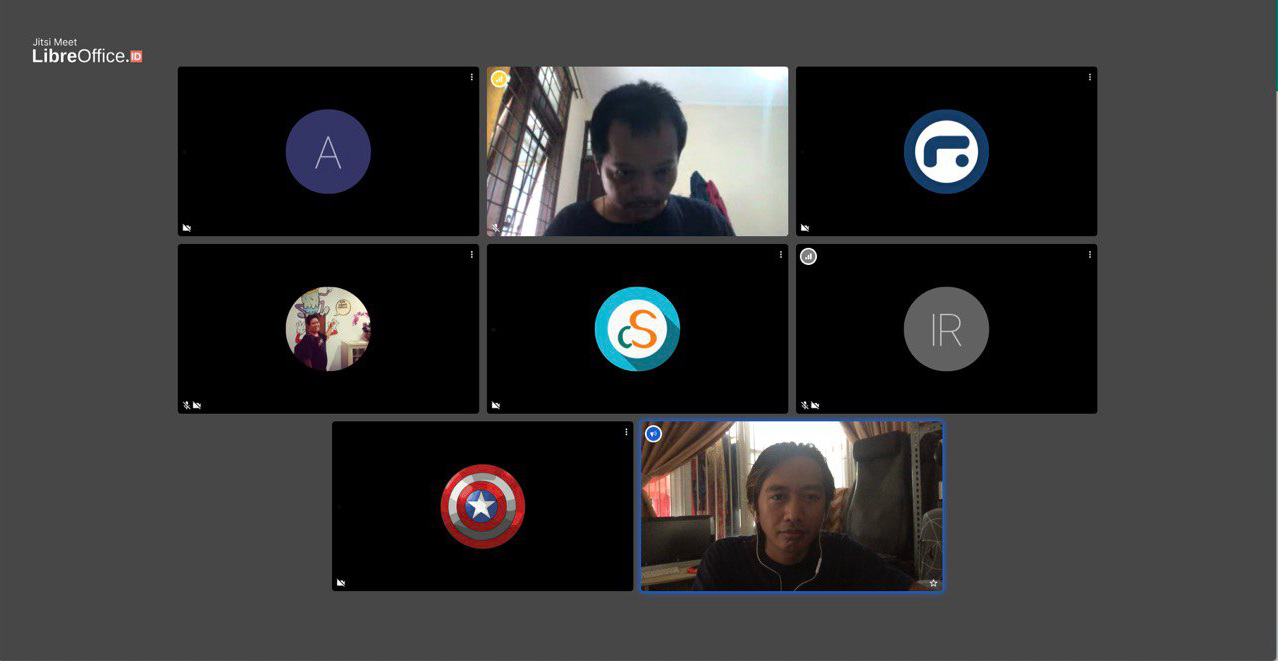
  • Communities around the world organise local events to meet in person, but many of these events have moved online, given the ongoing pandemic. The Indonesian community organised an online translation marathon to improve LibreOffice’s localisation in their language. They’re getting close to having 100% of the user interface translated – a big thanks for all their work!
  • On a more light-hearted note, TDF Board member Franklin Weng created an Easter Egg hunting game, based on the Document Freedom Day. Try to find the important words or phrases!

  • In the middle of the month, we provided an update on the status of LibreOffice for Android and iOS. Our main focus is on the desktop app right now, but mobile apps based on LibreOffice are available from our certified developers and partners.

  • Running LibreOffice on Windows 10? Need help with file management? Harald Berger, from our documentation and German-language communities, created a newcomer-friendly video explaining the basics of file management, and how to organise your documents for efficient usage in LibreOffice.

Please confirm that you want to play a YouTube video. By accepting, you will be accessing content from YouTube, a service provided by an external third party.

YouTube privacy policy

If you accept this notice, your choice will be saved and the page will refresh.

Keep in touch – follow us on Twitter, Facebook and Mastodon. Like what we do? Support our community with a donation – or join us and help to make LibreOffice even better for everyone!

Community Member Monday: Stanislaus J. Pinasthika

Today we’re talking to Stanislaus J. Pinasthika from the Indonesian LibreOffice community. He has recently become a member of The Document Foundation, helping to guide the LibreOffice project and community…

To start with, tell us a bit about yourself!

Let me tell you a story: Jember was a quiet city. No many cafes at the time. One day, in the beautiful morning, a boy was born. He was named Stanislaus Jiwandana Pinasthika – but his parents called typically called him Stanis. Twenty two years later, this boy graduated from the Information Systems Department, Faculty of Computer Science, at the University of Jember…

Today, I am struggling to start my masters degree in Computer Science at Gadjah Mada University. I like to design things using Inkscape, such as vector graphics, cartoons etc. You can see my work here. But I also love to contribute to open source projects.

For instance, I made a Linux Community in Jember with my friends – Sofyan Sugianto is one of them. He is also a member of TDF. My contributions to LibreOffice started with translating – at the time still using Pootle. Now, I am glad to be a proud member of TDF and the LibreOffice Quality Assurance (QA) team.

Why did you decide to become a member of TDF?

After one year of contributing to translations and joining the QA team, Ahmad Haris suggested that all of the Indonesian contributors fill in the membership application form. I thought: becoming a TDF member is more challenging for me, so I took the chance. I am very grateful that my application has been accepted.

What are you working on in the LibreOffice project right now?

In the QA community, we make sure that all reports are clarified as bugs or not, so that these reports help to improve the quality of LibreOffice. I also give a hand with translating into Bahasa Indonesia. But, QA is my first priority.

Anything else you plan to do in the future? What does LibreOffice
really need?

My plans are around social aspects, and marketing LibreOffice. Indonesians often know Microsoft Office as well as their neighbour’s business. But sometimes, when they cannot buy a licence, they get a cracked version. So it’s a pity that they don’t yet know about the powerful alternative, LibreOffice.

So, I think LibreOffice really needs more marketing, publications, and promotion to increase its popularity in developing countries.

Thanks to Stanislaus for his great work! Everyone is welcome to join our friendly worldwide community – you don’t need to be a developer. You can help out in marketing, design, documentation, translations and more. Build up skills, have fun, and see what you can do for LibreOffice!

LibreOffice 6.4.3 available for download

Berlin, April 16, 2020 – The Document Foundation announces the availability of LibreOffice 6.4.3, the 3rd minor release of the LibreOffice 6.4 family, targeted at technology enthusiasts and power users. LibreOffice 6.4.3 includes several bug fixes and improvements to document compatibility.

LibreOffice 6.4.3 represents the bleeding edge in term of features for open source office suites, and as such is not optimized for enterprise class deployments, where features are less important than robustness. Users wanting a more mature version can download LibreOffice 6.3.5, which includes some months of back-ported fixes.

LibreOffice 6.4.3’s change log pages are available on TDF’s wiki: https://wiki.documentfoundation.org/Releases/6.4.3/RC1 (changed in RC1) and https://wiki.documentfoundation.org/Releases/6.4.3/RC2 (changed in RC2).

LibreOffice’s individual users are helped by a global community of volunteers: https://www.libreoffice.org/get-help/community-support/. On the website and the wiki there are guides, manuals, tutorials and HowTos. Donations help us to make all of these resources available.

LibreOffice in business

For enterprise class deployments, TDF strongly recommend sourcing LibreOffice from one of the ecosystem partners to get long-term supported releases, dedicated assistance, custom new features and other benefits, including Service Level Agreements (SLAs). Also, the work done by ecosystem partners flows back into the LibreOffice project, benefiting everyone.

Also, support for migrations and trainings should be sourced from certified professionals who provide value-added services which extend the reach of the community to the corporate world and offer CIOs and IT managers a solution in line with proprietary offerings.

In fact, LibreOffice – thanks to its mature codebase, rich feature set, strong support for open standards, excellent compatibility and long-term support options from certified partners – represents the ideal solution for businesses that want to regain control of their data and free themselves from vendor lock-in.

Availability of LibreOffice 6.4.3

LibreOffice 6.4.3 is immediately available from the following link: https://www.libreoffice.org/download/. Minimum requirements are specified on the download page. TDF builds of the latest LibreOffice Online source code are available as Docker images: https://hub.docker.com/r/libreoffice/online/.

LibreOffice Online is fundamentally a server-based platform, and should be installed and configured by adding cloud storage and an SSL certificate. It might be considered an enabling technology for the cloud services offered by ISPs or the private cloud of enterprises and large organizations.

All versions of LibreOffice are built with document conversion libraries from the Document Liberation Project: https://www.documentliberation.org.

Support LibreOffice

LibreOffice users are invited to join the community at https://ask.libreoffice.org, where they can get and provide user-to-user support. People willing to contribute their time and professional skills to the project can visit the dedicated website at https://whatcanidoforlibreoffice.org.

LibreOffice users, free software advocates and community members can provide financial support to The Document Foundation with a donation via PayPal, credit card or other tools at https://www.libreoffice.org/donate.

Open Badges for top wiki contributors!

Open Badges are special images that we’re awarding to super-active contributors in the LibreOffice project. They contain metadata describing the contributor’s work, which can be verified using an external service. Open Badges are used by other free software projects, such as Fedora.

Last month, we announced Open Badges for Ask LibreOffice contributors, and today we’re awarding some more – this time for the most active editors on The Document Foundation’s wiki (in the last 12 months).

So, congratulations to the following users – we’ll send you your badge in the next couple of days. Feel free to proudly show it off on your wiki user page, website, blog or social media. And with the metadata inside, you can prove your history of contributors to other FOSS projects (or indeed potential employers)!

  • Akurery
  • Blue.painting
  • Filmsi
  • Fito
  • Hibagonsan
  • Hrbrgr (second badge!)
  • Kolarkater
  • Kompilainenn
  • LibreOfficiant
  • Manuelf
  • Nogajun
  • Pierre-yves samyn
  • PlateauWolf
  • Prcek
  • Raal
  • So
  • SteenRønnow
  • Stevefanning
  • Suokunlong

More Open Badges are still to come – stay tuned to the blog for details!

Status of LibreOffice for Android and iOS

Here’s a quick status update on LibreOffice for Android and iOS (iPhone/iPad).

LibreOffice is an application for desktop platforms, including Linux, macOS and Windows. The Document Foundation, the non-profit entity behind LibreOffice, is currently focused on delivering the best experience on the desktop. (There is also LibreOffice Online, a cloud-based version of the suite, for use in web browsers.)

While The Document Foundation doesn’t currently offer an Android or iOS version of LibreOffice, there is a LibreOffice-based product in app stores from Collabora, one of our certified developers and ecosystem members:

(More apps will be added to this list as they are developed and released.)

For more technically-oriented users: our developer community has been working on a mobile app, LibreOffice Viewer for Android, which also includes experimental editing support. This is not yet ready for widespread usage, but work is ongoing. (Binary builds are also available on F-Droid, but may not represent the latest state of the code.) If you’re familiar with Android app development, we’d appreciate your contributions!