Czech translation of LibreOffice Calc Guide 6.4

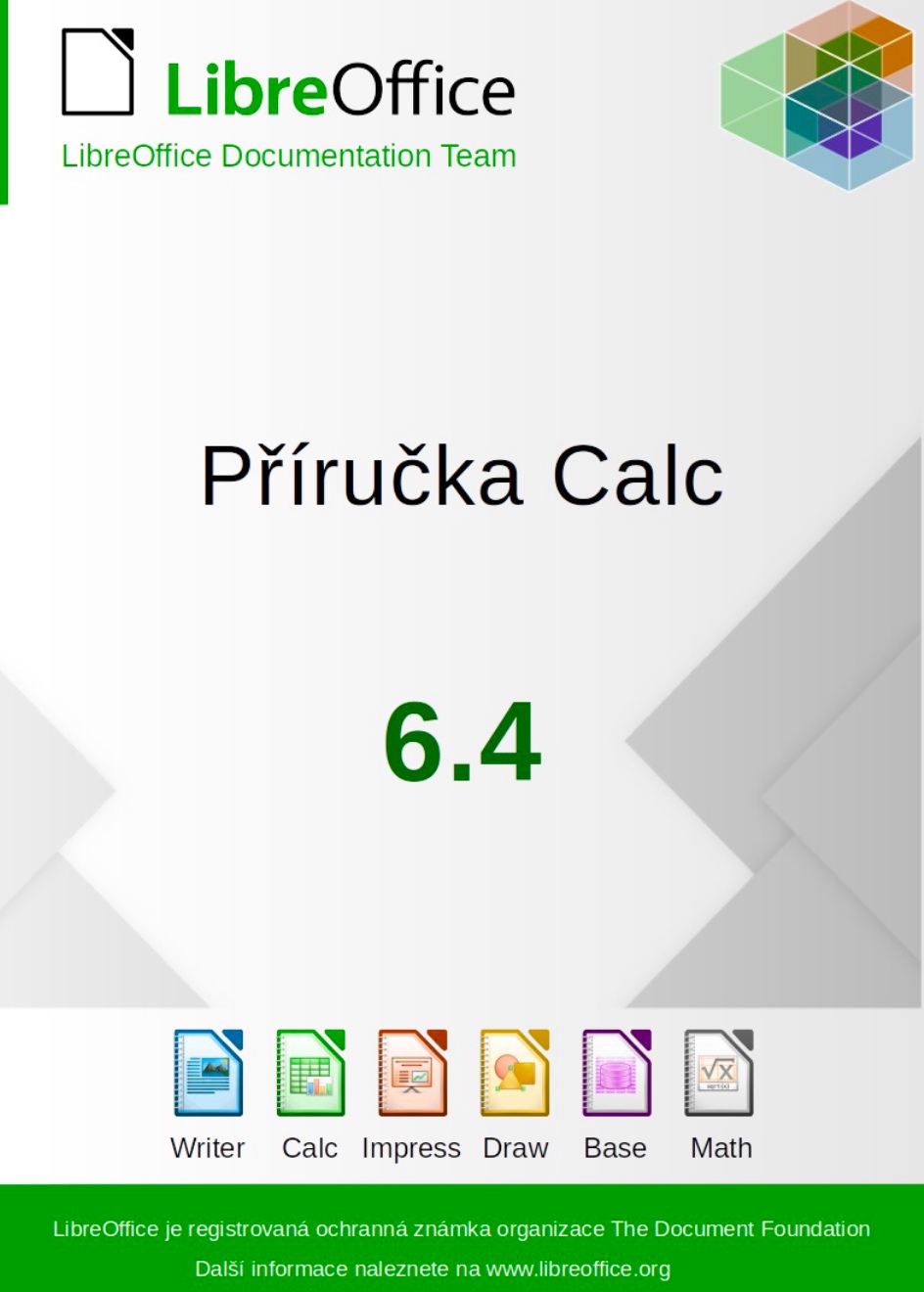
Zdeněk Crhonek (aka “raal”) from the Czech LibreOffice community writes:

It’s a bit late for the Christmas gift , but we finished translation of the Calc guide 6.4. As usual it was team work, namely:

Translations: Petr Kuběj, Zdeněk Crhonek and Zuzana Pitříková

Text corrections: Marcela Tomešová and Vendula Crhonková

Localised pictures: Roman Toman

Technical support: Miloš Šrámek.

Thanks to all the team, and especially Petr for his amazing amount of translation work, Marcela for her patience with our mistakes, and Roman for his continuous support. The Czech translation of the Calc guide 6.4 is available for download here.

Zdeněk adds that the Czech team is continuing with the translation of the Writer Guide, and is always looking for new translators. Join them, or indeed teams in other languages!

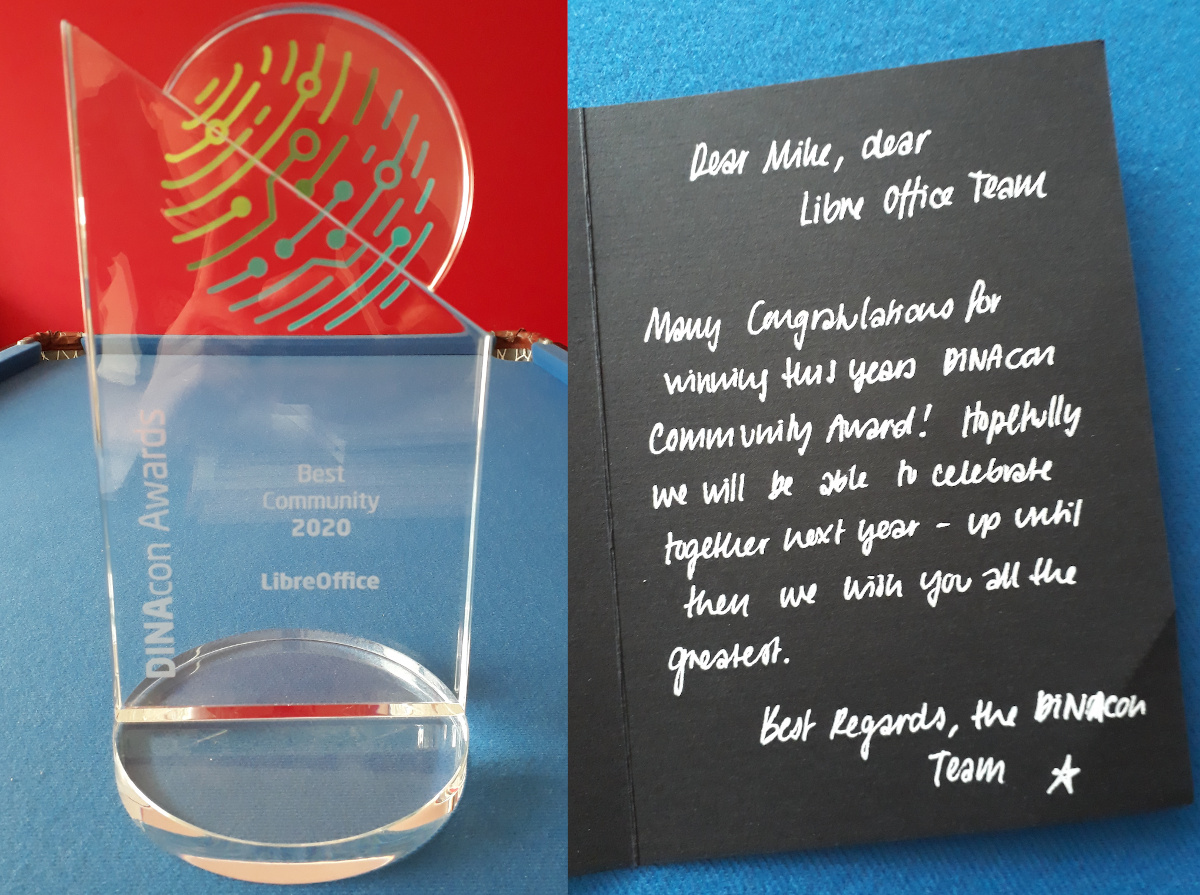
Best Community 2020: LibreOffice at DINAcon

At the recent online DINAcon (Digital Sustainability Conference) in Switzerland, Mike Saunders from The Document Foundation gave a talk about how TDF and the LibreOffice community works.

And guess what: our community won an award at DINAcon too: Best Community 2020! We’re really proud to have such an active, passionate and diverse range of contributors all across the globe – LibreOffice wouldn’t be as popular and powerful today without their help.

So to DINAcon: thank you very much for the award and trophy, which we accept on behalf of the whole LibreOffice community! And to everyone out there working on the many different sub-projects in LibreOffice: thank you so much for everything you do. And hopefully see you some point next year!

Community Member Monday: Sarper Akdemir

Today we’re talking to Sarper Akdemir, who is a passionate supporter of free software and is helping to add new features to LibreOffice…

Tell us a bit about yourself!

I live in Istanbul, where I am pursuing a bachelor’s degree in Electronics and Communication Engineering at Istanbul Technical University. I like to hack code, cook, play bass, and rice some desktops in my free time. My primary computer is a Thinkpad X220 – such a cutie – and I use Emacs to hack on it.

On April 28 2018, Istanbul Technical University Software Freedom Club (ITUGnu) organized an event called “Free Software Summit”, which introduced me to free software. After that event, I decided to join and be an active member of the club, in the hope of learning more about free software and the hacker culture.

People in ITUGnu informed me about a summer camp called “Mustafa Akgül Free Software Camp”, which is a non-profit organization where people all around Turkey volunteer to teach attendees about free software, with courses ranging from GNU/Linux system administration to IT law.

I took a workshop there that Muhammet Kara gave called “LibreOffice Development Workshop” which got me started hacking on LibreOffice.

After the workshop, I decided to keep contributing to LibreOffice and apply to the Google Summer of Code. And I was lucky enough to get selected as a Google Summer of Code student in the past summer.

Why did you decide to become a member of The Document Foundation?

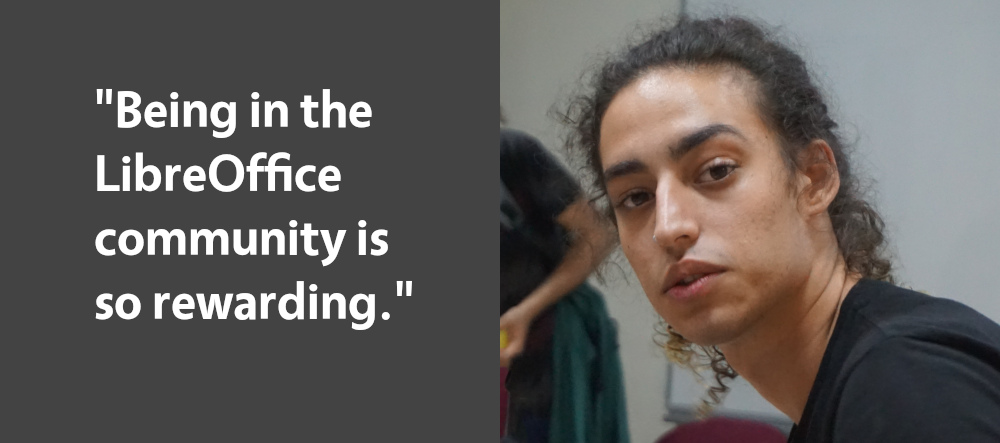
Throughout the Google Summer of Code period, hacking on LibreOffice daily was a lot of fun and at times challenging. While doing so, I got to interact and learn from the community of developers, especially my mentor Thorsten Behrens (CIB). Since being in the LibreOffice community is so rewarding, I wanted it to be official with a TDF membership – and having a say in what the future holds for LibreOffice is, of course, a plus.

What are you working on in the LibreOffice project right now?

I finished my Google Summer of Code project that introduced physics-based animation effects to LibreOffice Impress. And right now, I’m looking forward to fixing some bugs, starting from the ones related to animation effects.

Anything else you plan to do in the future? What does LibreOffice really need?

Since LibreOffice is one of the core utility pieces that the end user looks for in a computer, I think it is also an important piece for end users to achieve freedom. Therefore, I think LibreOffice can always use more robustness, so I will be fixing as many bugs as I can in the future.

Other than that, in the near future I’m trying to organize an event under ITUGnu to help some fellow students to contributing to LibreOffice and other free software projects.

Huge thanks to Sarper for his work on the new Impress animations, and Thorsten, his mentor, for supporting him. We hope to be in the next Google Summer of Code, but in the meantime, everyone with some C++ knowledge is welcome to explore the LibreOffice source code and try some EasyHacks. We’ll be there if you need help!

Open Badges for top LibreOffice QA contributors

Earlier this year we announced Open Badges for contributors to LibreOffice and its various sub-projects. These are custom PNG images sent out to each recipient, containing metadata about achievements, which can be verified using an external service. Recipients can then proudly show them off, or use them as proof of activity when applying for jobs or joining other free software projects!

Today, we’re announcing Open Badges for the top QA (Quality Assurance) project contributors. These are the most active people on Bugzilla, our bug tracking tool. The winners are:

Telesto – NISZ LibreOffice Team – Mike Kaganski – Andreas Kainz – Roman Kuznetsov – Regina Henschel – Aron Budea – Seth Chaiklin – Robert Großkopf – Rizal Muttaqin – Timur – R. Green – TorrAB – Gerald Pfeifer – Kevin Suo – Jim Raykowski – Samuel Mehrbrodt – Sergio Callegari – Michael Weghorn – Ming Hua – Julien Nabet – sawakaze – Eyal Rozenberg – Thorsten Wagner – Zdeněk Crhonek – Jim Avera – Thomas Lendo – Ricky Tigg – Gabor Kelemen – Steve Fanning

Congrats to all of you! We’ve personally emailed you with the custom badge, so enjoy showing it off 🙂

The Document Foundation releases LibreOffice 7.0.4

Berlin, December 17, 2020 – LibreOffice 7.0.4, the fourth minor release of the LibreOffice 7.0 family, is available from https://www.libreoffice.org/download/. All users are invited to update to this version, as the LibreOffice 6.4 family won’t be updated, having reached end-of-life. LibreOffice 7.0.4 includes over 110 bug fixes and improvements to document compatibility.

LibreOffice offers the highest level of compatibility in the office suite arena, starting from native support for the OpenDocument Format (ODF) – with better security and interoperability features – to wide support for proprietary formats. End user support is provided by volunteers via email and online resources: https://www.libreoffice.org/get-help/community-support/. On the website and the wiki there are guides, manuals, tutorials and HowTos. Donations help us to make all of these resources available.

For enterprise class deployments, TDF strongly recommends sourcing LibreOffice from one of the ecosystem partners, to get long-term supported releases, dedicated assistance, custom new features and other benefits, including SLAs (Service Level Agreements): https://www.libreoffice.org/download/libreoffice-in-business/.

Support for migrations and training should be sourced from certified professionals who provide value-added services which extend the reach of the community to the corporate world. Also, the work done by ecosystem partners flows back into the LibreOffice project, and this represents an advantage for everyone.

LibreOffice 7.0.4 change log pages are available on TDF’s wiki: https://wiki.documentfoundation.org/Releases/7.0.4/RC1 (changed in RC1) and https://wiki.documentfoundation.org/Releases/7.0.4/RC2 (changed in RC2). All versions of LibreOffice are built with document conversion libraries from the Document Liberation Project: https://www.documentliberation.org.

LibreOffice users are invited to join the community at https://ask.libreoffice.org, where they can get and provide user-to-user support. People willing to contribute their time and professional skills to the project can visit the dedicated website at https://whatcanidoforlibreoffice.org.

LibreOffice users, free software advocates and community members can provide financial support to The Document Foundation with a donation via PayPal, credit card or other tools at https://www.libreoffice.org/donate.