Celebrating “I Love Free Software Day” 2017

I love free software

LibreOffice is free software. This means that it’s totally free of charge to download and use – a benefit that many people appreciate. But free software is about much more than just saving money; it’s about having freedom to control our own computers and devices. Free software is incredibly important for digital freedoms, security, privacy and civil rights. All together, free software is a movement.

So what defines free software, compared to proprietary software? The Free Software Foundation outlines four key freedoms that we should have as users of the software. Here’s a summary:

  • The freedom to run the program as you wish, for any purpose
  • The freedom to study how the program works, and change its source code
  • The freedom to redistribute copies so you can help your friends and colleagues
  • The freedom to distribute copies of your modified versions to others, so that they can benefit

Fundamental to this is the license under which the software is made available. LibreOffice is released under the Mozilla Public License Version 2.0, a free and open source license that lets everyone share the program – and gives everyone the right to study how it works and modify it.
The importance of freedom

Free software is essential to the success of LibreOffice. Because of the license it uses, anyone can join our community and help to improve the software. The low cost of ownership means that developing countries can reap the benefits of LibreOffice without having to spend large amounts of money. And no company can take LibreOffice and lock it up as proprietary, closed software forever.

Now, most LibreOffice users are not software developers. And they may ask: “Apart from the low cost, how do I benefit from LibreOffice being free software?” The best response to this is: with free software, you control your computer. With proprietary, closed software – where you can’t study how it works or modify it – the software controls you. Sure, some proprietary software may look tempting in terms of technical features, but without the four freedoms listed above, you don’t truly have control of your software, your computer and your data. Someone else does.

One common misconception is that free software means no money for developers. This simply isn’t true! While the software itself is free to download, many companies make money by providing extra services on top: documentation, technical support, and bespoke features. Look at our certified developers, for instance, and then consider all of the companies making money around the GNU/Linux ecosystem. You can develop free software, help make the world a better place, and still earn a good living as well!

A big thank you

Of course, LibreOffice is just one example of a well-known free software project. Others include GNU/Linux, Firefox and KDE – but there are thousands more. Today we celebrate the vibrant, rich and active communities around the web that are working hard to provide us with all of this great software – so we’d like to say a big thank you to all LibreOffice developers, and indeed everyone else working on free and open source projects.

Keep up the great work!
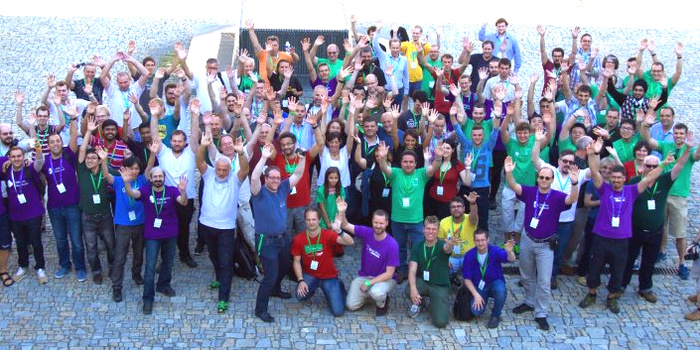
LibreOffice conference Brno

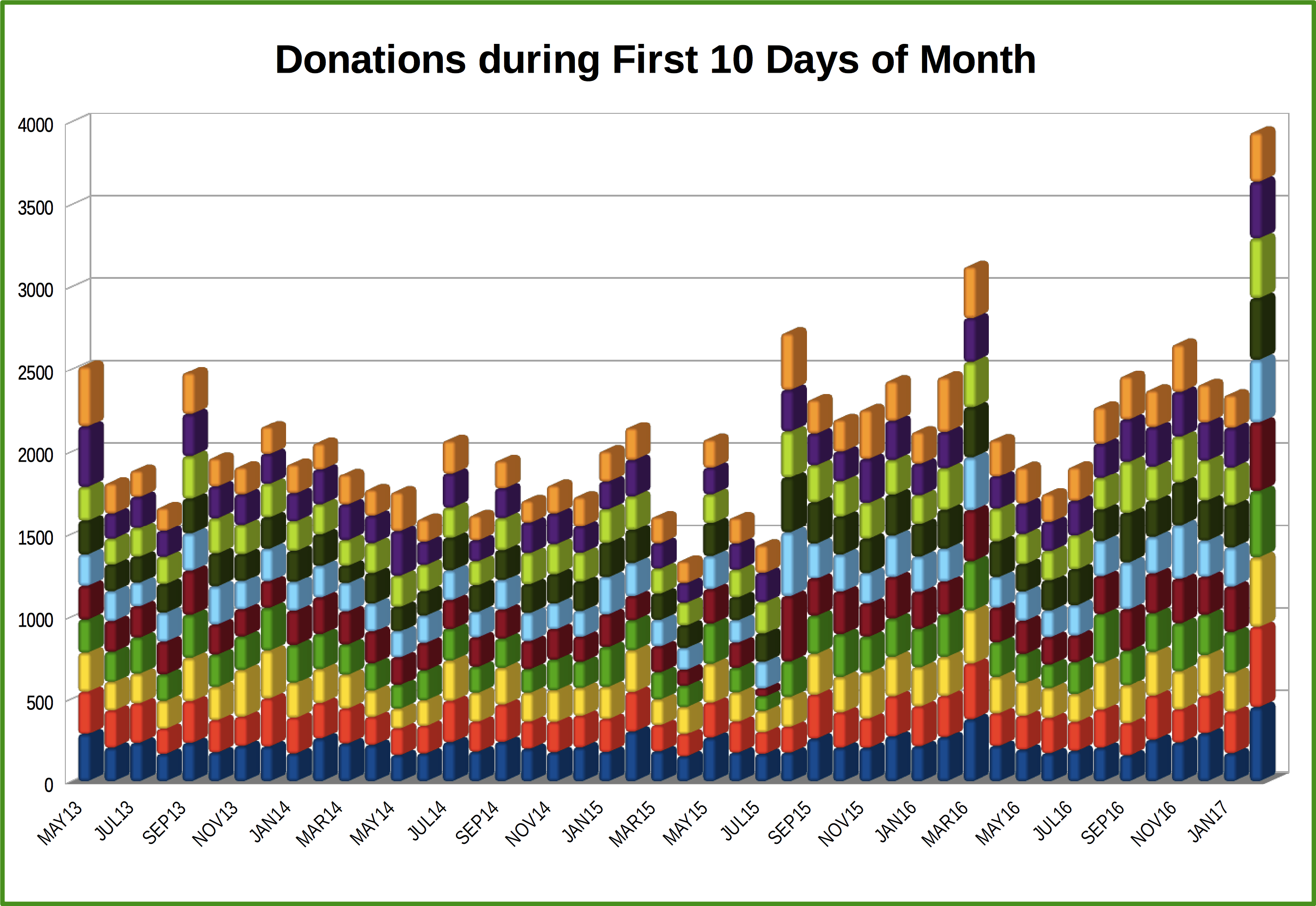
LibreOffice 5.3 triggers a record of donations

In this case, one image is better than 1,000 words, as the histogram represents donations during the first 10 days of each month, since May 2013, and doesn’t need any further comment. LibreOffice 5.3 has triggered 3,937 donations in February 2017, 1,800 more than in March 2016, and over 2,000 – sometimes over 3,000 – more than any other month. Donations are key to the life and the development of the project. Thanks, everyone.


LibreOffice contributor interview: Tamás Bunth

LibreOffice developers, testers, translators and documentation authors are working hard on LibreOffice 5.3, which is due for release in early February. One contributor to the project, Tamás Bunth, has been helping to improve Base, the database front-end of the suite. We caught up with him to ask how he got involved with LibreOffice and what the community is like…

Where do you live, and are you active on IRC channels or social media?

I’m Hungarian, and I live in Budapest. My IRC nickname is Wastack (the name comes from the game Heroes of Might and Magic, one of my favourite games from childhood – Wastack is a barbarian hero). I’m on Facebook too: https://www.facebook.com/btomi96.

Do you work for a LibreOffice-related company or just contribute in your spare time?

I did some work for Libreoffice as a Google Summer of Code (GSoC) student last year. In the future I’ll contribute in my spare time.

How did you get involved with LibreOffice?

One of my roommates in my student hostel suggested that we should try GSoC. I was searching for an end user application written in Java or C++, since these are the languages I’m comfortable with. As I looked at the Easy Hacks I realised that I may be able to solve some of these, and the developer community was helpful as well.

What areas of the project do you normally work on? Anything else you want to tackle?

My GSoC project was to upgrade the internal Firebird database management system, which is used by LibreOffice Base, and solve related bugs, which makes Firebird an experimental feature. Therefore, I got to know the drivers in some detail, and I think I’ll stick to this area in the future.

What was your initial experience of contributing to LibreOffice like?

When I first looked at the C++ code in the repository, it was scary, since even a simple string is called OUString. After that I found some UNO interfaces, and I really don’t know what was going on there. Of course, after some time and guidance from my mentor things got much clearer.

Which is your preferred text editor – and why?

Vim is my favourite. Well, I don’t now many other editors, but Vim is highly customisable. I like the recording feature too.

What do you do when you’re not working on LibreOffice?

I am a 2nd year Bachelor of Science student of Budapest University of Technology and Economics. In my free time I go rowing. This year I got 4th place on the National Championship of Hungary in eights crew. I’ve achieved two first places there, but I’ve never been in an international race. It is one of my future goals.

Any other hobbies or projects you’re working on?

When I still have some free time, I like writing little computer games. I started with a simple snake game using Flash several years ago, which was followed by a Tetris with Java Swing and a multiplayer Tron game using TCP (still Java). Currently, I have an incomplete project of a browser game, where you have to move simultaneously with figures on a map. It is written in JavaScript, with Node.js on the server side.

Thanks Tamás! And thanks to everyone else who’s working on making LibreOffice 5.3 the best release yet. If you’re reading this and want to join a friendly and busy community promoting open standards and document liberation, get involved!

A huge thanks to our donors

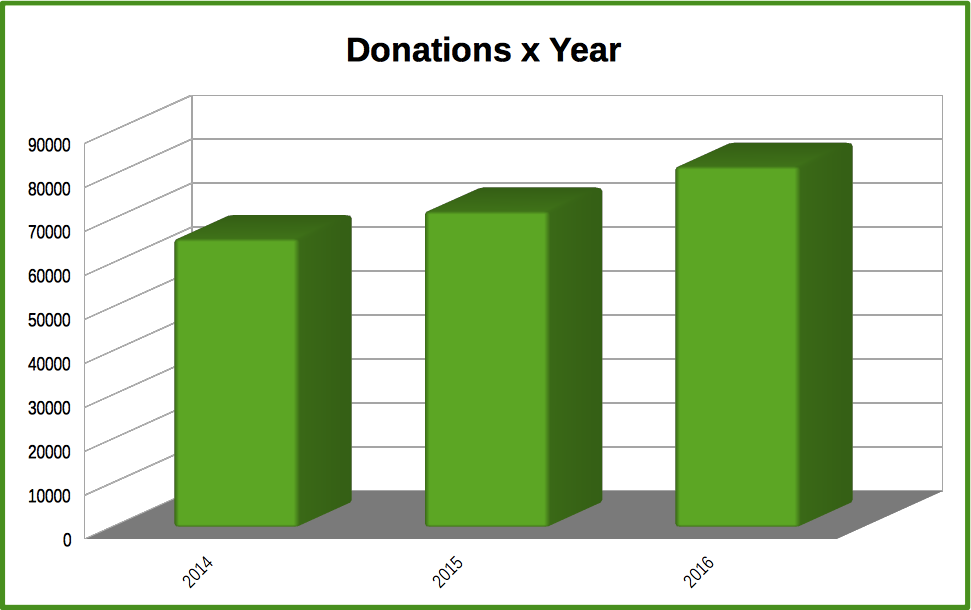
Donations to The Document Foundation have been steadily growing for the last three years, thanks to the generosity of many thousands of people around the world.

In 2016, donations have been 82,036 (a 14.2% increase over 2015).

In 2015, donations have been 71,839 (a 9.5% increase over 2014).

In 2014, donations have been 65,579.

Donations are key to our project, as they provide the economic resources to keep the organization and the infrastructure running, to fund activities such as participation of volunteers to FOSDEM and the LibreOffice Conference, and to help local activities organized locally by native language projects.

You can find examples of activities funded by donations money in the annual report: http://tdf.io/report2015.

Without donations, The Document Foundation could not be an independent community led project. Thanks again to all donors.

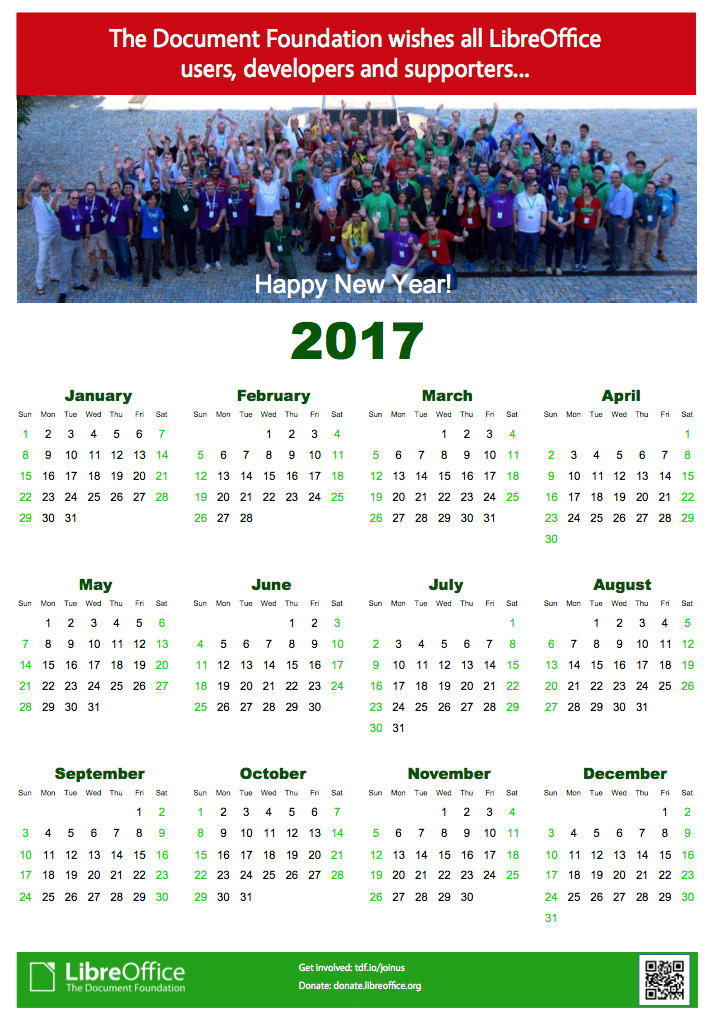
2017 TDF and LibreOffice calendar

2017 is just around the corner, so here’s a shiny calendar from The Document Foundation and the LibreOffice community. Print it out, hang it on your wall, and here’s to a great 12 months ahead!

Click for high-res PDF: