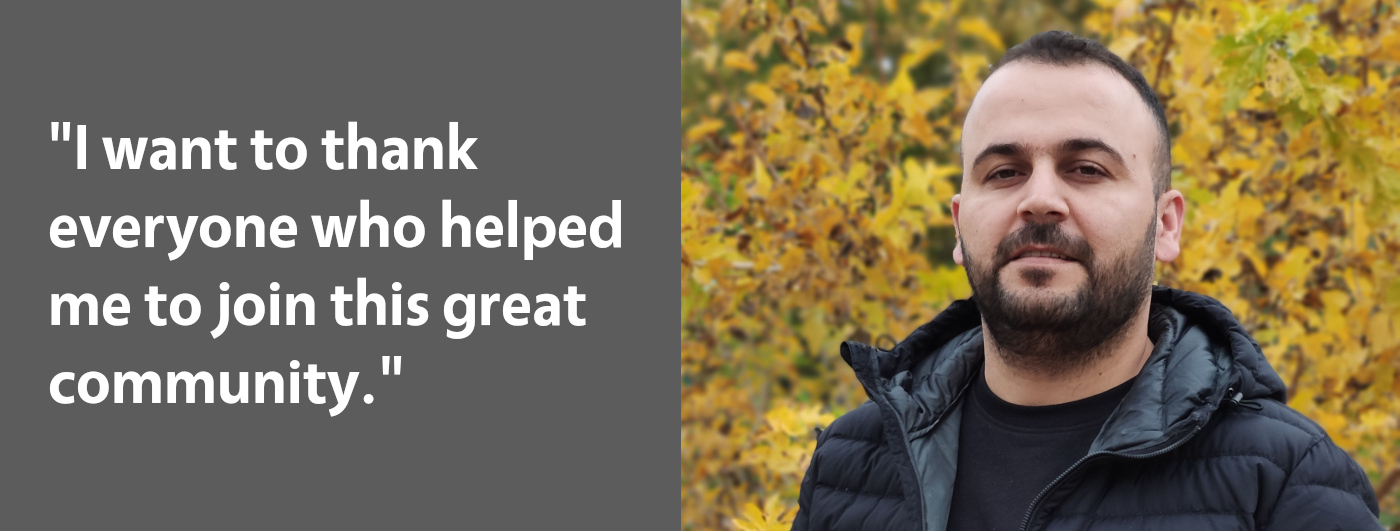
Community Member Monday: Jwtiyar Ali

Today we’re talking to Jwtiyar Ali, who is helping to localise LibreOffice into Kurdish…

To start with, tell us a bit about yourself!

Hey! I live in the Kurdistan region, in the north of Iraq – the city of Sulaymaniyah. I have an MSc in Physics, but I love computer science too. Currently I am working in the Cement Quality Control Department at a cement factory, as a physicist.

I do translations for many open source projects such as Ubuntu, Gimp, Firefox etc., leading these translation projects. My hobbies are following new open source projects and seeing how they can be more competitive. I also like football, walking, and reading Python programming courses in my free time.

What are the opportunities and challenges for promoting/using free software and LibreOffice in your region?

In my country, promoting open source apps and systems is a very big challenge because most people – maybe 90% – use proprietary apps, because they don’t hear about or know about open source alternatives.

So we in the team at www.chawg.org decided to make a website to introduce many open source projects. We created a wiki platform and a forum for that reason – and now we have Facebook groups and pages.

In my opinion, an opportunity is to provide users with more guides, and make a comparison between LibreOffice with other apps. Show users what LibreOffice can do that others apps can’t. Also, show people that LibreOffice can do the same things – or even more – with their daily work, and send them articles to educate them about the software.

What are you doing in the LibreOffice project right now?

I am translating LibreOffice. I hope to see LibreOffice in my language – that would be perfect. Also, it would help users to interact with LibreOffice more often than before.

How did you get involved in LibreOffice, and what was the experience like?

My love for open source projects made me engage with LibreOffice and the big community behind it. Being in the community made me feel that I wasn’t working in a specific part of the world – but people around the world can benefit from what I do.

The experience was amazing, because I didn’t know beforehand that we have a great app like LibreOffice.

Anything else you want to add?

I want to thank everyone who helped me to join this great community. My passion for LibreOffice has no borders, and I hope to see other open source projects grow faster than ever. The best part of the community is that we all trust in open source and teamwork.

Thesedays, I am promoting LibreOffice to my colleagues and friends. Also, I help them to fix any problems that they may face it during installing or when using the suite.

Thanks to Jwtiyar for all his contributions! Our native language communities are always open for more help – so if you want LibreOffice and its website localised in your language, give us a hand!
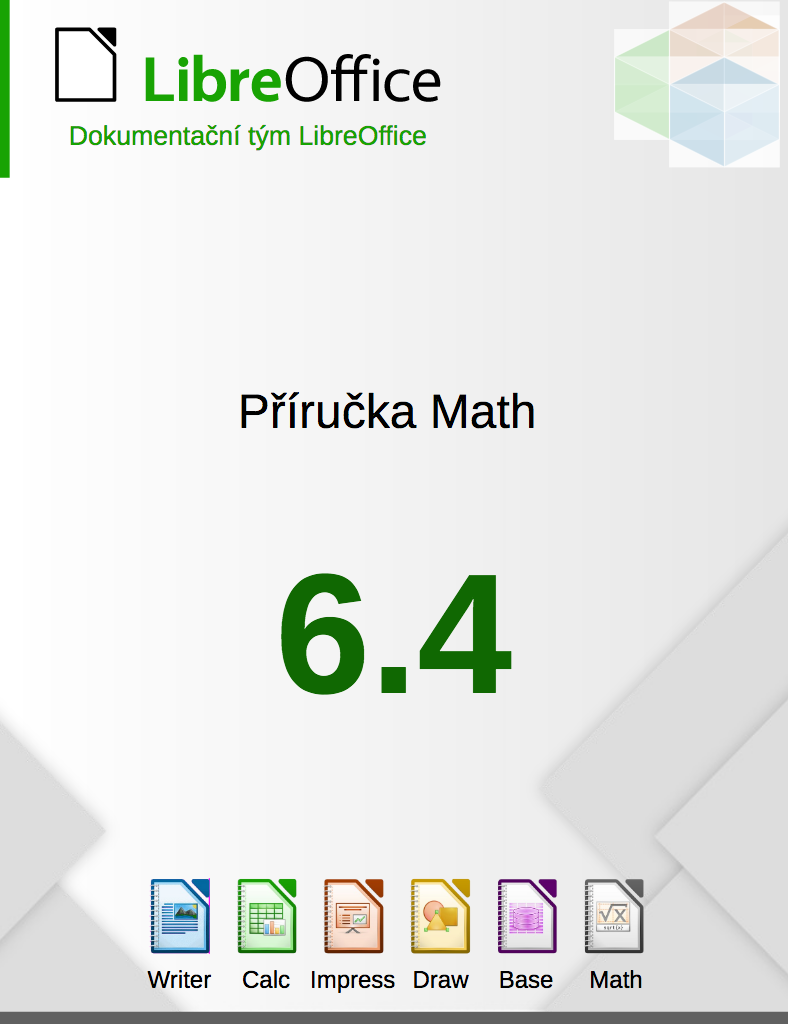
Documentation updates: Czech Guide for LibreOffice Math

Math is LibreOffice’s formula editor, and can be invoked in your text documents, spreadsheets, presentations and drawings, enabling you to insert perfectly formatted mathematical and scientific formulas. Your formulas can include a wide range of elements, from fractions, terms with exponents and indices, integrals, and mathematical functions, to inequalities, systems of equations, and matrices.

We have an English guidebook for Math in LibreOffice 6.4, and now our Czech community has completed a translation, thanks to Zdenek Crhonek, Petr Kubej, Eliska Rolfova and Roman Toman. Click here to read it!

Meanwhile, they’re working on the Getting Started Guide and Calc Guide. If you speak Czech, give them a hand! You can also follow the Czech LibreOffice community on Twitter.

And indeed, the documentation community appreciates help in all languages – plus, contributing is a good way to build up skills for a possible career in technical writing. See here to get started!

openSUSE + LibreOffice Conference Update

The organisers of the openSUSE + LibreOffice Conference have slightly adjusted the conference dates, from the original of October 13 – 16 to the new dates of October 15 – 17.

The new dates are Thursday through to Saturday. Participants can submit talks for the online conference until July 21 when the Call for Papers is expected to close.

The length of the talks for the conference have also been changed. There will be a 15-minute short talk, a 30-minute normal talk and a 60-minute workgroup session to select. Organisers felt that shortening the talks were necessary to keep attendees engaged during the online conference. The change will also help with the scheduling of breaks, social video sessions and extra segments for Questions and Answers after each talk.

The live platform that will be used will allow presenters with limited bandwidth to play a talk they record, should they wish not to present a live talk. The presenter will have the possibility to control the video as well as pause, rewind, fast-forward, etc., which is built into the system.

Organizers have online, live conference sponsorship packages available. Interested parties should contact ddemaio (at) opensuse.org for more information.

Community Member Monday: Andreas Heinisch

Today we’re talking to Andreas Heinisch, who recently became a member of The Document Foundation, the non-profit entity behind LibreOffice…

Tell us a bit about yourself!

I am from South Tyrol, and live near the city of Meran/Merano on the mountain side. I studied computer science, and teach informatics, physics and mathematics at the local high schools. In my spare time, I like to go hiking, climbing, and of course programming 🙂

What are you working on in the LibreOffice project right now?

At the moment I am part of the Macro team, and try to solve some of the bug reports. I don’t remember exactly, but I think that I contributed to about over a dozen of them. Personally, I think macros are not without controversy due to the security concerns, but they are widely used in order to automate some easy tasks.

Why did you decide to become a member of TDF?

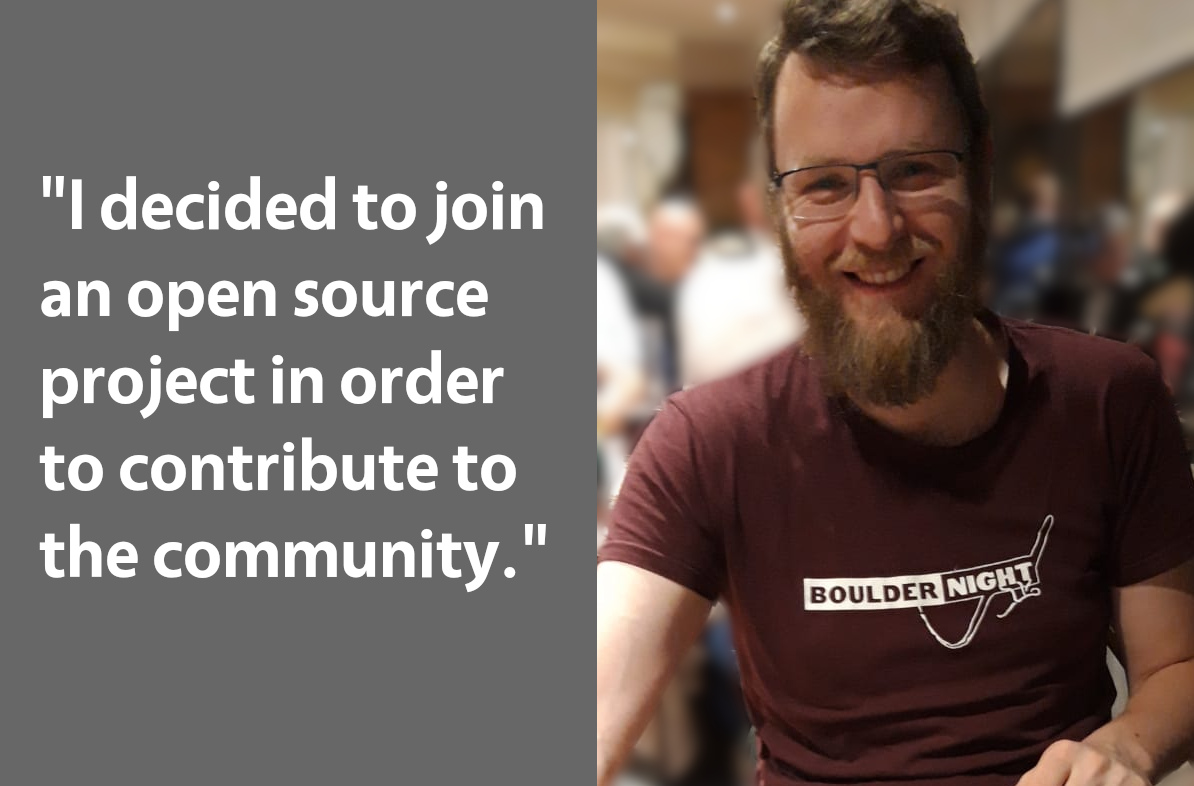
In my teaching activity, there’s only a small part where I can really program or solve some challenging problems. So I decided to join an open source project in order to contribute to the community, get in touch with current software lifecycle technologies and to improve or contribute to existing widely used software. To be honest: LibreOffice was the first product which came to my mind.

In addition, I think that local public administrations should not invest only in proprietary software solutions, which abuse their market position.

Anything else you plan to do in the future?

In the future I want to promote LibreOffice for our local high school, and to encourage more students to contribute to open source software. For this reason, I think that the help pages of LibreOffice should be revisited and simplified in order to attract more people to improve and contribute to such a great product.

Thanks to Andreas for all his work! Everyone in the LibreOffice project is welcome to apply as a member of TDF – check out this short video for more info…

Please confirm that you want to play a YouTube video. By accepting, you will be accessing content from YouTube, a service provided by an external third party.

YouTube privacy policy

If you accept this notice, your choice will be saved and the page will refresh.

Month of LibreOffice, May 2020: The winners!

At the beginning of May, we started a new Month of LibreOffice, celebrating community contributions all across the project. So how many people got sticker packs? Check it out…

This makes it the best Month of LibreOffice we’ve ever had! Hundreds of people, all across the globe, have helped out in our projects and communities. We’re hugely thankful for your work – and, of course, everyone who’s listed on the page can get a sticker pack!

How to claim

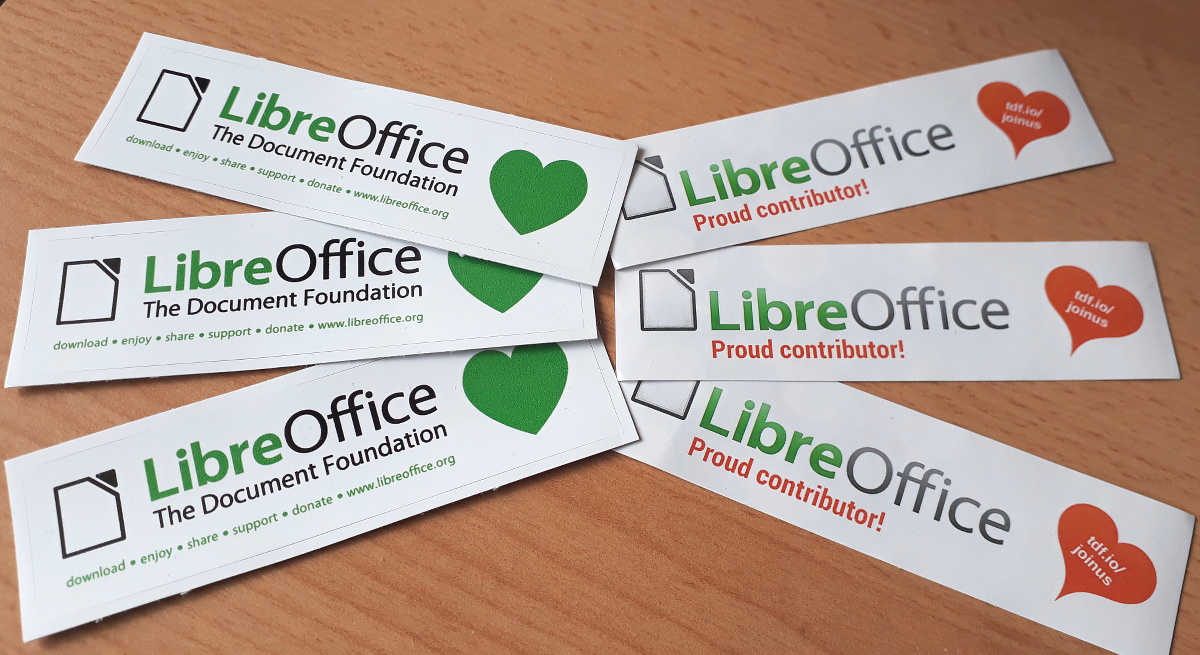
If you see your name (or username) on this page, get in touch! Email mike.saunders@documentfoundation.org with your name (or username) from the wiki page so that we can check, along with your postal address, and we’ll send you these:

(Note: your address will only be used to post the stickers, and will be deleted immediately afterwards.) If you contributed to the project in May but you’re not on the wiki page, please let us know what you did, so that we can add you.

But wait – there’s more…

And we have an extra bonus: 20 contributors have also been selected at random to get an extra piece of merchandise – a hoodie, T-shirt or snazzy LibreOffice glass mug. Here are the winners – we’ll get in touch personally with the details:

  • Gellért Gyuris
  • Anastasiya T
  • Walter o’Dim
  • BigRAl
  • hoergen@horche.demkontinuum.de (Mastodon)
  • Schiavinatto
  • Earnest Al
  • jwtiyar ali nariman
  • Dimitris Spingos
  • Tuomas Hietala
  • @mpanhans@librem.one (Mastodon)
  • Hugo Carvalho
  • Ayhan YALÇINSOY
  • @sebastiaanveld (Twitter)
  • Sarper Akdemir
  • pb
  • Steve Fanning
  • Rob Westein
  • Andrew Krizhanovsky
  • Peter Schofield

Congratulations to all the winners, and a big thanks once again to everyone who took part! Your contributions keep the LibreOffice project strong. We plan to have another Month of LibreOffice in November, but everyone is welcome to see what they can do for LibreOffice at any time!