Open Badges for French Math Guide translators!

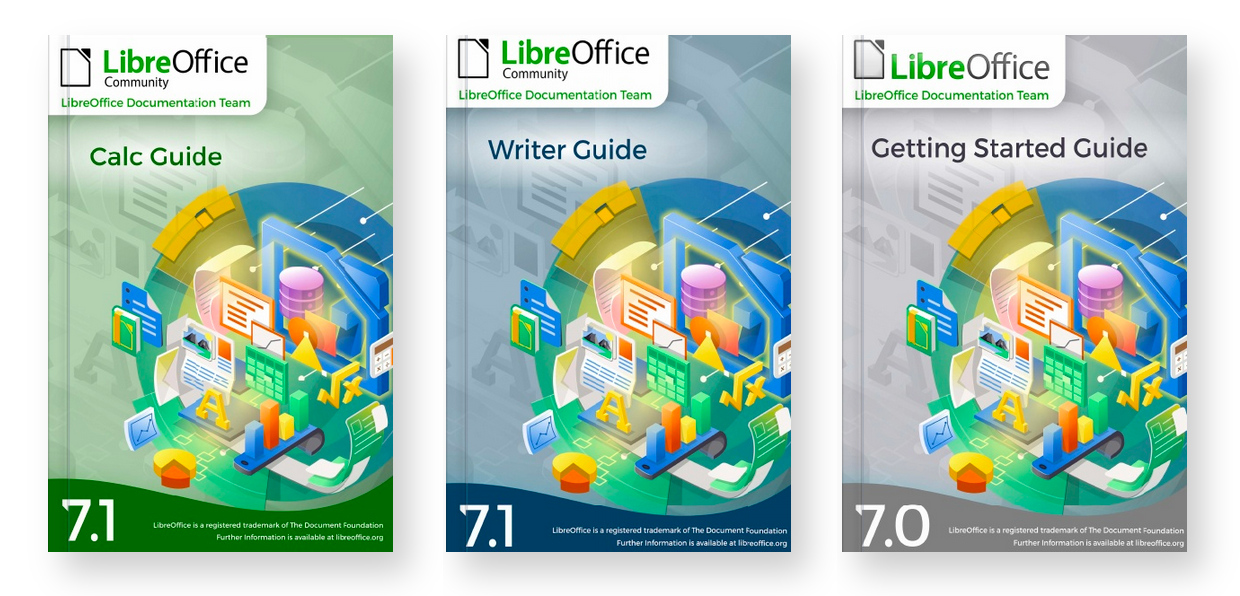
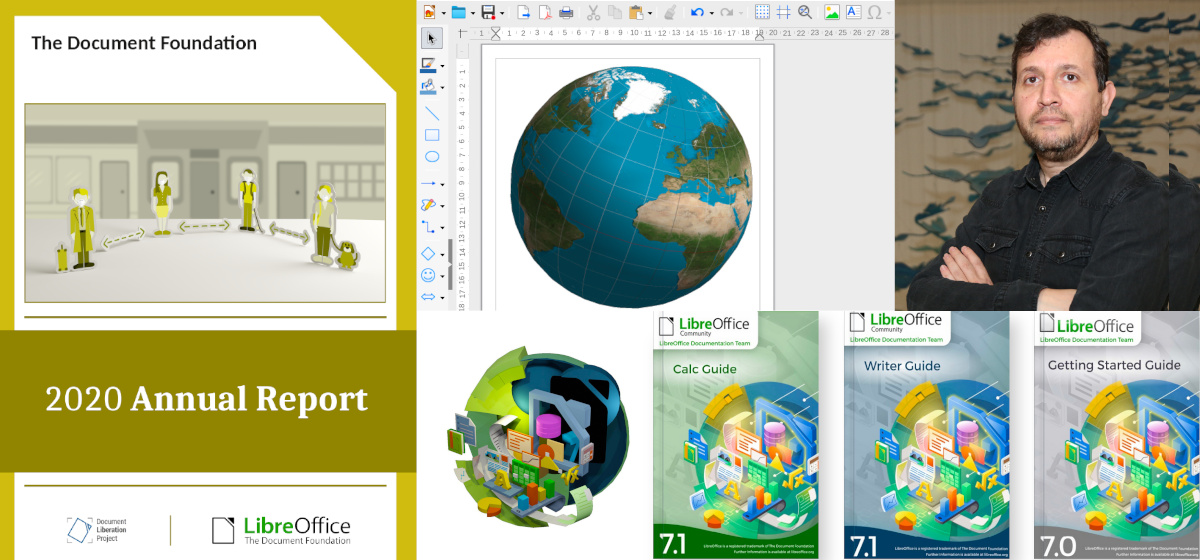
Thanks to localisation volunteers around the world, LibreOffice’s documentation is available in many languages. Today, we want to say thanks to the French community of translators, who localised the guide for LibreOffice Math 7.0 – great work, everyone!

Each translator gets an Open Badge from The Document Foundation, the non-profit behind LibreOffice. These are special, custom images with embedded metadata, confirming the contributions.

So, if you got a badge, feel free to share it on your blog, social media, Git page and other places! And indeed use it as proof of your abilities, when joining another project or looking for work! You can verify your badge here.

The recipients:

  • Sango BARKER-GILES
  • Maëlle GONZALEZ
  • Ornella NGUENANG LOWE
  • Célian LIMOUSIN
  • Baptiste LECUYER

Enjoy, and thanks again! Stay tuned to this blog for more Open Badges in coming months…

Tender to implement Curl based HTTP/WebDAV UCP (#202104-01)

Note: for questions asked about this tender and their respective answers, please see the bottom of this page


We are extending the application deadline.

The deadline for questions stays as in the original tender: June 15, 2021
The deadline for applications has been extended to: June 24, 2021


The Document Foundation (TDF) is the charitable entity behind the world’s leading free/libre/open source (FLOSS) office suite LibreOffice.

We are looking for an individual or company to implement Curl based HTTP/WebDAV UCP.

The work has to be developed on LibreOffice master, so that it will be released in the next major version.

The task consists of addressing two problems. All of the mentioned features and requirements are a mandatory part of this tender and therefore have to be part of the bid. This tender does not contain any optional items.

Problem description #1 – Currently we need to bundle crypto libraries

  • TDF releases of LibreOffice bundle both OpenSSL and NSS, but both libraries have a high number of security issues.
  • On macOS and Windows, neither OpenSSL nor NSS integrate with the crytographic APIs supplied by the operating system, so they will use a bundled hard-coded set of trusted certificate authorities (CAs), that is different from what the operating system itself would trust. This hard-coded set of trusted certificates is also not user-modifiable.
  • Additionally, OpenSSL cannot ever be used from the system because it has no application binary interface (ABI).

Problem description #2 – Currently we duplicate and use different HTTP/WebDAV UCPs

  • One which is used by everybody, including TDF releases, using a bundled Neon WebDAV library. This requires OpenSSL and cannot be used on a hypothetical Apple iOS port.
  • Another (for a hypothetical Apple iOS port) using a bundled Serf library. This requires OpenSSL.
    • Serf does not actually support WebDAV directly, only HTTP, so the UCP itself implements the additional WebDAV protocol features.
    • It is complicated to build, as it drags in two other bundled external libraries.
    • Additionally, this cannot be upgraded to a current version without introducing a new build dependency on the “scons” tool.
  • TDF releases also bundle the Curl library.
    • This can can do HTTP, likely similar to Serf.
    • Also, it can use native operating system cryptographic APIs and trusted certificate authorities (CAs) on Windows, macOS and Linux.
    • It can be used on Apple iOS without problems. (iOS deliverables are not part of this tender.)

The solution we seek, and as such the scope of this tender, is to implement a HTTP/WebDAV UCP with Curl, possibly based on code from the Serf UCP, to solve these issues, by getting rid of four bundled external libraries and one hard OpenSSL dependency. Besides addressing the above issues, the new Curl-based implementation needs to be at least as functionally complete as the existing Neon-based one.

All technology standards of relevance, as well as their targeted versions for this tender should be declared or defined in the offer’s description of implementation (e.g. name and version of the cryptographic API on the respective operating systems).

A key item of the deliverables for this tender, and therefore also a decision criteria – besides qualification, references, price, and completeness of fullfilment – is extensive documentation about the approach chosen to implement the above items, covering more than just the pure implementation. We expect bidders to provide documentation on both the code and the non-code parts of this tender, e.g. methodology, structure and technical aspects.

The Document Foundation will publish this under a free and open source license and make it available to the general public. Another criteria for the evaluation of the bids will be the description of the required test activities and the delivery of (automated) tests supporting work items for the described tender implementation or feature specification.

Required skills

  • Extensive knowledge of C++
    Experience working on the LibreOffice source code

Other skills

  • English (conversationally fluent in order to coordinate and plan with members of TDF)

We use free, libre and open source (FLOSS) software for development wherever possible, and the resulting work must be licensed under the Mozilla Public License v2.0.

TDF welcomes applications from all suitably qualified persons regardless of their race, sex, disability, religion/belief, sexual orientation or age.

Bidders will get a preference for including a partner or independent developer who has not been involved in a successful tender before. For such developers, who have not yet been part of a successful tender bid, we aim on a best-effort basis, but without any guarantees whatsoever, to provide some mentoring in understanding the code base and the process in contributing to the code. We expect that time and efforts on the bidder’s side for this should not be part of the paid work for this tender. Please mention such need of LibreOffice development mentoring in your offer.

As always, TDF will give some preference to individuals who have previously shown a commitment to TDF, including but not limited to certified developers and/or members of TDF. Not being a member, or never having contributed before, does not exclude any applicants from consideration.

The task offered is a project-based one-off, with no immediate plans to a mid- or long-term contractual relationship. It is offered on a freelance, project basis. Individuals and companies applying can be located anywhere in the world.

When budgeting, we anticipated that this project (all items combined) to take in the region of 40 days of work. Should bidders’ assessment result in a significantly different number, please reach out to us before sending your bid, so we can clarify upfront.

TDF is looking forward to receiving your applications for the aforementioned tasks, your offer in form of a fixed-time, fixed-budget approach, and the duration period for the implementation in calendar weeks after the final awarding of the tender, via e-mail to a committee at tender20210401@documentfoundation.org no later than May 31, 2021.

Applicants who have not received feedback by June 30, 2021 should consider that their application, after careful review, was not accepted.

All bidders are invited to ask their questions on this tender until June 15, 2021. Questions can be sent informally to the above e-mail address, and answers will be made public in a collected and anonymized form.

We received the following question:

“getting rid of four bundled external libraries” – Could you please clarify what these four libraries are?

Answer: the text only indirectly mentions that serf “is complicated to build, as it drags in two other bundled external libraries”, which are apr and its dependency apr_util (both in external/apr/). So the “four bundled external libraries” would be apr, apr_util, neon, and serf. (There are still other dependencies on openssl, like ExternalProject_python3 and ExternalProject_xmlsec, so we will not get rid of it through this tender.)


We received the following question:

Could you please expand a bit on:

1. the meaning of ‘extensive documentation’, e.g. number of pages or words, and level of detail (classes, functions, line-by-line) that would meet the acceptance criteria?

2. the target audience (e.g. certified LibreOffice developers, or more general?) and purpose of the documentation (e.g. teaching, reference, new implementations, maintenance), as well as form (document format) and acceptable publishing location (e.g. inline, separate-but-within-the-code-base, wiki, or elsewhere)?

Answer: There is no fixed criteria for the documentation. Our goal is to share the knowledge about the approach chosen to address the problem and/or implement the feature, in order to make that information available to the general public.

The target audience is a suitably skilled developer. As such, industry-standard inline documentation in the code, targetting experienced and/or certified LibreOffice developers, plus documenting any non-obvious design choices in an accompanying README file, would be sufficient.

Annual Report: LibreOffice in 2020

In 2020, LibreOffice celebrated its tenth birthday. Two new major versions of the suite introduced a variety of new features, while minor releases helped to improve stability as well

(This is part of The Document Foundation’s Annual Report for 2020 – the full version will be posted here on the blog soon.)

The Document Foundation announced two major releases of LibreOffice in 2020: version 6.4 on January 29, and version 7.0 on August 5. In addition, 13 minor releases were made available over the year:

RELEASE DATE
LibreOffice 6.3.5 February 20
LibreOffice 6.4.1 February 27
LibreOffice 6.4.2 March 19
LibreOffice 6.4.3 April 16
LibreOffice 6.3.6 April 30
LibreOffice 6.4.4 May 21
LibreOffice 6.4.5 July 2
LibreOffice 6.4.6 August 13
LibreOffice 7.0.1 September 3
LibreOffice 7.0.2 October 8
LibreOffice 6.4.7 October 22
LibreOffice 7.0.3 October 29
LibreOffice 7.0.4 December 17

Throughout the year, we held three Bug Hunting Sessions in preparation for new major releases. These typically took place on a single day between set times, so that experienced developers and QA engineers could help new volunteers to file and triage bugs via the IRC channels and mailing lists. The Bug Hunting Sessions for LibreOffice 7.0 were held on May 11 and July 6 – while the one for LibreOffice 7.1 took place on October 26.

LibreOffice 6.4

On January 29, LibreOffice 6.4 was officially released after six months of work. Developers at Collabora, CIB, Red Hat, SIL and other companies – along with volunteers – worked on many new features. For instance, a QR Code generator was added to the suite, making it easy to add QR codes (which can be read by mobile devices) to documents.

Hyperlink context menus were unified throughout the software to provide the following menu entries: Open Hyperlink, Edit Hyperlink, Copy Hyperlink Location and Remove Hyperlink.

Meanwhile, a new Automatic Redaction feature was added to hide classified or sensitive data in a document, based on text or regular expression matches, while the help system was reworked to provide faster and more precise search results – and many help pages were given localized screenshots for a better user experience.

TDF produced a video to explain and demonstrate many of the new features in LibreOffice 6.4. This was linked to in the announcement, and embedded into various web news websites that covered the release:

Please confirm that you want to play a YouTube video. By accepting, you will be accessing content from YouTube, a service provided by an external third party.

YouTube privacy policy

If you accept this notice, your choice will be saved and the page will refresh.

LibreOffice 7.0

Later in the year, on August 5, TDF released LibreOffice 7.0. OpenDocument, LibreOffice’s native open and standardised format for office documents, was updated to version 1.3 as an OASIS Technical Committee Specification. Important new features included digital signatures and OpenPGP-based encryption of XML documents, with improvements in areas such as change tracking, and additional details in the description of elements in first pages, text, numbers and charts. The development of ODF 1.3’s features was funded by donations to The Document Foundation, and the implementation was done by CIB and other developers in the ecosystem.

Additionally, support for Skia graphics engine was added thanks to sponsorship by AMD, and was set as the default on Windows, for faster performance. Skia is an open source 2D graphics library which provides common APIs that work across a variety of hardware and software platforms, and can be used for drawing text, shapes and images. Vulkan is a new-generation graphics and compute API with high-efficiency and cross-platform access to modern GPUs. Luboš Luňák (Collabora) did a large part of the work to support Skia.

Many other features were added as well, and there were a large number of compatibility improvements.

As with the previous release, TDF staff worked with the LibreOffice community to make a video (PeerTube version here) to demonstrate the new features:

Please confirm that you want to play a YouTube video. By accepting, you will be accessing content from YouTube, a service provided by an external third party.

YouTube privacy policy

If you accept this notice, your choice will be saved and the page will refresh.

Like what we do? Support the LibreOffice project and The Document Foundation – get involved and help our volunteers, or consider making a donation. Thank you!

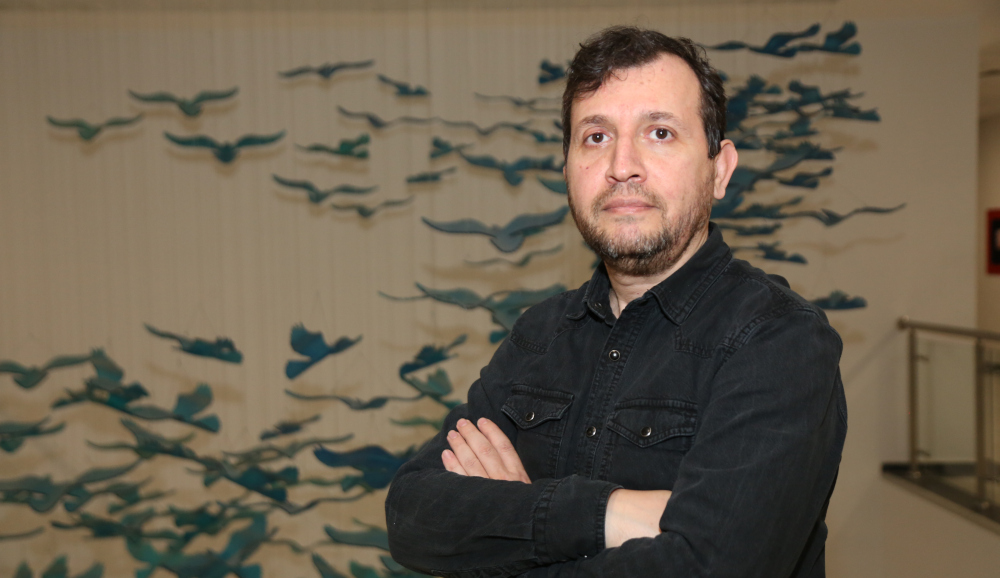
Community Member Monday: Necdet Yücel

Today we’re talking to Necdet Yücel from the Turkish LibreOffice community, who has been mentoring students and helping them to get involved with LibreOffice…

Tell us a bit about yourself!

I have been working as a lecturer at a university for more than 20 years. I teach programming and computer networks courses in the computer engineering department. My main area of interest is free software. My personal contribution to the free software world is mostly by making Turkish translations of free software – and I try to explain the free software world to my students, and guide them through it.

What are you doing in the LibreOffice project right now?

I’m one of the old translators of LibreOffice. I have translated hundreds of thousands of words, but I have no motivation to work on translations for a while.

Since 2015, the year Gülşah Köse become a LibreOffice developer, more than 15 of my students made contributions to LibreOffice. One of them is Mert Tümer’s, who is an active LibreOffice developer. Gülşah’s work was a major influence for LibreOffice developments in Turkey. I am very proud of my students, who started with her and continued until Gökçe Küler.

Do you have any tips/thoughts to share from bringing people into the community?

I think we have no choice but to direct students to free software in universities. Because it’s the only chance to to study how the programs work. Reading well-written code, changing it, compiling and redistributing it are the main requirements for being good developers. If we can explain them to students, they will become free software developers.

Is there anything else you plan to do in the project

The only thing I think I know well is mentoring students to free software. My short term plan is to continue translating and consulting students for free software.

Many thanks to Necdet for all his contributions! And to everyone reading this who uses LibreOffice and is interested in getting more involved: find out what you can do here. We’d love to have you on board, in our community!

LibreOffice flyers for schools and universities – Help us to hand them out!

Our New Generation project is encouraging new – and especially younger – people to join the LibreOffice community, improve the software, and gain valuable skills.

We’ve created a flyer that can be handed out in schools and universities, and here it is:

Now, we need your help to spread the word! If you study or work in a school or university, we can send you some flyers that you can give to interested people. We also have versions of the flyer in other languages, translated from the source file (Vegur font required) by our community:

Want some flyers?

We’re happy to send them to you – just send us an email with some details, such as the school/uni where you work or study, how many you want, and in which language. Then we’ll get them printed and posted to you.

Thanks for helping to spread the word! To learn more about LibreOffice New Generation and share your ideas, join our Telegram group.

Annual Report: The Document Foundation in 2020

In 2020 we had with elections for the foundation’s Membership Committee, along with regular Advisory Board calls, and support for other projects and activities

(This is part of The Document Foundation’s Annual Report for 2020 – the full version will be posted here on the blog soon.)


Election of new Membership Committee (MC)

Members – more formally known as the “Board of Trustees” – are a crucial part of The Document Foundation. They are people from across the globe who contribute time, effort and skills, whether on a voluntary or paid basis. Members can vote for the Board of Directors (aka BoD) and the Membership Committee (MC), and also nominate themselves for a position in the BoD and the MC. The mission of the MC is to administer membership applications and renewals following the criteria defined in the Foundation’s Statutes.

In July, we announced the process of elections for the next MC, which is in place from 19 September 2020 until 18 September 2022. Initially, we started by opening up nominations; TDF members could nominate themselves for a position in the MC, or nominate others.

On 1 September, Franklin Weng announced the final list of 13 candidates, along with the voting phase, which ran from 4 – 10 September. All members were sent tokens so that they could vote anonymously during this time. On 16 September, Franklin announced the final results, where voting preferences were considered according to the Meek STV method with Droop-Dynamic-Fractional setting, default threshold.

  • Elected Members: Marina Latini, Muhammet Kara, Gabriele Ponzo, Gustavo Buzzatti Pacheco, and Ahmad Haris. Elected Substitute (Deputy) Members: Shinji Enoki, Uwe Altmann, Dennis Roczek, Jona Azizaj.

TDF’s Board would like to say thank you to all past and new members of the Membership Committee for their service to the community, and to all candidates for running. Congratulations to the newly elected Committee Members and their deputies.


Advisory Board members and meetings

The Document Foundation relies on its Advisory Board Members in order to receive advice and support. The Advisory Board’s primary function is to represent The Document Foundation’s supporters and to provide the Board of Directors with advice, guidance and proposals. Current members are Adfinis SyGroup, allotropia software GmbH (joined in 2021), Red Hat, Collabora, GNOME, Google, Kopano b.v., City of Munich (Landeshaupstadt München), the Free Software Foundation (FSF), CIB Software, LLC RusBITech-Astra, IHC Invest Inc., Software in the Public Interest (SPI), KDE e.V., UK Government Digital Services, and the Free Software Foundation Europe (FSFE).

Throughout the year, TDF had regular calls with representatives of the Advisory Board. Staff and Board members at TDF provided updates on the foundation, software and community, and described plans for the future. Advisory Board members were invited to provide valuable feedback on TDF’s activities, and various ideas and proposals were discussed. TDF would like to express its thanks to all of the members for their help.


Highlights of activities

Throughout the year, TDF supported various campaigns and events, via this blog and social media channels. For instance, on 14 February we joined the Free Software Foundation Europe’s campaign “I love Free Software”. This was the perfect opportunity to say thank you to the contributors of the various Free Software we love: developers, translators, designers, testers, or documentation writers, of huge software projects – or smaller ones.
Similarly, we backed International Women’s Day on March 8, raising awareness against bias and prejudices. Free Software projects tend to be heavily male-dominated, but our community is trying to be more open and inclusive.

In March, we celebrated Document Freedom Day 2020, to educate organizations and users about the importance of adopting open document standards. This helps users to get back full ownership of their documents and content that they have developed, but have then – often unwittingly – left in the hands of a proprietary software vendor. LibreOffice’s native format, OpenDocument, is fully standardised and available to everyone to implement, making it the best long-term storage format for office data.

In June, TDF celebrated its 500,000th donation (since we started counting on 1 May 2013). We are grateful to all the people who have donated, because they help all of us to keep the LibreOffice community growing and developing. Over the years, many donors added notes and feedback to their donations, so we collected them together in a blog post.

2020 had two milestone anniversaries for our projects, the first being 20 years of free office suites. On 19 July 2000, Sun Microsystems announced the release of the source code of its StarOffice Suite to the open source community, at the O’Reilly Open Source Convention in Monterey, California. This started the history of the community that helped to grow the OpenOffice project for nearly ten years, until the announcement of the acquisition of Sun by Oracle.

Then, on 27 September, we celebrated 10 years of LibreOffice, putting together a video with highlights of community activities and events over the past decade:

Please confirm that you want to play a YouTube video. By accepting, you will be accessing content from YouTube, a service provided by an external third party.

YouTube privacy policy

If you accept this notice, your choice will be saved and the page will refresh.

(PeerTube version here)

Finally, on 30 September, we supported International Translation Day. This is celebrated every year on the feast of Saint Jerome, the Bible translator who is considered the patron saint of translators. The celebrations have been promoted by International Federation of Translators (FIT) ever since it was set up in 1953. In 1991, FIT launched the idea of an officially recognized International Translation Day to show solidarity to the worldwide translation community, in an effort to promote the translation profession in different countries.

We celebrate our community of translators, which provide LibreOffice in 119 different languages (with more hopefully becoming available in the future), more than any other software. This helps us to fulfil one of the most important objectives of The Document Foundation: “to support the preservation of mother tongues by encouraging all people to translate, document, support, and promote our office productivity tools in their native language”. Today, there are over four billion people in the world who can use LibreOffice in their native languages.

Like what we do? Support the LibreOffice project and The Document Foundation – get involved and help our volunteers, or consider making a donation. Thank you!