Math is LibreOffice’s formula editor, and can be invoked in your text documents, spreadsheets, presentations and drawings, enabling you to insert perfectly formatted mathematical and scientific formulas. Your formulas can include a wide range of elements, from fractions, terms with exponents and indices, integrals, and mathematical functions, to inequalities, systems of equations, and matrices.
And indeed, the documentation community appreciates help in all languages – plus, contributing is a good way to build up skills for a possible career in technical writing. See here to get started!
The organisers of the openSUSE + LibreOffice Conference have slightly adjusted the conference dates, from the original of October 13 – 16 to the new dates of October 15 – 17.
The new dates are Thursday through to Saturday. Participants can submit talks for the online conference until July 21 when the Call for Papers is expected to close.
The length of the talks for the conference have also been changed. There will be a 15-minute short talk, a 30-minute normal talk and a 60-minute workgroup session to select. Organisers felt that shortening the talks were necessary to keep attendees engaged during the online conference. The change will also help with the scheduling of breaks, social video sessions and extra segments for Questions and Answers after each talk.
The live platform that will be used will allow presenters with limited bandwidth to play a talk they record, should they wish not to present a live talk. The presenter will have the possibility to control the video as well as pause, rewind, fast-forward, etc., which is built into the system.
Organizers have online, live conference sponsorship packages available. Interested parties should contact ddemaio (at) opensuse.org for more information.
Interesting article on REPUBLICWORLD.COM about LibreOffice Writer Keyboard Shortcuts, which – according to the editor – help to improve the usability of the software:
However, it becomes highly important to know LibreOffice shortcut keys to create content faster. LibreOffice shortcut keys also help a user use the medium more effectively. If you want to learn how to use LibreOffice shortcut keys, here are some of the many essentials to know to be able to use the software more effectively.
Shortcuts are based on the English keyboard, but many works also with other keyboard layouts:
F2 – Formula Bar Ctrl+F2 – Insert Fields F3 – Complete AutoText Ctrl+F3 – Edit AutoText F4 – Open Data Source View Shift+F4 – Select next frame F5 – Navigator on/off Ctrl+Shift+F5 – Navigator on, go to page number F7 – Spellcheck Ctrl+F7 – Thesaurus F8 – Extension mode Ctrl+F8 – Field shadings on / off Shift+F8 – Additional selection mode Ctrl+Shift+F8 – Block selection mode F9 – Update fields Ctrl+F9 – Show fields Shift+F9 – Calculate Table Ctrl+Shift+F9 – Update Input Fields and Input Lists Ctrl+F10 – Nonprinting Characters on/off F11 – Styles and Formatting window on/off Shift+F11 – Create Style Ctrl+F11 – Sets focus to Apply Style box Ctrl+Shift+F11 – Update Style F12 – Numbering on Ctrl+F12 – Insert or edit Table Shift+F12 – Bullets on Ctrl+Shift+F12 – Numbering / Bullets off Alt+Arrow Keys – Move object. Alt+Ctrl+Arrow Keys – Resizes by moving lower right corner. Alt+Ctrl+Shift+Arrow Keys – Resizes by moving top left corner. Ctrl+Tab – Selects the anchor of an object.
Following the recent release of our updated guides, the LibreOffice Documentation Team is happy to announce the immediate availability of the LibreOffice Draw Guide 6.4, the complete handbook for the drawing tool of LibreOffice. The guide was updated from the existing release 4.3 and include all the improvements developed since early 2014, when the last version of the guide was published.
LibreOffice Draw is the vector drawing tool of LibreOffice, capable of creating and edit complex drawings, from basic geometric shapes to sophisticated technical drawings, including tri-dimensional composition, all supporting the ODF file format standard.
“Returning to the LibreOffice Documentation team was a great opportunity for me to continue to contribute for the LibreOffice Community. I used all my 35 years of professional experience as a technical writer in high end industries to bring the Draw Guide up to date with the latest publicly available release of LibreOffice (Version 6.4). I hope the community enjoy LibreOffice as this is an excellent office software package that is freely available” said Peter Schofield, who coordinated the update and release of the Draw guide.
“Our vision for LibreOffice goes beyond the software development and we care to create the elements of an authentic LibreOffice culture. It is a great joy for all of us to see the LibreOffice community and the documentation team actively working on the update of the Guides. These books are important assets of the LibreOffice ecosystem and a critical element to improve and enlarge the opportunities for all persons of the community” Said Emiliano Vavassori and Daniel Rodriguez, members of The Document Foundation Board of Directors.
The Draw Guide 6.4 is the result of the collaborative work of Peter Schofield, Claire Wood and Regina Henschel. A big thanks to them for all their work!
• PDF version – recommended for viewing
• ODT version – for opening/editing in LibreOffice
Everyone is welcome to join our documentation team! It’s a great way to build up experience in a large and well-known open source project, especially if you’re interested in a career in technical writing one day.
I am from South Tyrol, and live near the city of Meran/Merano on the mountain side. I studied computer science, and teach informatics, physics and mathematics at the local high schools. In my spare time, I like to go hiking, climbing, and of course programming 🙂
What are you working on in the LibreOffice project right now?
At the moment I am part of the Macro team, and try to solve some of the bug reports. I don’t remember exactly, but I think that I contributed to about over a dozen of them. Personally, I think macros are not without controversy due to the security concerns, but they are widely used in order to automate some easy tasks.
Why did you decide to become a member of TDF?
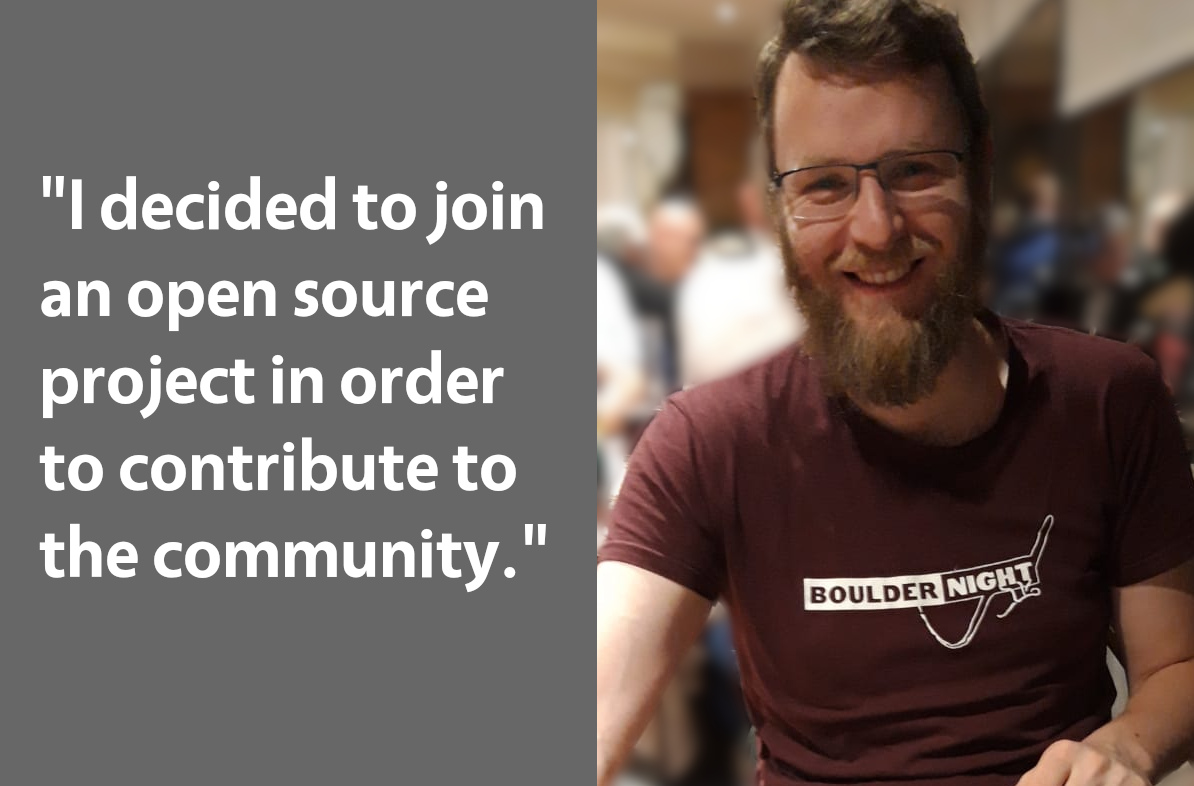
In my teaching activity, there’s only a small part where I can really program or solve some challenging problems. So I decided to join an open source project in order to contribute to the community, get in touch with current software lifecycle technologies and to improve or contribute to existing widely used software. To be honest: LibreOffice was the first product which came to my mind.
In addition, I think that local public administrations should not invest only in proprietary software solutions, which abuse their market position.
Anything else you plan to do in the future?
In the future I want to promote LibreOffice for our local high school, and to encourage more students to contribute to open source software. For this reason, I think that the help pages of LibreOffice should be revisited and simplified in order to attract more people to improve and contribute to such a great product.
Thanks to Andreas for all his work! Everyone in the LibreOffice project is welcome to apply as a member of TDF – check out this short video for more info…
Please confirm that you want to play a YouTube video. By accepting, you will be accessing content from YouTube, a service provided by an external third party.