
A selection of LibreOffice Conference in Brno has been published here: https://blog.documentfoundation.org/pictures/.
Year: 2016
LibreOffice Conference 2016: video roundup
A short video roundup of this year’s conference in Brno – thanks to everyone who attended, and see you next year in Rome!
Please confirm that you want to play a YouTube video. By accepting, you will be accessing content from YouTube, a service provided by an external third party.
If you accept this notice, your choice will be saved and the page will refresh.
LibreOffice contributor interview: Regina Henschel
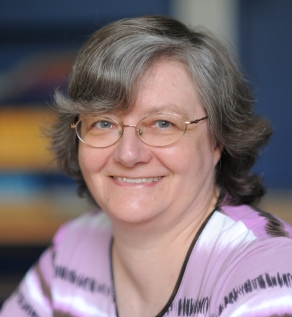
Now that the LibreOffice Conference has finished, we’re back to our regular contributor interviews. This week it’s the turn of Regina Henschel who helps LibreOffice users by answering questions, testing new features and working on bug reports.
What is your IRC nickname / location / social media page?
I live in Dortmund (Germany). You can best contact me via the mailing lists. I don’t have any account on Twitter or Facebook or similar, and I seldom use IRC (nickname pppregin).
Do you work for a LibreOffice-related company or just contribute in
your spare time?
I do all of my work for LibreOffice in my spare time. In my daily job I’m teacher of mathematics.
How did you get involved with LibreOffice?
That is a wide range: I’m member of the Open Document Format Technical Committee (ODF TC), I answer questions on ask.libreoffice.org and on the mailing lists, I discuss and test new features and work on Bugzilla issues, and sometimes I contribute code.
What areas of the project do you normally work on? Anything else you want to tackle?
Currently I watch the development of some new features coming in from the Google Summer of Code, including testing, and I need a lot of my time for to prepare me for ODF TC meetings.
I would like to do much more coding. But especially in Draw, which I like most, the code is complicated and I don’t have enough spare time to learn it quickly. My special interest is in the 3D features of Draw.
What was your initial experience of contributing to LibreOffice like?
I started with user support for StarOffice in Usenet newsgroups more than sixteen years ago, and have got a lot of product experience with OpenOffice.org. A really surprising aspect of LibreOffice was how much easier it has become to build on Windows. Using Gerrit was unfamiliar for me, but help on IRC or mailing list was always there.
What areas of LibreOffice do you think need to be improved?
We need more volunteers to look after the increasing amount of users, and manage the growth of questions and bug reports. Also, we need more testers for new features and people to document user interface changes and new features.
Which is your preferred text editor? And why?
A lot of my work is creating test files and examining file formats. For that I use XML Notepad 2007, where I can work directly on the nodes, without need for all the quotes and angle brackets, which are needed in a simple editor. And I use Notepad++. It has syntax highlighting for XML and C++ (among lot of other languages), folding, it reformats XML, and makes diffs. Sometimes I use PSPad, mostly as a notepad, because of its quick starting, or I use its HexViewer. That is all on Windows, as you might have noticed.
What do you do when you’re not working on LibreOffice?
Besides my daily job, all the other time goes to my family.
Thanks Regina! And thanks indeed to our whole community – if you’re reading this and want to get involved, join us today and help to make LibreOffice even better.
Community conference starts with 10th release of LibreOffice in 2016
 Brno, September 7, 2016 – The Document Foundation (TDF) has celebrated the opening session of LibOCon with the announcement of LibreOffice 5.2.1, the first minor release of the LibreOffice 5.2 family.
LibOCon is a showcase of the project activity, and will feature over 60 talks in three days, covering development, QA, localization, ODF, marketing, community and documentation, a business session in Czech focused on large deployments of LibreOffice, and a meeting of the Open Source Business Alliance (OSBA).
Details of the conference, including the program and collateral activities such as the traditional “hacknight” – a hands-on session where developers hack over food and drinks – are available on the event website: http://conference.libreoffice.org.
LibreOffice 5.2.1, targeted at technology enthusiasts, early adopters and power users, provides a number of fixes over the major release announced in August. For all other users and enterprise deployments, TDF suggests LibreOffice 5.1.5 “still”, with the backing of professional support by certified people (a list is available at: http://www.libreoffice.org/get-help/professional-support/).
People interested in technical details about the release can access the change log here: https://wiki.documentfoundation.org/Releases/5.2.1/RC1 (fixed in RC1) and https://wiki.documentfoundation.org/Releases/5.2.1/RC2 (fixed in RC2).
Download LibreOffice
LibreOffice 5.2.1 is immediately available for download from the following link: http://www.libreoffice.org/download/libreoffice-fresh/.
LibreOffice users, free software advocates and community members can support The Document Foundation with a donation at http://donate.libreoffice.org.
Several companies sitting on the TDF Advisory Board (http://www.documentfoundation.org/governance/advisory-board/) are providing either value-added Long Term Supported versions of LibreOffice or consultancy services for migrations and trainings, based on best practices distilled by The Document Foundation.
Presenting Xisco Fauli, the new QA Engineer
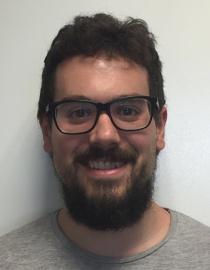 Xisco Fauli, a Spanish LibreOffice developer working in Madrid as a Quality Assurance (QA) specialist, will be a consultant for The Document Foundation effective from September 1st, as QA Engineer.
Xisco got a bachelor’s degree in system data processing at the Polytechnic University of València in 2011. Since then, he has worked for four years as a QA Engineer for a company providing Digital TV solutions, where he has focused mainly on testing software for PCs and portable devices.
Xisco has recently been interviewed by Mike Saunders based on his volunteer development activity and his involvement in the project.
Xisco’s main responsibilities will be the following:
-
Monitor and report about the state of LibreOffice QA, fostering communications between QA and other teams and encouraging people to join the QA team (and help onboarding new contributors);
-
Provide and maintain bibisect repositories of the LibreOffice codebase;
-
Maintain, update and create feature patches for TDF Bugzilla instance;
-
Organize and coordinate bug hunting sessions, test LibreOffice development builds daily on multiple platforms, run master to try to find regressions early in release cycles, and run release tests on alphas, betas and release candidates to identify blockers;
-
Triage unconfirmed bugs on master;
-
Create, improve and keep up-to-date introductions, documentation and howtos for volunteers to LibreOffice QA;
-
Represent the QA project during weekly Engineering Steering Committee calls.
LibreOffice contributor interview: Susobhan Ghosh
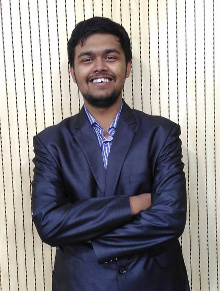
In this week’s interview, we talk to Susobhan Ghosh, who got involved in the project earlier this year and has been working on tasks for the Google Summer of Code (GSoC).
First off, what’s your IRC nickname, nationality and blog URL?
- IRC: susobhang70
- Nationality: Indian
- Blog: https://susobhang70.github.io (it’s very recently set up, after GSoC)
Where are you currently based, and do you work for a LibreOffice-related company or just code in your spare time?
I’m currently living in Hyderabad, India. I’m a third year Computer Science and Engineering student at IIIT Hyderabad. I’ve been coding full time throughout the summer for LibreOffice as a GSoC student – otherwise I code in my spare time.
How did you get involved with LibreOffice?
I started in January 2016, with bug tdf#95845 – I had to replace methods for labels/tooltips with CommandInfoProvider. I ended up causing a regression, which I later on fixed with help from samuel_m. I started contributing more frequently in March, and learnt a lot while fixing the Firefox persona search (tdf#88502).
What was your initial experience of contributing to LibreOffice like?
Initially I had trouble building the suite, and also pushing patches due to network restrictions, but I received good support from the developers like JanIV and chris_wot on IRC, and also samuel_m for submitting my first patch. Overall, the initial experience was pretty nice.
What areas of the project do you normally work on? Anything else you want to tackle?
I’m currently working on the sidebar for GSoC, and I’m familiar with the Firefox personas search. I’d personally like to work on adding theming support for LibreOffice (similar to other office suites) apart from the Firefox themes and color changing options, to provide better customization options.
What is your vision for the future of LibreOffice?
I’m very much looking forward to quite a few things: LibreOffice Online, LibreOffice for Android, the NotebookBar, and added customization and themes for LibreOffice – all of which are under development right now.
What was the very first program you wrote?
My first program was in C++, similar to a Hello World program, except I printed my own name instead of “Hello, World”.
Which is your preferred text editor, and why?
I’m not really a fan of the command line when it comes to editing. My favorite editor would be Sublime Text 3. I won’t bring up the debate as to whether it’s better than Vim or Atom or Emacs – I choose this just because I’m familiar with it have mastered it.
What do you do when you’re not working on LibreOffice?
I’m generally busy with studies and research throughout the year. Otherwise during my holidays, I like to play games – FIFA, Assassin’s Creed, Pokemon etc. Other than that, I watch football (FC Barcelona fan), go out for movies and hang out with my friends.
Thanks Susobhan! And thanks indeed to our whole community – if you’re reading this and want to get involved, join us today and help to make LibreOffice even better.