2021: The Year the LibreOffice Documentation Team Shined

Seasons Greetings

2021 is ending, so let’s recap our achievements and look forward for 2022. It has been a very tough year for all of us in our professional or personal matters, and for sure worsened by the persisting pandemic, even with the release of the COVID vaccines.

But this year was a great documentation year after all. We closed the gap between the LibreOffice major releases, and the update of the corresponding User Guides. By the year end, we will have all of our version 7 guides updated to the LibreOffice release 7.2, and ready to continue for the forthcoming release – 7.3 – due in early February 2022. The goal of tracking the software release closely was achieved, and now we are in a steady state of small updates between releases.

The updates and enhancements of the guides was an effort of all the team, coordinated by Jean Weber (Writer and Getting Started Guide), Steve Fanning (Calc and Base guides), Peter Schofield (Impress and Draw guides), Rafael Lima (Math guide). A number of volunteers also worked in each guide by writing and reviewing contents and suggesting improvements. A special thank to Jean Weber for making the guides available for sale on paper by Lulu Inc. The sad note of the year was the passing of Drew Jensen, a prominent member of the LibreOffice community for many years, and a documentation volunteer.

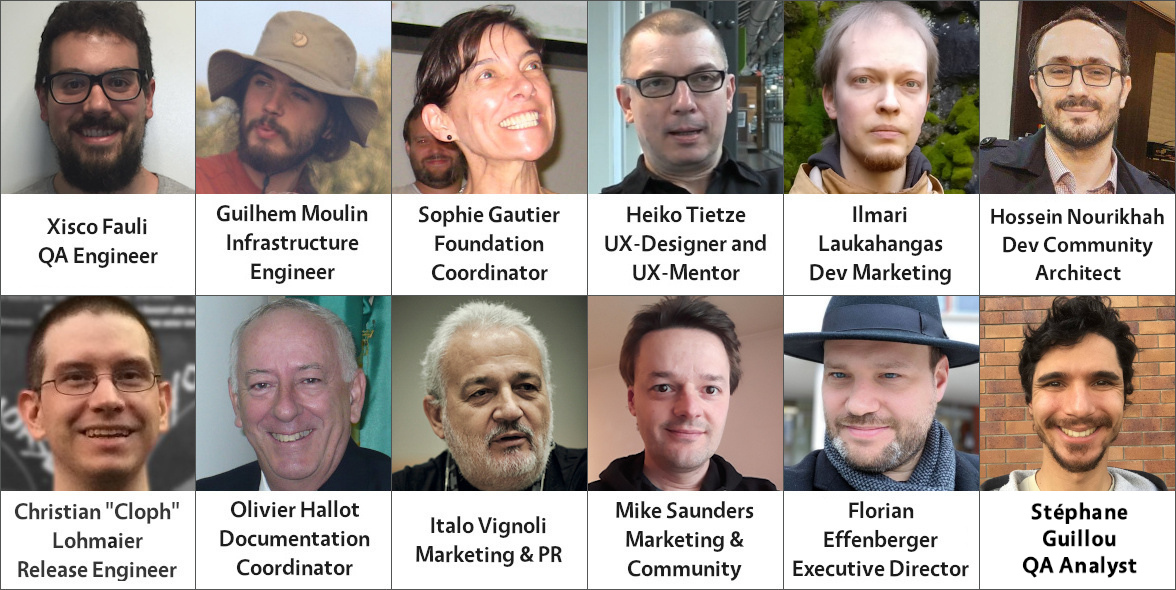
Coordinators

In the last quarter – thanks to The Document Foundation’s budget – some master documents bugs were fixed under contract by Michael Stahl of Allotropia, and now we can safely assemble our guides with master documents, and produce PDFs with hidden sections and correct navigation indexes in PDF readers.

Our documentation community also had a nice contribution of Jean Pierre Ledure, Alain Romedenne and Rafael Lima, for the development of the ScriptForge macro library, in synchronization with the much-needed Help pages on the subject, a practice rarely followed by junior developers of LibreOffice. As we know, undocumented software is software that’s lacking; features that are unknown to the user can be a cause of costly calls to the Help Desk in corporate deployments. ScriptForge developments came together with its documentation, a proof of the ScriptForge team’s professional maturity.

Special thanks to Steve Fanning for his leadership of the Calc Functions wiki pages maintenance. The wiki pages were initially developed by Ronnie Gandhi in 2020 under the Google Season of Docs programme, and are now run by Steve, providing richer content about the functions, with better descriptions, new examples, and other reference information. The in-depth review of the Calc Function wiki pages gave very good feedback for the Help pages, which also lead to Help improvements. The Calc functions wiki pages are available for translation, thanks to the dedication of Ilmari Lauhakangas.

Very important as well: we also had a team of Help page bug smashers, closing Help documentation bugs and gaps, fixing typos and improving quality, a must-have update to keep LibreOffice in-shape for its user base. Our Help pages, which are part of the LibreOffice code, have also been refactored continuously for better maintenance and code readability. The L10N team of volunteers (localization and translators) were quick in flagging typos and English mistakes – while translating the Help and the User Interface.

In 2021 we also launched the LibreOffice bookshelf, another download page for LibreOffice guides that, different from the current documentation.libreoffice.org server page, the bookshelf can be cloned and installed in organizations, libraries, colleges and schools, for immediate availability in controlled environments, as well as online reading of the guides. The ODF chapters were transformed into static HTML pages and are ready to display on computers, tablets and cell phones, bringing LibreOffice user guides closer to its public, anywhere, anytime. The conversion process is extensive and has been addressed in the LibreOffice 2021 Conference. It was also extended to the Portuguese translation of the guides, and can easily extended for other languages. Note: converting ODF documents into web pages is far beyond a simple export to HTML.

2022

For 2022, besides keeping the guides updated with the software releases and our wiki pages, we can elaborate on new projects and enhancements.

In the last couple of years, from reading users’ questions and feedback on TDF’s communication channels (mailing lists, Telegram channels, Ask LibreOffice and more), it became clear that the user community is permanently asking for support in writing macros for automating documents and converting from other suite macros. This calls for a new guide, probably a Scripting Guide for which contents shall address the use of the scripting languages by the casual user. The project is under construction and is open to editorial guidelines.

Scripting Guide

In the same direction of script documentation, the LibreOffice API documentation – created by automated tools – is excessively directed at skilled programmers, and falls short in readability, especially for the casual macro programmer. The project under construction is to illustrate the API pages with code snippets, as much as possible – a task suitable for newcomers and would-be programmers.

The bookshelf project shall be enhanced with new guide releases, new languages, and also demand for upstream control of the guide chapter formatting. Under discussion in the documentation team call meetings, it is interesting to write some sanity checks scripts for chapters compliance to the template, remove of unlisted styles, cleaning of direct formatting, object anchoring and more. These checks are important because the same visual output can be the result of very different techniques.

Portuguese bookshelf

Seasons Greetings!

LibreOffice has been awarded the Editor’s Pick badge by Software Informer

This is Software Informer’s editor rating.

Work with document files either imported from programs like MS Word, Excel and other office tools or created natively in formats like ODF or PDF compatible with modern and open standards. Editing, copying and incorporating data in databases is possible.

LibreOffice is an open-source free alternative to heavy commercial office suites like MS Office. While having generally the same functionality, LibreOffice is more open to modification and updates, making it a more attractive suite if you want a comfortable and adjustable tool for working with documentation.

LibreOffice consists of several tools capable of working with documents of any type, from standard Word files and Excel tables to presentations and Publisher files. There’s a word processing and desktop publishing tool called Writer; spreadsheet program Calc; tool for creating effective multimedia presentations called Impress; a sketching tool named Draw; database manager Base; formula editor Math; advanced chart and diagram creator Charts. Every tool has all the features of an advanced editor for the kind of files you could work with. The tools work stable and fast, they are easy to use even if you’re not an experienced user of office tools.

LibreOffice adds several unique features into its programming, such as the support for ODT documents and the ability to incorporate various plugins and extensions. You can always add new templates for various documents.

Open-source tools sometimes disappoint by being attempts to copy a licensed product. LibreOffice is different in that, it’s a genuinely good product itself.

Two ODF Toolkit releases in a row!

ODF is the Open Document Format, the native format used by LibreOffice (and supported by many other apps too). Then there’s the ODF Toolkit, a set of Java modules that allow programmatic creation, scanning and manipulation of ODF files. Svante Schubert writes with some updates:

We are happy to announce that there have been recently two ODF Toolkit releases in a row. These were our first releases at The Document Foundation (TDF), after the migration of the project to TDF in 2019:

  • With the 0.9.0 release, we have our last JDK 8 release (due to a switch of the Java Doc Taglet API we are using). After this release, we dropped the so-called “Simple API” (which was once forked from our ODFDOM doc Java Package by IBM, but not merged back, leaving lots of duplicated code that was unable to embrace our new change API). And the XSLT Runner Ant plugin will be removed in a future release, as we are no longer using Ant but Maven (to avoid maintenance of untested functionality).
  • With the 0.10.0 release, we support the next JDK 11 LTS version and our new change API that was implemented by myself for Open-XChange’s web office OX Documents – thanks to them, especially Malte Timmermann and Rafael Laguna for keeping the Apache License 2. Unfortunately, OX forked before I started there and it took me several months – and some sponsorship from a PrototypeFund project – to merge manually every file and enable all tests again (which some OX colleagues had disabled as they took too long…). (Please check out the PrototypeFund: Any German taxpayer may apply with an open-source project/idea!).

I would like to thank also all those numerous folks assisting us to make this work – especially recently in pushing this forward!

Especially, I would like to congratulate Michael Stahl for officially becoming the co-maintainer of this project. Michael has been my long term colleague (from StarOffice Hamburg times) and helps me constantly drop procrastination and/or fix issues I am no longer capable to realize as I looked too long at them. In addition, Michael and I also serve as editors of the OASIS ODF TC. There at the ODF TC, we envision having a faster turn-around of ODF spec deliveries and making their information set more readable for downstream software as we are. Thanks to allotropia software GmbH, Michael’s employer, for providing him with the time for working on these tasks!

So what’s next? Obviously, it’s more than time to release an ODF Toolkit 1.0.0.

Personally, I would like to get the code generation right, but keep as much compatibility to prior releases as possible. Michael and my aim is to work from the end of January on this release (any helping hand is most welcome) 😊

There is also ODF 1.3, to be embraced by a release in the near future.

In February, I will likely have an online talk at FOSDEM, at the LibreOffice dev room about our project and what I intend to do next year.

In a nutshell, I was able to receive some NGI Search funding for this project to enable search in ODF documents.

Aside from the obvious search API – focusing on one higher-level based on user semantic and likely having also one lower-level based on XML, I would like to refactor my “spaghetti feature code” in the SAX parser that made the implementation of the changes hard to maintain. Sorry for that, not my first and likely not my last mistake – but I am learning! 🙂

We’re going to work out a more elaborate picture for the FOSDEM presentation.

Until then, have fun with the ODF Toolkit!

PRELIMINARY results of the elections for the next Board of Directors at The Document Foundation

TDF Membership Committee announces the PRELIMINARY results of the elections for the next Board of Directors at The Document Foundation.

The number of TDF Members who voted is 120, from a total amount of 211 eligible voters. This means that 91 TDF Members did not vote. The Membership Committee would like to thanks all the voters, as the elections are the most significant time of the year for TDF Members, because they can decide about the project’s governance.

Based on the PRELIMINARY results, the following candidates are elected as members of TDF Board of Directors, in order of preference:

Full Members:

  1. Thorsten Behrens
  2. Paolo Vecchi
  3. Jan ‘Kendy’ Holešovský
  4. Emiliano Vavassori
  5. Caolán McNamara
  6. Cor Nouws
  7. László Németh

Deputies:

  1. Gábor Kelemen
  2. Ayhan Yalçınsoy
  3. Gabriel Masei

Results were calculated using the same tooling and rules of previous elections, based on the single transferable vote (STV) voting system and the Meek algorithm (https://en.wikipedia.org/wiki/Counting_single_transferable_votes). The software used is OpenSTV (https://github.com/Conservatory/openstv).

The Membership Committee agreed on the ranking of the first six candidates, but is still discussing about the last four candidates.

Unfortunately, given that there are 10 candidates and 10 seats, OpenSTV 1.7 does not provide more than one round to rank all candidates that have not reached the threshold, and considers all candidates as elected. For more details, see: https://elections.documentfoundation.org/results.php?election_id=14. The Membership Committee will investigate this further, and will update TDF Members and the general public as soon as possible.

Before the results can be considered as final, we have the challenge phase from Wednesday, December 15, to Monday, December 20, at midnight CET (UTC+1).

TDF Members are invited to check their votes as explained after the voting, by using the anonymous token received at that time (each voter has received a different token, and is the sole owner of that token). Election results to verify are available here: https://elections.documentfoundation.org/votes.php?election_id=14.

If you have any questions or if you think that there were irregularities during the vote, please get in touch with the Membership Committee AS SOON AS POSSIBLE, and in any case no later than Monday, December 20, at midnight CET (UTC+1), using the email address elections@documentfoundation.org.

For reference, details of the whole election process have been outlined in the first announcement: https://listarchives.tdf.io/i/tFJzSYUUGcSjf0c0NtNiEOou.

Record number of LibreOffice downloads

The chart says it all! Last week, we had a record number of downloads for LibreOffice in a single week. More and more people are discovering the free and open source office suite, the successor to OpenOffice, that respects users’ privacy and freedom.

Downloads have been growing steadily over time, and one week ago we released an important security update, so we recommend downloading it, if you’re using an older version.

Thanks to everyone in our wonderful worldwide community for all their help! It’s thanks to you that LibreOffice keeps going from strength to strength. Let’s keep spreading the word together 👍

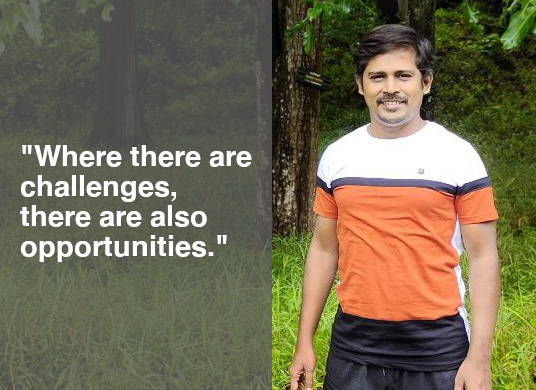
Community Member Monday: Ravi Dwivedi

Today we’re chatting with Ravi Dwivedi, a free software supporter who recently joined our marketing community

To start, tell us a bit about yourself!

I am from India, and I recently received my masters degree (M.Math) in mathematics from the Indian Statistical Institute in Kolkata. I am looking forward to doing a PhD in mathematics. My hobbies include listening to music, reading novels, playing chess, and meeting new people.

I campaign that software must respect users’ freedom. We call such a software free software, where ‘free’ refers to freedom and not price. In Indian languages, we call it “swatantra/mukt software” to remove the confusion. Free Software gives users the freedom to run, study, modify, share and improve the software. If the software lacks any of these freedoms, it is called non-free/proprietary software.

In my computing, I use only free software, except for some blobs in my phone. I volunteer for the Free Software Community for India. (FSCI). FSCI is not a registered organization, but a community of free software activists. It is also a non-hierarichal group. I raise awareness on why free software is important and the dangers of non-free/proprietary software.

I also raise awareness about the importance of digital privacy, and try my best to avoid privacy-invading technologies – and this means I usually have an amount of inconvenience for my freedom and privacy. Although I work on the issues of free software, I do care about other issues in society and actively look for opportunities to meet people who care about these issues. I believe in the power of collaboration.

I am an associate member of Indian Pirates, a group of people who would like to be a political party some day, with the goal of protecting the human rights of citizens. Within the groups FSCI and Indian Pirates, there is no leader, boss or hierarchy. I embrace the nonhierarchial structure of these groups, otherwise groups become(or, are liable to become) dictatorship of a few people.

What are you doing to spread the word about Free Software in India?

I hangout in FSCI chat groups. FSCI is very active in promoting free software, guiding people to switch to free software, providing technical support as well.

I am personally a part of the following activities by FSCI:

  • Convincing educational institutes to use Free Software and providing technical support to help them switch (see this page). Open letter to Kerala teachers is a part of this campaign. This is a hard and lifelong change that we are trying to bring and therefore, we need more volunteers. Snehal, who is from our group, could switch his department to fully free software for teaching.
  • Organizing Software Freedom Camp Diversity Edition 2021: We are trying to reach people from underrepresented (in the free software community) or underprivileged backgrounds. The main goal is to teach people about ethical issues in technology, and integrate them in our community. In the camp, people meet other like-minded people and interact with them. The learners participate in many activities in the camp and this makes it fun place. They also contribute to free software via technical (like programming) or non-technical means (like translations or organizing events).
  • Crowdfunding for fixing a problem with XMPP-matrix bridge: Matrix-XMPP bridge has a limitation that XMPP users miss messages posted in the groups hosted on matrix when they were offline. Sunday Nkwuda and Olatunji Ajayi, with help from team formed by Pirate Praveen, including me, are planning to fix the problem. Please help us to raise funds, so that we can fix the limitation. Check the fundraiser here.
  • With free software, users can fix the bugs themselves and share the modification with others, so that everyone benefits. With non-free software, we would have to beg the developer to fix the bridge. We need to actively think in terms of fixing things ourselves and building this attitude.
  • Privacy Yathra campaign: Promotes and raises awareness about privacy in India. The website is not up yet, but should be up this month. The website is here.

FSCI does a lot of other activities which I am not a part of. We run many services: poddery.com and diasp.in are our Matrix, XMPP, Diaspora service, Gitlab instance, Jitsi Meet, https://fund.fsci.in etc.

What are the challenges you face in convincing people?

There are many challenges. A lot of people do not get convinced about switching to free software or protecting their privacy.

I meet people on streets, trains, buses and wherever I find the opportunity – and I talk about the issue of free software and privacy. Usually, I try to understand what issues other people care about, and then relate digital privacy and free software with their issue.

For example, once a bookseller told me how people have stopped buying from physical bookstores, especially in COVID times, and instead buy books online from Amazon. I understood their issues and I told them that I never bought from Amazon even once (after June 2020) because ordering from Amazon puts me under surveillance. This way, I related the issues of privacy and free software with the ones they already care about. This is one good way to explain people.

Even when people don’t care, I tell them about these issues because it might be their first trigger, and they might need several triggers to consider the idea. I hope to raise some questions in people’s minds rather than convincing them. Also, I need to remind myself time and again that we cannot convince everyone that they should care for privacy. Apparently, it is a hard change to bring in today’s world and therefore, even small changes (like convincing and installing a few free software apps in their device) requires a lot of hard work.

You recently joined the LibreOffice community. How/why did you decide to join, and how’s your experience been so far?

I personally use LibreOffice as my office suite for all the work, as I am a devotee of free software. I also promote LibreOffice when I guide people to switch to free software. Further, I make my slides for talks in LibreOffice Impress, and tell the audience that the slides are made using LibreOffice which respects user’s freedom.

I think the LibreOffice community is doing very good work, and therefore I wanted to share some LibreOffice flyers with some college group, on my Mastodon and my website. Before doing that, I wanted to remove the term ‘open source’ with ‘freedom-respecting’ because personally, I don’t promote the term ‘open source’. Then I contacted Mike Saunders. We had some email exchanges and Mike gave me the idea of joining the LibreOffice Marketing team.

I found the LibreOffice community inclusive and welcoming, so I feel at home. Promoting LibreOffice also serves my broader goal of spreading free software. Therefore, I decided to help LibreOffice in marketing. Thanks a lot!

What else are you planning to do?

As of now, FSCI is planning to announce public meetings which help people switch to Free Software. It is similar to GNU/Linux installfests. We haven’t done this yet. We are planning to have our first session soon. I personally believe that even if people understand the dangers of non-free software and realize that they should switch to free software, they have some inertia. This type of meetings are aimed at breaking that inertia.

Currently, the adoption and awareness of free software is concentrated highly in a few Indian states, like Kerala. I am also planning to reach people in other areas of India too.

How can others help with Free Software adoption / spreading the word in India?

The most important part for free software adoption is to replace as much proprietary software you can with free software in your own computing. Then convince others to switch to free software.

Please visit fsci.in, and join our chat groups mentioned at the bottom of the page. Feel free to join and discuss. Help us with maintaining the services and other activities that we already do. You can start your own initiatives. One important aspect of community is that if you do the activism alone, you can easily get demotivated. Meeting like-minded people acts as a psychological boost. This is one reason I am able to boycott non-free software successfully.

Further, our goal (as FSCI) is not only creating more free software users but creating functional free software communities which are inclusive, welcoming and respectful.

I believe, we also need to have more free software businesses like libretech.shop, which sells free software powered laptops and mobiles.

Thanks for your time, Ravi! Finally, how can we reach you?

The contact page of my personal website lists the ways you can get in touch with me. You can also send me an email via ravi at ravidwivedi.in. Looking forward to hearing from you!