LibreOffice 6.3.1 and LibreOffice 6.2.7 announced, focusing on security
 Berlin, September 5, 2019 – The Document Foundation announces LibreOffice 6.3.1, the first minor release of the LibreOffice 6.3 family, and LibreOffice 6.2.7, the seventh minor release of the LibreOffice 6.2 family, with many bug fixes and a key security improvement.
LibreOffice 6.3.1 and LibreOffice 6.2.7 consider the presence of any call to a script-like thing as equally hazardous as a macro, and present the user a warning dialog about the document trying to execute a script. Users should never allow the execution of macros and scripts embedded in documents, unless they are perfectly aware of the potential risks associated with the action.
LibreOffice 6.3.1 “fresh” is targeted at technology enthusiasts and power users, while LibreOffice 6.2.7 “still” is targeted at users in production environments and individual users who prefer robustness over advanced features. All LibreOffice users should update immediately their current version.
LibreOffice’s individual users are helped by a global community of volunteers: https://www.libreoffice.org/get-help/community-support/. On the website and the wiki there are guides, manuals, tutorials and HowTos. Donations help us to make all of these resources available.
LibreOffice users are invited to join the community at https://ask.libreoffice.org, where they can get and provide user-to-user support. While TDF can not provide commercial level support, there are guides, manuals, tutorials and HowTos on the website and the wiki. Your donations help us make these available.
LibreOffice 6.3.1’s change log pages are available on TDF’s wiki: https://wiki.documentfoundation.org/Releases/6.3.1/RC1 (changed in RC1) and https://wiki.documentfoundation.org/Releases/6.3.1/RC2 (changed in RC2). LibreOffice 6.2.7’s change log page is also available on TDF’s wiki: https://wiki.documentfoundation.org/Releases/6.2.7/RC1 (changed in RC1).
LibreOffice in business
For enterprise class deployments, TDF strongly recommend sourcing LibreOffice from one of the ecosystem partners to get long-term supported releases, dedicated assistance, custom new features and bug fixes, and other benefits. Also, the work done by ecosystem partners flows back into the LibreOffice project, benefiting everyone.
Also, support for migrations and trainings should be sourced from certified professionals who provide value-added services which extend the reach of the community to the corporate world and offer CIOs and IT managers a solution in line with proprietary offerings.
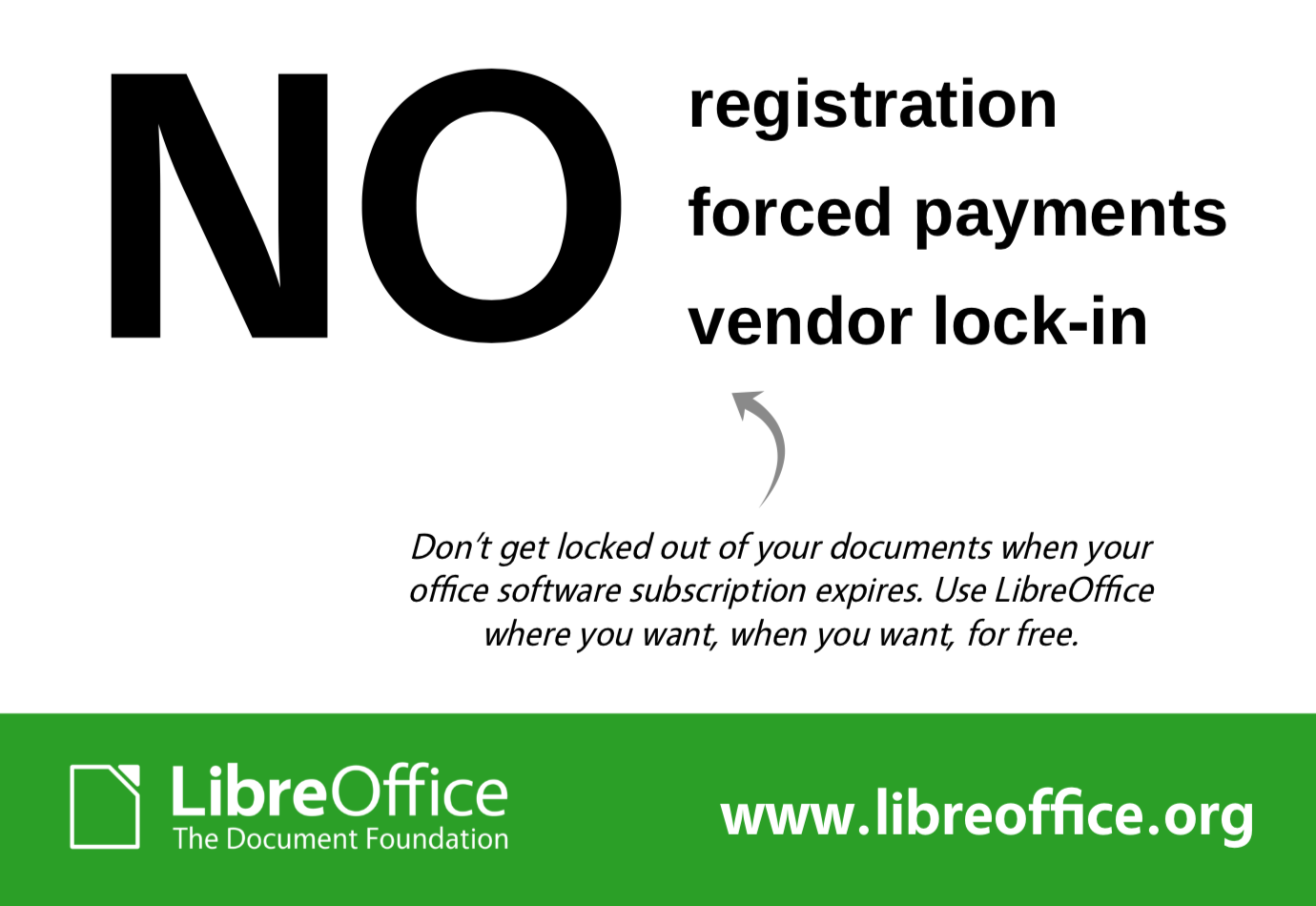
In fact, LibreOffice – thanks to its mature codebase, rich feature set, strong support for open standards, excellent compatibility and long-term support options from certified partners – represents the ideal solution for businesses that want to regain control of their data and free themselves from vendor lock-in.
Availability of the new versions of LibreOffice
LibreOffice 6.3.1 and LibreOffice 6.2.7 are immediately available from the following link: https://www.libreoffice.org/download/. Minimum requirements are specified on the download page. Builds of the latest LibreOffice Online source code are available as Docker images: https://hub.docker.com/r/libreoffice/online/.
LibreOffice Online is fundamentally a server-based platform, and should be installed and configured by adding cloud storage and an SSL certificate. It might be considered an enabling technology for the cloud services offered by ISPs or the private cloud of enterprises and large organizations.
LibreOffice users, free software advocates and community members can support The Document Foundation with a donation at https://www.libreoffice.org/donate.
All versions of LibreOffice are built with document conversion libraries from the Document Liberation Project: https://www.documentliberation.org.
 Good news for all users of high quality presentation software: a dedicated team has been formed within the LibreOffice community with the aim of further improving PPT/PPTX (PowerPoint) file format support. The initial developer members are: