FOSDEM 2020: Open Document Editors DevRoom Call for Papers

FOSDEM is one of the largest gatherings of Free Software contributors in the world and happens each year in Brussels (Belgium) at the ULB Campus Solbosch. In 2020, it will be held on Saturday, February 1, and Sunday, February 2.

The Open Document Editors (OFE) DevRoom is scheduled for Saturday, February 1, from 10:30AM to 7PM. Physical room has not yet been assigned by FOSDEM. The shared devroom gives all project in this area a chance to present ODF related developments and innovations.

We are now inviting proposals for talks about Open Document Editors or the ODF document format, on topics such as code, extensions, localization, QA, UX, tools and adoption related cases. This is a unique opportunity to show new ideas and developments to a wide technical audience.

Length of talks should be limited to a maximum of 20 minutes, as we would like to have questions after each presentation, and to fit as many presenters as possible in the schedule. Exceptions must be explicitly requested and justified. You may be assigned LESS time than you request.

All submissions have to be made in the Pentabarf event planning tool: https://penta.fosdem.org/submission/FOSDEM20.
While filing your proposal, please provide the title of your talk, a short abstract (one or two paragraphs), some information about yourself (name, bio and photo).

To submit your talk, click on “Create Event”, then make sure to select the “Open Document Editors” devroom as the “Track”. Otherwise your talk will not be even considered for any devroom at all.

If you already have a Pentabarf account from a previous year, even if your talk was not accepted, please reuse it. Create an account if, and only if, you don’t have one from a previous year. If you have any issues with Pentabarf, please contact ode-devroom-manager@fosdem.org.

The deadline is Saturday, November 30, 2019. Accepted speakers will be notified by Sunday, December 8th, 2019. The DevRoom schedule will be published by Tuesday, December 12, 2019.

Recording permission

The talks in the Open Document Editors DevRoom will be audio and video recorded, and possibly streamed live too.
In the “Submission notes” field, please indicate that you agree that your presentation will be licensed under the CC-BY-SA-4.0 or CC-BY-4.0 license and that you agree to have your presentation recorded. For example: “If my speech is accepted for FOSDEM, I hereby agree to license all recordings, slides, and other associated materials under the Creative Commons Attribution Share-Alike 4.0 International License. Sincerely, Name”.

Coming up on October 21: First Bug Hunting Session for LibreOffice 6.4!

LibreOffice 6.4 is being developed by our worldwide community, and is due to be released in early February 2020 – see the release notes describing the new features here. Of course, we’re still early in the development cycle, so many more features are still to come!

In order to find, report and triage bugs, the LibreOffice QA team is organizing the first Bug Hunting Session for LibreOffice 6.4 on Monday October 21, 2019. Tests will be performed on the first Alpha version, which will be available on the pre-releases server a few days before the event. Builds will be available for Linux (DEB and RPM), macOS and Windows, and can be installed and run in parallel along with the production version.

Mentors will be available from 07:00 UTC to 19:00 UTC for questions or help in the IRC channel #libreoffice-qa and the Telegram QA Channel. Of course, hunting bugs will be possible also on other days, as the builds of this particular Alpha release (LibreOffice 6.4.0 Alpha 1) will be available until mid November. Check the Release Plan.

All details of the first Bug Hunting Session are available on the wiki. We look forward to seeing you soon – thanks so much for your help! Together we’ll make LibreOffice 6.4 a super solid release.

LibreOffice Conference 2019: Meet the Engineering Steering Committee

Who makes the big technical decisions in the LibreOffice project? In this video from our recent LibreOffice Conference in Spain, the Engineering Steering Committee (ESC) introduces itself and provides an update on the latest updates:

Please confirm that you want to play a YouTube video. By accepting, you will be accessing content from YouTube, a service provided by an external third party.

YouTube privacy policy

If you accept this notice, your choice will be saved and the page will refresh.

Six extra videos from the LibreOffice Conference 2019

Here’s the final set of presentations from the “Sala de Grados (Aulario IV)” room at the LibreOffice Conference 2019 in Almeria, Spain. We have many more videos from other rooms to come, of course! (Note: for better audio, use headphones.)

First up is “Neural Machine Translation for LibreOffice” with Thomas Viehmann:

Please confirm that you want to play a YouTube video. By accepting, you will be accessing content from YouTube, a service provided by an external third party.

YouTube privacy policy

If you accept this notice, your choice will be saved and the page will refresh.

Next, “Weblate public test feedback round” with Christian Lohmaier:

Please confirm that you want to play a YouTube video. By accepting, you will be accessing content from YouTube, a service provided by an external third party.

YouTube privacy policy

If you accept this notice, your choice will be saved and the page will refresh.

“Experiment for large-scale operation of LibreOffice Online, 2019 Edition” with Masaki Murakami:

Please confirm that you want to play a YouTube video. By accepting, you will be accessing content from YouTube, a service provided by an external third party.

YouTube privacy policy

If you accept this notice, your choice will be saved and the page will refresh.

“LibreOffice Online new features” with Cor Nouws:

Please confirm that you want to play a YouTube video. By accepting, you will be accessing content from YouTube, a service provided by an external third party.

YouTube privacy policy

If you accept this notice, your choice will be saved and the page will refresh.

“Online integration success stories” with Jan Holesovsky:

Please confirm that you want to play a YouTube video. By accepting, you will be accessing content from YouTube, a service provided by an external third party.

YouTube privacy policy

If you accept this notice, your choice will be saved and the page will refresh.

And “10/20 Anniversary Planning” with Italo Vignoli:

Please confirm that you want to play a YouTube video. By accepting, you will be accessing content from YouTube, a service provided by an external third party.

YouTube privacy policy

If you accept this notice, your choice will be saved and the page will refresh.

As mentioned, we have many more videos from the other rooms of the conference to come, so stay tuned!

October 12: International Day Against DRM 2019

Digital Restrictions Management is the practice of imposing technological restrictions that control what users can do with digital media. When a program is designed to prevent you from copying or sharing a song, reading an ebook on another device, or playing a single-player game without an Internet connection, you are being restricted by DRM. In other words, DRM creates a damaged good; it prevents you from doing what would be possible without it. This concentrates control over production and distribution of media, giving DRM peddlers the power to carry out massive digital book burnings and conduct large scale surveillance over people’s media viewing habits.

If we want to avoid a future in which our devices serve as an apparatus to monitor and control our interaction with digital media, we must fight to retain control of our media and software.

Defective by Design is a broad-based anti-DRM campaign that is targeting Big Media, unhelpful manufacturers and DRM distributors. The campaign aims to make all manufacturers wary about bringing their DRM-enabled products to market. DRM products have features built-in that restrict what jobs they can do. These products have been intentionally crippled from the users’ perspective, and are therefore “defective by design”. This campaign will identify these “defective” products, and target them for elimination.

Nine more videos from the LibreOffice Conference 2019

Yes, we’ve uploaded some more presentations from the recent LibreOffice Conference 2019 in Almeria, Spain. Many of these cover interoperability between LibreOffice and other office software. To start, here’s “Sharing is caring” with Marina Latini:

Please confirm that you want to play a YouTube video. By accepting, you will be accessing content from YouTube, a service provided by an external third party.

YouTube privacy policy

If you accept this notice, your choice will be saved and the page will refresh.

“TDF community and membership: how to get in” with Gabriele Ponzo:

Please confirm that you want to play a YouTube video. By accepting, you will be accessing content from YouTube, a service provided by an external third party.

YouTube privacy policy

If you accept this notice, your choice will be saved and the page will refresh.

“LibreOffice community and the SDG” with Leo Moons:

Please confirm that you want to play a YouTube video. By accepting, you will be accessing content from YouTube, a service provided by an external third party.

YouTube privacy policy

If you accept this notice, your choice will be saved and the page will refresh.

“Interoperability as core feature” with Gábor Kelemen:

Please confirm that you want to play a YouTube video. By accepting, you will be accessing content from YouTube, a service provided by an external third party.

YouTube privacy policy

If you accept this notice, your choice will be saved and the page will refresh.

“Interoperable office collaboration” with Svante Schubert:

Please confirm that you want to play a YouTube video. By accepting, you will be accessing content from YouTube, a service provided by an external third party.

YouTube privacy policy

If you accept this notice, your choice will be saved and the page will refresh.

“Interoperability improvements in the last year” with Mike Kaganski:

Please confirm that you want to play a YouTube video. By accepting, you will be accessing content from YouTube, a service provided by an external third party.

YouTube privacy policy

If you accept this notice, your choice will be saved and the page will refresh.

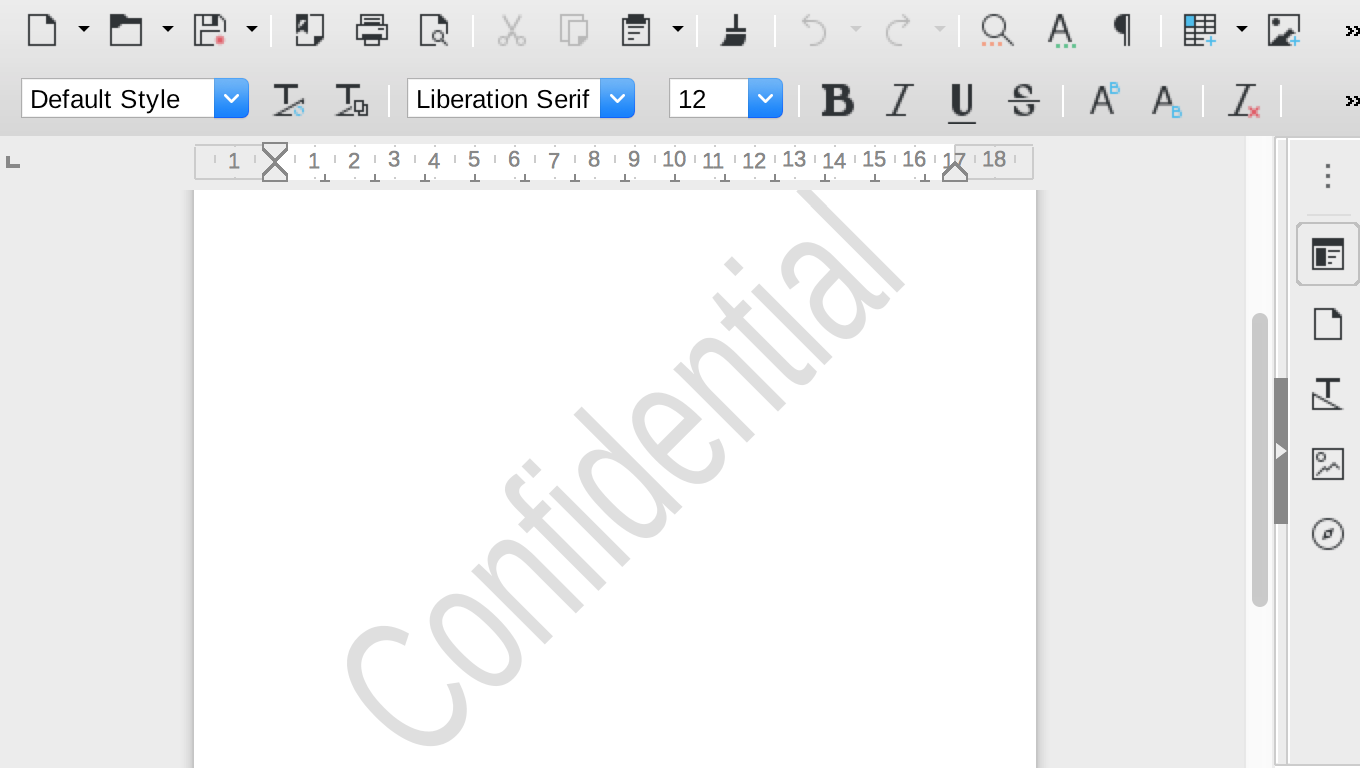
“Watermarking: a secure way to share documents” with Mert Tümer:

Please confirm that you want to play a YouTube video. By accepting, you will be accessing content from YouTube, a service provided by an external third party.

YouTube privacy policy

If you accept this notice, your choice will be saved and the page will refresh.

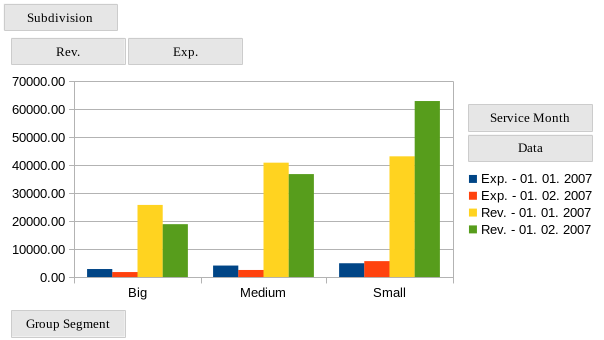
And “Interoperability of Charts between LibreOffice and Microsoft Office” with Balázs Varga:

Please confirm that you want to play a YouTube video. By accepting, you will be accessing content from YouTube, a service provided by an external third party.

YouTube privacy policy

If you accept this notice, your choice will be saved and the page will refresh.