
Yes, LibreOffice is at FOSDEM in Brussels – come to our stand (H.A1) and chat with our community – and also grab cool swag! (T-shirts, stickers, candy and more…)
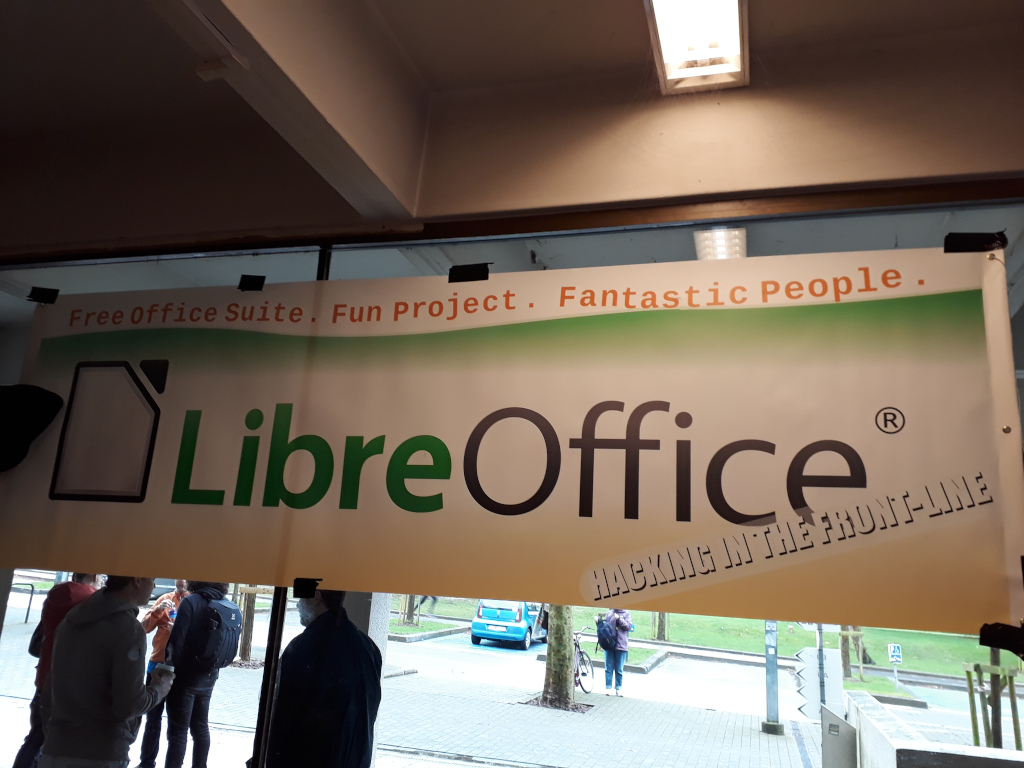
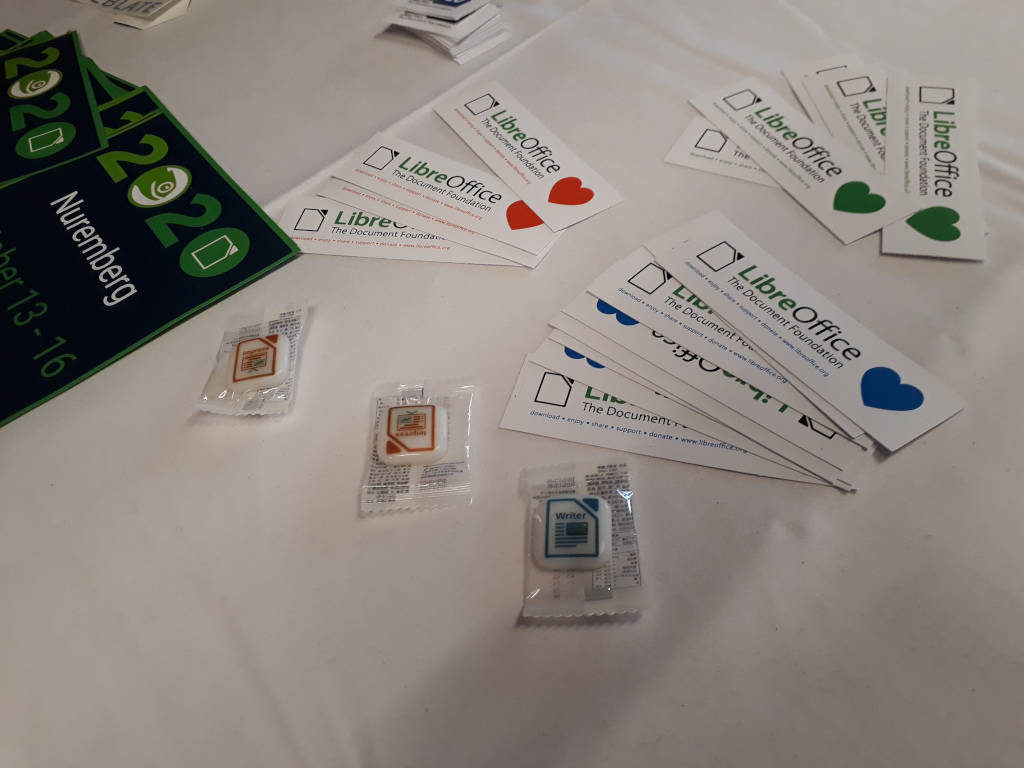
Yes, LibreOffice is at FOSDEM in Brussels – come to our stand (H.A1) and chat with our community – and also grab cool swag! (T-shirts, stickers, candy and more…)
Certain versions of Microsoft Windows include “S mode” (also known as “Windows 10 S” or “Windows 10S”), which limits the range of software that users can install, and imposes other restrictions.
There are at least 75 million LibreOffice users who have installed the software on Windows 10 without any security or performance issues, so we would like to offer the same possibility to Windows 10 “S mode” users. If you’re running Windows 10 in “S mode” but can’t install LibreOffice, here are some options:
In addition, LibreOffice lets you store documents in the superior OpenDocument standard document format, which is not affected by the same security issues as DOCX, XLSX and PPTX files (according to security specialists Symantec, Kaspersky and Barracuda Networks, between 48% and 70% of malware attacks are based on Microsoft Office files).
If you need further help installing LibreOffice on Windows 10, please see Ask LibreOffice.

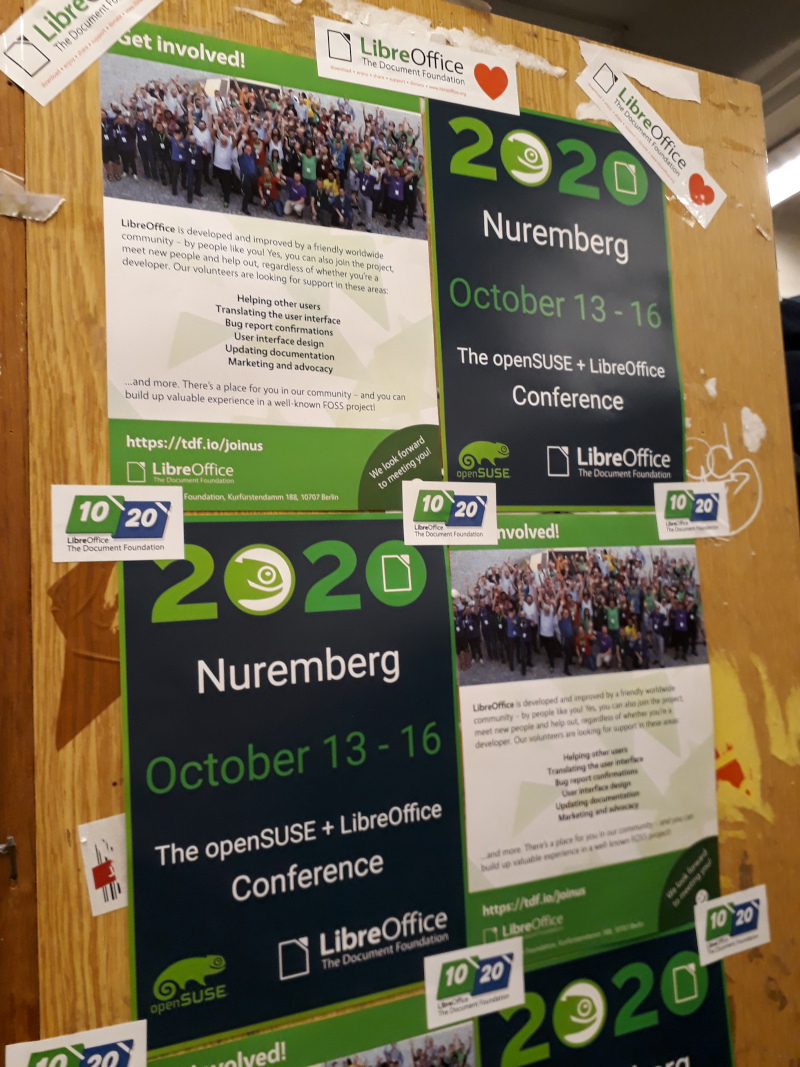
In 2020, openSUSE and LibreOffice will have a shared conference from October 13 – 16 in Nuremberg, Germany. We’re pleased to announce that the the winner of the openSUSE + LibreOffice Conference logo competition is Kukuh Syafaat from Indonesia.
Kukuh’s “Fresh Community Spirit” was the winning design and was one of 10 designs submitted during the competition. A “Mystery Box” will be sent to Kukuh for the winning design!
The organizing committee for this year’s joint conference selected the winning design during a meeting on Jan. 20. The logo portrayed an ideal fit for the conference since openSUSE and LibreOffice are combining their community conferences for just one year in 2020 to celebrate LibreOffice’s 10-year anniversary and the openSUSE Project’s 15-year anniversary.
Now that the logo has been announced, fliers and posters can be created to help advertise the event. The conference website will soon be available at on the openSUSE and LibreOffice websites, and the Call for Papers will begin next month. We look forward to seeing you there!
In December, members of The Document Foundation voted for a new Board of Directors. The Board is the main administration of the Foundation’s projects and teams – including LibreOffice and The Document Foundation. The new Board will begin work after FOSDEM in February – and there are some new faces to welcome! Let’s hear from them…
I have been working voluntarily with TDF since January 2011 and I am a member since 2013. Whenever possible I try to evangelize regarding the advantages of adopting the ODF standard and LibreOffice as an office suite.
Considering the number of people living in this region of the world, I consider the need to add more volunteers to the community and, eventually, more members to the foundation to be a continuous effort. A significant weakness has to do with the language barrier as the number of English speakers in this part of the continent is relatively low. For this reason, I translate and publish on the Hispanic blog press releases, interviews and articles that help raise awareness of the strategic importance of adopting free tools and open standards. I work in a high school with technical orientation all day. I live in Misiones, Argentina (northeast of the country), an small province between Paraguay and Brazil.
I’m averaging the 40’s, father of two, a boy and a girl, and live and I’ve been living in a couple for almost 20 years.
I am a senior system administrator, employed in a small company based in Bergamo, in the North of Italy, with its core business in providing ICT services for SMB companies. In my job, I’m mostly without any relation to LibreOffice – we install it on some customer’s PCs, but at least for the moment we don‘t have any migration process/anything bigger planned.
My operating system of choice is GNU/Linux since 2001 and from the same days I advocate FOSS and openness whenever possible, both in public events and in the business. Lately I was convinced that also open formats should have their own share of advocating so I am trying to do that as well. I am actually in the Board of both BgLUG (Bergamo Linux Users Group) and LibreItalia (Italian local “chapter” of TDF), but I am/was involved in a lot of other organizations, mostly with goals in FOSS advocacy.
In the last few years, I was involved in FOSS advocacy also inside schools, founding and leading the LibreSchool Project (www.libreschool.org) with a group of friends and colleagues from my LUG. I hope my experience would be of help inside TDF Board of Directors; I am pretty sure that I will also learn a lot.
As soon as I have been involved with TDF, I have been greeted by a full lot of passionate and welcoming people who worked hard to make yourself feel at home inside TDF and, sharing the same spirit, I would like to drive the efforts on the next two years within the BoD to make LibreOffice and The Document Liberation Project shine even more. My goals inside the Board will be mostly facilitating community interactions and activities, community inclusion and lowering the initial barriers to becoming a community member and contributor, which I can feel is still pretty high.
I would like to provide my direct help inside the TDF Board of Directors dealing with infrastructure (as it may seem legitimate by my job), marketing, event organization and native language projects.
This is a logical consequence – I think – of my long-term contributions to the project. A lot of you know me as owner of .riess applications, which was the first partner of Sun for doing migration business with StarOffice/OpenOffice nearly 20 years ago.
You might also know me from my contributions with activities for the national and international ecosystem, developing the certification process for LibreOffice professionals with others, where I nowadays serve as volunteer co-chair of the certification committee.
This gives me the chance to give something back for a lot of things I got out of this project. It‘s not just in the sense of making business, but in the sense of experiencing a healthy and powerful community of an open source project. As I’m also engaged in the German-based Open Source Business Alliance as speaker of the working group of public affairs and co-speaker of the working group for interoperability, there are a lot of topics where I can leverage each engagement through the other in the interest of all.
Helping and driving activities in the sense of growing local communities internationally (India, Africa, Asia, as well as European communities for recovering) and activating more exchange of ideas between the community and the board are some of the challenges I see for the next board period.
I’m Nicolas Christener, living in Switzerland, married, love skiing & music and I was born between RFC 812 and 813.
I currently work for Adfinis SyGroup which is a company delivering services (engineering, managed services, development) around F/OSS software. We partner with Collabora and together with them we brought LibreOffice to iOS.
I helped to organize LibreOffice Conference 2014 in Switzerland, the company I work for hosts some TDF servers and lately I was busy to help make the iOS app a reality. I contributed comment translations (de -> en) in the code, filed many bugs and convinced users and organizations to use LibreOffice.
I was also appointed by the current Board (which I’m not part of) to help start the The Document Collective (TDC). This transitional group only bootstraps the legal entity and I won’t automatically be involved in the future entity.
I believe that I have a good understanding of the enterprise requirements and am very community oriented which gives me a well balanced view where and how we could improve LibreOffice for the good of all of us.
I’m based in Luxemburg and my two organisations, Omnis Systems Ltd (UK) and Omnis Cloud Sarl (LU), are specialised in the promotion of Open Source and Free Software platforms. During the last years, I wrote many articles promoting Open Source, Free Software and naturally LibreOffice.
Many of you may know me also from FOSDEM and LibOCon. I’ve been a part of the working group that succeed in convincing the UK Government to adopt ODF as their standard file format, convinced the City Council of Reggio Emilia to upgrade to LibreOffice and contributed in writing the Manifesto for Technological Sovereignty with the City Council of Barcelona – just to mention some of the activities.
I’m contributing to the LibreOffice project by investing time and resources to work with the private and public sector organisations showing them the social, ethical and economical benefits of replacing proprietary products with Open Source platforms and open standards.
With my new venture in Luxembourg I decided to lead by example, so I’ve setup a new “Sovereign Cloud”, providing resources and a set of free services to individuals and local non-profits. I want to show to local institutions that with Open Source platforms it’s possible to compete directly against the big players and that this change is not as difficult and expensive as they want us to believe. The services I’m providing will also be used to further promote LibreOffice, both desktop and On-Line.
I want to share my expertise with the board and bring in my passion for Open Source and Free Software.
Elected as member of the Board of Directors, in this order are:
And elected as deputies of the Board of Directors are:
Want to become a member and vote in future elections? Check out this video…
Please confirm that you want to play a YouTube video. By accepting, you will be accessing content from YouTube, a service provided by an external third party.
If you accept this notice, your choice will be saved and the page will refresh.
Check out this short video of activities throughout the year:
Please confirm that you want to play a YouTube video. By accepting, you will be accessing content from YouTube, a service provided by an external third party.
If you accept this notice, your choice will be saved and the page will refresh.
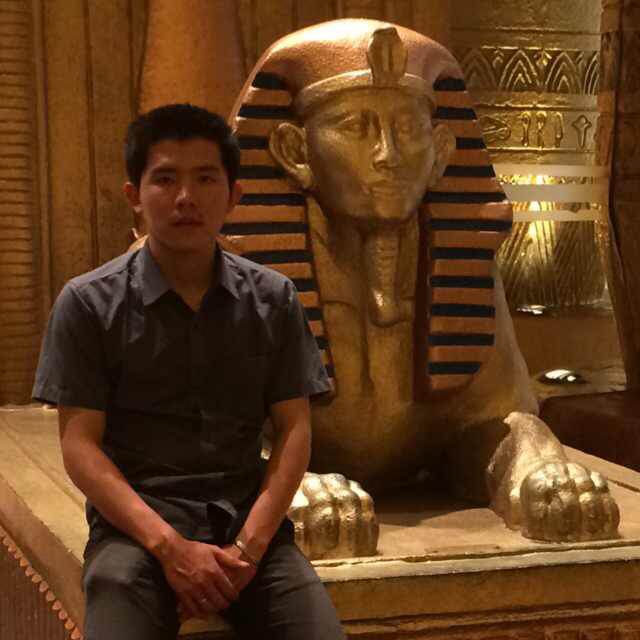
For our final Community Member Monday of 2019, we talk to Saikeo Kavhanxay, who is helping with the Lao language localisation of LibreOffice…
I live in Vientiane, Laos. I am working as a full-time network engineer. My hobbys are reading books, surfing the internet and learning how to code. I also dedicate my free time to the open source community and I have contributed to other open source projects as well.
You can find me on social media – Twitter and my blog.
Currently I am contributing to LibreOffice localization for my locale. In the future I also plan to contribute to other parts of the project as well, like filing bugs, development and assisting people in my community who have questions about using LibreOffice.
I’ve been using LibreOffice for a long time, and then I realised that I want to contribute something back, so I decided to contact my locale and the LibreOffice localization community. After that, I got an opportunity to contribute to LibreOffice. I think is quite easy to get involved in the project – you can reach to your locale or the LibreOffice localization team and then they will get back to you shortly.
To avoid license issues, and due to limited budgets, some organisations in my country use LibreOffice. So, I think the LibreOffice community in Southeast Asia needs to expand more, and work on LibreOffice Online.
Thanks to Saikeo and the Lao localisation team for their great work! Everyone is welcome to join our friendly community and give us a hand with design, documentation, QA, and many other aspects of the software. It’s a great way to build up experience, meet new people and have fun!