
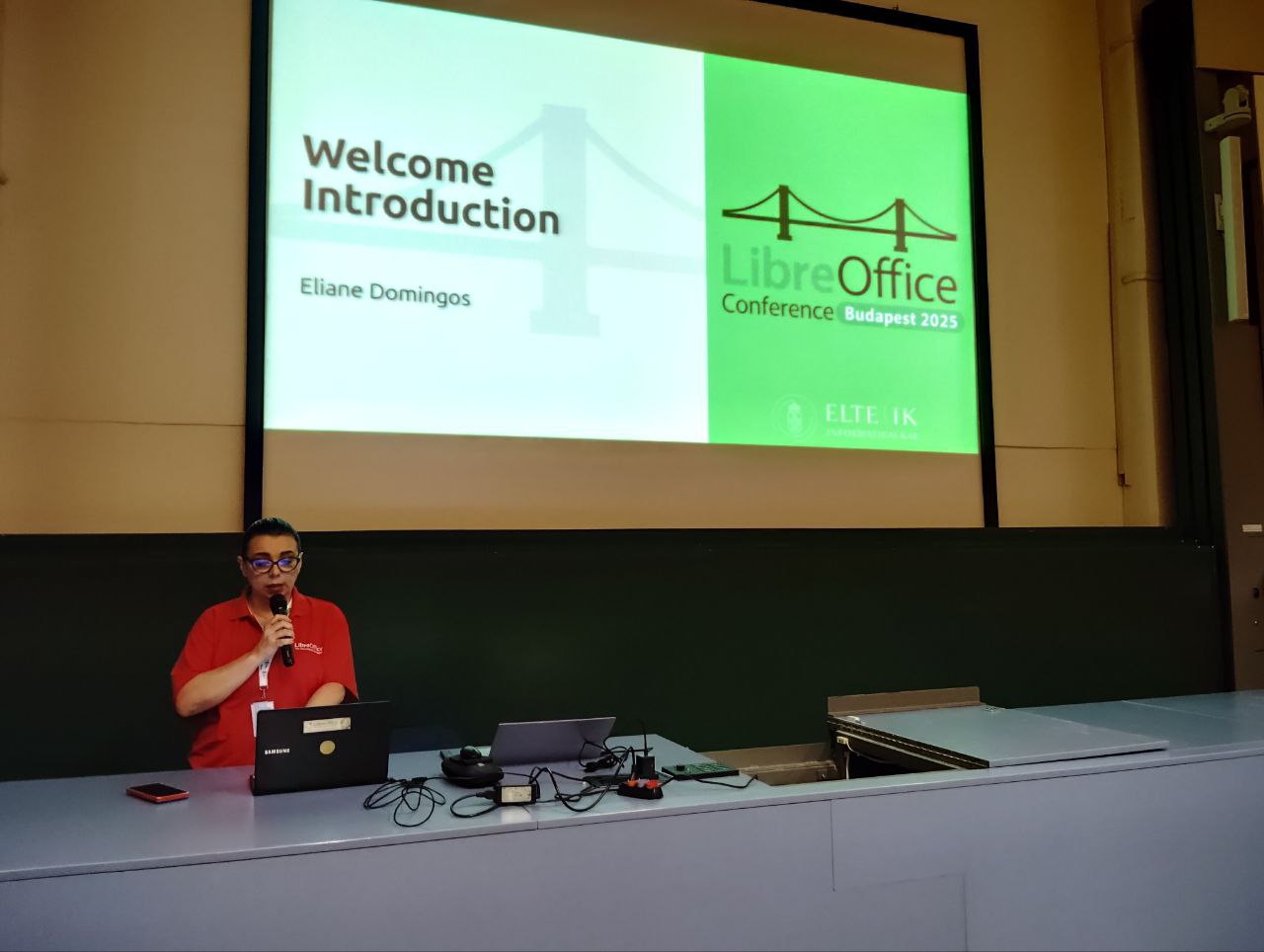
Yes, the conference in Budapest has started. If you’re not there in-person, join one of the chat channels linked to on the site and you can watch talks remotely. Enjoy!
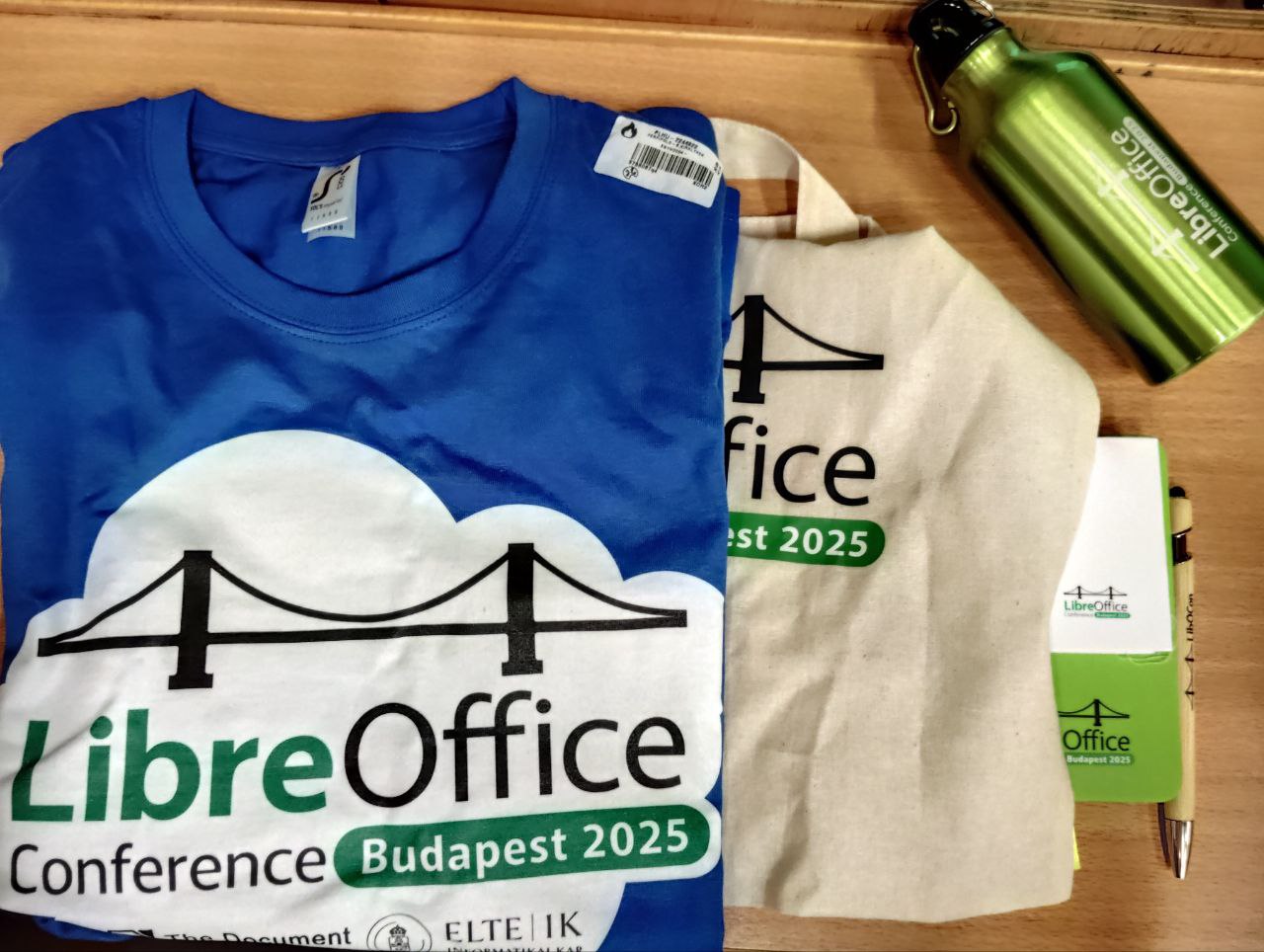
Yes, the conference in Budapest has started. If you’re not there in-person, join one of the chat channels linked to on the site and you can watch talks remotely. Enjoy!
Here’s our summary of updates, events and activities in the LibreOffice project in the last four weeks – click the links to learn more…
Please confirm that you want to play a YouTube video. By accepting, you will be accessing content from YouTube, a service provided by an external third party.
If you accept this notice, your choice will be saved and the page will refresh.
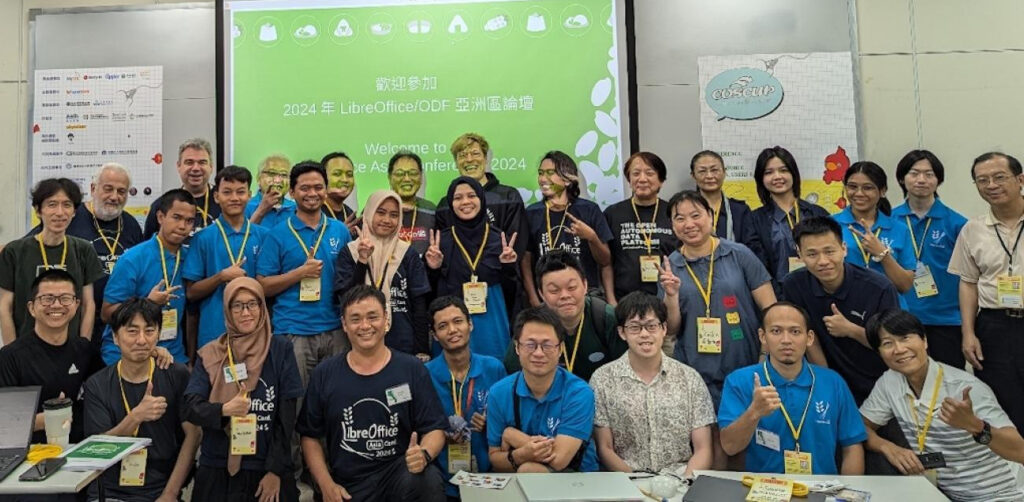


One week ago, we announced LibreOffice 25.8, our brand new major release. It’s packed with new features, and has many improvements to compatibility and performance too. So, what has happened in the week since then? Let’s check out some stats…
These are just stats for our official downloads page, of course – many Linux users will have acquired the new release via their distribution’s package repositories.
Combining our Mastodon, Bluesky, X/Twitter and Facebook posts about the announcement, and all the likes, shares, views and comments, we get 23,999. Thanks to everyone who spread the word on social media! 😊
On release day, we posted the announcement on the /r/linux subreddit. There was lots of discussion there about the new update, including things users like and things that could still be improved.
Huge thanks to our worldwide community of volunteers, and certified developers, for all their work on this release!
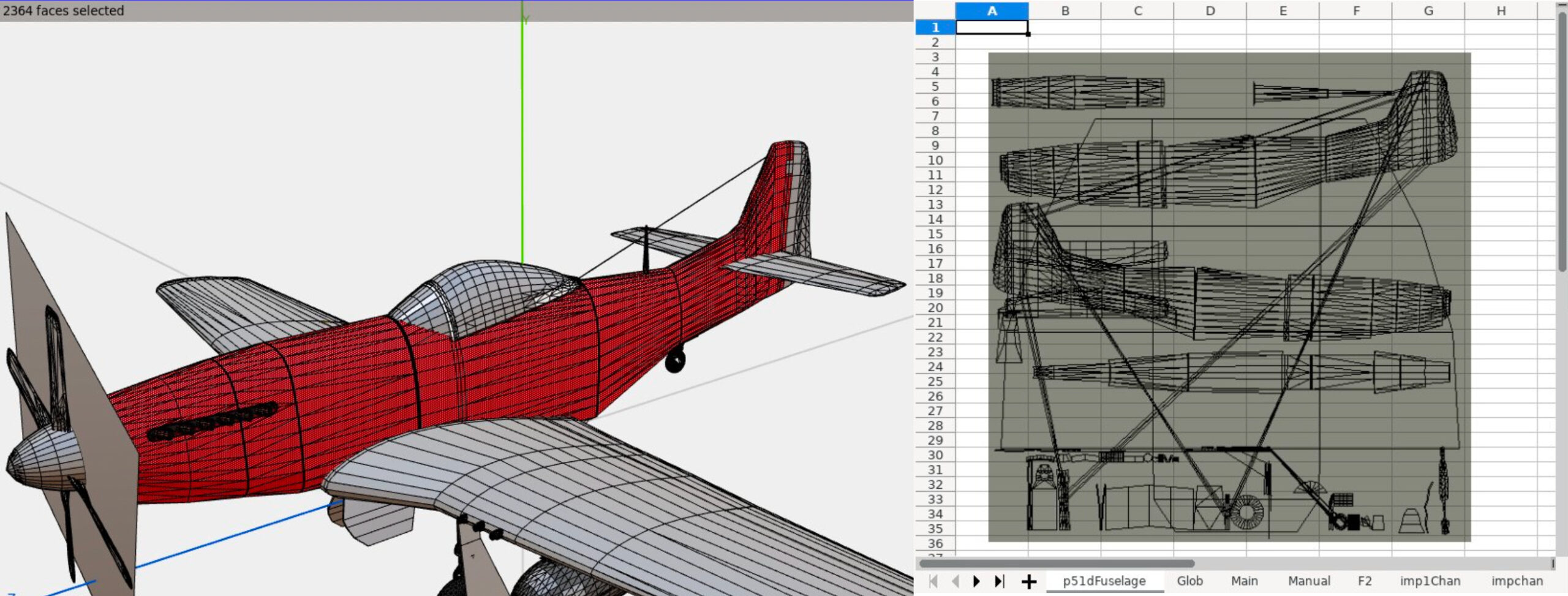
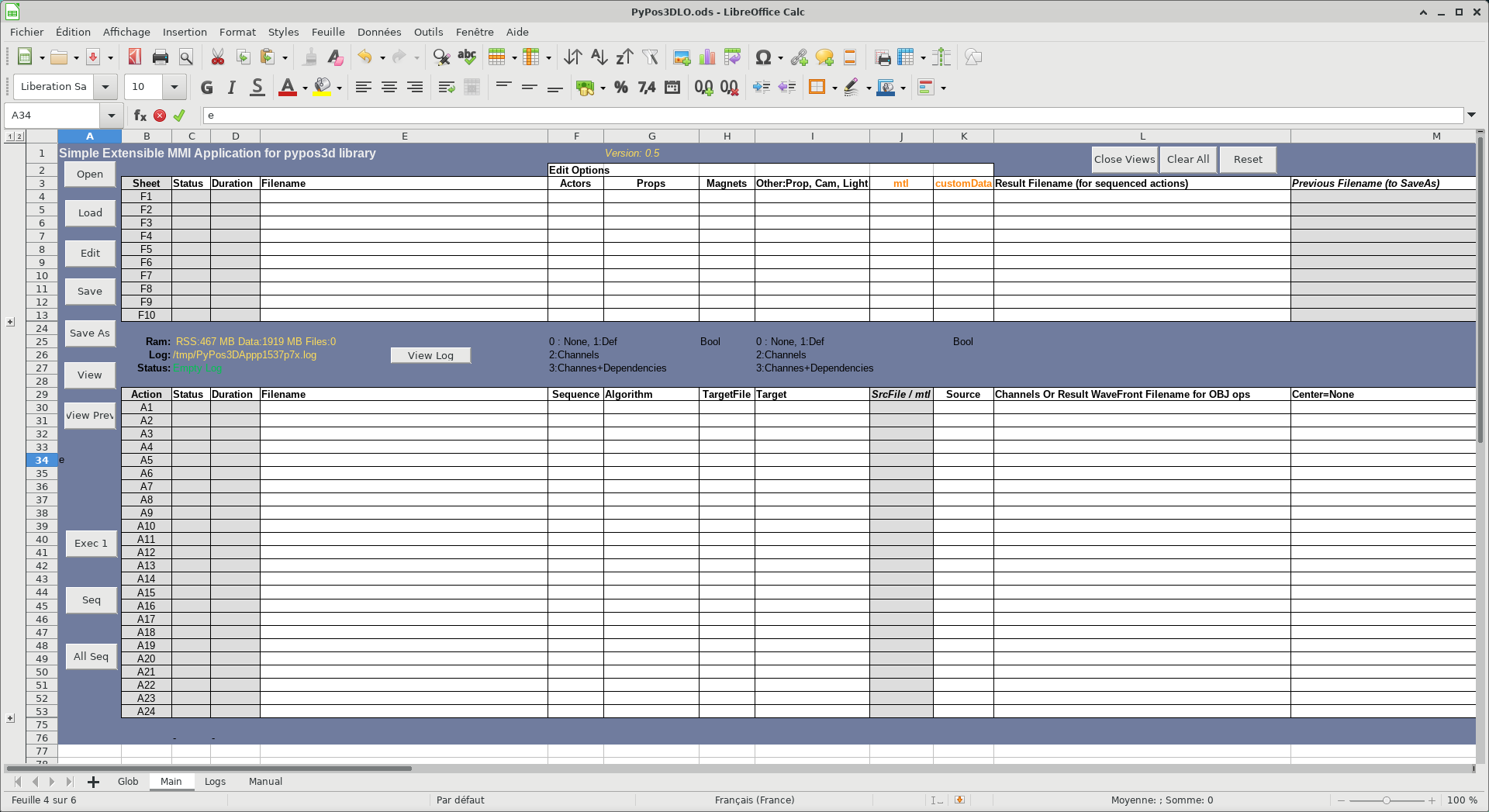
Today we’re talking to Olivier Dufailly, who’s working on PyPos3DLO, an app based on LibreOffice to create mechanical characters, edit and optimize Poser files, and manipulate WaveFront files:
I live in Toulouse (France) and for around 30 years I’ve mainly worked in the space and aeronautical domain (from software to system engineering), although I was also a business manager for a few years, and the first CIO of a mid-size engineering company. But now, I’m back in my preferred domain: space systems engineering and development. It’s a so exciting environment.
On a personal side, I like and practice sports (swimming, biking, running) and 3D modeling. I remember, when I bought my first Casio graphic tracer in 1985, I immediately ported some Apple BASIC 3D curves programs to Casio BASIC!
And now, I always like to produce some airplanes models for 3D rendering (unfortunately, the former free site ShareCG.com has disappeared so I need to find a way to publish my work elsewhere). Additionally, I think that we – all of us – are responsible of our children’s planet, and open source software is sustainable and so is vital to help us in the future.
I’ve produced a LibreOffice-based application to help 3D mechanical characters development. I’d would be proud to present it in more detail later, but for now: PoJamas aims to provide a Python library and tools for loading, processing, and producing .cr2, pz3 (crz, pzz) files compatible with the SmithMicro (e-Frontier) Poser character animation application. It includes PyPos3DLO, an app based on LibreOffice to create mechanical characters, and edit and optimize Poser files.
LibreOffice is a great project and I’d like to try to contribute to its development. It’s just the beginning, but I feel welcome in the project already.
I have a strategic approach concerning LibreOffice and general engineering usage.
In my professional and personal domains, engineers, PhD, techs guys produce studies and data for testing and running large and complex systems. To do this, they usually use Microsoft Office with a huge amount of BASIC macros. Moreover, they also use MATLAB and try to integrate or automatize things.
They usually have a lot of “integration” problems and the result is frequently a mess: hard to use, and more or less impossible to maintain or transfer. It’s a lack of experts’ time, when they spend too much time o “silly” development instead of doing their own business.
Our main problems are testing, maintainability and costs.
Finally, I’m convinced that we should promote a new maintainable approach for engineering studies with a better integration of Python (or other, if any languages) in LibreOffice. (Financial studies may be also greatly enhanced with an easy integration between Python libraries and Calc/Excel sheets).
At the end of the journey, BASIC should naturally become extinct.
To achieve this goal, we will need to enhance LibreOffice, ease the development of LibreOffice macros, and teach our users with many tutorials.
I’d be happy to help with testing, writing tutorials, or anything else.
Get a quick overview of some of the new features in LibreOffice 25.8, released on Wednesday. (This video is also available on PeerTube).
Please confirm that you want to play a YouTube video. By accepting, you will be accessing content from YouTube, a service provided by an external third party.
If you accept this notice, your choice will be saved and the page will refresh.
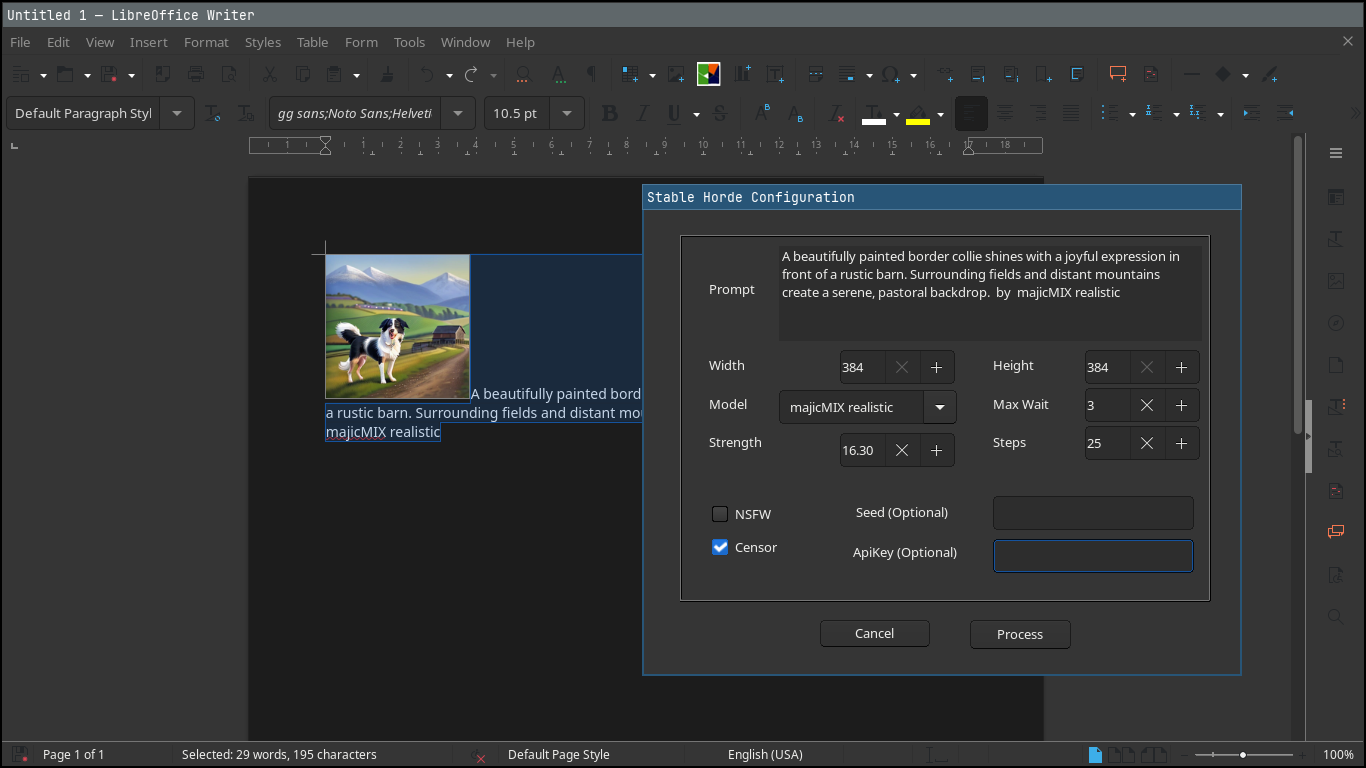
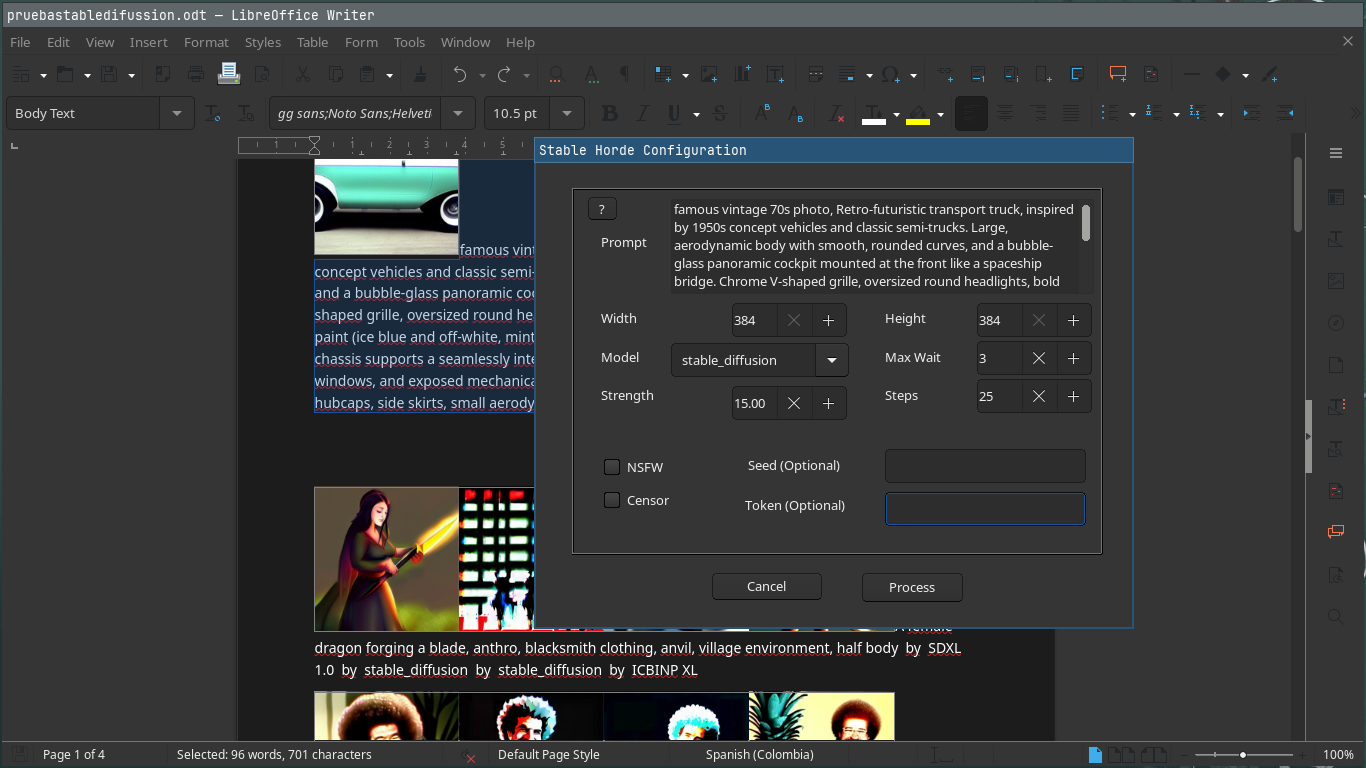
LibreOffice does not include artificial intelligence (AI) out-of-the-box. But many users want AI features in the suite – so we encourage developers to make them available as optional extensions. And that’s what Igor Támara did, creating the “Stable Diffusion for LibreOffice” extension for AI-generated images powered by AI Horde (a volunteer crowd-sourced distributed cluster of image generation workers).
We talked to Igor about the extension – here’s what he had to say:
You write some text describing an image, and get an AI image generated from the given text. You can tweak parameters, choose a model and use the best result on written documents, presentations or the place you prefer. The images are generated on volunteer GPUs through AI Horde.
Two weeks ago, starting from a Gimp plugin as a base. I’m brand new to the LibreOffice project, and started it as a macro to get this functionality in the software. One week later I put it on GitHub.
Later on I got help from friendly people on the forum to turn it into an extension. I also joined the the chat and filled some requests in the bug tracker.
Be aware that the text you provide is sent to AI Horde and seen by the machines that create the image, so do not send sensitive data. Also, you can get better results if you send the description of the desired image in English. You are encouraged to try different languages to see the results.
You need internet connection to use it. If you wanted to create images locally on your machine, it would take time to configure your environment with local AI models, with gigabytes of memory dedicated to this purpose, and maybe processing for hours to get something useful.
Sometimes the text can be marked as NSFW (“not safe for work”) – in which case you end up with black and white text saying so.
For now, the extension works in Writer and Impress; when invoked from other LibreOffice components, it opens a new text document and inserts the image along with the provided text.
The roadmap includes:
Report any problems you find, and help to translate into your language. Please do so by filling an issue with your intention saying which language.
If you have a GPU (and good graphics hardware in general), you can volunteer as a worker joining the horde, to add to the computing power – and you can earn kudos to have higher priority when you need it.
If you work with a friendly company that wants to make use of the existing hardware, you can join the horde too.
One of the purposes of AI Horde is to aid education, having a special program for that.
This plugin and AI Horde are all open source, so everyone can learn and be as transparent as possible in this changing and revolutionary world of AI times.
There might be concerns about the use of products and the ownership of work. As I see it, we are always learning by example and reusing what others have invented from thousands of years ago, like how to walk, make fire, communicate, explore, recreate and mix. We can continue to learn and make fair use of resources – and contribute too.