Community Member Monday: Moritz Duge

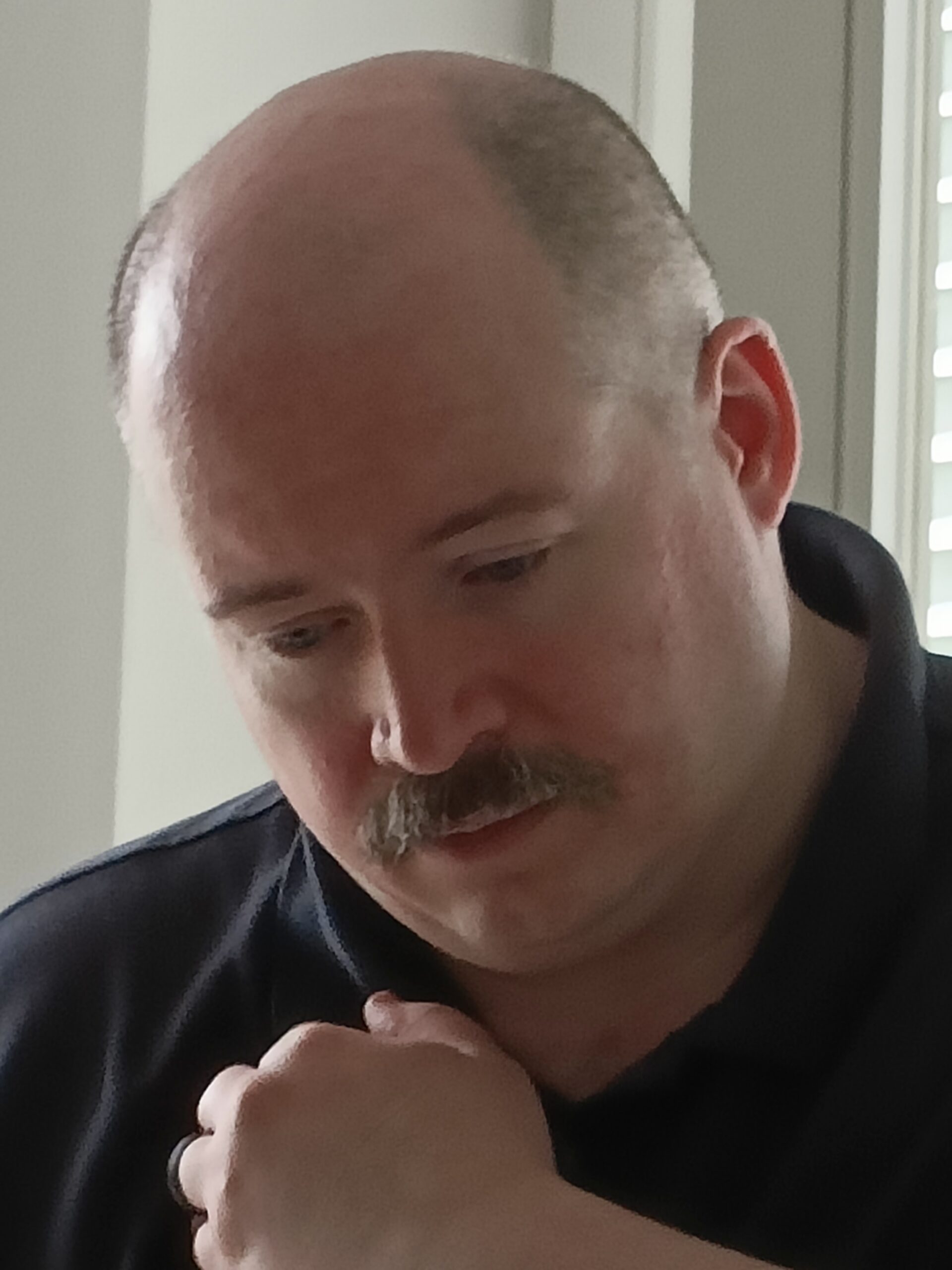
Moritz Duge

Tell us a bit about yourself!

I live in the north of Germany, in the city of Hamburg. Probably not so far away from where the first lines of what was called StarWriter where written, just a year before I was born.

I remember downloading StarOffice over a 64 kbit/sec line around the year 1997. And since it turned into OpenOffice.org I used it for a lot of home work in high school, student jobs and finally my bachelor thesis in computer science. For StarOffice and OpenOffice I mainly used Windows. But around the time LibreOffice started I had shifted to Linux as a daily driver.

My first contact with the LibreOffice community was when I got into a conversation with a few people at the Chaos Computer Club Congress around 2013. And as most of the last 15 years I’ll be around at the CCC too this year. As a hobby I’m engaged in politics, pushing Open Source, data protection, privacy as well as environmental protection topics. And to calm down I’m cycling, pursuing my interest for astrophysics and recently started doing Yoga.

What are you working on in the LibreOffice project right now?

In summer I’ve reworked some parts of the GPG / OpenPGP and X.509 integration in LibreOffice. Drastically improving the performance for users with large GPG keyrings like me. But also making the GPG and X.509 workflows in the LibreOffice UI more user friendly. Knowing there’s still much work left to do.

Beside I’m mostly working on the web integration of LibreOffice. I’m spending a lot of time with LOWA (LibreOffice Web Assembly) builds, improving them with my colleague Stephan Bergmann, and even committed my first patch to Emscripten to improve LOWA debugging.

My top priority is currently to work on ZetaJS, which wraps UNO into a native JavaScript API.
It’s being used to integrate LibreOffice into web apps without the need for a huge server running server side LibreOffice processes. I’ve also written some nice example use cases like this one.

Why did you choose to join the project, and how was the experience?

I’ve worked with Linux for many years. Mainly as Ruby developer and web administrator. But I’ve always had a big interest into more classical technical environments. I really like strong typing. And I’ve collected some experience with big C code bases. Like when bisecting Wine to keep old Star Trek games running, or when debugging the amdgpu Linux driver for my notebook. Although not without great help from the AMD guys!

So when looking for new tasks, I remembered the LibreOffice guys I met at the CCC and I had some talks with Thorsten Behrens who kindly offered me a job at allotropia. For me LibreOffice is one of the flagship projects of Open Source beside the Linux kernel and Firefox. And I’m enthusiastically absorbing all the C++ insider knowledge I can get from my colleague Stephan 🙂

Surely I’m a little bit of a uncommon guy. In my old job I was usually the one who had an eye for what code did, which was written by people who left the company years ago. Maybe I should say something like “you can’t improve a software if you’re unwilling to understand the existing code base”. And I like to call LibreOffice “your friendly code base from the 90s” 😉

So there’s much archaeology I can do in LibreOffice. But I also love, that because of the code base being Open Source, many developers from 10, 20 or even more years ago are still in the community. So they might still remember what some code line was for.

I’ve always preferred decentralized solutions. And I know quite well how to get around with IRC, mailinglist and Bugzilla. So I’m probably not the regular guy of today, who’s conveniently doing everything via GitHub. Nevertheless, I hope I’m forgiven when stumbling over a few conventions I didn’t know before 🙂

Beside I very much enjoyed all the nice conversations at my first LibreOffice Conference this year. And I’ve held a few conference talks about my work with ZetaJS and the LibreOffice-GPG improvements in the recent months.

Please confirm that you want to play a YouTube video. By accepting, you will be accessing content from YouTube, a service provided by an external third party.

YouTube privacy policy

If you accept this notice, your choice will be saved and the page will refresh.

Anything else you plan to do in the future? What does LibreOffice really need?

Surely web, mobile and collaborative editing are important topics. I’m myself using Collabora Online even outside IT communities since years. But I like to see it work even better with low end servers like a Raspberry Pi, to enable everyone with a small home server to serve a LibreOffice-Online instance. So moving the actual LibreOffice binary from the server into the browser’s WASM engine and enabling P2P collaborative editing is definitely a long-term goal.

Besides that, I also see that machine learning, some call it AI, can help with a lot of simple tasks. Knowing that more difficult tasks like programming often end in quite disastrous results, machine learning might be a good opportunity to help beginners to create great documents quickly with LibreOffice. And free software like SpeechNote shows me, that there’s no need to run stuff through a questionable online service. But instead only the proper training models need to be provided.

Beside I always cherish rock-solid software. Nobody will continue to use an app which constantly crashes or stores data in a broken file, resulting in many hours of writing being lost. So as in many software projects, a big priority is always to just keep things running as well as they ran before.
LibreOffice Podcast, Episode #1 – Marketing Free Software

Italo Vignoli and Mike Saunders from The Document Foundation, the non-profit organisation behind LibreOffice, discuss marketing free and open source software (FOSS). This video is also available on PeerTube.

Please confirm that you want to play a YouTube video. By accepting, you will be accessing content from YouTube, a service provided by an external third party.

YouTube privacy policy

If you accept this notice, your choice will be saved and the page will refresh.

Month of LibreOffice, November 2024 – Half-way point!

Month of LibreOffice banner

Yes, we’re half-way through the Month of LibreOffice, November 2024. And already, 206 contributors have won cool LibreOffice sticker packs! Details on how to claim them will be provided at the end of the month, but if you don’t see your name (or username) on that page, it’s not too late to join…

How to take part

There are many ways you can help out – and you don’t need to be a developer. For instance, you can be a:

  • Handy Helper, answering questions from users on Ask LibreOffice. We’re keeping an eye on that site so if you give someone useful advice, you can claim your shiny stickers.
  • First Responder, helping to confirm new bug reports: Go to our Bugzilla page and look for new bugs. If you can recreate one, add a comment like “CONFIRMED on Windows 11 and LibreOffice 24.8.3”.
  • Drum Beater, spreading the word: Tell everyone about LibreOffice on Mastodon, Bluesky or X (Twitter)! Just say why you love it or what you’re using it for, add the #libreoffice hashtag, and at the end of the month you can claim your stickers.
  • Globetrotter, translating the user interface: LibreOffice is available in a wide range of languages, but its interface translations need to be kept up-to-date. Or maybe you want to translate the suite to a whole new language? Get involved here.
  • Docs Doctor, writing documentation: Whether you want to update the online help or add chapters to the handbooks, here’s where to start.

So, two more weeks to go! We’ll be posting more updates on this blog and our Mastodon, Bluesky and X (Twitter) accounts…

Another eight videos from the LibreOffice Conference 2024

The next batch is here! We’re editing and uploading more videos from our recent conference – these ones covering C++, the LibreOffice WebAssembly port from Allotropia, and Collabora Online. Use the icon in the top-right to choose videos from the playlist:

Please confirm that you want to play a YouTube video. By accepting, you will be accessing content from YouTube, a service provided by an external third party.

YouTube privacy policy

If you accept this notice, your choice will be saved and the page will refresh.

Eight more videos from the LibreOffice Conference 2024

We’re editing and uploading more videos from our recent conference – these ones covering the Google Summer of Code, new Calc functions and optimisations, improvements to language support and more (use the icon in the top-right to choose videos from the playlist):

Please confirm that you want to play a YouTube video. By accepting, you will be accessing content from YouTube, a service provided by an external third party.

YouTube privacy policy

If you accept this notice, your choice will be saved and the page will refresh.

LibreOffice project and community recap: October 2024

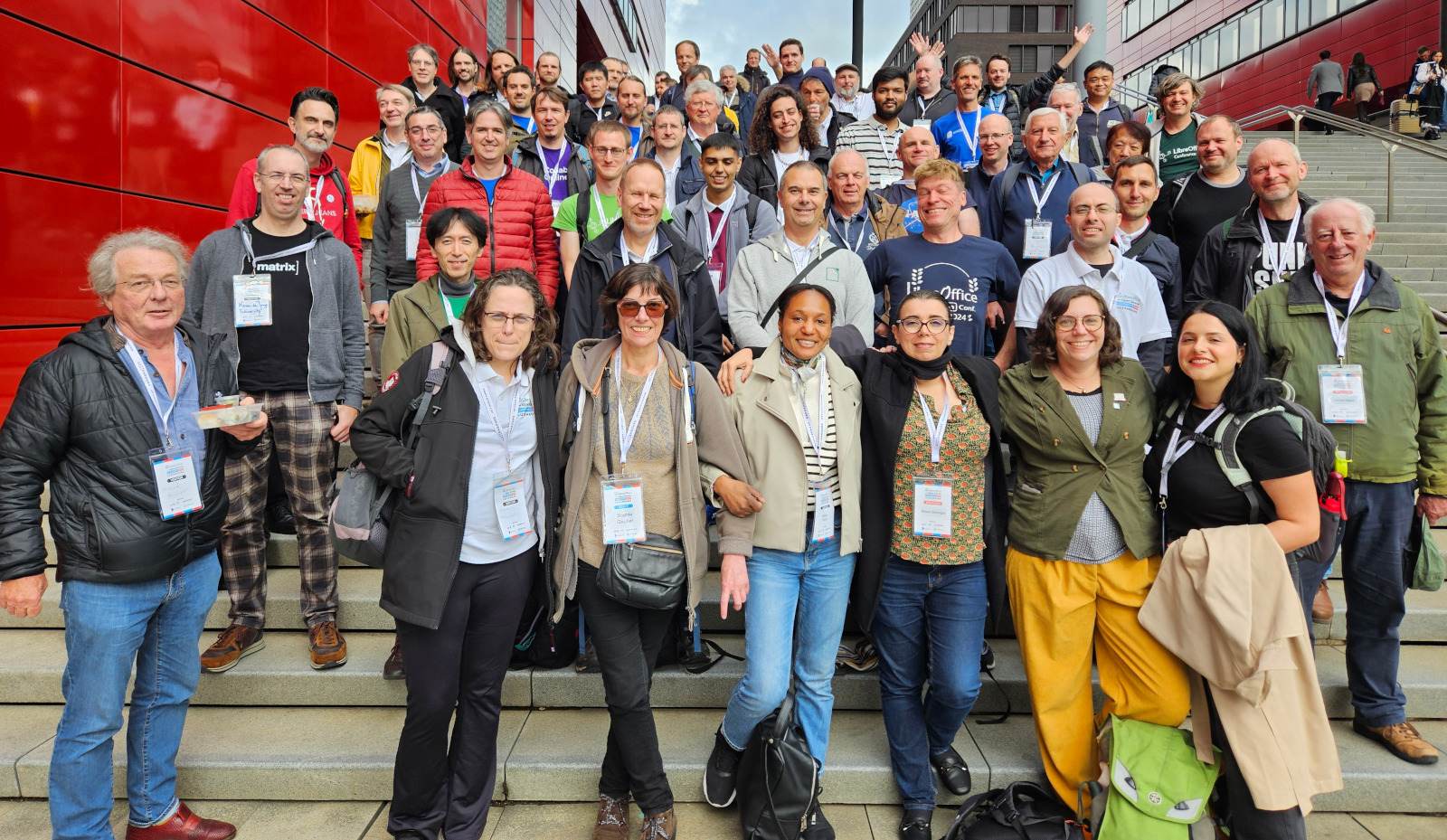
LibreOffice Conference 2024 group photo

Here’s our summary of updates, events and activities in the LibreOffice project in the last four weeks – click the links to learn more…

Please confirm that you want to play a YouTube video. By accepting, you will be accessing content from YouTube, a service provided by an external third party.

YouTube privacy policy

If you accept this notice, your choice will be saved and the page will refresh.

  • In addition, we’ve started editing and uploading videos from the talks. Here’s the first batch – but there are many more to come, and we’ll put them on PeerTube too. (Apologies for the occasional video stutter in some places.)

Please confirm that you want to play a YouTube video. By accepting, you will be accessing content from YouTube, a service provided by an external third party.

YouTube privacy policy

If you accept this notice, your choice will be saved and the page will refresh.

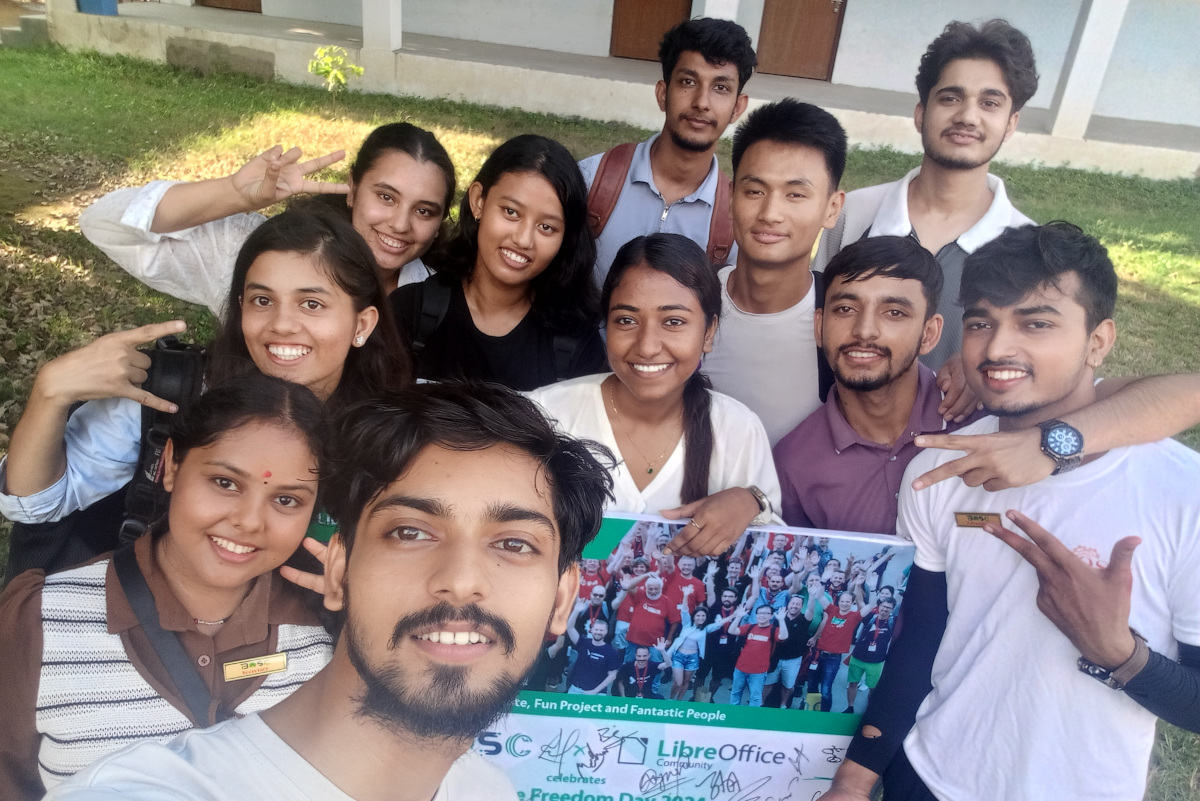
LibreOffice at Software Freedom Day celebrations in Nepal

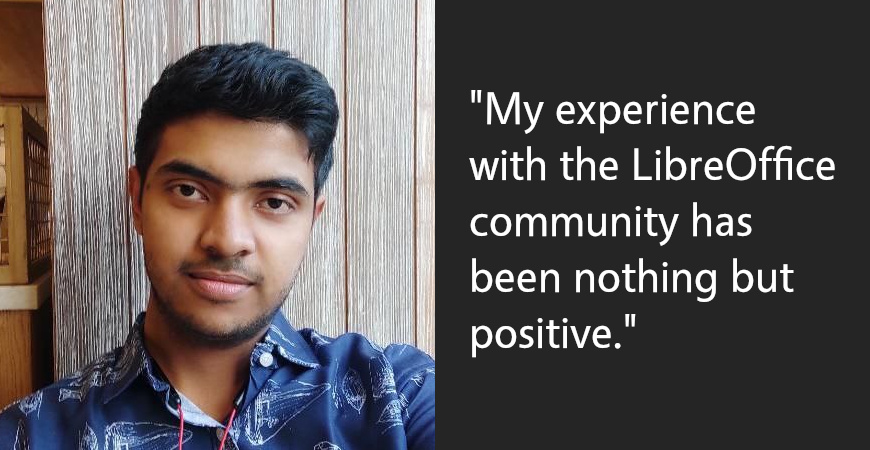
  • We talked to Ritobroto Mukherjee about the work he’s doing to improve LibreOffice, as part of the Google Summer of Code. He also tells us about his experiences joining our community.

Ritobroto Mukherjee<

  • Then we caught up with Jonathan Clark, who recently joined the small team at The Document Foundation to work on improving LibreOffice’s language support, especially for RTL / CTL / CJK.

Jonathan Clark

  • On the release side, we had one update to LibreOffice in October – version 24.2.7, planned to be the last in the 24.2 branch. Then all users are strongly recommended to upgrade to the latest stable branch, LibreOffice 24.8.

LibreOffice 24.2 banner

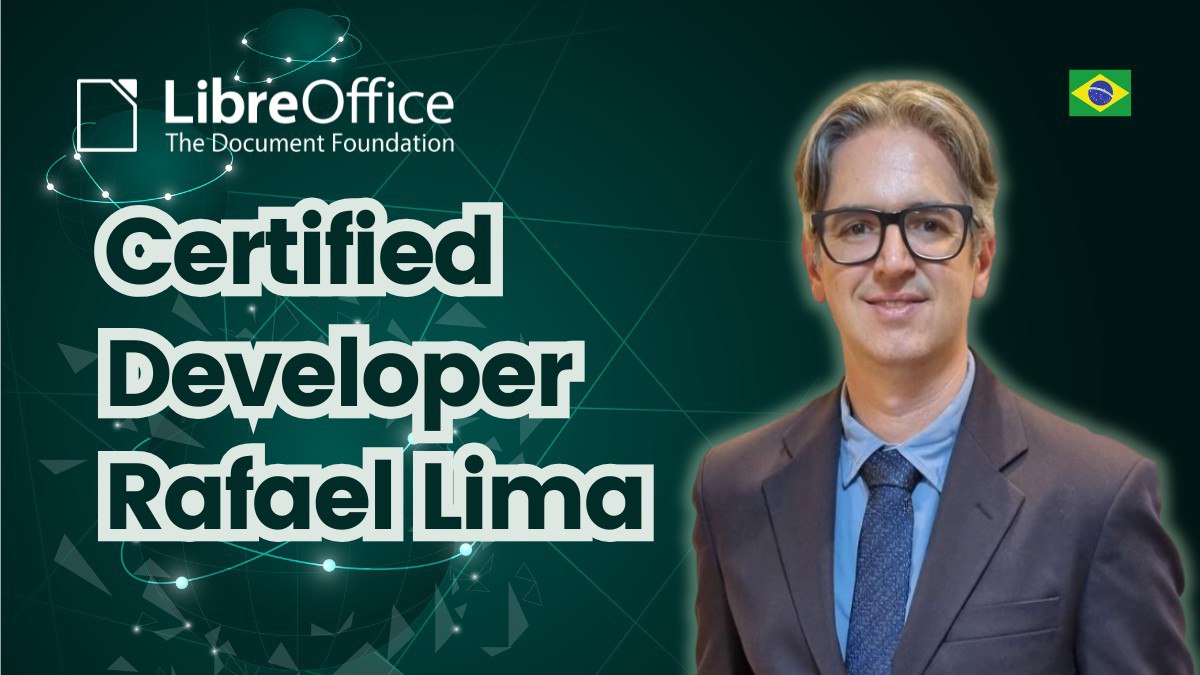
Rafael Lima

  • And finally, we looked ahead to some upcoming and future events. The LibreOffice project will be at FOSDEM 2025 in Brussels at the start of February, for instance. And thinking further ahead: we’re looking for people to host the LibreOffice Conference 2025!

Keep in touch – follow us on Mastodon, X (formerly Twitter), Bluesky, Reddit and Facebook. Like what we do? Support our community with a donation – or join our community and help to make LibreOffice even better!