

Björn Michaelsen, developer
Björn Michaelsen, developer
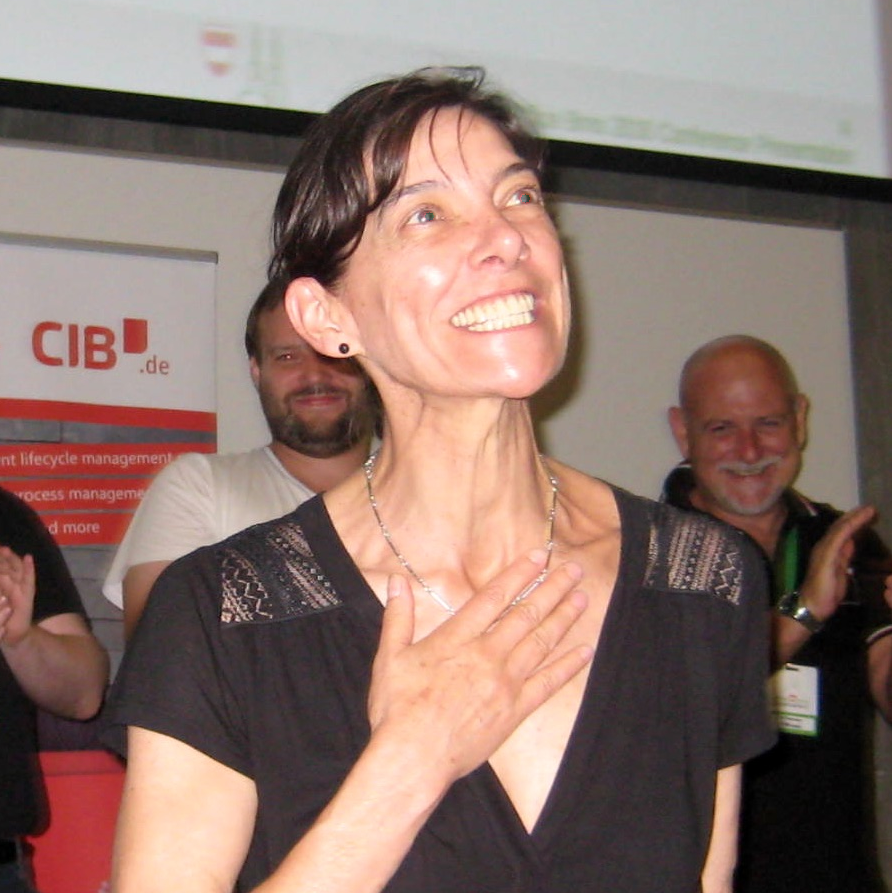
Getting close to the end of the year, we want to remember everyone how much fun we have for being members of The Document Foundation, by showing our best smiles. We start with Sophie Gautier, who doesn’t need any introduction, as she’s always been around since the early days of OOo and LibreOffice.
 I have organized the LibreOffice Conference in 2013 (Milan) and 2017 (Rome), after having organized the OOo Conference in 2009 (Orvieto). So, I am qualified for the creation of a conference organization checklist to help future organizers in carrying out their tasks.
Of course, I give for granted that the entire team is familiar with both the Call for Locations and the proposal, because there are some details which could represent a major issue getting close to the events, if ignored. I am referring to the fact that the organization of the conference has to be entirely managed by the community including activities such as handling sponsorships and sending out invitation letters to attendees requiring a VISA to enter the country.
So, let’s manage the checklist as a 12 month countdown, starting from the previous LibreOffice Conference. In fact, the location will be announced during the closing session, when all the future organizing team will be called on stage to get a virtual handover from the leaving one.
12 Months
Set the event date and location in stone. If the location is a public administration building, ask to organize a meeting with the people responsible for the ceremonial as soon as possible, to go over all event details. The later the meeting, the higher the chances that something will go wrong at the very last minute.
11 Months
Start thinking about specific responsibilities for each member of the organization team. Of course, this can be decided at a later time, but it is definitely better to get each member on his own agenda as soon as possible. A well coordinated team will result in a lower effort, especially if volunteers are not experienced event planners (I have organized events for over 30 years of my professional life, from the small meeting to the large exhibition, so organizing the LibreOffice Conference has never been a real issue, but I have a peculiar background for FLOSS).
10 Months
Start thinking about conference planning. Write down a tentative program, based on what you know at the time: (1) there will be TDF BoD, MC and team meetings before and/or after the conference; (2) there will be a community day on Tuesday, with at least a half day meeting of people active in native language communities, to discuss localization and marketing activities; (3) the opening session will be Wednesday morning; (4) tracks, at least three, will run concurrently from Wednesday afternoon until Friday early afternoon; (5) the closing session, with all remaining confernce attendees, will be on Friday late afternoon. Every other event will have to fit this schedule: in general, there should be a community dinner, and a “hacknight” for people to work together on common tasks (hacking is not just for hackers, but also for other volunteers involved in the project).
9 Months
Once the conference tentative schedule is set, it is time to start studying sponsor packages to leverage all the opportunities in the program: general sponsorships to cover the entire event, but also specific sponsorships for collateral events, and for food. At the end, based on past experiences, all sponsors will choose different levels of general sponsorships, but all other options will give the organizing team more flexibility while discussing with sponsor prospects (and in some cases will be instrumental to attract small local sponsors).
8 Months
Based on the expected level of sponsorships, start to design a tentative budget, detailing all items and giving each one of them a figure (based on experience, or on average market prices). Also, give each budget item a rate, as you will have to confirm them based on the amount of money available. The budget should foresee the following items: location, technical equipment for presentations and recording of sessions, network connection, conference bag and t-shirt, light food and drinks for lunches, and community dinner and hacknight. Leave some money for last minute expenses, which will always happen.
7 Months
Provide contents for the conference website: how to get the VISA (for those who need a VISA), how to reach the city and the conference location, what to do (apart from attending the conference), where to stay (hotels, apartments, and other kind of accommodations, from the medium expensive to the unexpensive), where to eat (and what to eat, keeping in mind that we have a community with different eating habits, from vegan to vegetarian to omnivore, and food allowances based on the religion, with people not eating cow and pork meat).
6 Months
Once the website is ready, start meeting potential conference suppliers to brief them. They should be able to make the best possible proposal at the first attempt, to avoid the inevitable loss of time which results from endless budget reviews. At that time, you should be able to have all details under control, even if nothing has been set in stone (because you will probably be missing sponsorships, which are instrumental to confirm services, based on their importance).
5 Months
Organize the meeting with TDF team representatives, to show them the venue and go over all conference details. In general, the meeting will be with Sophie Gautier and Italo Vignoli, who are the two people coordinating the conference effort for TDF, but Florian Effenberger could join as well (or replace Italo Vignoli, according to their availability).
4 Months
Based on the outcome of the meeting with TDF representatives, you can start making your final plans for the conference. At this point in time, you should be able to have a complete picture of the event including collaterals. You should be talking to potential sponsors too, to get their confirmation as soon as possible, although – based on experience – the last sponsors will confirm during the last two months. Because of this, you should explain the situation to conference suppliers, as they should be prepared to act immediately after the budget confirmation.
3 Months
Several people will start asking for a letter of invitation, which is often needed to get a VISA. At this point, you should be very familiar with the immigration law of your country, and of specific situations which might reduce the chances of getting a VISA (for instance, today it is impossible for Indians to get a business VISA to Italy, and vice versa, so the suggestion is to ask for a tourist VISA instead of a business VISA).
2 Months
The call for papers will be closed, and the presentation schedule will be published to allow people to finalize their travel schedule and book their accommodations in due time. VISA requests will increase. Sponsors will confirm their commitments. As usual, everything will come together at the last minute, so the team should be prepared to handle this sharp increase in activities.
1 Month
If you have planned the event in the proper way, the last month will be spent by confirming the services and checking that suppliers are sticking with the schedule. Of course, there will be some last minute emergencies, but they should not create any disruption to the program. During last week, the team should work at last time details, and at preparing the conference kit (badge, bag, t-shirt, sponsor materials, and other stuff).
During the Conference
Try to have fun. Of course, taking care of the entire program and check all details will ask for a lot of energy, but there should be space for some fun as well. Every conference attendee will have a specific question to ask, but don’t take this as an issue. In fact, it is an opportunity to get to know everyone in the community-
After the Conference
Pay all the bills, and have some rest.
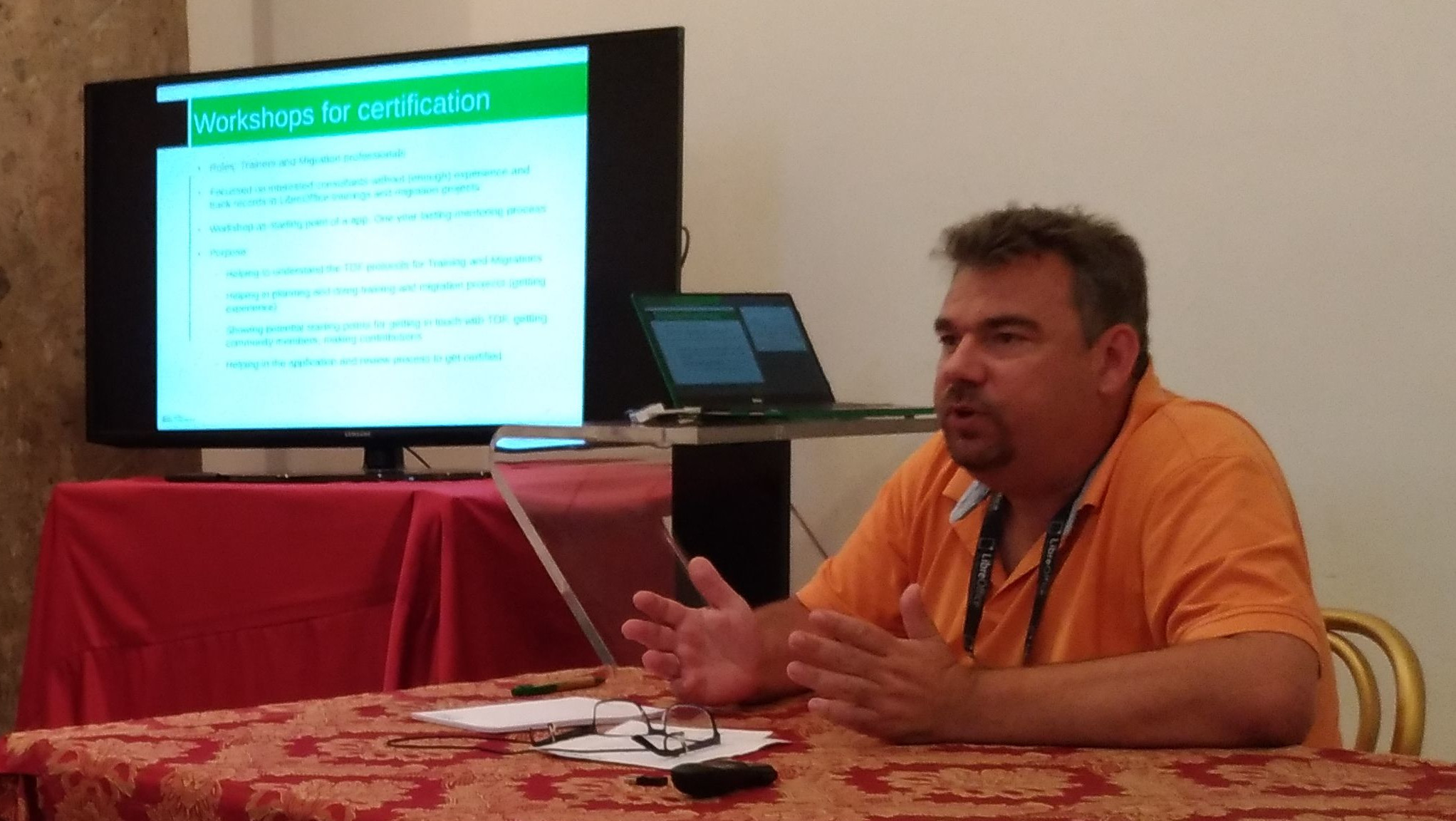 Lothar Becker, a long-time member of the LibreOffice community (and previously of the OOo community), has been appointed Co-Chair of TDF’s Certification Committee, which has been chaired by Italo Vignoli since its inception in 2013, effective immediately. Lothar will manage certification applications and reviews, while Italo will focus on updating existing certification-related documents and developing new ones. Together, Lothar and Italo will develop content for certification workshops, which will be planned starting from 2018.
“Lothar has been instrumental for the growth of the certification project, as he has contributed in a significant way to all certification reviews, and has also pushed forward concepts which are now part of the certification process”, said Italo Vignoli. “After four years, it was time to share the responsibility with one of the people who has always believed in the certification project as a trigger of growth for the entire LibreOffice project, especially in enterprise and public administration environments”.
The next Certification Review is planned for Sunday, February 4, at FOSDEM in Brussels. People interested in becoming either Certified Migrator or Certified Trainers, or both, should apply as soon as possible by filling the form on The Document Foundation website.
 Berlin, November 9, 2017 – The Document Foundation (TDF) announces LibreOffice 5.4.3, the third minor release of LibreOffice 5.4 family. LibreOffice 5.4.3 continues to represent the bleeding edge in term of features, and as such is targeted at technology enthusiasts and early adopters.
TDF suggests to conservative users and enterprises to deploy LibreOffice 5.3.7 with the backing of certified professionals (an updated list is available at https://www.libreoffice.org/get-help/professional-support/).
LibreOffice 5.4.3 includes approximately 50 bug and regression fixes. Technical details about the release can be found in the changelogs here: https://wiki.documentfoundation.org/Releases/5.4.3/RC1 (fixed in RC1) and https://wiki.documentfoundation.org/Releases/5.4.3/RC2 (fixed in RC2).
Download LibreOffice
LibreOffice 5.4.3 is immediately available for download from the following link: https://www.libreoffice.org/download/.
LibreOffice users, free software advocates and community members can support The Document Foundation with a donation at https://www.libreoffice.org/donate/. Donations help TDF to maintain its infrastructure, share knowledge, and organise events such as the Month of LibreOffice, which has last week and will be active until the end of November (https://blog.documentfoundation.org/).
Several companies sitting on TDF’s Advisory Board (https://www.documentfoundation.org/governance/advisory-board/) provide either value-added LTS versions of LibreOffice or consultancy services for migrations and training, based on best practices distilled by The Document Foundation.
 Berlin, November 2, 2017 – The Document Foundation (TDF) announces LibreOffice 5.3.7, the seventh and last minor release of the LibreOffice 5.3 family, targeted at enterprises, government bodies and individual users in production environments.
TDF suggests deploying LibreOffice in production environments with the backing of professional support by certified developers, migrators and trainers (a list is available at: https://www.libreoffice.org/get-help/professional-support/).
LibreOffice 5.3.7 includes around fifty bug fixes. Technical details can be found here: https://wiki.documentfoundation.org/Releases/5.3.7/RC1 and here: https://wiki.documentfoundation.org/Releases/5.3.7/RC2.
Download LibreOffice
LibreOffice 5.3.7 is immediately available for download from the following link: https://www.libreoffice.org/download/.
LibreOffice users, free software advocates and community members can support The Document Foundation with a donation at https://www.libreoffice.org/donate/. Donations help TDF to maintain its infrastructure, share knowledge, and organise events such as the Month of LibreOffice, which has started yesterday and will be active until the end of November (https://blog.documentfoundation.org/).
Several companies sitting in TDF’s Advisory Board (https://www.documentfoundation.org/governance/advisory-board/) provide either value-added LTS versions of LibreOffice or consultancy services for migrations and training, based on best practices distilled by The Document Foundation.