Behind the scenes at TDF: LibreOffice QA, so much accomplished so far this year!

Many of you are familiar with LibreOffice or one of its predecessors (StarOffice, OpenOffice.org, etc..), but you may not be aware of the immense amount of work that goes into the production of the software and the careful testing of each release. Although there are many different teams within the LibreOffice community who each perform essential roles in the collaborative development process, I don’t have enough space to cover them all today, so I’ll focus on the LibreOffice QA Team, a group of volunteers and employees of various companies around the world who work tirelessly to identify issues with LibreOffice on all platforms, including issues of interoperability, process, accessibility, and ease of use.
robinson-in-brusselsThe QA Team has accomplished much in the first quarter of this year, including significant reduction of UNCONFIRMED bug count, broad testing of our support for media on all major platforms, migration of our Bugzilla bug tracker to our own infrastructure, information and advice for our Annual Report, exhaustive work testing our LibreOffice Android port, and major improvements with our bibisect repositories. I’m sure I’ve omitted something from that list, but the sentence was getting long enough that I figured I should stop before I ran out of breath 😉

As of mid-December of last year, our UNCONFIRMED bug count was steadily dropping, but was still above 500. Throughout the holiday season and into January, the QA Team amazed everyone by lowering the number of bugs that needed triage to sub-400, then to 359, and even down below 280. Although our current count has stabilized around 350, we hope that with increased participation we can continue to chip away at the remaining pile.

Although most of the code for displaying images is cross-platform, LibreOffice uses different libraries on Win, Mac, and GNU/Linux for audio and video playback. With confusion about media playback a persistent issue, the QA Team created a set of wiki pages to help clarify the extent and quality of media support on all of our platforms, as well as provide user-friendly information about what codecs we recommend for use. Test support is ongoing, and we very much welcome additional test results or suggestions on how we can increase our playback support on proprietary platforms such as Windows and Mac OS X.

QA’s biggest project this year to date has been our Bugzilla Migration from Freedesktop.org to TDF (The Document Foundation) infrastructure. With careful planning and dry-runs tested over many weeks, our migration went very smoothly and had minimal interruption to the overall development of LibreOffice. With TDF control of Bugzilla in place, we’ve been able to make additional changes to the bug tracker, add new Components and Products for all of our current software projects, and even make small tweaks and add well-crafted messages to assist our users in reporting, updating, and interacting with our bugtracker, with the QA Team, and our developers. We will continue to make changes and improvements to Bugzilla throughout 2015, and are eager to hear from you about any bugs you’ve found in LibreOffice or suggestions you have for enhancement. Please file all bugs and enhancement requests at: https://bugs.documentfoundation.org/.

Throughout 2014, people continually asked me about running LibreOffice on Android, and by the beginning of 2015, I was excited to hear that our port was on its way! Upon the arrival of editing support (currently in beta) in the LibreOffice for Android app, QA has provided insightful feedback about various aspects of document use, feature support, and even special, edge-case problems that affect only a limited number of our users, but which we would like to eliminate (as with all bugs!) With volunteers stepping up to test on phones, tablets, and even laptops, the QA Team has provided extensive testing of our port of LibreOffice to Android, and has committed to keeping UNCONFIRMED bugs for Android in the single digits.

As in 2014, our bibisect repositories remain one of the best investigative tools of the QA Team to help identify the point at which regressions have been introduced into the codebase. With the ability to use binary search and pre-built binaries to quickly focus-in on a particular regression, we can use our time much more effectively, avoiding building and re-building the same versions. The more steps that QA can take to ferret-out the particular commit that caused a crash or changed program behavior, the faster that developers can create a fix and patch the code for the next version of LibreOffice.

Historically, our bibisect repositories have contained only a fraction of all commits to our mainline repository. Due to a confluence of factors, including server resources, software limitations, and hard disk sizes, it was most prudent for us to include only every 60th commit, allowing us to drastically narrow the search field to a much more manageable size. Armed with faster hardware and some careful optimization of non-relevant commits, superstar volunteer Matthew Francis has created a breed of “max” bibisect repositories that include all relevant commits in a single repository. These new repositories will give the QA Team the ability to delve much deeper into the particulars of a given regression, often identifying the particular developer who committed the change, allowing us much faster feedback and progressed towards a clean and consistent codebase.

Of course, QA works on many other tasks as well, including testing and triaging our Android Impress Remote, providing feedback about our websites and infra, helping the Document Liberation Project, and helping to identify new enhancements for LibreOffice. Although our primary focus is the LibreOffice suite, we do our best to keep track of everything else in the ecosystem, so that we can identify any potential problems before they affect many users.

With new platforms such as LibreOffice Online announced, and more interesting developments on the horizon, the members of the QA Team will definitely have more than enough work to keep them busy throughout 2015. If you’re interested in joining our efforts, or just curious about what’s involved in testing such a large project, drop by #libreoffice-qa on Freenode or say hello on our mailing list.

Cheers, Robinson
Open Document Format (ODF) 1.2 published as International Standard 26300:2015 by ISO/IEC

odf12Berlin, July 17, 2015 – The Open Document Format for Office Applications (ODF) Version 1.2, the native file format of LibreOffice and many other applications, has been published as International Standard 26300:2015 by ISO/IEC. ODF defines a technical schema for office documents including text documents, spreadsheets, charts and graphical documents like drawings or presentations.

“ODF 1.2 is the native file format of LibreOffice. Today, ODF is the best choice for interoperability, because it is widely adopted by applications, and is respected by applications in every area”, says Thorsten Behrens, Chairman of The Document Foundation. “ODF makes interoperability a reality, and transforms the use of proprietary document formats into a relic of the past. In the future, people will tell stories about incompatible document formats between two releases of proprietary office suites, as a bygone problem”.

ODF is developed by the OASIS consortium. The current version of the standard was published in 2011, and then was submitted to ISO/IEC in 2014. The standard is available – in three parts: schema, formula definition and packages – from the repository of Publicly Available Standards as a free download from the following links:

  1. Schema: http://standards.iso.org/ittf/PubliclyAvailableStandards/c066363_ISO_IEC_26300-1_2015.zip

  2. Formula Definition: http://standards.iso.org/ittf/PubliclyAvailableStandards/c066375_ISO_IEC_26300-2_2015.zip

  3. Packages: http://standards.iso.org/ittf/PubliclyAvailableStandards/c066376_ISO_IEC_26300-3_2015.zip

The standard is also available from the OASIS ODF TC website, from the page at the following address: http://docs.oasis-open.org/office/v1.2/OpenDocument-v1.2.html.

ODF 1.2 is supported by all the leading office suites, and by a large number of other applications. It has been adopted by the UK Cabinet Office as the reference for all documents exchanged with the UK Government, and is currently proposed as the reference standard by the Référentiel Général d’Interopérabilité 1.9.9 of the French Government. In addition, ODF 1.2 has been adopted by many European public administrations. In Brasil, ODF is part of the Progranma do Governo Eletrônico (e-PING) and can be accessed at this link: http://eping.governoeletronico.gov.br/#p2s3.

<

p align=”left”>

Registration for the LibreOffice Conference is now open

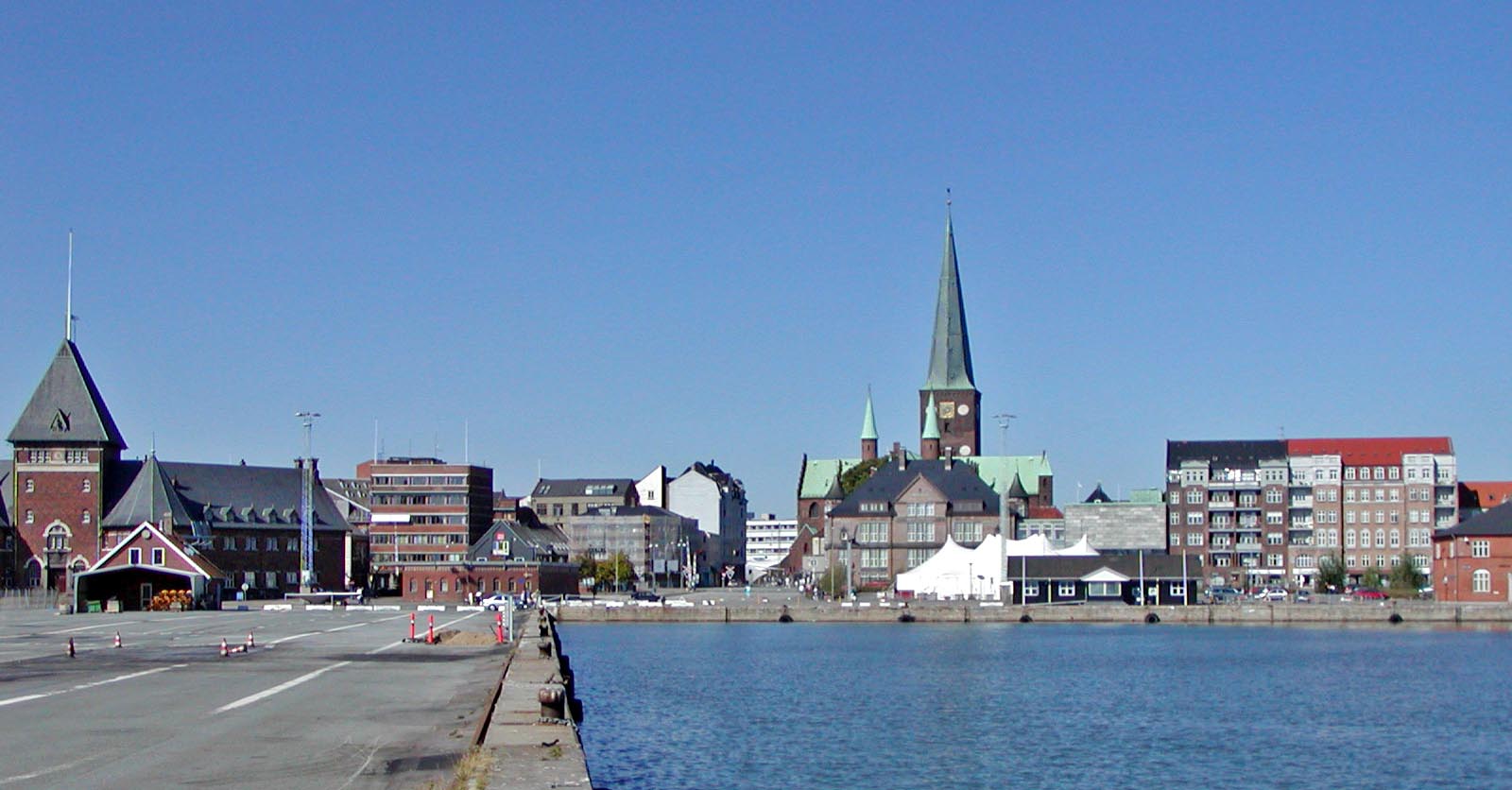
Berlin, Juli 1st, 2015 – Registration for the LibreOffice Conference, which will be hosted by the Danish city of Aarhus from September 23 to September 25, 2015, is now open at: http://conference.libreoffice.org/2015/registration/.

Call for Papers is still open until July 15, 2015. Details on the tracks and the call for papers are available at: http://conference.libreoffice.org/2015/call-for-papers/. Tracks are about Development, Quality Assurance, Localization, Documentation and Native Language Projects, Ease of Use, Design and Accessibility, Migrations and Deployments, Certifications and Best Practices, ODF, Document Liberation and Interoperability, and Building a Business around LibreOffice.

The conference website (http://conference.libreoffice.org/) is also including some practical info (http://conference.libreoffice.org/2015/practical-info/) about VISA, transportation and accommodation.

Of course, do not forget to pay a visit to the sponsors who have made the event possible with their generous support: CIB, Collabora, Google, Magenta and RedHat (http://conference.libreoffice.org/2015/our-sponsors/).

The Document Foundation announces LibreOffice 4.4.4

Berlin, June 30, 2015 – The Document Foundation (TDF) announces LibreOffice 4.4.4, the fourth minor release of the LibreOffice 4.4 family, with over 70 fixes over LibreOffice 4.4.3. New features introduced by LibreOffice 4.4 are listed on this wiki page: .

The Document Foundation suggests to deploy LibreOffice in enterprises and large organizations with the backing of professional support by certified people (a list is available at: http://www.documentfoundation.org/certification/).

People interested in technical details about the release can access the change log here: https://wiki.documentfoundation.org/Releases/4.4.4/RC1 (fixed in RC1), https://wiki.documentfoundation.org/Releases/4.4.4/RC2 (fixed in RC2) and https://wiki.documentfoundation.org/Releases/4.4.4/RC3 (fixed in RC3).

Get involved: LibreOffice 5.0 and LibreOffice Conference

The LibreOffice community is actively working at next major release, LibreOffice 5.0, expected in early August 2015. After two successful bug hunting sessions, developers are putting the finishing touches to the software. Preliminary release notes are available at: https://wiki.documentfoundation.org/ReleaseNotes/5.0.

Also, the Call for Paper for LibreOffice Conference 2015, which will be hosted by the Danish city of Aarhus from September 23 to September 25, is open until July 15, with further details on the website: http://conference.libreoffice.org/2015/call-for-papers/.

The LibreOffice community is growing, and these are exceptional opportunities to join the fun together with over 900 developers who have contributed to the code and over 3,000 volunteers who have localized the suite, chased the bugs, written the manuals, spoken at conferences, and advocated LibreOffice both at global and local levels.

Download LibreOffice

LibreOffice 4.4.4 is immediately available for download from the following link: http://www.libreoffice.org/download/.

LibreOffice users, free software advocates and community members can support The Document Foundation with a donation at http://donate.libreoffice.org.

Publication of TDF Ledgers

TDF has begun publishing the accounting ledgers to the general public. As part of the foundation’s transparency and openness principles, TDF is committed to publishing the accounting ledgers on a regular basis from now on.

Accounting is done by a professional accountant, and the resulting ledgers are slightly anonymized and translated. The style of the ledgers is defined by our tax/accounting requirements and changes are possible only on a limited basis.

You can find TDF Ledgers at https://wiki.documentfoundation.org/TDF/Ledgers.

TDF is grateful to all donors and volunteers for the ongoing donations, support and contributions, which make TDF what it is today and contribute greatly to the ongoing success of the LibreOffice community!

Contribute to LibreOffice 5.0 with a brand new Impress Template

LibreOffice Design Team launches a competition to increase the number of Impress templates bundled with the upcoming Libreoffice 5.0, due in early August 2015. The competition is open to designers, artists and creatively talented users.

The project is focused on Impress templates, as this is the primary place where templates are needed. As Impress templates do not contain text, they can be included in all language versions without the need of translation.

Deadline for submission of new Templates is July 18, 2015, to be included in LibreOffice 5.0. Works submitted after this deadline will be added to the next LibreOffice release.

Templates will be selected by the members of the LibreOffice Design Team, and may be edited before the inclusion. Authors will be credited on http://www.libreoffice.org/about-us/credits/.

To be considered for inclusion, templates must meet the following conditions:

  • They are an original work, and are not converted from existing templates.
  • They are licensed under Creative Commons CC0.
  • They are templates for LibreOffice Impress and contain two or more master slides.
  • They are based only on fonts bundled with LibreOffice (Caladea, Carlito, DejaVu, Gentium, Liberation, Libertine G, Open Sans, PT Serif, Source Code, Source Sans).
  • They contain no text, including no text in images, as they are intended to be used in any language without the need for translation.
  • They are based on LibreOffice styles, and not on direct element formatting. Styles must be created according to the expected use of the template.

For more information about creating templates, please check here: and here: http://lodahl.blogspot.ae/2014/12/making-good-and-solid-templates.html.

The submission page for the new Impress templates, with all details, is here: https://wiki.documentfoundation.org/Design/Whiteboards/Templates_for_LibreOffice_5.0.

Be creative ! We look forward to bundle your template designs !